Published on: 2026-07-15
Updated on: 2026-07-16
Before opening a CFD account, many traders compare spreads, platforms and promotions. Fewer check which legal entity they are signing an agreement with, who regulates it, or what happens if the broker fails. Yet two accounts carrying the same brand can offer very different investor protections.
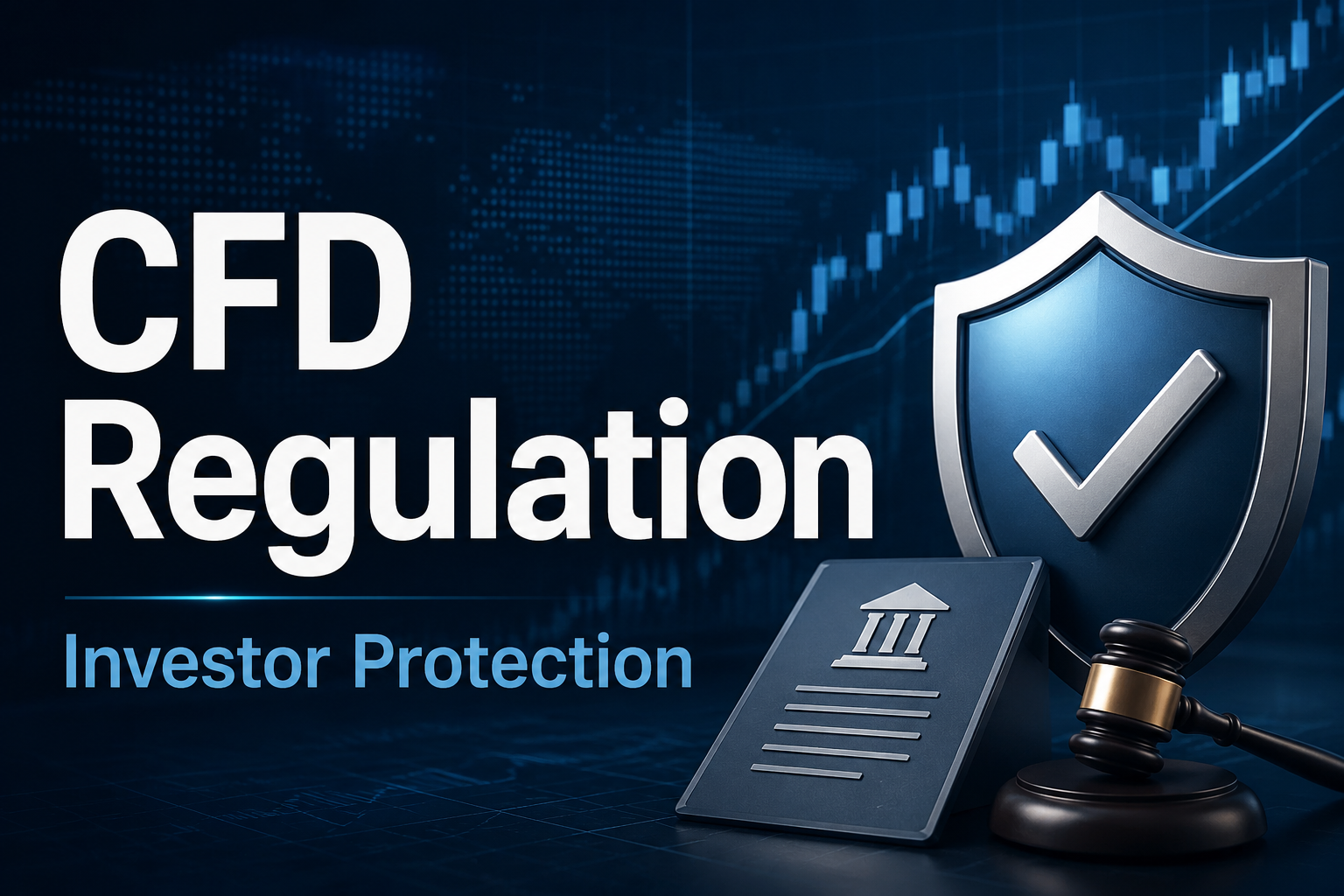
CFD regulation sets minimum standards for client money protection, risk disclosure, and leveraged trading. The details depend on the account entity and jurisdiction. The risks remain substantial. In Australia, 133,674 retail clients lost more than A$458 million trading CFDs in the 2023–24 financial year, including A$73 million in fees. CFDs are complex leveraged instruments and may not be suitable for all investors.
The legal entity in the client agreement determines which regulatory rules protect the account.
UK and EU retail leverage is generally capped between 30:1 and 2:1, depending on the market.
Client fund segregation concerns how money is held, not whether a trade makes or loses money.
Professional or wholesale status can mean giving up protections available to retail clients.
A broker check should cover the licence, permissions, website, client category and complaints process.
CFDs are usually traded directly with the provider rather than through a central exchange. The provider supplies the platform, quotes prices, holds margin and processes withdrawals. Regulation addresses the risks created by that relationship.
Depending on the jurisdiction, a CFD provider can be required to maintain adequate capital, keep client records, disclose charges and manage conflicts. Retail rules can also restrict leverage, trigger position close-out when equity becomes too low and ban incentives that encourage excessive trading.
These controls reduce operational risks, but they cannot prevent trading losses.
Imagine a global broker with one company regulated in the UK and another based elsewhere. Both use the same brand and platform, so their accounts may look identical. Their leverage limits and investor protections can still differ.
The account agreement should name the company providing the service. Search that exact legal name on the regulator’s register, then confirm the licence number, approved website and permitted activities.
A matching name alone is insufficient. Clone firms copy genuine licence details and use them on unrelated websites. The phone number, email and domain should match the information held by the regulator.
| Protection | What it does | Main limitation |
|---|---|---|
| Client fund segregation | Keeps eligible client money separate from the broker’s own operating funds. | Accessing funds may take time if a firm becomes insolvent. |
| Leverage limits | Restrict the maximum exposure available from a margin deposit. | Even with limits, small price movements can still create significant losses. |
| Margin close-out | Automatically closes positions when account equity falls below required levels. | Rapid market movements can cause positions to close at worse prices due to slippage. |
| Negative balance protection | Prevents eligible retail clients from losing more than the funds available in their CFD account. | Availability depends on the regulatory jurisdiction, account type, and client classification. |
| Risk warnings | Highlight the risks of leverage and disclose required loss statistics. | They inform traders but do not determine whether a product is suitable for an individual. |
| Complaints and compensation schemes | Provide a formal process for disputes and potential compensation where applicable. | They generally do not cover losses from normal trading activity. |
Segregation means qualifying client money is held separately from funds used for salaries, rent and other business expenses. This reduces the risk of a broker using client cash for its own operations.
It is different from a bank deposit guarantee. If a firm becomes insolvent, repayment depends on local law, the quality of its records and compensation eligibility.
With 30:1 leverage, $1,000 of margin can support a $30,000 position. A 1% move changes that position’s value by about $300 before spreads, financing and slippage. The important number is total exposure, not simply the cash posted as margin.
UK and EU retail limits range from 30:1 for major currency pairs to 2:1 for cryptoassets where permitted. Account-level close-out applies when funds fall to 50% of the margin needed to maintain open positions. Australia follows a similar asset-based approach.
Standardised warnings show the risks before an account is opened and, in some jurisdictions, the provider’s percentage of loss-making retail accounts.
Negative balance protection covers extreme moves that carry an account below zero before positions can be closed. Eligible retail clients should not owe more than the funds in the covered CFD account, although their balance can still be wiped out.
Higher leverage can make professional status look attractive. The trade-off is that many safeguards were designed specifically for retail clients.
A change in classification can affect leverage limits, disclosures, negative balance protection and access to complaint or compensation arrangements. Regulators have warned about firms pressuring clients to describe themselves as professionals or move to overseas entities.
In 2025, UK retail CFD protections were estimated to stop nearly 400,000 people each year from risking more than their original stake.
Request a written comparison before changing the status. Higher leverage increases trading capacity. It does not increase investor protection.
| Region | Retail CFD position | What traders should know |
|---|---|---|
| United Kingdom | CFDs are permitted for retail clients under FCA rules. | Restrictions include leverage limits, margin close-out rules, negative balance protection, and mandatory risk warnings. |
| European Union | CFDs are permitted under national rules that follow the ESMA product intervention framework. | Retail leverage limits typically range from 30:1 to 2:1 depending on the underlying asset, along with risk warnings and loss protection measures. |
| Australia | CFDs are permitted under ASIC’s product intervention measures. | Rules cover leverage limits, margin close-out requirements, negative balance protection, and restrictions on certain promotional practices. |
| United States | Retail access to off-exchange CFDs is highly restricted. | A broker regulated overseas may not be authorised to offer CFDs directly to US retail customers. |
The rules vary because regulation can target a particular product or client group rather than the whole CFD market. The UK prohibits firms from selling certain cryptoasset derivatives to retail clients, but other retail CFDs remain available under FCA restrictions.
In the United States, foreign providers cannot rely on an overseas licence to offer off-exchange leveraged products freely to US retail customers. Product structure, registration and customer eligibility all matter.
Do not rely on a regulatory logo or licence number displayed on the broker’s website. Check the company independently before transferring funds.
Identify the legal entity.
Find the full company name in the client agreement. A broker group can operate through several entities, each with different rules and protections.
For example, EBC operates through multiple regulated entities, such as EBC Financial Group (UK) Ltd (FCA-regulated) and EBC Financial Group (Cayman) Ltd (regulated by CIMA).
To practise this step, open the broker’s website, scroll to the footer or legal section, and locate the exact entity name listed in the terms and conditions or account opening agreement.
Verify it on the regulator’s register.
Search the company name or licence number on the regulator’s official website. Confirm that the licence is active and covers the service being offered. For example, go to the FCA Register, type “EBC Financial Group (UK) Ltd” or reference number “927552” into the search bar, and check that the status is “Authorised.”
Match the contact details.
Compare the registered website, address and phone number with the broker’s details. Clone firms often copy the name and licence number of a genuine company.
Check your client classification.
Confirm whether the account is retail, professional or wholesale. This can affect leverage limits, negative balance protection and access to complaints or compensation arrangements. For example, with EBC’s UK entity, you will see that CFD accounts are offered only to professional clients and eligible counterparties.
Before opening an account, check the eligibility criteria on the broker’s product page and confirm whether you qualify.
Read the account protections.
Review how client money is held, when positions can be closed, whether negative balance protection applies and what fees affect withdrawals or overnight positions. You can usually find this information in the broker’s client agreement or risk disclosure document.
Find the complaints and compensation process.
Check where complaints are submitted and whether an independent body can review them. Compensation schemes cover only eligible claims and do not reimburse normal trading losses. For example, FCA-regulated firms may fall under the Financial Ombudsman Service and FSCS protection (subject to eligibility). Confirm these details directly on the regulator’s website and cross-check them with the broker’s disclosures.
Regulation cannot stop prices moving against you. It also cannot prevent gaps, slippage, financing costs or losses caused by an oversized position.
A licence is one part of broker due diligence, not a substitute for managing exposure.
Check the client agreement and legal disclosures for the provider’s full company name. Match it and the licence number with the regulator’s register. The brand shown on the trading platform is not enough.
No automatic guarantee exists. Segregating client funds from business funds can improve their treatment after a failure. Recovery still depends on records, insolvency rules and any compensation scheme.
Eligible retail clients covered by negative balance protection should not owe more than the funds in the relevant CFD account. Professional, wholesale and offshore accounts can follow different rules.
Professional clients are assumed to have greater experience and financial capacity, so some retail limits can be relaxed. The result is greater exposure from the same deposit and faster potential losses.
Often. Some jurisdictions apply lower leverage to crypto-linked CFDs, while others prohibit their sale to retail clients. A crypto restriction should not be confused with a ban on CFDs linked to currencies, indices, shares or commodities.
Regulation reduces some of the operational and conduct risks involved in CFD trading, but market risk remains. Before funding an account, check who regulates the broker, which legal entity will hold the account and what protections apply to your client category.
Then examine where client money is held, how leverage is capped, when positions can be closed and where a complaint would go. Those details reveal more than a regulatory logo at the bottom of a website.