Published on: 2026-08-07
Updated on: 2026-08-07
A mobile-money business earning its revenue across Africa could be valued near $10 billion and become London’s biggest new flotation since 2021. Airtel Money ended June 2026 with 56.5 million active customers and more than $245 billion in annualised transaction value.
The reported figure is equivalent to more than half of Airtel Africa’s recent equity market value, putting the valuation gap between mobile money and telecoms at the centre of the deal.
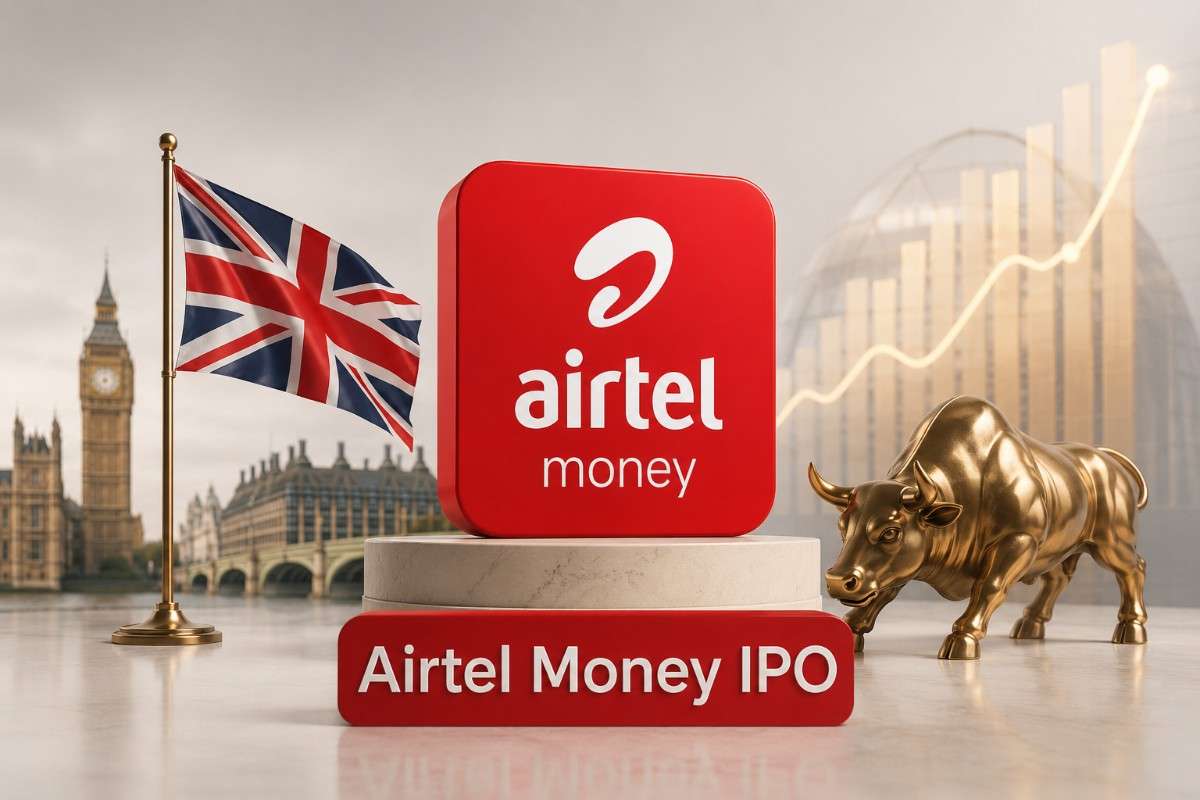
London is confirmed; $10 billion is not. Airtel Africa has selected London as its preferred 2026 listing venue, while the reported valuation and offer size remain unconfirmed.
Airtel Money serves 56.5 million active customers, up 23.3% year on year, so the IPO is arriving while its user base is still expanding at more than 20%.
Quarterly transaction value reached $61.4 billion, rising 51.5% against 25.8% constant-currency revenue growth.
Airtel Money’s 49.1% EBITDA margin fell 363 basis points after intra-group agreements changed, showing how closely its standalone profitability still depends on Airtel Africa.
Airtel Money is Airtel Africa’s mobile-financial-services business. Airtel Africa operates across 14 sub-Saharan African markets and is controlled by India’s Bharti Airtel. South Africa is not among those markets. Airtel Money provides digital wallets, transfers, merchant payments, remittances, savings, insurance and credit services.
A London IPO would give Airtel Money its own public valuation rather than leaving the business embedded inside Airtel Africa’s broader telecom operations.
Airtel Africa has traded in London since 2019, giving Airtel Money an established public-market connection before its own flotation. Management has also identified access to broad international capital as a reason for choosing London.
Only seven UK IPOs raised £577 million in the first half of 2026. Airtel Money could seek about $1.5 billion on its own, giving London the kind of large growth listing it has struggled to attract in recent years.
The Financial Times has reported that the proposed IPO could value Airtel Money at roughly $10 billion, although Airtel Africa has not confirmed that figure. Airtel Africa closed at £3.32 on 6 August, putting its recent equity market value at roughly £12 billion. The reported valuation would therefore equal about three-fifths of the parent’s market value.
The Rise Fund and Mastercard invested in Airtel Money at a $2.65 billion enterprise valuation in 2021. Reaching $10 billion in 2026 would mean that reference value has risen almost fourfold in five years.
| Metric | Airtel Money | MTN MoMo |
|---|---|---|
| Active users | 56.5m | 67.4m |
| Quarterly transaction value | $61.4bn | $163bn |
| Revenue growth | 25.8% CC | 20.0% CC |
MTN MoMo is larger by both active users and transaction value, while Airtel Money is currently growing revenue faster. MTN’s last disclosed external valuation was about $5.2 billion in 2024, but that figure reflected an enterprise valuation attached to Mastercard’s investment and is not directly comparable with Airtel Money’s reported 2026 IPO valuation.
Airtel Money’s latest quarterly revenue annualises to about $1.62 billion, putting the reported valuation near 6.2 times that revenue run-rate. The IPO documents still need to establish whether the $10 billion figure refers to equity or enterprise value.
Airtel Money’s transaction value increased 51.5% year on year in the latest quarter, almost twice the 25.8% growth in constant-currency revenue. Airtel Africa reports monthly transaction value per customer at $371, up 13% year on year, using the average active customer base during the quarter.
Airtel Money is scaling activity faster than it is monetising it. Only 58% of adults in sub-Saharan Africa had a financial account in 2024, leaving a large addressable market as mobile money expands access to formal financial services. More activity can also feed higher-value services such as merchant payments, remittances, savings, insurance and credit.
Airtel Money generated a 49.1% EBITDA margin and $183 million of operating free cash flow in the June quarter while recording only $15 million of segment capital expenditure. The gap between cash generation and direct segment investment strengthens the economics behind a standalone valuation.
Wallet services, payments and transfers still generate roughly 91% of Airtel Money’s revenue, while broader financial services contributed only $21 million during the quarter. Savings, insurance and credit remain a relatively small part of the revenue base, leaving room for growth if adoption deepens.
London can change where Airtel Money shares trade. It cannot change where Airtel Money earns its money.
Reported quarterly revenue rose 38.9%, compared with 25.8% in constant currency, as currencies including the Zambian kwacha and CFA franc strengthened. A weaker currency backdrop could cut reported growth even if underlying transaction activity remained unchanged.
Revenue is also concentrated. East Africa generated $297 million of Airtel Money’s $404 million quarterly revenue, close to three-quarters of the total. Nigeria had 3.4 million mobile-money customers but contributed only $5 million of revenue, leaving much of the current earnings base concentrated elsewhere.
Airtel Money’s profitability also depends partly on its relationship with Airtel Africa. Its EBITDA margin fell 363 basis points after intra-group agreements were renegotiated. The IPO prospectus must show how much of the current margin remains once network, distribution and shared-service costs are fully disclosed.
The current plan points to the second half of 2026. Airtel Africa has confirmed London as its preferred venue for a 2026 listing but has not announced a final pricing date or public offer timetable.
The Financial Times has reported that the IPO could raise about $1.5 billion at a valuation near $10 billion. Neither figure has been confirmed by Airtel Africa.
No. Airtel Money is not yet separately traded on a public exchange. Shares would become publicly tradable only after the IPO completes and trading begins under the final London listing arrangements.
No. Airtel Money is the mobile-financial-services operation within Airtel Africa. Airtel Payments Bank is a separate Indian banking business within the wider Bharti Airtel group structure.
Yes. The listing remains subject to regulatory approval, market conditions and final pricing. Earlier plans to float the business were delayed, and weak demand at the valuation sought could still change the price, offer size or timetable.
Airtel Africa’s half-year results on 30 October 2026 will show whether transaction growth, revenue and margins are holding. The IPO prospectus will reveal ownership, debt, shared costs and the financial ties between Airtel Money and its parent. The $10 billion valuation will then have to stand on Airtel Money’s own financials.