Published on: 2026-07-09
Updated on: 2026-07-09
US hedge funds sold tech hardware stocks for a fourth week in a row, according to a client note from Goldman Sachs, just before many high-profile chipmakers will report earnings.
Tech shares have propelled the broader equity market higher this year, but they have been swinging dramatically on a combination of profit-taking and concern about the lavish capital spending.
Morgan Stanley predicts a capital shift toward AI hyperscale operators. This rotation indicates a healthier, more diversified market rally as investors pivot toward major cloud platforms.
The bank noted that those companies may exercise greater near-term capital expenditure discipline, adding that these stocks have already completed their phase of underperformance.
In May, the SEC introduced a proposal enabling Wall Street-listed firms to transition to semi-annual reporting, aiming to curb corporate short-termism and lower accounting and compliance expenses.
JPMorgan and Nasdaq are among the organisations endorsing the plan, noting that it will strengthen capital markets and enable businesses to focus more on long-term performance.
Potential changes in the rule could particularly benefit highly cyclical firms which suffer from natural seasonal fluctuations, and tech giants which are pressured to slash R&D budget.
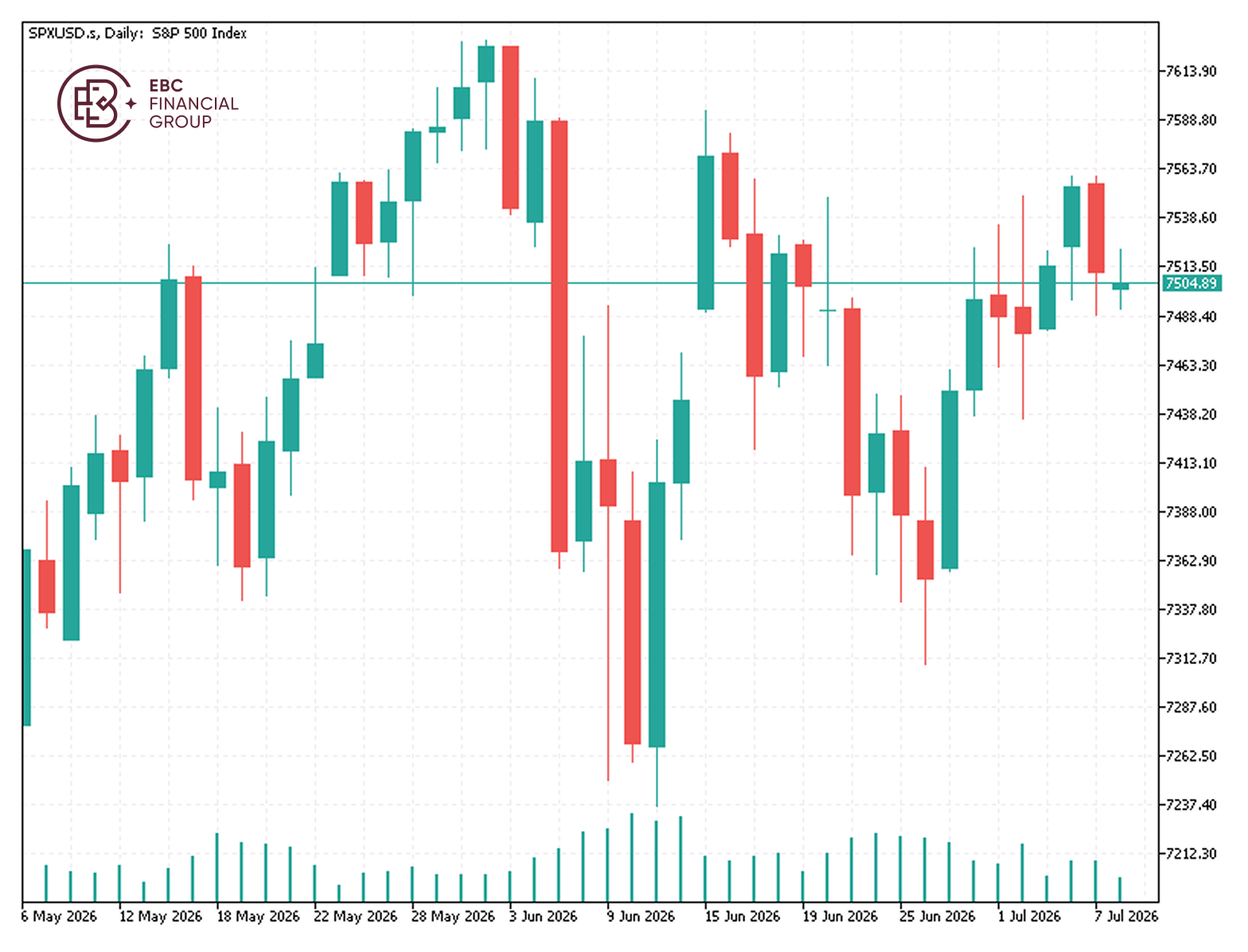
In a BofA note on Tuesday, analysts reaffirmed their year-end price target of 7,100 for the S&P 500. Speculation is seen at extreme levels, which may signal multiple compression.
The index generally saw positive returns during previous tightening cycles, but rising rates would rear ugly head as the market is currently the most expensive ahead of a first hike – except for the 1999-2000 cycle.
According to Bloomberg data, analysts have upwardly revised their forecasts, predicting a 25% growth in S&P 500 earnings for the upcoming year, fuelled by robust economic growth and accelerating AI adoption.
Michel Lerner, head of UBS's investment analytics platform HOLT, said "shares in the AI food chain are priced to maintain supernormal profits" and warned of an "earnings bubble" forming in the market.
Adding to growing anxieties over complacency, other market red flags are emerging, evidenced by a corporate scramble to raise capital—highlighted by SpaceX's IPO and massive debt issuance.
SpaceX has broken below its opening day price despite the Nasdaq 100 inclusion. Investors are looking ahead to August for Q1 results, and that period marks the expiration of lockup agreements.
US stocks are currently trading at around 20 times forward earnings. This measure sits below last year's peaks, the 2020 post-Covid rebound, and the dotcom bubble heights.
South Korea has fallen into a technical bear market this week amid chip stock rout. Foreign investors sold Asian equities at the fastest pace in at least 16 years in the first half of 2026, LSEG data showed.
SK Hynix will launch a US listing to raise about $28 billion, which is expected to be the second-biggest share sale after a record $85.7 billion initial public offering by SpaceX last month.
Market outflows are driven by currency hedging and technical benchmark rebalancing, not risk-off fear, according to analysts. Funds are selling winners purely to manage portfolio concentration risks.
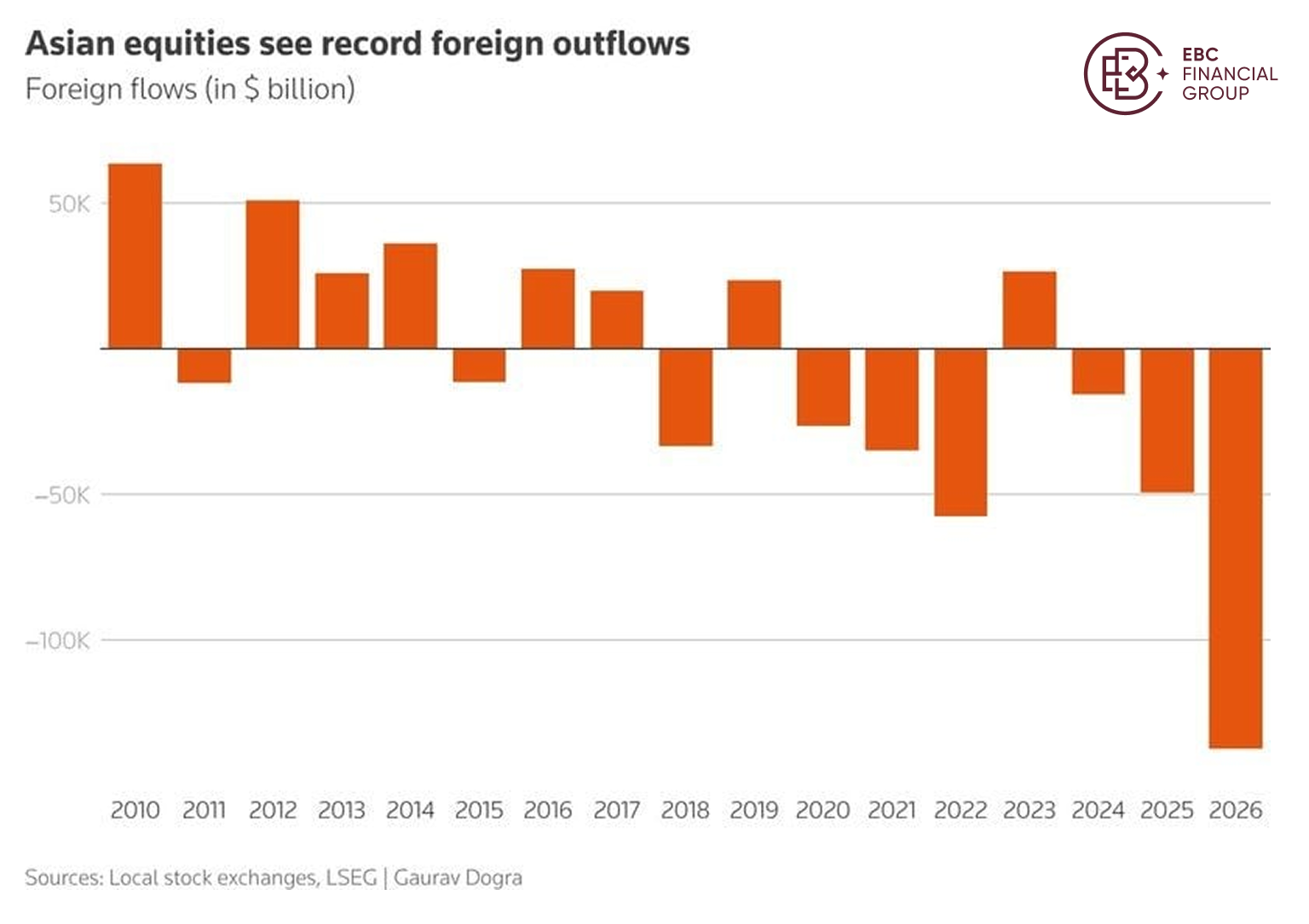
They warned that record outflows do not guarantee a foreign return to regional laggards. Instead, much of that capital has likely been hedged, sent back home, or reinvested outside Asia.
Investors worry that hyperscales will have to take on heavy debt to fund AI infrastructure amid highly uncertain returns, a move that could subsequently depress semiconductor demand.
Potential delays to AI infrastructure investment could be the biggest risk to the current memory boom. Samsung and SK Hynix are expanding capacity in South Korea, left more vulnerable to a reckoning.
Historical downturns in semiconductor pricing have severely impacted these manufacturers, pushing SK Hynix to the brink of insolvency in 2001 and leading both entities to record steep losses in 2023.