Published on: 2026-07-15
Updated on: 2026-07-15
Wall Street saw a noticeable shift in technology portfolios on Tuesday afternoon as institutional trading desks quieted their selling and began bidding up chipmakers again. Leading the charge was Intel stock, which experienced a significant bump in daily volume and total market value. Shares of the prominent semiconductor company (NASDAQ: INTC) climbed steadily throughout Tuesday’s session, finishing the day up more than 4.5% to settle at $107.76. The rally provided a strong recovery from Monday’s closing price of $103.12, pushing the chipmaker's total market value back over the $541 billion line.
This latest upward swing shows just how volatile the stock has been over the last twelve months. If you look back at the trailing 52-week data, the equity sank to a painful low of $18.96 during a brutal industry pullback, only to spark a massive multi-month run that eventually topped out at $142.34. The trading activity on Tuesday suggests that big institutional funds are establishing larger positions in the semiconductor stock ahead of a major corporate checkpoint: the company's second-quarter financial scorecard, which drops right after the market closes on July 23.
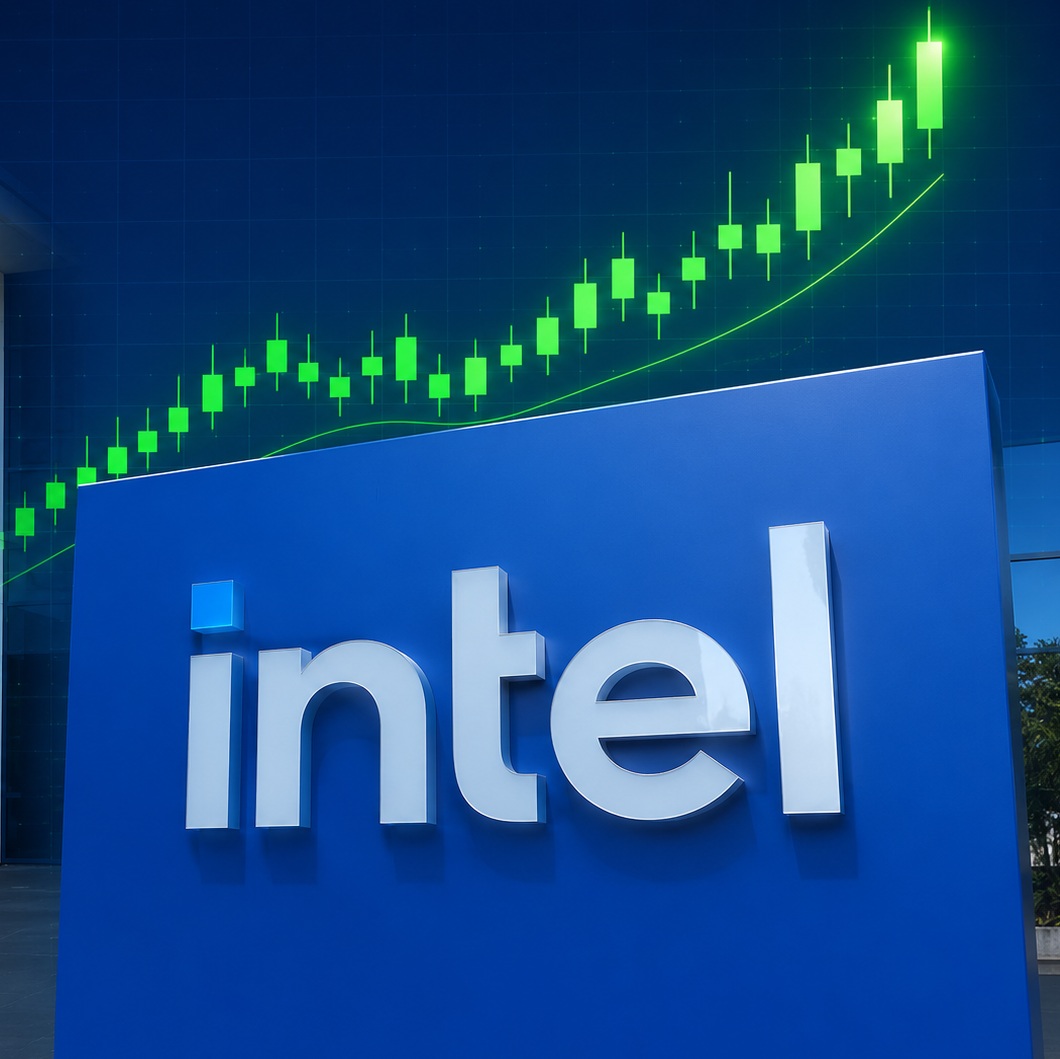
When you strip away the daily market noise, market chartists point out that Intel stock is undergoing what traders call a classic bullish consolidation breakout. The stock formed a clear, hard bottom at around $94 back in April. That floor served as a springboard for the heavy accumulation we saw throughout May and June, driving the price back up toward that $140 resistance ceiling.
The options market is telling an even more interesting story right now. Big funds are clearly hedging for massive swings ahead of the July 23 report. The implied volatility for INTC options has recently shot up to the 94th percentile. This basically tells us that professionals aren't viewing this upcoming earnings report as just another dull corporate update. They see it as a high-stakes event that will either send the stock past its recent yearly highs or cause a fast, messy drop.
Right now, the stock is trading comfortably above its standard 50-day and 200-day moving averages, which gives momentum traders a lot of confidence. The catch, though, is the company's normalized price-to-earnings (P/E) ratio. It looks incredibly bloated right now compared to rivals like AMD. This means the market isn't paying for what Intel is earning today—it is paying for what everyone hopes Intel will earn tomorrow.
The big reason investors are giving Intel stock another look comes down to how the market is re-evaluating the company's deep internal changes, especially within its massive factory business. For a long time, the company took a beating from critics for falling behind Asian chip factories in raw manufacturing tech. That narrative has shifted completely over the last few months.
Massive Production Milestones: In recent closed-door meetings and public showcases, management laid out solid proof that their next-generation manufacturing nodes are coming along ahead of schedule. Wall Street is finally buying into the idea that Intel can become a true independent contract factory, building cutting-edge processors for other massive tech companies who are terrified of geopolitical risks overseas.
New Executive Blood: A wave of seasoned manufacturing executives has taken over key roles inside the Intel Foundry division, giving investors peace of mind that the company can actually hit its production deadlines.
The Data Center Infrastructure Push: New partnerships that tie Intel's enterprise Xeon chips directly into custom AI network systems have put the company right back into the middle of the cloud infrastructure boom.
On top of that, some smart balance-sheet moves have caught the eye of institutional analysts. Earlier in the year, the executive team moved to buy back a 49% stake in their premier factory joint venture out in Ireland. Reclaiming total financial and operational control over that high-performing European plant sent a clear message to the market: the company's global manufacturing footprint is stabilizing much faster than the bears thought it would.
Even with Tuesday's solid trading performance, major research firms are still locked in a fierce debate over where Intel stock goes next. If you pull up the latest analyst notes from the major banks, you'll see one of the widest price target spreads in the entire tech sector. Conservative targets are sitting all the way down near $120, while the most aggressive bulls on the Street are putting out numbers closer to $200.
The crowd betting on the upside points out that Intel is uniquely positioned to take advantage of huge government handouts, like the U.S. CHIPS Act. These programs heavily favor companies building physical factories on American soil. As massive tech companies look to protect their supply chains from global conflicts, Intel's upgraded domestic plants are sitting there waiting to pick up billions of dollars in outsourced production work.
The short-sellers and bears, however, see things differently. They look straight at the company's financial bleeding. The underlying numbers still show a negative trailing earnings-per-share (EPS) of -$0.62. That negative figure is a direct result of the astronomical cost of building these advanced chip factories, which sucks up all the company's short-term profits. Critics keep warning that if the July 23 earnings call shows even a minor delay in their factory timelines, or if their regular computer chip margins come in soft, the stock will drop fast as those expensive INTC options lose their value.
As the trading week moves forward, Intel stock remains one of the most heavily debated stories on the floor. The run from the sub-$20 lows of last year up to the current triple-digit mark shows that the market has stopped treating this company like a dying legacy brand. Instead, they are trading it like a massive, government-backed infrastructure play with huge upside.
Ultimately, the upcoming earnings print on July 23 is going to be the truth serum the market needs. If the executive team can prove that their new factories are running efficiently and that they are winning over large corporate AI clients, this current stock surge might just be the start of one of the greatest corporate turnaround stories in modern tech history. Until those numbers cross the wire, expect trading to stay highly volatile and entirely driven by anticipation.