Published on: 2026-05-22
India’s carbon market is turning industrial emissions into a financial signal. The Carbon Credit Trading Scheme makes carbon performance measurable, tradable, and commercially significant for companies in cement, aluminium, refining, petrochemicals, textiles, and other energy-intensive sectors.
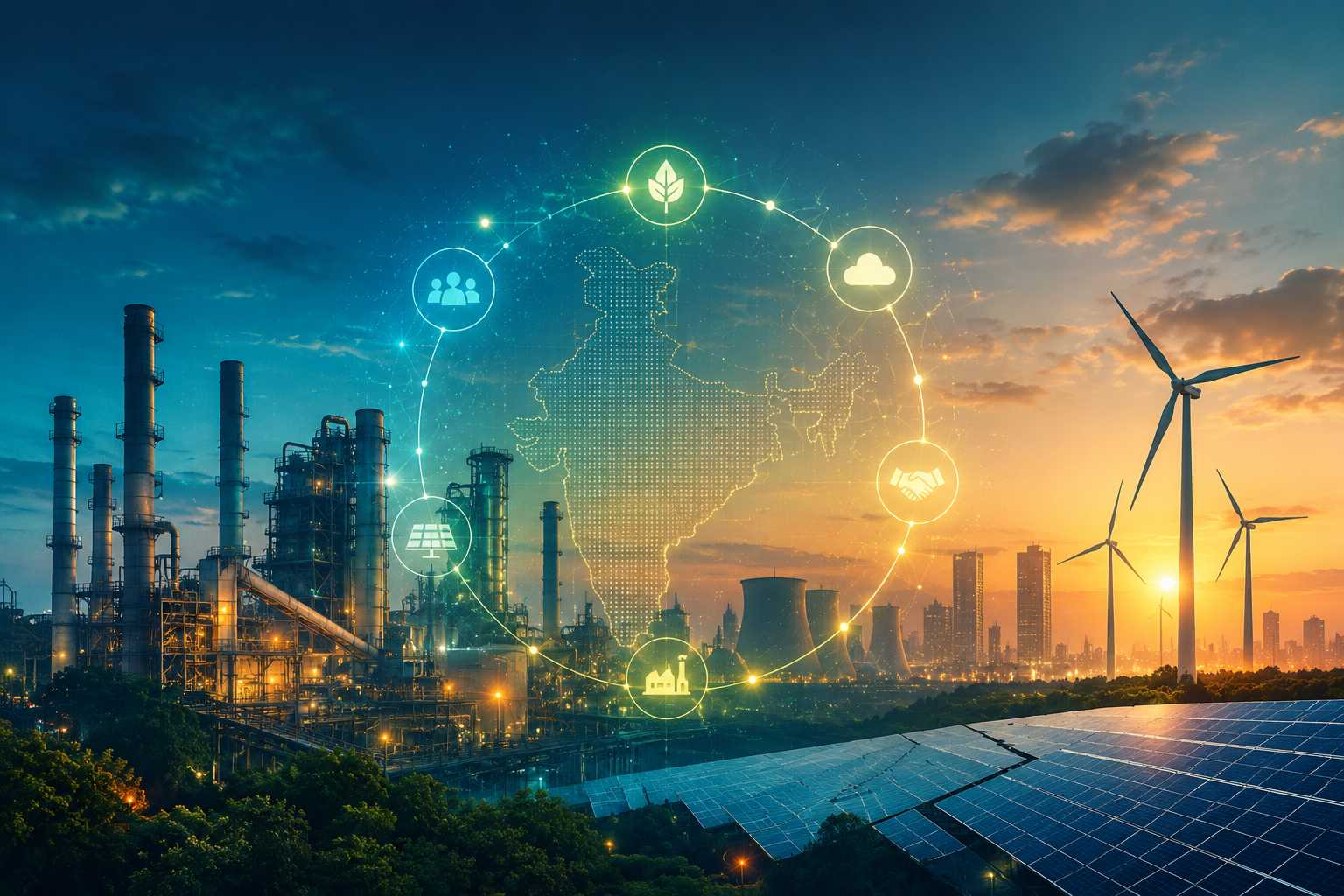
This is a regulated market, not a symbolic platform. Companies that exceed emissions-intensity targets can earn Carbon Credit Certificates, while those that do not may need to purchase them. With 490 obligated entities now covered, the market has shifted from policy design to affecting industrial cost structures.
India’s carbon market enables cleaner production to become a tradable financial advantage.
Each Carbon Credit Certificate represents 1 tonne of CO₂ equivalent reduced or removed.
The scheme is intensity-based, making it more suitable for a growing economy than a fixed emissions cap.
The compliance market is expected to cover over 700 million tonnes of CO₂ equivalent, positioning India among the world’s leading emerging emissions trading systems.
The greatest opportunities may be in energy efficiency, renewable power, verification, emissions data, and green hydrogen, rather than in credit trading alone.
The main risk is credibility. Weak verification or oversupply could undermine price discovery before the market matures.
A carbon credit is a certificate representing 1 tonne of carbon dioxide equivalent, or tCO₂e, that has been reduced, avoided or removed. In India’s framework, each Carbon Credit Certificate corresponds to one tonne of CO₂ equivalent reduction or removal. The market logic is straightforward. Companies that exceed emissions-intensity targets can earn and sell certificates, while those that do not may need to purchase them.
Certificates turn carbon performance into a measurable asset or liability. This price signal is significant. When emissions have a market cost, carbon efficiency becomes a factor in margins, capital allocation, and, over time, share valuation.
For cement plants, aluminium smelters, refineries, and textile exporters, carbon performance can impact profitability, financing terms, and long-term competitiveness.
The Carbon Credit Trading Scheme operates through two main channels.
| Mechanism | Coverage | Market role |
|---|---|---|
| Compliance mechanism | Obligated industrial entities | Creates demand from companies that must meet emissions-intensity targets |
| Offset mechanism | Non-obligated and voluntary entities | Creates supply from approved projects with verified reductions or removals |
The compliance mechanism creates demand. Obligated companies that miss targets may need to buy and surrender certificates, while those that outperform can earn and sell them. The offset mechanism creates supply. Non-obligated entities can register approved projects, complete verification, and generate credits if they meet required standards.The institutional structure is key to the scheme’s credibility.
The Bureau of Energy Efficiency administers the programme, the Grid Controller of India manages the registry, and the Central Electricity Regulatory Commission oversees trading.
This structure gives the Indian Carbon Market more authority than voluntary offset platforms.Compliance obligations are now in effect for fiscal year 2025 to 2026. Carbon Credit Certificate trading is expected to begin in 2026 as the first compliance cycle approaches settlement.
India is not replicating Europe’s carbon market. The EU Emissions Trading System uses an absolute cap on total emissions, while India’s scheme measures carbon output per unit of production. This distinction is intentional. India is still industrialising, and sectors like cement, aluminium, refining, petrochemicals, and textiles are vital for infrastructure, employment, and exports. A hard cap could limit output prematurely.
An intensity-based model allows production to grow while requiring companies to reduce emissions per unit of output. It aligns industrial expansion with decarbonisation, aiming to make growth more carbon-efficient.
This design also aligns with India’s climate goals. India has committed to reduce the emissions intensity of GDP by 47% by 2035 from 2005 levels, achieve 60% cumulative electric power installed capacity from non-fossil sources by 2035, and reach net zero by 2070.
India’s initial compliance targets included aluminium, cement, chlor-alkali, and pulp and paper, covering 282 obligated entities. The January 2026 expansion added petroleum refineries, petrochemicals, textiles, and secondary aluminium, bringing in another 208 entities and raising total coverage to 490.
| Sector | Exposure | Financial relevance |
|---|---|---|
| Aluminium | High | Power-intensive smelting makes emissions intensity a direct cost variable |
| Cement | High | Among the hardest industrial sectors to decarbonise |
| Chlor-alkali | Medium to high | Electricity use can affect credit generation or compliance cost |
| Pulp and paper | Medium | Efficiency upgrades can create measurable carbon savings |
| Petroleum refineries | High | Fossil-fuel infrastructure is entering carbon-cost discipline |
| Petrochemicals | High | Emissions exposure spans chemicals, plastics and supply chains |
| Textiles | Medium | Export-facing producers face rising sustainability requirements |
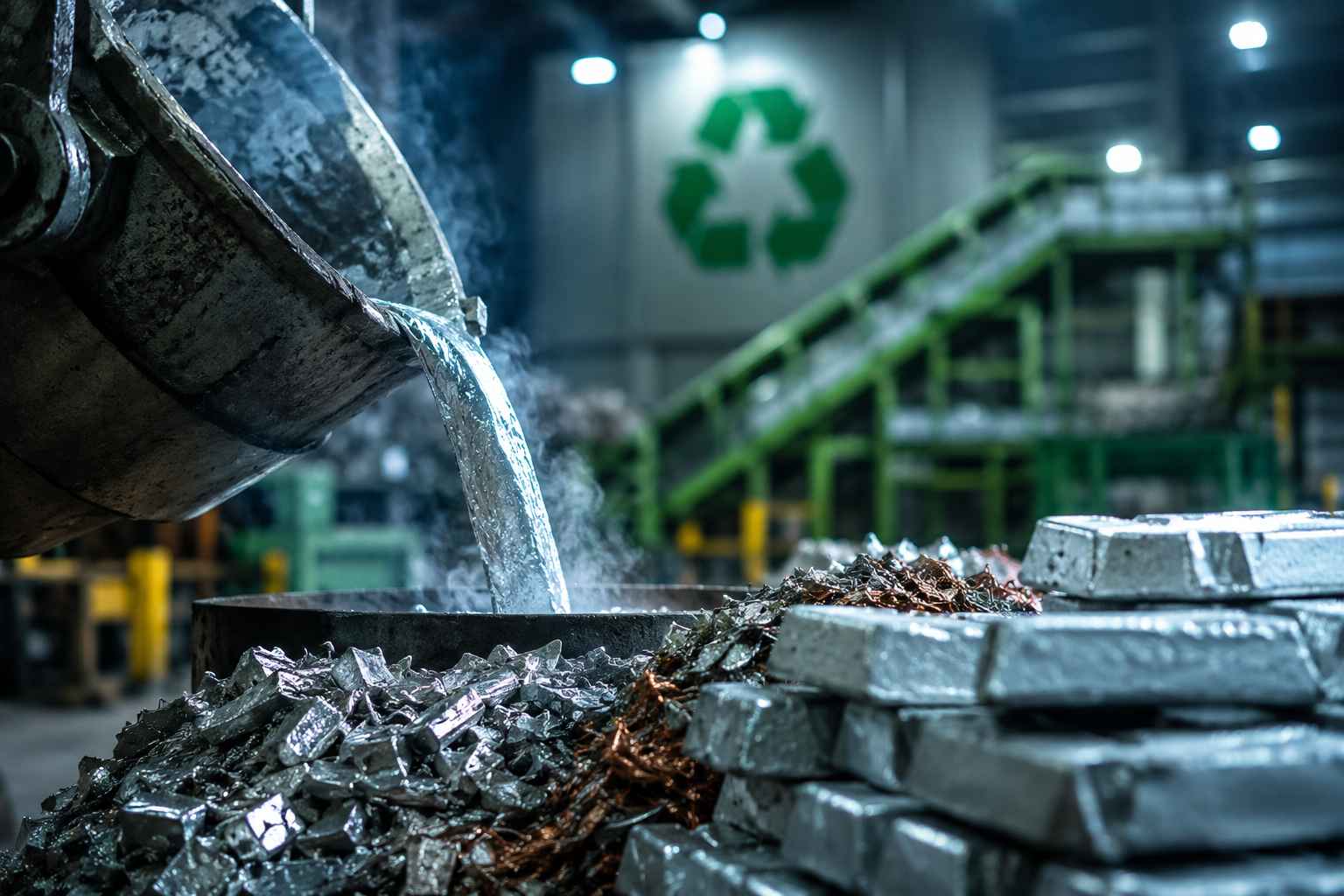
| Secondary aluminium | Medium to high | Recycling-based output may benefit from a lower-carbon cost base |
Iron and steel are expected to join the framework in a later phase. Aviation, ports, railways, and data centres are also being considered for future inclusion.The carbon market acts as a competitiveness filter.
Companies with modern plants, cleaner power sources, and strong process control may gain a measurable advantage. The likely winners are those with lower power intensity, better operating data, and proactive management, not just those with prominent sustainability disclosures.
Carbon credits can affect corporate performance through three channels: compliance cost, tradable revenue and capital access.
A company that misses its target may need to purchase certificates. Persistent underperformance can create recurring operating costs, similar to power tariffs, raw material inflation, or environmental levies.
A company that exceeds its target can sell surplus certificates. Cleaner operations can generate financial returns beyond lower energy bills, turning efficiency investments into tradable assets.
The capital-market impact may become more significant over time. Institutional investors, lenders, and export customers are increasing scrutiny of emissions data. Companies with verified lower emissions may be better positioned for green bonds, sustainability-linked loans, and export financing.
For investors in Indian shares, carbon performance could become a valuation factor. If carbon costs are visible and persistent, analysts may apply a discount to companies lacking credible decarbonisation plans and a premium to those demonstrating verified progress.
India’s domestic carbon market is closely linked to trade.The European Union’s Carbon Border Adjustment Mechanism applies to carbon-intensive imports including cement, iron and steel, aluminium, fertilisers, electricity and hydrogen. The mechanism is designed to place a carbon cost on imports that compete with EU producers subject to carbon pricing.
For Indian exporters in aluminium, steel-related products, cement, chemicals, and textiles, credible emissions data is becoming essential commercial infrastructure. Buyers and regulators increasingly require proof of carbon intensity rather than general sustainability claims.
A domestic carbon framework helps Indian companies prepare by building the measurement, verification, and reporting systems that overseas buyers and regulators now require. In this way, the Carbon Credit Trading Scheme also serves as an export-readiness programme.
The most lasting opportunities may arise not from trading certificates directly, but from the broader ecosystem the market creates. Energy-efficiency companies may benefit as industrial clients seek lower-cost compliance options. Renewable power developers could gain from increased corporate demand for cleaner electricity.
Green hydrogen may become more relevant in sectors where direct electrification is not commercially viable. Verification agencies, auditors, emissions-data platforms, and specialised consultants will also see sustained demand.
The carbon market’s strength depends on reliable data, and the necessary infrastructure is still being developed. Power exchanges and market infrastructure providers may also become more relevant as Carbon Credit Certificates are actively traded. Initial volumes may be modest, but liquidity should increase as more sectors participate and price discovery improves.
Carbon markets fail if credits are not trusted.Certificates that do not reflect genuine, verified emissions reductions weaken the entire system. Excess weak credits suppress prices below levels needed to influence investment. Poor verification erodes buyer confidence and deters institutional participation. India must balance accessibility with rigour.
Supply should be sufficient for a functioning market, but not so large that pricing loses commercial relevance. Price calibration will be an ongoing challenge. A carbon price set too low will not influence investment decisions, while one set too high may face industry resistance. The market’s success depends on building liquidity without sacrificing credibility.
India’s carbon market is young, but its direction is clear. Emissions are becoming measurable, tradable, and financially significant across a growing share of the industrial economy.For efficient companies, carbon credits can become a realisable asset. For less efficient firms, they may become a recurring cost.
For investors, carbon performance is becoming a quantifiable factor in assessing margins, capital expenditure risk, export competitiveness, and long-term share valuation.India is not creating a parallel market. It is building a framework that links climate policy with industrial strategy. Once emissions are priced, corporate behaviour will adjust accordingly.