Published on: 2026-01-08
Updated on: 2026-01-08
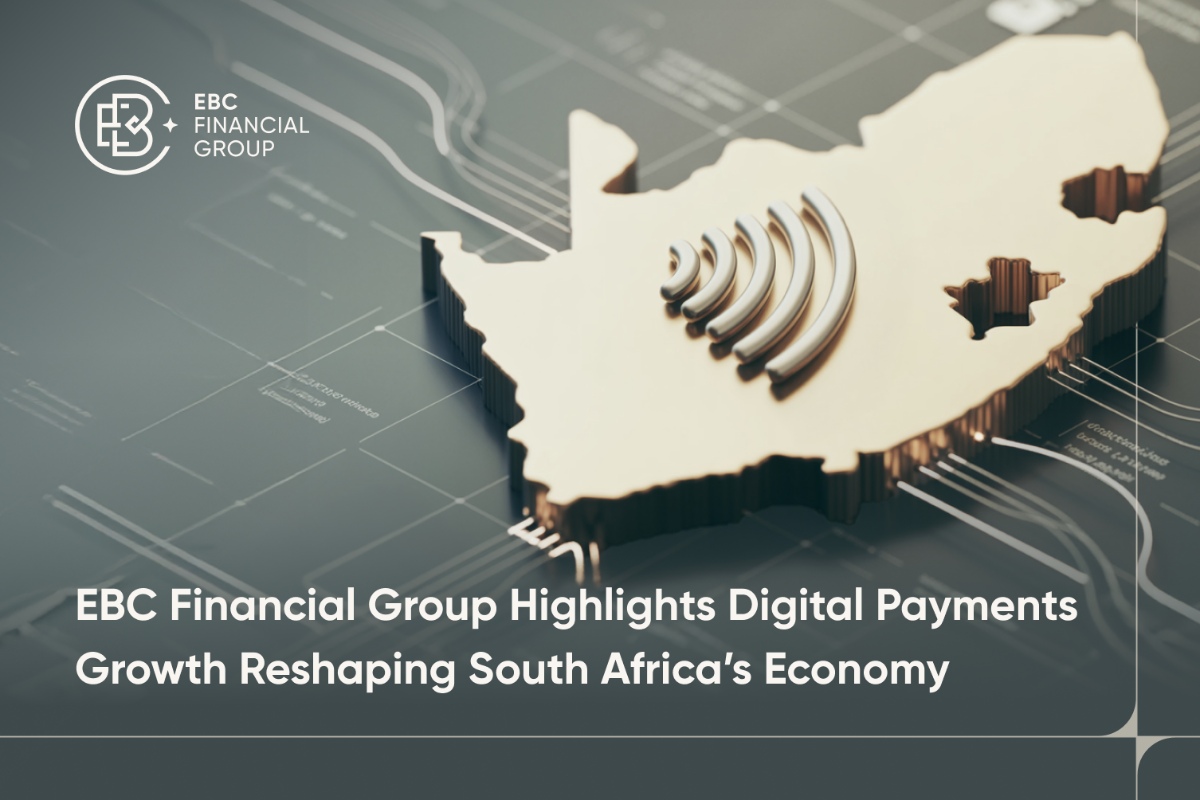
EBC Financial Group notes that South Africa's digital payments market is entering a decisive growth phase, with card-based transactions projected to exceed ZAR2.9 trillion ($159 billion) in 2025. Card usage continues to rise at a robust 10.4% annual pace, with South African consumers averaging more than 118 card transactions per year, placing the country among the most active card-using markets in the emerging world. Recent industry data reinforces the scale of this transition. Rising merchant acceptance, contactless technology and mobile-led payments are reshaping how households and businesses transact, supporting efficiency and broader participation in the formal economy.
"South Africa's payments landscape is reaching a point where digital finance is no longer supplementary, but foundational," said David Barrett, Chief Executive Officer of EBC Financial Group (UK) Ltd. "The scale and consistency of adoption show that cashless transactions are becoming embedded across consumer behaviour and business operations, which has important implications for liquidity, transparency and market efficiency."
Momentum has been reinforced by a sharp expansion in payment acceptance across the region. In 2025, Africa's digital payments network expanded by 45%, significantly increasing access for merchants and consumers and strengthening transaction infrastructure in South Africa's retail and services sectors. Investments in tokenisation, real-time processing and security have supported both in-store and online commerce, improving reliability and trust in digital transactions.
The expansion of digital payments infrastructure is improving transaction efficiency across the economy. Broader point-of-sale coverage and rising contactless adoption have reduced friction for consumers while improving settlement speed for businesses. These developments are extending beyond major urban centres, enabling smaller merchants and informal traders to participate more fully in the digital economy.
"Efficient payment infrastructure lowers barriers to entry and supports economic participation at scale," Barrett said. "When transactions become faster, cheaper and more reliable, it strengthens confidence for both consumers and businesses, which ultimately supports more sustainable growth."
Small and medium-sized enterprises are central to South Africa's digital payments transformation. Around 90% of SMEs now accept digital payments, highlighting how cashless solutions have become essential for managing cash flow, improving transparency and reaching customers across multiple sales channels. For many businesses, faster settlement and access to transaction data have strengthened financial planning and reduced operational risk. The ability to operate seamlessly across physical stores, e-commerce platforms and delivery services is increasingly viewed as a competitive necessity rather than an optional upgrade.
Barret explained, "For SMEs, digital payments are as much about survival as they are about growth. Cashless systems improve visibility and predictability, which are critical for managing costs, planning investment and navigating periods of volatility."
Beyond domestic transactions, digital finance is strengthening South Africa's role as a regional payments hub. New cross-border platforms are reducing settlement times and transaction costs, supporting trade flows and remittances across southern Africa. Improved efficiency in cross-border payments is enhancing liquidity and encouraging greater participation by businesses engaged in regional commerce. These developments align with wider continental trends. Africa's digital payments economy is projected to reach around ZAR25 trillion $1.5 trillion by 2030, with South Africa expected to remain a key driver due to its mature banking system, regulatory framework and high mobile penetration. "Cross-border efficiency is particularly important for South Africa given its role in regional trade," Barrett said. "ower friction in payments supports stronger capital flows and makes it easier for businesses and investors to operate across markets."
Looking ahead, continued growth in mobile payments, contactless transactions and real-time settlement is expected to deepen South Africa's digital finance ecosystem. Investment in cybersecurity, infrastructure resilience and collaboration between banks, fintech firms and global payment networks will remain critical to sustaining momentum.
For markets, the expansion of digital payments signals more than technological progress. It reflects stronger economic participation, improved transaction transparency and a gradual shift towards a more efficient and inclusive financial system.
"Digital finance is becoming core economic infrastructure," Barrett said. "For investors and traders, this matters because it supports liquidity, improves market functioning and enhances the resilience of the broader financial system."
Disclaimer: This material is for information only and does not constitute a recommendation or advice from EBC Financial Group and all its entities ("EBC"). Trading Forex and Contracts for Difference (CFDs) on margin carries a high level of risk and may not be suitable for all investors. Losses can exceed your deposits. Before trading, you should carefully consider your trading objectives, level of experience, and risk appetite, and consult an independent financial advisor if necessary. Statistics or past investment performance are not a guarantee of future performance. EBC is not liable for any damages arising from reliance on this information.