Published on: 2026-08-27
Updated on: 2026-08-27
Amphenol’s 2-for-1 stock split reaches its key market date on September 3, when APH is expected to begin trading at roughly half its pre-split price with twice as many shares. The August 17 record date was not a simple buy-by deadline, so purchasing APH afterwards does not automatically mean missing the split.
The split changes the quoted price, not the valuation multiple, so Amphenol’s 30% organic growth and record $10.7 billion in quarterly orders support the valuation already embedded in APH.
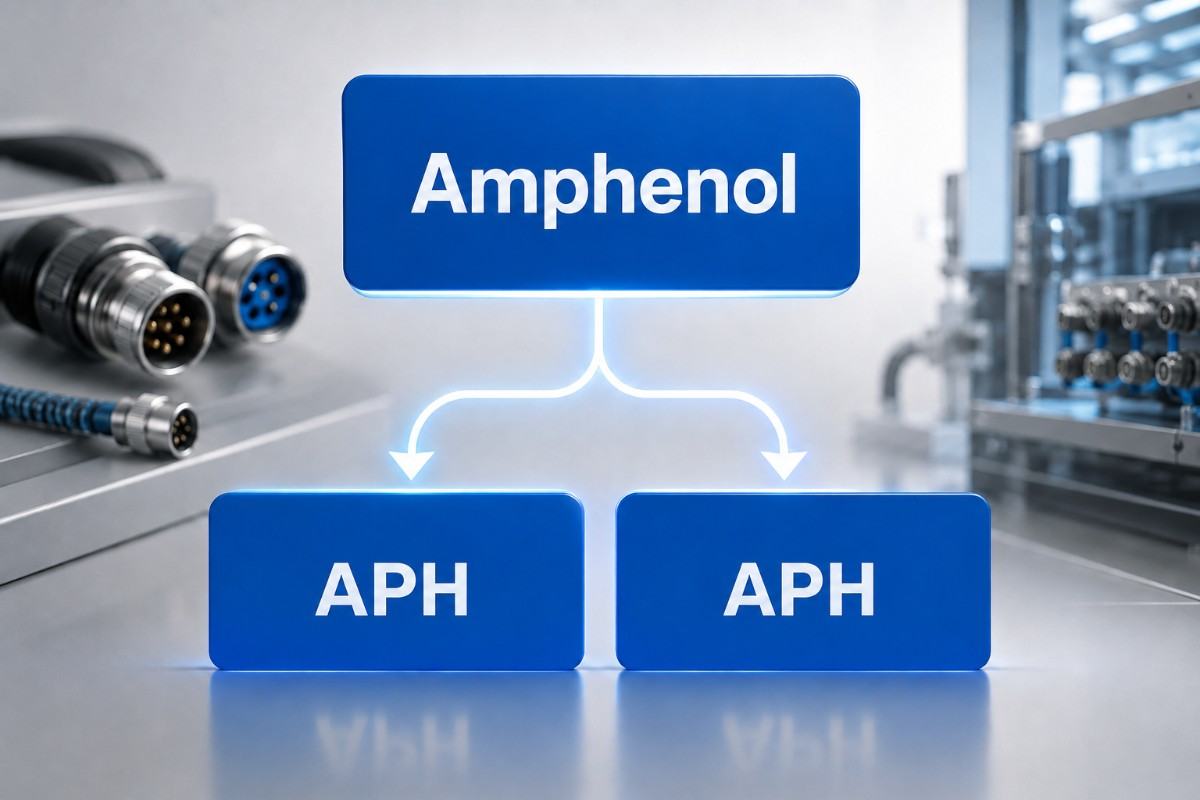
September 3 is the expected first day of split-adjusted APH trading, following the September 2 share distribution.
100 APH shares become 200, while the position’s value is unchanged solely because of the split.
$161.34 becomes $80.67 mechanically using the August 26, 2026 close as an example, not as a September 3 price forecast.
IT/datacom accounted for 43% of Q2 sales and grew 63% organically, with AI-related products driving virtually all of its latest sequential increase. Amphenol reported those end-market figures during its official July 29 earnings webcast, while its 10-Q separately confirms outsized IT/datacom growth with particular strength in AI-related applications.
A lower share price does not lower APH’s valuation; earnings growth and execution must justify the premium.
August 17 was not the final day to buy APH and receive the economic benefit of the split. Amphenol will distribute one additional share for every APH share on September 2. FINRA’s standard rule for stock distributions worth at least 25% of a security places the ex-date on the first business day after the payable date, which points to September 3 for APH’s split adjustment.
Buying after the record date therefore does not automatically mean missing the additional shares. Before the ex-date, a due bill can transfer the distribution right from the seller to the buyer. FINRA illustrates the same mechanism with a large stock distribution in which a record holder who sells before the ex-date relinquishes the distribution to the purchaser.
| Date | Event | Practical meaning |
|---|---|---|
| Aug. 17 | Record date | Not a final buy-by date |
| Sept. 2 | Distribution | One extra share per APH share |
| Sept. 3 | Adjusted trading | Price and share count adjust |
Once split-adjusted trading begins, new purchases will already reflect the higher share count and lower quoted price.
A 2-for-1 split turns 100 APH shares into 200 without creating a gain or loss. Using APH’s August 26, 2026 closing price of $161.34 as a fixed illustration, a 100-share position worth $16,134 would correspond to 200 shares at a split-adjusted reference price of $80.67. The market-data snapshot used here is specifically dated August 26, 2026.
| Metric | Before | After split |
|---|---|---|
| Shares | 100 | 200 |
| Example price | $161.34 | $80.67 |
| Position value | $16,134 | $16,134 |
$80.67 is an illustration, not a September 3 price forecast. APH can rise or fall before the adjustment, so the actual split-adjusted quote will depend on its market price immediately beforehand.
A roughly 50% lower APH quote after the split is therefore not a 50% loss. The number of shares doubles at the same time, leaving the position’s economic value unchanged by the corporate action itself.
A stock moving from roughly $160 to $80 after a 2-for-1 split does not cut its P/E ratio in half.
Using the same August 26, 2026 market-data snapshot, APH closed with a market capitalization of approximately $198.93 billion and a forward P/E of 27.50 times. Doubling the share count while halving the quoted share price leaves those valuation measures essentially unchanged.
The split changes the quoted share price, not the earnings multiple. Whether APH deserves that valuation depends on whether its current operating momentum can continue.
Amphenol generated $8.8 billion of Q2 sales, up 55% year over year, while organic growth reached 30%. The gap between those figures shows acquisitions amplified the headline increase without reflecting the underlying business's strength.
Orders reached a record $10.7 billion, producing a 1.23x book-to-bill ratio. A ratio above 1.0 means incoming orders exceeded quarterly sales, leaving demand ahead of the revenue already being recognized.
Adjusted operating margin reached 29.8%, although the quarter included an $80 million net tariff-recovery benefit. Removing that benefit mechanically lowers the implied margin by roughly 0.9 percentage points to just under 29%, still a strong profitability level without treating the full headline result as recurring.
IT/datacom is now the largest test of whether that growth can persist, with AI-related demand driving much of its recent acceleration.
IT/datacom accounted for 43% of Q2 sales and grew 63% organically year over year. Sales rose another 22% sequentially, with virtually all of that sequential increase coming from AI-related products.
AI-related demand is accelerating an end market that already represents a large share of quarterly sales. Amphenol's interconnect portfolio supplies high-speed copper, power and fiber-optic connectivity used across increasingly demanding AI infrastructure.
The acquired CommScope businesses deepen Amphenol’s fiber and data-center connectivity exposure. Amphenol now expects the acquired operations to contribute about $4.6 billion of 2026 sales, up from its earlier $4.1 billion expectation.
The larger business also carries more acquisition-related leverage. Amphenol reported approximately $18.81 billion of total debt at June 30 against about $5.42 billion of cash, cash equivalents and short-term investments, implying net debt near $13.39 billion. A weaker-than-expected CommScope integration would therefore carry greater financial consequences than it would have before the transaction.
A material slowdown in AI-related demand would hit one of Amphenol’s largest revenue engines rather than a peripheral growth theme.
No. Buying APH after August 17 does not automatically mean missing the additional shares. For a large stock distribution, trades before the ex-date can carry the distribution right to the buyer through a due bill. September 3 is expected to be the first day APH trades without that entitlement attached.
For U.S. federal tax purposes, the total cost basis does not change because of the split itself. The basis is reallocated across twice as many shares, so a $100 per-share basis would become $50 after a 2-for-1 split, assuming no other transactions alter the position. The IRS also confirms that receiving additional shares through a stock split does not itself create a taxable event.
No. The Q3 dividend adjusts from $0.25 to $0.125 per share because the share count doubles. A 100-share position receiving $25 at $0.25 per share becomes 200 shares receiving the same $25 at $0.125 per share, before any future dividend change. Amphenol has confirmed the post-split dividend adjustment.
The 2-for-1 split creates no mechanical valuation advantage either before or after September 3. The share count and quoted price adjust together. Amphenol’s earnings growth, AI-related IT/datacom demand, CommScope execution and the valuation paid for that growth carry far more weight than the timing of the split itself.
September 3 settles the stock-split mechanics. The next earnings cycle will show whether Amphenol can sustain enough growth to support the valuation already attached to APH.
The split changes the share count. Earnings will decide whether the valuation still holds.