Published on: 2026-01-08
Updated on: 2026-01-08
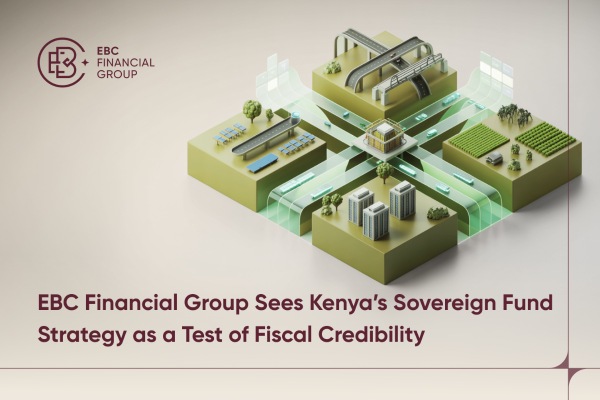
EBC Financial Group regards Kenya's cabinet approval of the establishment of the National Infrastructure Fund (NIF) and the Sovereign Wealth Fund (SWF), to seed marking a significant shift away from debt-financed growth towards a more sustainable, asset-backed financing model. The Kenyan government plans to seed these funds with proceeds from the privatisation of state assets, including the sale of a 15% stake in Safaricom, which has already generated KSh 244.5 billion to be directed into these vehicles. These funds aim to target critical infrastructure projects in sectors such as transport, energy, and agriculture, which are vital for Kenya's long-term growth plans. The government has set aside KSh 5 trillion for its development agenda over the next decade.
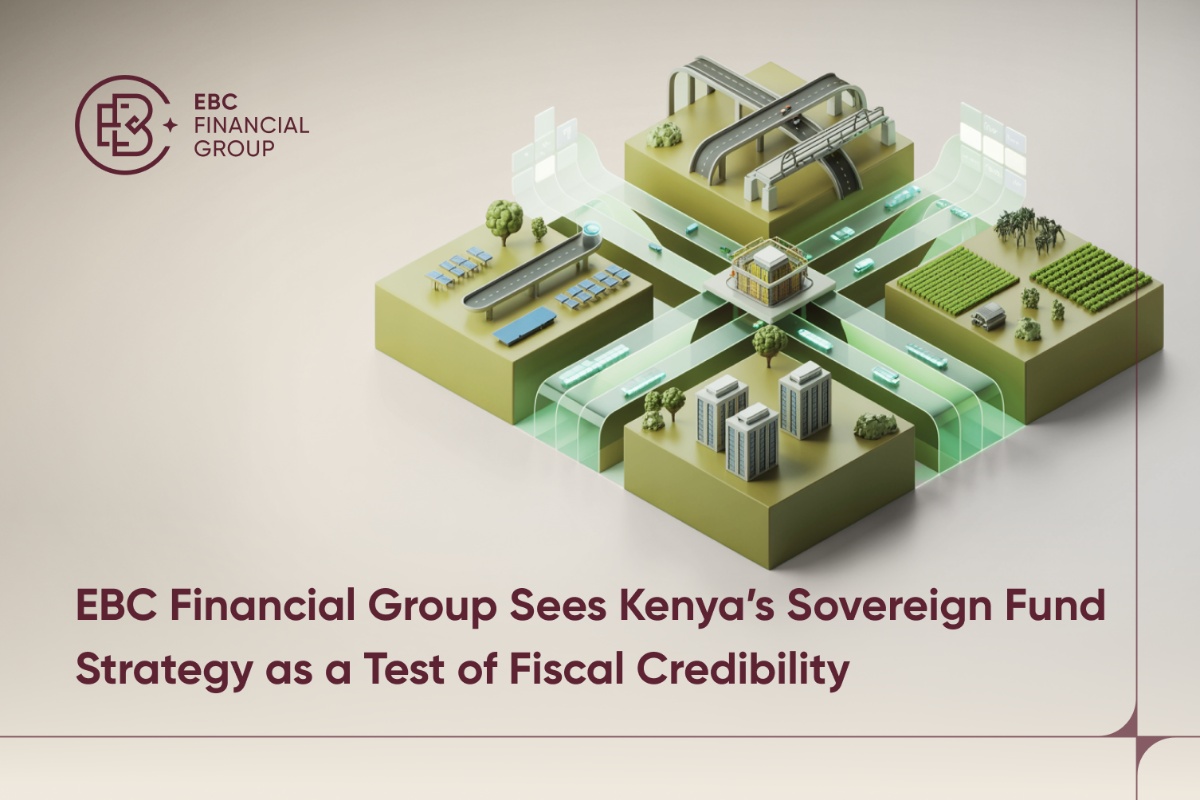
The funds will target strategic sectors such as transport, energy, and agriculture, areas critical for Kenya's long-term development plans, which are set to cost an estimated KSh 5 trillion over the next decade, according to the government's strategic documents. NIF is designed to attract private and institutional capital through the monetisation of state assets, including a 15% stake in Safaricom, which has already generated KSh 244.5 billion in proceeds. The Sovereign Wealth Fund, on the other hand, will focus on preserving wealth through the accumulation of resource royalties, dividends from state investments, and portions of privatisation proceeds.
Kenya's long-standing approach of financing infrastructure largely through debt has contributed to fiscal pressures, with the budget deficit expected to widen to around 5.3 % of GDP in 2026/2027, according to the Ministry of Finance. This widening reflects ongoing commitments to large-scale public investment and debt servicing costs. NIF aims to attract substantial private capital alongside state contributions. Government projections suggest that every KSh 1 invested into the NIF could leverage up to KSh 10 from pension funds, sovereign partners, private equity, and development institutions, creating a multiplier effect for long-term projects such as.
"This strategy is not about a quick fix," said David Barrett, Chief Executive Officer of EBC Financial Group (UK) Ltd. "It represents a long-term approach to fiscal stability that, if executed with discipline and transparency, could bolster Kenya's risk profile and attract global investment."
The pivot toward sovereign and infrastructure funds is a clear attempt to ease fiscal pressure by utilizing asset sales instead of adding to sovereign debt. By ring-fencing these proceeds for investment, Kenya aims to alleviate the burden on public finances while maintaining its development momentum. This transition is critical for investors as it could help stabilize Kenya's fiscal profile and reduce the vulnerability of the shilling to shifts in global risk sentiment. However, execution challenges are emerging. A recent High Court order has temporarily halted all actions to operationalise the National Infrastructure Fund pending constitutional review, following a petition arguing that its establishment without a parliamentary law may contravene constitutional processes.
This legal uncertainty underscores the need for robust governance, clear mandates and effective oversight to translate policy intent into positive market signals. Without credible implementation, investor confidence and risk perception could remain constrained.
Kenya's recent economic indicators suggest resilience in the face of global headwinds with headline inflation eased to 4.5 % in November 2025, well within the Central Bank of Kenya's target range. The shilling has largely held steady against the US dollar, and foreign exchange reserves remain above key buffers, offering import coverage.
Recent World Bank projections show the Kenyan economy poised to grow by an average 4.9 % between 2025 and 2027, while underlying fiscal pressures and public debt levels underscore the need for credible fiscal consolidation. These macro trends provide a backdrop where the new funding architecture could strengthen investor confidence if it delivers tangible results in job creation, infrastructure completion and export competitiveness.
"Kenya's decision to pivot towards sovereign and infrastructure funds reflects a recognition that debt alone cannot carry the development burden," Barrett added. "This is a strategic recalibration, but credibility will ultimately rest on execution."
The coming 6 to 18 months will be crucial for assessing the viability of the NIF and SWF. Key milestones include finalising the Safaricom share sale, legal clarity on the fund structures, the passage of appropriate legislation, and the appointment of independent boards with clear mandates.
If implemented with transparency, these funds could enhance Kenya's appeal to long-term investors, reduce borrowing costs and support sustainable development. Conversely, delays due to legal challenges or concerns over governance and transparency could dampen investor enthusiasm and perpetuate elevated risk premiums.
Disclaimer: This material is for information only and does not constitute a recommendation or advice from EBC Financial Group and all its entities ("EBC"). Trading Forex and Contracts for Difference (CFDs) on margin carries a high level of risk and may not be suitable for all investors. Losses can exceed your deposits. Before trading, you should carefully consider your trading objectives, level of experience, and risk appetite, and consult an independent financial advisor if necessary. Statistics or past investment performance are not a guarantee of future performance. EBC is not liable for any damages arising from reliance on this information.