Published on: 2026-03-27
Updated on: 2026-03-27
The principal technical question is whether Rivian's (RIVN) stock can achieve a breakout following its Uber robotaxi agreement. Currently, Rivian trades near $15.21, positioned above a concentrated cluster of moving averages.
This context is significant as RIVN is no longer valued solely as an electric vehicle manufacturer. The stock increasingly reflects market expectations concerning Rivian’s ability to leverage its R2 launch and autonomy strategy to establish a scalable growth trajectory.
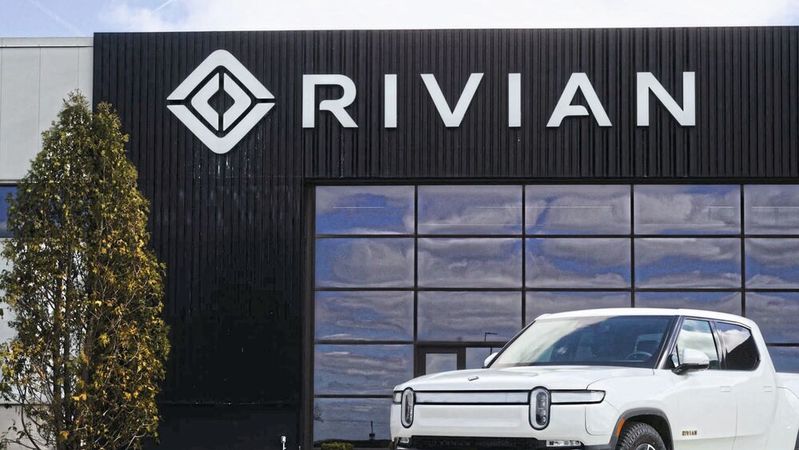
The fundamental outlook has strengthened. Rivian reported $5.387 billion in full-year revenue for 2025, achieved $144 million in gross profit, and provided guidance for 62,000 to 67,000 vehicle deliveries in 2026.
Rivian has shifted from concerns regarding persistent cash burn to demonstrable gross profit improvement. The R2 platform and autonomy initiatives now offer a clearer growth trajectory compared to the previous year.
| Metric | Latest reading |
|---|---|
| Share price | $15.21 |
| Market cap | $17.81 billion |
| EPS | -$3.08 |
| Q4 2025 revenue | $1.286 billion |
| FY 2025 revenue | $5.387 billion |
| Q4 2025 gross profit | $120 million |
| FY 2025 gross profit | $144 million |
| FY 2025 deliveries | 42,247 vehicles |
| 2026 delivery guidance | 62,000 to 67,000 vehicles |
| R2 first deliveries | Q2 2026 / Spring 2026 |
| Uber robotaxi plan | 10,000 initial vehicles, option to scale to 50,000 |
| Uber investment commitment | Up to $1.25 billion through 2031 |
However, the market still requires technical confirmation before re-evaluating the shares.
The daily chart remains defensive. Both the technical indicator summary and the moving-average summary currently indicate a Strong Sell, with RIVN trading below all key daily moving averages from the 5-day to the 200-day.
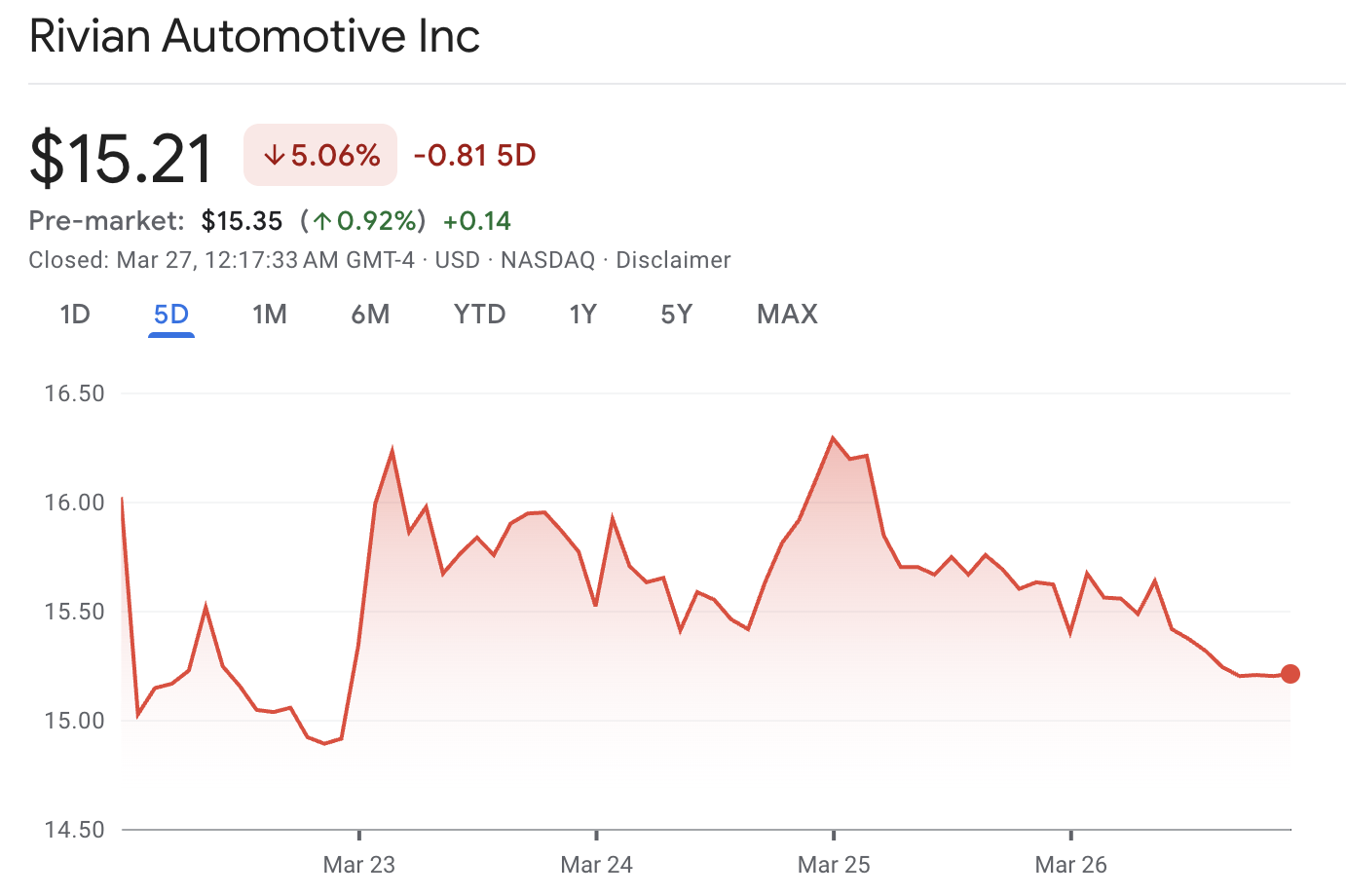
This does not preclude the possibility of a rally. However, any bullish thesis must be predicated on reclaiming overhead moving averages rather than relying on current momentum.
| Indicator | Latest level | Read-through |
|---|---|---|
| RSI (14) | 40.841 | Weak, below neutral 50 |
| MACD (12,26) | -0.12 | Bearish momentum bias |
| EMA 20 | $15.54 | First important overhead resistance |
| EMA 50 | $15.65 | Trend confirmation level |
| EMA 200 | $15.72 | Longer-term reclaim threshold |
| Pivot | $15.22 | Immediate balance point |
| Support | $15.17 / $15.13 / $15.08 | Near-term downside floor |
| Resistance | $15.25 / $15.31 / $15.34 | Initial upside hurdles |
| Trend | Bearish-to-neutral | Below major averages |
| Momentum | Weak | Selling pressure still dominant |
The immediate support band is situated just below the current price, while the primary resistance zone is positioned at $15.54 to $15.72.
A decisive move through this resistance zone would shift the technical structure from a reactive bounce to a credible breakout.
Conversely, failure to maintain levels above the $15.17 to $15.08 support band would result in a weak short-term technical configuration.
The bullish scenario requires RIVN to defend the pivot area near $15.22, surpass near-term resistance at $15.25 to $15.34, and subsequently reclaim the moving-average band between $15.54 and $15.72.
If these conditions are met, it would indicate that the Uber partnership and R2 launch timing are sufficient to counteract the prevailing daily sell bias. Technically, this would represent a transition from range-bound weakness to trend recovery.
The bearish scenario is also well-defined. Momentum remains weak, as indicated by an RSI below 50, negative MACD, and all major moving averages positioned above the current price. If buyers fail to overcome overhead supply, the stock remains vulnerable to repeated rejection.
A decline below $15.17, followed by $15.13 and $15.08, would indicate that the robotaxi announcement has improved sentiment but has not yet altered the underlying trading regime.
At present, the chart is best interpreted as a conditional setup rather than an unequivocally bullish configuration. Rivian’s fundamentals have improved relative to the stock’s prior reputation.
Full-year revenue increased to $5.387 billion, gross profit turned positive at $144 million, and 2026 guidance anticipates further increases in deliveries.
These improvements are significant because they reduce the pressure on the R2 launch to drive all growth simultaneously.
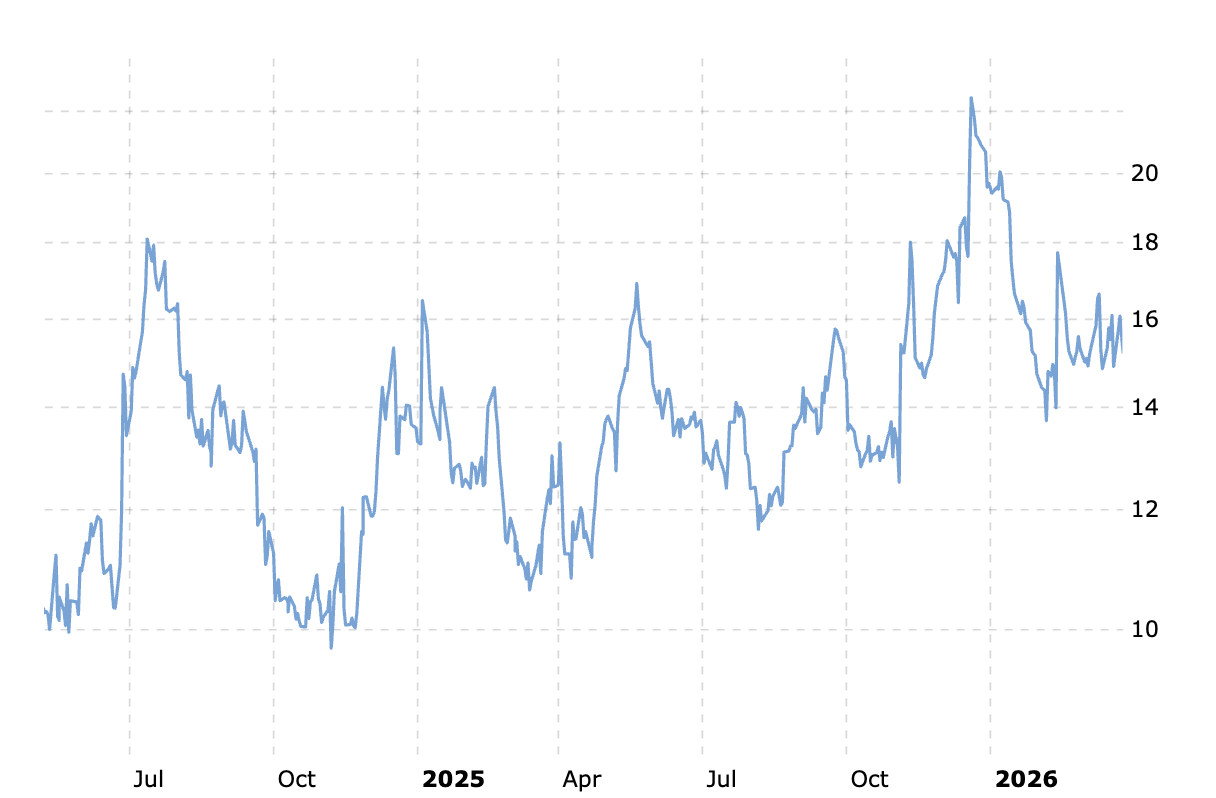
The market is currently evaluating whether Rivian can convert narrative momentum into sustained accumulation.
Until the price reclaims the EMA 20, EMA 50, and EMA 200, the stock remains a watchlist candidate rather than a confirmed breakout.
The upcoming earnings period is also significant. Public estimates indicate that Rivian’s next earnings release will occur around May 5, 2026.
As a result, the chart may remain sensitive to news flow as market participants await clearer information on R2 ramp progress, margins, and 2026 execution.
RIVN is currently in a transitional phase. Operational performance has improved and strategic prospects are more compelling, yet the technical outlook remains unproven.
Rivian’s recent developments are particularly relevant for technical analysts because they introduce additional narrative momentum to a stock positioned near critical inflection points.
The March 19 Uber partnership represents more than a routine announcement.
This development is notable as Rivian approaches its next major product milestone. The latest R2 lineup details indicate that deliveries will begin in spring 2026 with the Performance trim at $57,990, followed by Premium variants in late 2026 and Standard trims in 2027.
RIVN is best described as bearish-to-neutral on the daily chart. The stock is below the 20-day, 50-day, and 200-day exponential moving averages, while RSI and MACD both signal weak momentum.
The most important zone is not the first pivot resistance near $15.25 to $15.34. It is the heavier moving-average band between $15.54 and $15.72. That area includes the EMA 20, EMA 50, and EMA 200, making it the real test of whether the trend can improve.
The deal matters because it links Rivian’s R2 platform to a scalable autonomy opportunity. Uber and Rivian expect to deploy 10,000 autonomous R2 robotaxis in the first phase, with expansion across 25 cities by 2031 and up to $1.25 billion in Uber investment through 2031.
The key product catalyst is the R2 launch. Rivian expects first customer deliveries in Q2 2026, with the initial Performance trim starting at $57,990 and later configurations rolling out through late 2026 and 2027.
RIVN is positioned at a critical juncture. Operational performance has improved, the R2 launch is imminent, and the Uber robotaxi partnership provides Rivian with a more robust strategic narrative than that of a typical electric vehicle manufacturer.
However, the technical chart has not yet validated this narrative. Daily momentum remains weak, and the stock continues to trade below all major moving averages.
Consequently, the technical assessment remains cautious. RIVN is not currently in breakout mode and remains under breakout observation.
Disclaimer: This material is for general information purposes only and is not intended as (and should not be considered to be) financial, investment or other advice on which reliance should be placed. No opinion given in the material constitutes a recommendation by EBC or the author that any particular investment, security, transaction or investment strategy is suitable for any specific person.