Published on: 2026-03-31
Updated on: 2026-03-31
Aluminium is increasingly recognized as a strategic commodity, extending beyond its traditional role as an industrial metal.
The recent rise in Alcoa stock reflects a genuine supply shock rather than speculative trading activity.
Elevated aluminium prices may benefit producers, although risk profiles differ substantially among various market participants.
On March 30, Alcoa stock and aluminium futures surged after missile strikes damaged major Gulf smelters, intensifying an already constrained market into an acute supply shock.
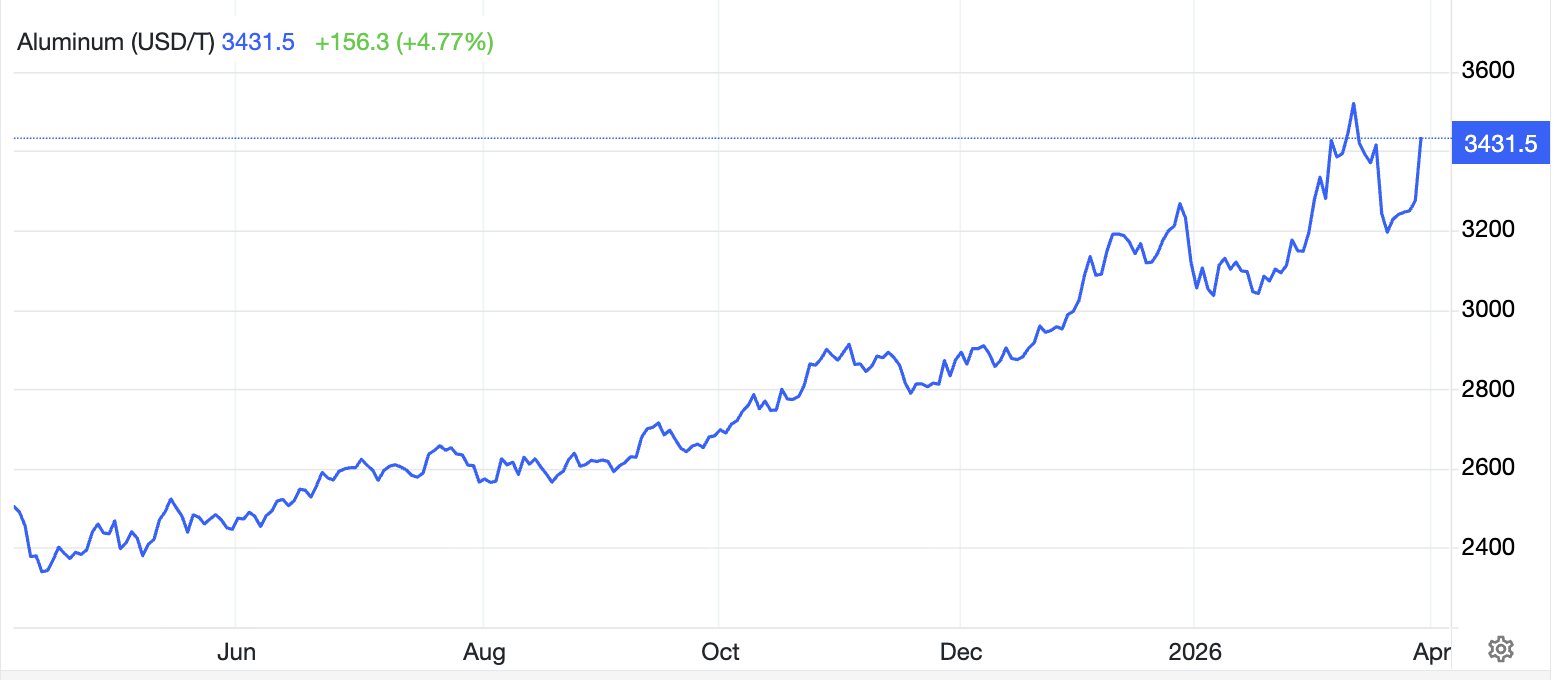
Alcoa rose by as much as 11.8% in morning trading, Century Aluminum advanced approximately 10%, and benchmark London aluminium increased by up to 5.9% to $3,492 per tonne, approaching its 2022 peak.
The rapid price movement has prompted consideration of whether aluminium continues to trade as a cyclical metal or is beginning to command a geopolitical premium similar to oil.
On March 28, Emirates Global Aluminium reported that its Al Taweelah facility sustained “significant damage” during Iranian missile and drone attacks, resulting in injuries to several employees.
The smelter produced 1.6 million tonnes of cast metal in 2025, highlighting its importance beyond the Gulf region.
This damage compounded existing market fragility. Earlier in the month, Aluminium Bahrain initiated a controlled shutdown of Reduction Lines 1, 2, and 3, representing 19% of its 1.623 million-tonne annual capacity, to maintain business continuity amid disruptions in the Strait of Hormuz.
Concurrently, Qatalum has operated at approximately 60% capacity due to gas-supply issues necessitating a controlled curtailment.
This situation is significant because it is not a localized disruption in a minor-producing region. The Gulf contributes approximately 8% to 9% of global aluminium supply, and about 9% of the world’s aluminium is transported through the Strait of Hormuz.
When both production and freight risks increase simultaneously, the market demonstrates minimal flexibility.
London Metal Exchange (LME) stocks were already limited before the recent attacks. According to The Times, aluminium inventories in LME warehouses declined by over 60% since May 2025, which partly explains the pronounced price reaction, even as other industrial commodities remained influenced by broader economic concerns.
| Market snapshot, March 30, 2026 | Move |
|---|---|
| Alcoa stock | Up as much as 11.8% intraday |
| Century Aluminum stock | Up about 10% |
| LME aluminum | Up as much as 5.9% |
| Aluminum price | Around $3,440 to $3,492 a tonne |
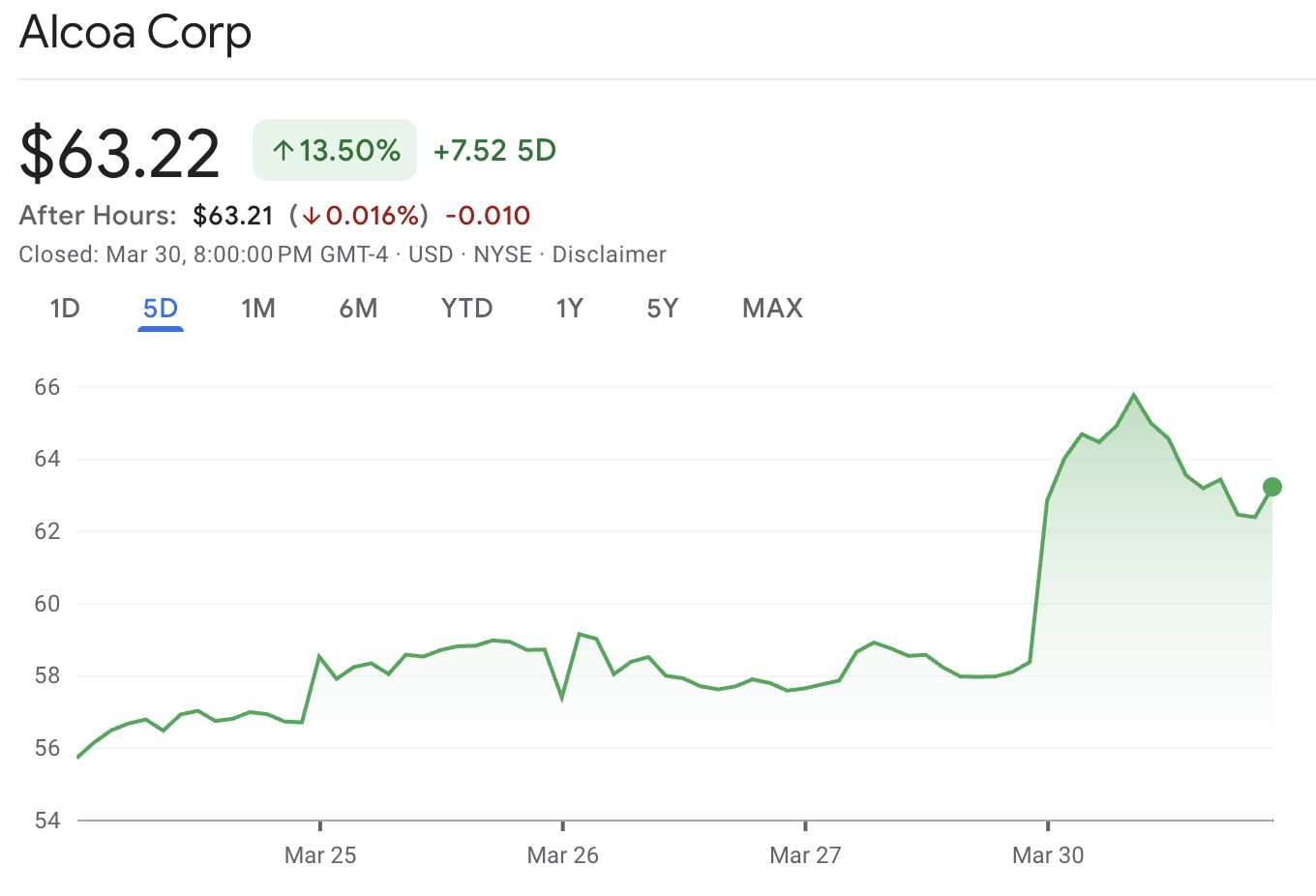
Alcoa recorded a second consecutive day of gains on Monday, rising 8.23% to close at $63.22 per share, as the market responded to escalating supply concerns.
Aluminium forward contracts in New York increased by approximately 4% to $3,319 per metric ton during early Monday trading. Prices have risen 10% since the onset of hostilities.
Oil is not the only commodity with significant geopolitical leverage. Aluminium production is highly concentrated, energy-intensive, and substantially exposed to transportation chokepoints.
The Gulf region accounts for about 8% to 9% of global aluminium supply, and approximately 9% of the world’s aluminium is shipped through the Strait of Hormuz. When that route is disrupted, the market reprices rapidly.
That explains why the latest aluminium price move feels different from a normal industrial-metals rally. This is not a pure demand story tied to stronger manufacturing data.
It is a commodity supply shock hitting a market that already had limited flexibility, with LME aluminium inventories reported to be down by more than 60% since May 2025.
Aluminium occupies a central position in critical supply chains across the automotive, aerospace, food packaging, solar panel, and power infrastructure sectors. Consequently, significant changes in benchmark prices can rapidly affect manufacturing costs across these sectors.
This dynamic has led the market to assign aluminium a geopolitical premium comparable to that of energy commodities.
Aluminium does not fully parallel oil in a macroeconomic context. Oil remains more influential for transportation, inflation expectations, and central bank policy responses.
However, aluminium is beginning to exhibit trading patterns similar to oil in one key aspect: the market is attributing a geopolitical premium due to concentrated supply, limited inventories, and the disproportionate importance of a single shipping corridor for global availability.
This episode differs from a typical industrial-metals rally. The price movement was driven less by increased demand and more by concerns that a strategic commodity had become more difficult to source, ship, and replace.
In this environment, aluminium begins to behave less like copper and more like an energy commodity.
A more accurate conclusion is that aluminium is not replacing oil, but it is now trading as a strategic bottleneck metal. For Alcoa, this shift enables the stock to benefit from both cyclical optimism and geopolitical scarcity.
Over the past two years, Alcoa has optimized its portfolio and prioritized low-carbon "green" aluminium production. As a result, its North American and Australian assets are now central to heightened global demand.
This strategic positioning is deliberate. Alcoa's Aluminium segment has benefited from robust demand in North American electrical and packaging markets, with production capacity further enhanced by the restart of smelters in San Ciprián (Spain), Alumar (Brazil), and Lista (Norway).
The San Ciprián restart, scheduled for June 2026, is projected to add 228,000 metric tons of annual capacity as prices approach their peak. This timing, although coincidental, represents a significant advantage for Alcoa shareholders.
Alcoa shares have increased by 35.8% over the past three months, outperforming the industry's 33.5% growth.
The next move in Alcoa stock will depend less on headlines and more on whether the aluminium supply shock lasts.
Key factors to monitor include the duration of Gulf smelter disruptions, the normalization of shipping through the Strait of Hormuz, and whether higher aluminium prices result in stronger orders and margins for Alcoa.
If outages persist and freight risk remains elevated, aluminium could retain its geopolitical premium. Conversely, if supply recovers quickly, the recent price spike may subside rapidly. The critical test is whether tight supply becomes a sustained driver of earnings.
Traders interested in commodity futures should always use a regulated broker to help ensure proper oversight, transparent pricing, and stronger client fund protections. Choosing a regulated provider is a basic safeguard when trading volatile markets.
A meaningful share of global aluminium supply and shipments runs through the Gulf and the Strait of Hormuz. When that route is disrupted, physical supply tightens quickly.
No. Alcoa benefits from stronger metal prices, but its alumina and customer exposure mean regional disruption can create both upside and friction.
Autos, aerospace, packaging, construction, solar, and power infrastructure tend to feel aluminium cost pressure early because the metal is embedded across those supply chains.
Yes. If damage is repaired faster than expected or shipping conditions improve, part of the geopolitical premium could unwind just as quickly as it appeared.
The recent surge in Alcoa stock was not driven by speculative momentum but was a direct response to a confirmed supply shock that impaired Gulf production, further strained the market, and significantly increased aluminium futures.
While aluminium is not replacing oil, the market is increasingly treating it as a strategic commodity whose price is sensitive to conflict, freight disruptions, and concentrated supply risks.
This dynamic explains the pronounced movement in Alcoa's stock and underscores the broader significance of recent events.
Disclaimer: This material is for general information purposes only and is not intended as (and should not be considered to be) financial, investment or other advice on which reliance should be placed. No opinion given in the material constitutes a recommendation by EBC or the author that any particular investment, security, transaction or investment strategy is suitable for any specific person.