Published on: 2026-04-02
Updated on: 2026-04-02
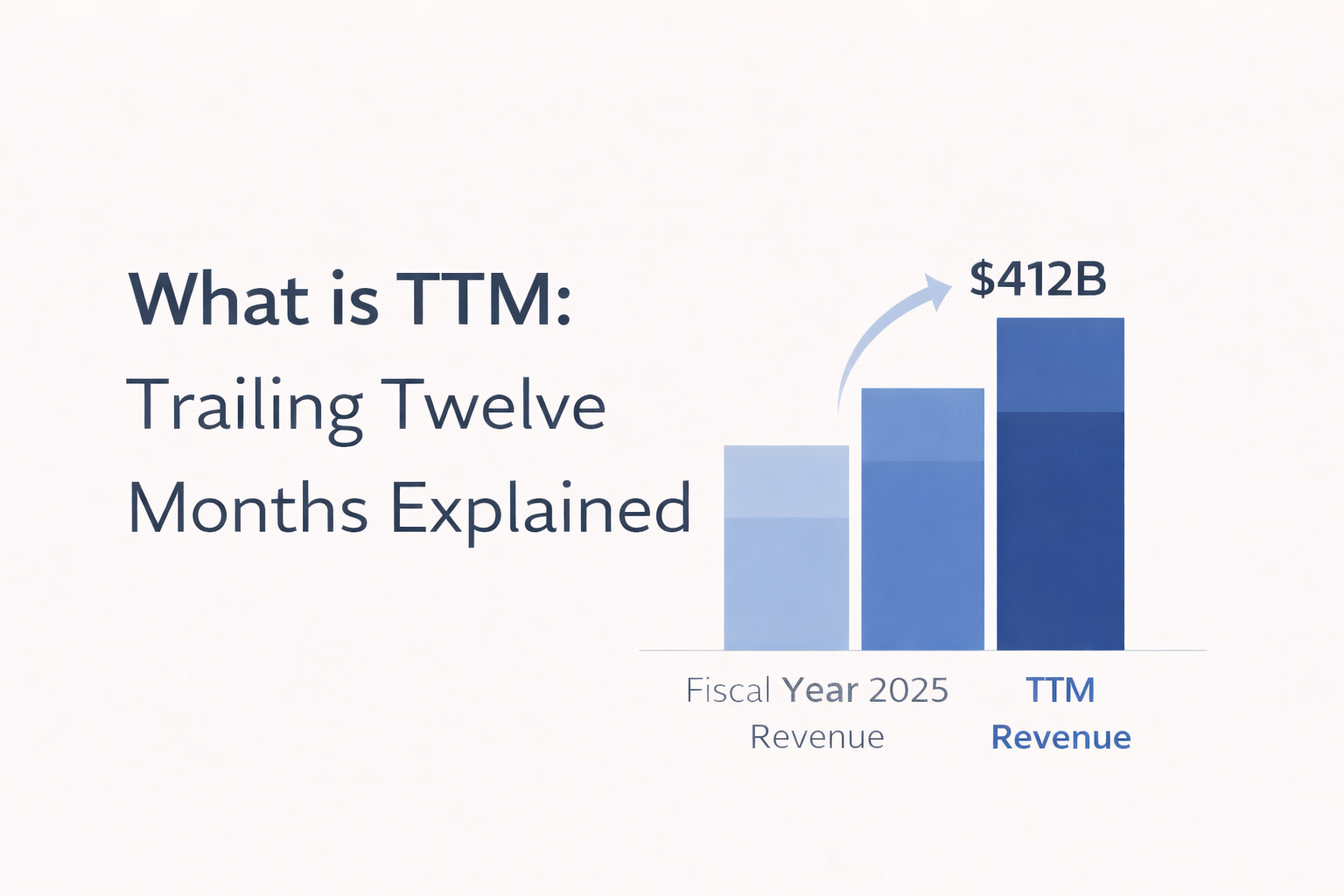
Investing often requires analysing a company’s recent performance to make informed decisions. One key metric investors use is TTM (Trailing Twelve Months), which captures a company’s financial performance over the most recent 12 months. Unlike annual reports that cover a fixed fiscal year, TTM provides a rolling view of performance, giving investors an up-to-date snapshot of revenue, earnings, and other financial metrics.
TTM measures a company’s performance over the most recent 12 months.
It provides a more current snapshot than annual or quarterly reports.
Useful for evaluating revenue, earnings, cash flow, and ratios such as P/E and EPS.
Helps investors identify trends and compare companies on a like-for-like basis.
Often used in stock screening and financial analysis for both growth and value investing.
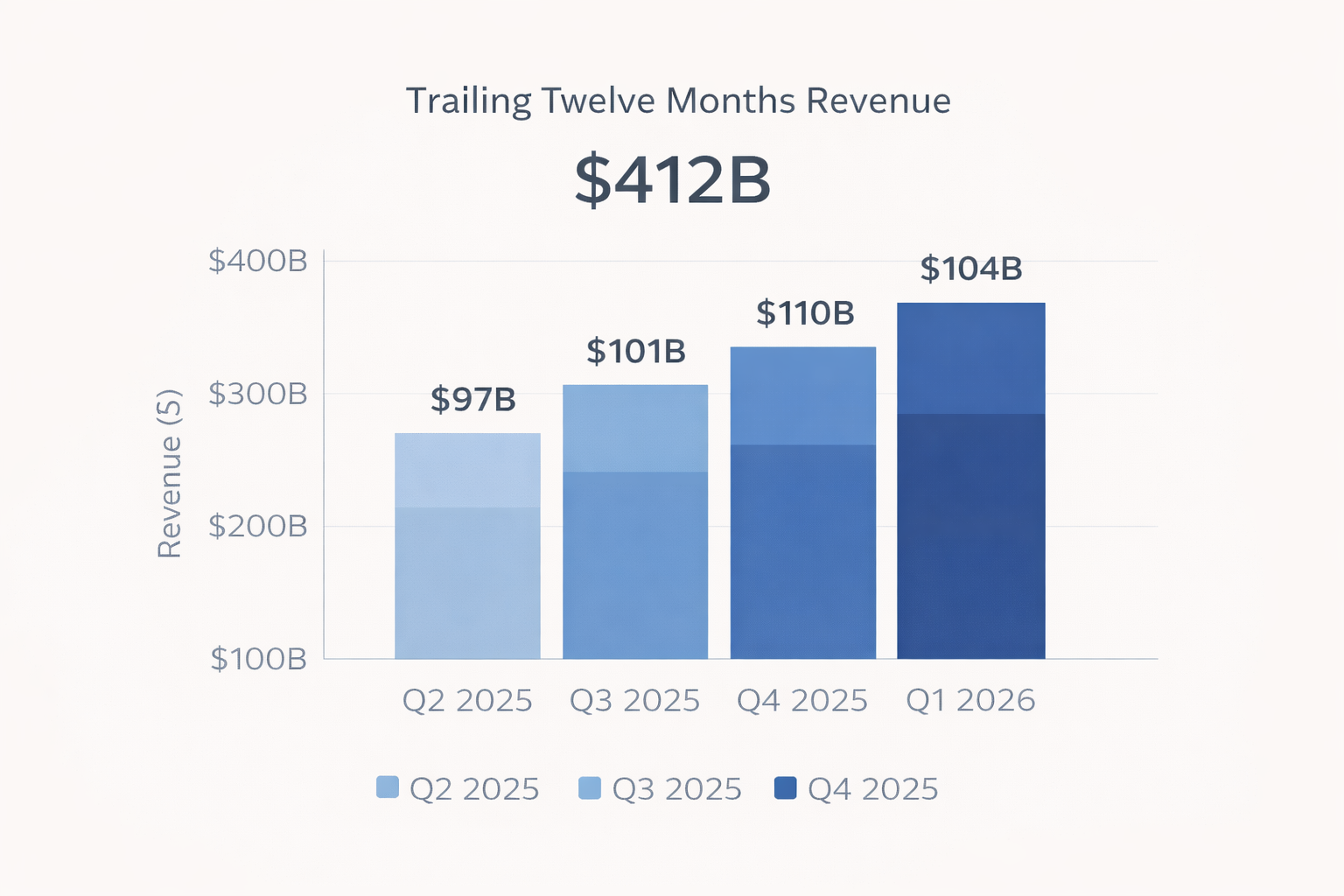
TTM is calculated by summing the financial data of the most recent four quarters. This approach ensures that the metric reflects the most current operating performance, even if a company’s fiscal year ends at a different time than the calendar year.

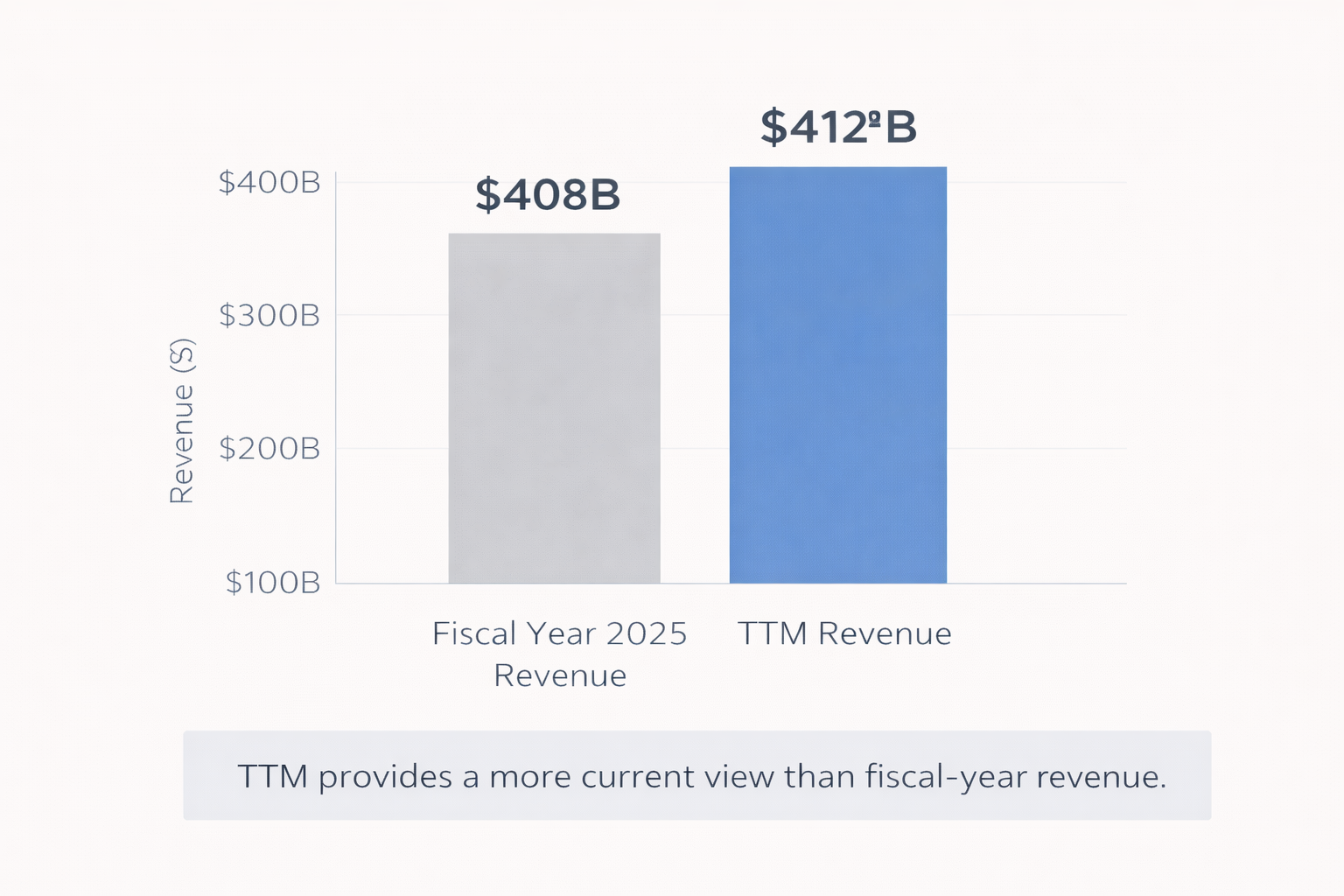
Unlike fiscal-year data, which may be up to a year old, TTM provides a more timely picture, especially useful in volatile sectors like technology or energy.
Example:
Suppose Apple Inc. (AAPL) reports the following quarterly revenues in 2026:
The TTM revenue as of Q1 2026 would be:

This TTM revenue gives investors a clearer picture of Apple’s current revenue trends than looking solely at the fiscal year 2025 report.
TTM is valuable because it smooths seasonal variations and accounts for recent changes in performance. Many companies experience seasonal fluctuations, for instance, retailers often see higher sales during Q4 due to holiday shopping. Using TTM allows investors to compare companies more accurately, regardless of their fiscal year timing.
Valuation Metrics:
TTM earnings per share (EPS) and TTM P/E ratios are widely used to evaluate stock prices.
Example: An investor can compare Microsoft (MSFT) and Alphabet (GOOGL) using TTM EPS to see which stock is more reasonably priced based on recent performance.
Trend Analysis:
Identifying whether revenue or profit is growing or declining over the past year.
Example: Tracking TTM revenue of energy ETFs can highlight how macro trends like oil price fluctuations affect performance.
Investment Screening:
Investors often screen stocks based on TTM metrics such as revenue growth >10% or TTM operating margin >20%.
While TTM is useful, it is not without limitations:
Delayed Reaction to Sudden Changes: If a company experiences a rapid decline, TTM may still show high performance due to prior strong quarters.
Non-GAAP Adjustments: Some companies report adjusted earnings that may inflate TTM metrics.
Currency and Accounting Differences: For multinational companies, TTM may be affected by currency fluctuations and by differences in accounting practices.
Investors should always complement TTM analysis with quarterly and annual reports, as well as forward-looking projections.
No. TTM measures the most recent 12 months of financial performance, which may span parts of two fiscal years. Annual revenue refers to a single fiscal year.
Yes. TTM can be applied to revenue, net income, cash flow, EPS, and other key metrics, allowing for a more current performance analysis.
TTM smooths out seasonal fluctuations and short-term anomalies, providing a clearer long-term trend rather than focusing on a single quarter.
TTM is historical and based on actual reported data, while forward-looking metrics estimate future performance, such as projected earnings or revenue.
TTM includes all reported numbers. Analysts may adjust TTM metrics to exclude one-time gains or losses for a clearer picture of operational performance.
TTM (Trailing Twelve Months) is a powerful tool for investors to assess a company's most recent financial performance. By aggregating the last four quarters of data, TTM provides a rolling, up-to-date view of revenue, earnings, and other key metrics. While it is especially useful for valuation, trend analysis, and stock comparison, investors should use TTM alongside other metrics and forward-looking projections to make well-informed decisions.
Disclaimer: This material is for general information purposes only and is not intended as (and should not be considered to be) financial, investment or other advice on which reliance should be placed. No opinion given in the material constitutes a recommendation by EBC or the author that any particular investment, security, transaction or investment strategy is suitable for any specific person.