Published on: 2023-10-18
Updated on: 2026-05-13
Forex overnight fees can quietly change the result of a trade that looks profitable on the chart. A position held for one extra night may only face a small adjustment, but the cost grows quickly when leverage, large lot sizes and several rollover days are involved.
That is why overnight interest rates in the forex market matter. They are not only a technical line on the trading platform. They show the cost or credit of holding one currency against another after the daily rollover. In 2026, with policy rates still uneven across the US Dollar, euro, pound, yen, and Australian Dollar, forex interest rates remain a live factor for traders holding positions beyond the intraday window.

Forex overnight charges apply when a position remains open after the broker’s rollover time, usually around 5 p.m. New York time.
A forex swap fee reflects the interest rate difference between the two currencies, plus broker pricing and market funding conditions.
Wednesday rollover is usually charged at three times the normal daily amount because spot forex settlement skips the weekend.
A positive swap can credit the account, but price movements can still overwhelm any interest income.
The overnight interest rate calculation depends on position size, rate differential, rollover days, pair direction and account currency.
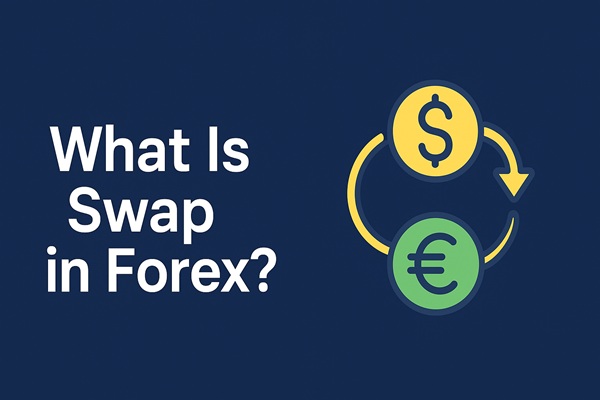
Forex overnight interest rates are the financing adjustment applied when a currency position stays open past the trading day. The same cost is often called rollover, overnight financing, swap or forex interest.
For traders asking what a swap in forex is, the answer is simple: it is the daily adjustment for rolling a position forward instead of settling it. A trader who buys EUR/USD is long euros and short US Dollars. A trader who sells GBP/JPY is short pounds and long yen. Each currency has its own interest rate, so the position creates a financing difference.
Spot forex normally settles two business days after the trade date. Retail traders rarely take physical delivery of currencies. Brokers roll the settlement date forward and apply the related debit or credit to the trading account.
Overnight forex trading creates charges because one side of every currency pair is effectively funded by the other. Buying a higher-yielding currency against a lower-yielding one may create a positive swap. Buying a lower-yielding currency against a higher-yielding one usually creates a negative swap.
For example, the Australian Dollar still carries a higher policy rate than the Japanese yen. A long AUD/JPY position may therefore receive a swap credit, while a short AUD/JPY position may pay a charge. This is the basic logic behind carry trades.
But the real market is not that clean. Broker markups, liquidity-provider pricing, holidays, account type and tom-next swap points all affect the final amount. This is why two brokers may show different swap rates for the same pair.
The overnight rate, meaning in forex, is therefore not just “the central bank rate”. It is the broker-applied financing rate for a specific currency pair, trade direction and position size.
The interest rate forex backdrop remains important in 2026 because major central banks are not moving in sync. The Federal Reserve’s target range is 3.50% to 3.75%, the ECB deposit facility rate is 2.00%, the Bank of England Bank Rate is 3.75%, the Bank of Japan guides the overnight call rate around 0.75%, and the Reserve Bank of Australia cash rate target is 4.35%.
These gaps help explain why swaps remain meaningful. A long USD/JPY trade may have a different financing profile from a long EUR/USD trade, even if both positions are the same size. The rate gap is one input, but the trade direction determines whether it helps or hurts the trader.
A positive swap means the account receives a credit. A negative swap means the account pays a charge. The number shown on the platform may be listed as 'swap long' or 'swap short'.
A long position and a short position in the same pair can have very different costs. In some market conditions, both sides can even be negative. That happens when the rate gap is small, liquidity costs are high, or the broker’s spread and administration costs exceed the available carry.
This is where many beginner traders get confused. A high-interest currency does not automatically create income. The position must be in the right direction, and the broker’s final swap rate must still be positive.
Most major forex pairs apply triple swap on Wednesday. The reason comes from the settlement. Spot forex usually settles two business days after the trade date. A position held after Wednesday's rollover moves the settlement from Friday to Monday, so the weekend is included in a single adjustment.
The usual schedule is:
Monday rollover: 1 day
Tuesday rollover: 1 day
Wednesday rollover: 3 days
Thursday rollover: 1 day
Friday rollover: 1 day
Some pairs may use a different triple-swap day because of holidays or settlement rules. Traders should check the platform specification before holding a position for rollover.
Wednesday matters because it can turn a small daily charge into a visible account cost. A trade with a daily swap of -$7 becomes roughly -$21 when a triple swap applies.
The simplest overnight interest rate calculation uses the position value, the annual funding rate, and the holding days.
Daily swap = position value × annual funding rate × rollover days ÷ 365
Suppose a trader holds one standard lot of EUR/USD long. The position value is about $108,000. If the broker’s annualised long funding rate is -2.50%, the one-day cost is:
$108,000 × -2.50% × 1 ÷ 365 = -$7.40
If the same position is held through Wednesday rollover:
$108,000 × -2.50% × 3 ÷ 365 = -$22.19
Some brokers display swaps in points rather than annualised rates. In that case:
Swap cost = pip value × lots × swap points
If one standard lot of EUR/USD has a pip value of about $10 and the swap is -0.65 points, the daily charge is about -$6.50.
This is how to calculate the overnight interest rate in practical terms for trading. The exact result may differ because brokers convert charges to the account currency and regularly update swap rates.
There is no single rule for how long you can hold a forex position. In most cases, traders can hold a position as long as the account has enough margin and the instrument remains available for trading.
The better question is whether the holding cost still fits the strategy. A day trader may avoid rollover entirely. A swing trader may hold for several nights and include a swap in the expected return. A position trader may hold for weeks, but must treat forex interest as part of total performance.
A negative swap does not automatically make a trade wrong. It simply raises the break-even level. A positive swap does not automatically make a trade attractive. It can reduce holding costs, but it cannot protect against a sharp exchange rate move.
No. Positions closed before the broker’s rollover time usually avoid a swap. Positions held after rollover may receive a credit or pay a charge, depending on the pair, trade direction and broker rate.
A forex swap is the overnight financing adjustment applied when a currency position is rolled forward. It reflects the interest rate difference between the two currencies, plus market and broker costs.
Yes. Both sides can be negative when broker costs, liquidity conditions, or small rate differentials outweigh the currency pair's carry.
They can close before rollover, reduce position size, avoid unnecessary Wednesday triple swap, choose lower-cost pairs or compare broker swap conditions before trading.
No. Positive swap can support returns, but exchange-rate losses can exceed the interest credit. Carry trades still require risk limits, stop placement and macro awareness.
Forex overnight interest rates are a real trading cost, not a background detail. They affect how much a trader pays or receives for holding a position after rollover, and they can change the final result of a trade held for several days.
The best approach is practical swap strategy. Know the swap before entering, understand whether the position pays or receives interest, account for the Wednesday triple swap and include the cost in risk planning. In a market where central bank rates remain far apart, disciplined swap management gives overnight forex trading a clearer edge.
Disclaimer: This material is for general information purposes only and is not intended as (and should not be considered to be) financial, investment or other advice on which reliance should be placed. No opinion given in the material constitutes a recommendation by EBC or the author that any particular investment, security, transaction or investment strategy is suitable for any specific person.