Published on: 2026-07-15
Updated on: 2026-07-15
Nobody on the Street expected a blowout of this size. On a morning when traders were bracing for quiet summer sideways-trading, Goldman Sachs walked in and tore up the script. The investment banking giant posted a second-quarter earnings report so far ahead of analyst consensus that it looked like a typo.
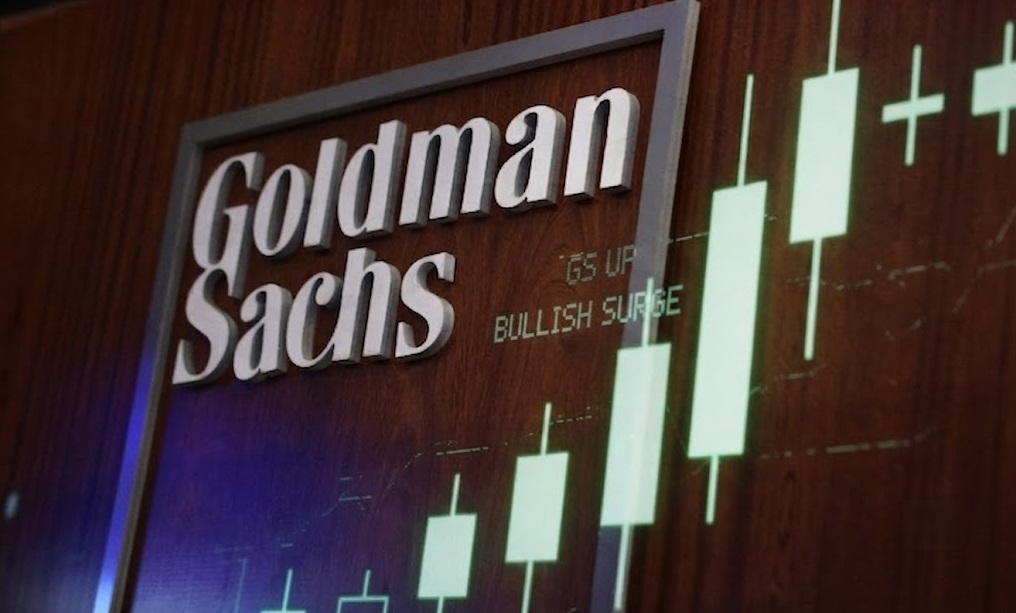
The market's reaction was instant. As trading desks scrambled to reprice their models, Goldman Sachs stock jumps to an all-time high, surging 9% in heavy intraday volume. The stock blew past its previous ceiling to trade near $1,140, leading a massive rally across the entire financial sector. For an institution that has spent the last two years restructuring, dodging negative headlines, and slimming down its consumer banking experiments, this wasn't just a win—it was a definitive statement of dominance.
To put Goldman’s performance in perspective, you have to look at how wildly the market underestimated their earnings power. Wall Street analysts had modeled a healthy but conservative quarter. What they got instead was a firehose of revenue.
The bank posted a net revenue of $20.3 billion for the quarter, up an eye-watering 39% from the same period last year. But the real jaw-dropper was the bottom-line profitability. Diluted earnings per share (EPS) landed at $20.98, completely obliterating the consensus estimate of $14.50. When an investment bank beats expectations by nearly 44%, it sends shockwaves through the market. That sudden realization—that the earnings power of this franchise is vastly higher than modeled—is precisely why Goldman Sachs stock jumps every time the firm shows it can still corner the market on high-margin advisory work.
| Q2 2026 Key Financial Metrics | Reported Results | Wall Street Estimate | Year-over-Year Shift |
| Net Revenue | $20.3 Billion | $16.4 Billion | +23% |
| Earnings Per Share (EPS) | $20.98 | $14.50 | +44% Beat |
| Return on Average Common Equity (ROE) | 23.5% | ~14.5% | +10% pts |
| Equities Desk Revenue | $7.4 Billion | $5.1 Billion | +72% |
A performance like this doesn't happen in a vacuum. It requires a perfect storm of heavy trading volumes, corporate panic over technological transitions, and a massive wave of capital restructuring.
The real engine of this growth wasn't hidden deep in the footnotes of the balance sheet; it was screaming from the equities desk. Goldman’s equities division generated a record-shattering $7.4 billion in revenue, marking a 72% increase year-over-year.
So, what is actually happening behind those closed doors? For the past year, the global tech industry has been engaged in a massive, capital-intensive race to build out artificial intelligence infrastructure. This isn't just about software; it is about real, physical assets. Silicon Valley giants, energy providers, and semiconductor companies are moving hundreds of billions of dollars to build massive data centers, secure energy grids, and buy up hardware.
This level of movement creates incredible volatility and massive capital requirements. When major institutions need to execute massive hedge programs, swap block trades, or restructure their balance sheets to fund these massive tech builds, they call Goldman Sachs. The bank acts as the ultimate tollkeeper for this transition. Every time a pension fund shifts billions into tech-heavy equities or a sovereign wealth fund rebalances its portfolio, Goldman takes a cut. Understanding this structural role helps explain why Goldman Sachs stock jumps when the broader tech market is in a frantic sprint—they profit from the sheer movement of money.
For a long time, the bear case against Wall Street was that high interest rates had permanently frozen the dealmaking market. Corporate boardrooms were simply too terrified of borrowing costs to execute mergers or go public.
That freeze is officially over. Goldman’s investment banking division pulled in $3.4 billion in fees this quarter, a 55% jump from a year ago. It turns out that corporate America has finally accepted the "higher-for-longer" rate reality and decided they can no longer wait on the sidelines.
Equity Underwriting ($985 million, up 130%): A flood of high-profile technology IPOs and secondary offerings broke the multi-year dry spell.
Debt Underwriting ($1.0 billion, up 75%): Corporations flocked to Goldman to refinance and restructure older debt before the macro climate shifts again.
M&A Advisory ($1.4 billion): Consolidation in the energy sector and defense industries kept Goldman's advisory teams working around the clock.
The bank’s deal backlog is now sitting at its highest level in five years. This is crucial because it means this quarter wasn’t a one-off fluke. There is a massive queue of corporate transactions waiting to be executed over the next twelve months. When Goldman Sachs stock jumps on a strong earnings report, long-term investors aren't just looking at the past three months—they are buying into a prolonged dealmaking cycle that is only just beginning to accelerate.
For a few years, CEO David Solomon was under intense pressure. Activist investors and internal partners questioned his focus, especially after the bank's costly pivot into consumer lending (Marcus) ran into regulatory and operational hurdles.
This quarter's results are Solomon's ultimate vindication. By systematically dismantling the consumer banking push and returning the firm's focus entirely to its core strengths—institutional trading and advisory—Solomon has built a incredibly efficient profit engine.
The bank managed to grow its top-line revenue by nearly 40% while actually reducing its total headcount by 2% to 46.200 employees. That represents extraordinary operational leverage. In simple terms, they are making far more money with fewer people.
This lean structure pushed Goldman’s Return on Equity (ROE) to 23.5%. To put that in perspective, most retail and commercial banks struggle to hit 12% in a good year. To sweeten the deal, Goldman announced an 11% hike to its quarterly dividend, bringing it to $5.00 per share, alongside $4 billion in share buybacks. When Goldman Sachs stock jumps in this manner, it is a direct reflection of the market rewarding a management team that stopped chasing distractions and returned to what it does best.
While the mood on Wall Street is celebratory, any seasoned market observer knows that investment banking is a highly cyclical game. The very factors that made this quarter so historic could easily shift.
If inflation prints hot again, or if geopolitical crises trigger a genuine credit freeze, that massive $3.4 billion investment banking pipeline could stall instantly. Furthermore, the massive revenue coming from the AI buildout relies on tech companies continuing to spend lavishly. If those tech companies fail to show a clear path to profitability on their massive infrastructure investments, they may be forced to scale back their spending, which would hit Goldman's advisory and underwriting desks directly.
Traders wanting exposure to Goldman Sachs and the broader financial sector around corporate earnings, Federal Reserve meetings, or key rate decisions can access GS.N as an individual stock CFD through EBC's stock CFD platform. For a broader sector view, the Financial Select SPDR ETF (XLF.P) is also available on EBC's ETF instruments page. Both are leveraged products with elevated volatility risk during major macroeconomic events.
Despite those long-term macro questions, the reality of the present is undeniable. Goldman Sachs has proven that when capital markets are moving fast, nobody is better positioned to capture the flow.
They have successfully trimmed the fat, doubled down on their trading and advisory strengths, and positioned themselves as the central hub for the massive capital transition driving the modern economy. As Goldman Sachs stock jumps to record territory, it is clear that the premium tier of Wall Street is back in business, and Goldman is leading the charge.