Published on: 2026-01-20
A taper tantrum is a market event that disrupts bonds and currencies. This article explains its causes and outlines strategies for managing risk during Federal Reserve tightening cycles.
A taper tantrum occurs when markets abruptly reprice expectations regarding a central bank's withdrawal of liquidity support more quickly than anticipated. This phenomenon extends beyond the bond market, representing a cross-asset shock that can rapidly affect interest rates, equities, credit spreads, currencies, and emerging markets.
The term became prominent during the 2013 taper tantrum, when the Federal Reserve indicated it might begin reducing its quantitative easing program. Treasury yields surged, risk assets weakened, and capital exited vulnerable emerging markets. This episode demonstrated that market disruptions are driven less by policy changes themselves and more by abrupt shifts in expectations.
A taper tantrum is primarily driven by changes in market expectations and central bank communication, rather than by the tapering process itself.
Bond yields typically reprice first, followed by increased volatility in equities, credit, and foreign exchange markets.
Emerging markets are most vulnerable, especially those with significant external deficits, substantial foreign-currency debt, and limited foreign exchange reserves.
Yield increases during taper tantrums often reflect rising term premiums rather than improvements in underlying growth fundamentals.
Clear and consistent Federal Reserve communication matters more than balance sheet size.
Contemporary taper tantrum risks are heightened by quantitative tightening, increased Treasury issuance, and reduced market liquidity.
A taper tantrum refers to a sharp rise in interest rates and market volatility following signals that a central bank will slow bond purchases. Tapering means reducing the pace of quantitative easing, not raising policy rates. Yet markets often react as if financial conditions have tightened immediately, even though QE directly influences long-term yields, risk appetite, and liquidity conditions.
 A typical taper tantrum environment features rising government bond yields, a stronger domestic currency, widening credit spreads, and capital outflows from emerging markets. These developments are significant because quantitative easing not only suppresses yields but also stabilises investor sentiment. When the central bank steps back from its role as the marginal buyer, markets require greater compensation for increased uncertainty.
The 2013 taper tantrum was a classic mismatch between central bank intent and market interpretation.
Following the global financial crisis, the Federal Reserve significantly expanded its balance sheet through quantitative easing. Investors became accustomed to abundant liquidity, reduced volatility, and persistently low yields. As a result, market positioning became increasingly concentrated in long-duration assets.
When discussions of tapering began, markets quickly repriced long-term interest rates. Although the Federal Reserve had not yet tightened policy in the traditional sense, the bond market responded as if a significant regime change was occurring. The US 10-year Treasury yield increased from approximately 2% in May 2013 to nearly 3% by early September, representing an unusually sharp movement for a benchmark rate.
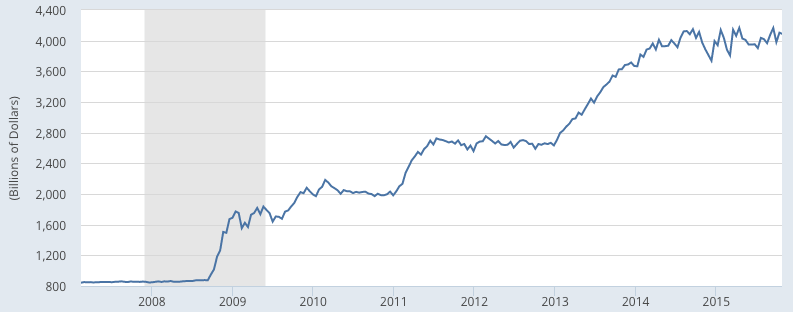
The core issue was not tapering itself, but the speed of repricing once expectations changed.
Long-term yields reflect expected future short-term rates and term premiums. During a taper tantrum, term premium tends to rise sharply as investors demand greater compensation for holding duration without assured central bank demand.
Higher uncertainty around inflation, growth, and bond supply increases volatility and pushes yields higher, even when economic data remain stable. This is why taper tantrums often feel disorderly and disconnected from fundamentals.
Rising yields increase the discount rates applied to future earnings. Long-duration equities, particularly growth and technology stocks, generally underperform because their valuations are more sensitive to interest rate changes. Even if earnings expectations remain stable, valuation multiples tend to contract.
As government yields rise, credit spreads tend to widen and corporate refinancing costs increase. This dynamic is especially challenging when leverage is elevated, or maturity walls are approaching, increasing pressure on high-yield and lower-quality issuers.
A taper tantrum driven by the Federal Reserve often strengthens the US dollar, as higher yields attract global capital into dollar-denominated assets and prompt the unwinding of carry trades. The foreign exchange adjustment typically occurs rapidly.
For emerging markets, the impact is asymmetric. Currency depreciation increases imported inflation, tightens domestic financial conditions, and raises debt-servicing burdens for dollar-linked liabilities. These pressures further reinforce capital outflows and strain local bond markets.
Taper tantrum vulnerability is concentrated where reliance on external liquidity is highest. Markets with large current account deficits, heavy foreign ownership of local bonds, substantial external refinancing needs, limited FX reserves, unstable inflation expectations, or weak central bank credibility tend to underperform.
Countries that depend on short-term foreign funding are especially exposed, as global capital becomes more expensive and selective during periods of market stress.
In 2013, market attention centred on the reduction in the flow of asset purchases. Currently, the focus has shifted toward quantitative tightening, which allows bonds to mature without reinvestment and reduces the central bank's balance sheet more directly.
Easing slows the pace of liquidity provision, while QT reduces the liquidity stock over time. QT also interacts with bank reserve levels, money market conditions, repo dynamics, and Treasury issuance cycles.
As a result, modern taper tantrum risk extends beyond yields and guidance. It increasingly reflects stress in market plumbing, including funding availability, collateral circulation, and dealer balance sheet constraints.
| Asset | Typical Reaction | Primary Driver |
|---|---|---|
| Long-term government bonds | Prices fall, yields rise | Higher term premium |
| Short-term rates | Less volatile | Policy rate path unchanged |
| Growth equities | Underperform | Higher discount rates |
| Value and financials | Mixed | Rate sensitivity varies |
| Credit markets | Spreads widen | Risk aversion |
| US dollar | Strengthens | Yield advantage |
| Gold | Mixed | Real yield dynamics |
| Emerging markets | Underperform | Capital outflows and FX stress |

Asset prices adjusted sharply before any reduction in QE. Forward guidance, not action, triggered the sell-off. Markets price the expected path of policy, not its execution.
Rising yields reflected a higher term premium, not stronger growth or inflation. When central bank demand becomes uncertain, duration is repriced aggressively even if macro data are unchanged.
QE compressed volatility and encouraged crowded duration exposure. Once liquidity support was questioned, positioning was unwound simultaneously. Liquidity is not neutral; it is a primary risk driver.
Economies dependent on external funding faced capital outflows, FX depreciation, and rising yields. Tightening cycles consistently stress countries with weak external balances first.
Ambiguous messaging tightened financial conditions as effectively as a rate hike would have. Since 2013, central banks have treated communication as a policy instrument, not a supplement.
Pre-tantrum calm reflected suppressed risk premiums, not stability. Extended periods of low volatility often signal latent vulnerability, particularly under unconventional policy regimes.
Long-duration assets suffered outsized drawdowns once policy assumptions shifted. Duration risk must be actively managed near monetary regime transitions.
Central banks aim to reduce tantrum risk through clear sequencing, explicit reaction functions, gradual policy transitions, liquidity backstops, and consistent guidance. Markets can accept tightening. What they struggle with is surprise tightening.
Managing taper tantrum risk necessitates active control of duration, leverage, and liquidity exposure. Investors often shorten duration or hedge interest rate risk, avoid crowded carry trades, diversify foreign exchange exposure in emerging markets, and prioritize balance sheet quality.
Rising volatility frequently serves as an early warning signal. Ignoring initial market stress as mere noise can be costly, since taper tantrums are liquidity-driven events that often precede the reassertion of fundamental factors.
A taper tantrum occurs when markets abruptly reprice expectations that central bank asset purchases will slow faster than anticipated. This shift pushes long-term yields higher, raises term premiums, and triggers volatility across bond, equity, currency, and credit markets.
No. A taper tantrum reflects a repricing of long-term yields driven by changing expectations and liquidity conditions, even when policy rates remain unchanged. Rate hike cycles involve direct increases in short-term interest rates.
Emerging markets rely heavily on foreign capital and often carry dollar-linked debt. Rising US yields and a stronger dollar pull capital back to developed markets, weakening EM currencies, raising borrowing costs, and intensifying external financing pressure.
Yes. Any sudden repricing of long-term rates due to shifts in policy expectations can create tantrum-like conditions. However, prolonged quantitative easing increases vulnerability by suppressing term premiums and conditioning markets to expect persistent liquidity support.
Taper tantrums typically last weeks to months. Initial reactions are usually sharp and fast, while broader tightening in financial conditions can persist until central bank communication stabilises and market positioning adjusts to the new liquidity regime.
A taper tantrum is a liquidity shock driven by abrupt shifts in central bank expectations. It begins with rapid repricing of policy support and ends only once yields, risk appetite, and credibility reach a new equilibrium.
The enduring lesson is that in modern markets, expectations are policy. When communication changes suddenly, term premiums rise, volatility spreads, and the most vulnerable assets suffer first. Investors who treat taper tantrums as regime shifts rather than random panics are better positioned to preserve capital and identify opportunity.
Disclaimer: This material is for general information purposes only and is not intended as (and should not be considered to be) financial, investment, or other advice on which reliance should be placed. No opinion given in the material constitutes a recommendation by EBC or the author that any particular investment, security, transaction, or investment strategy is suitable for any specific person.