Published on: 2026-07-07
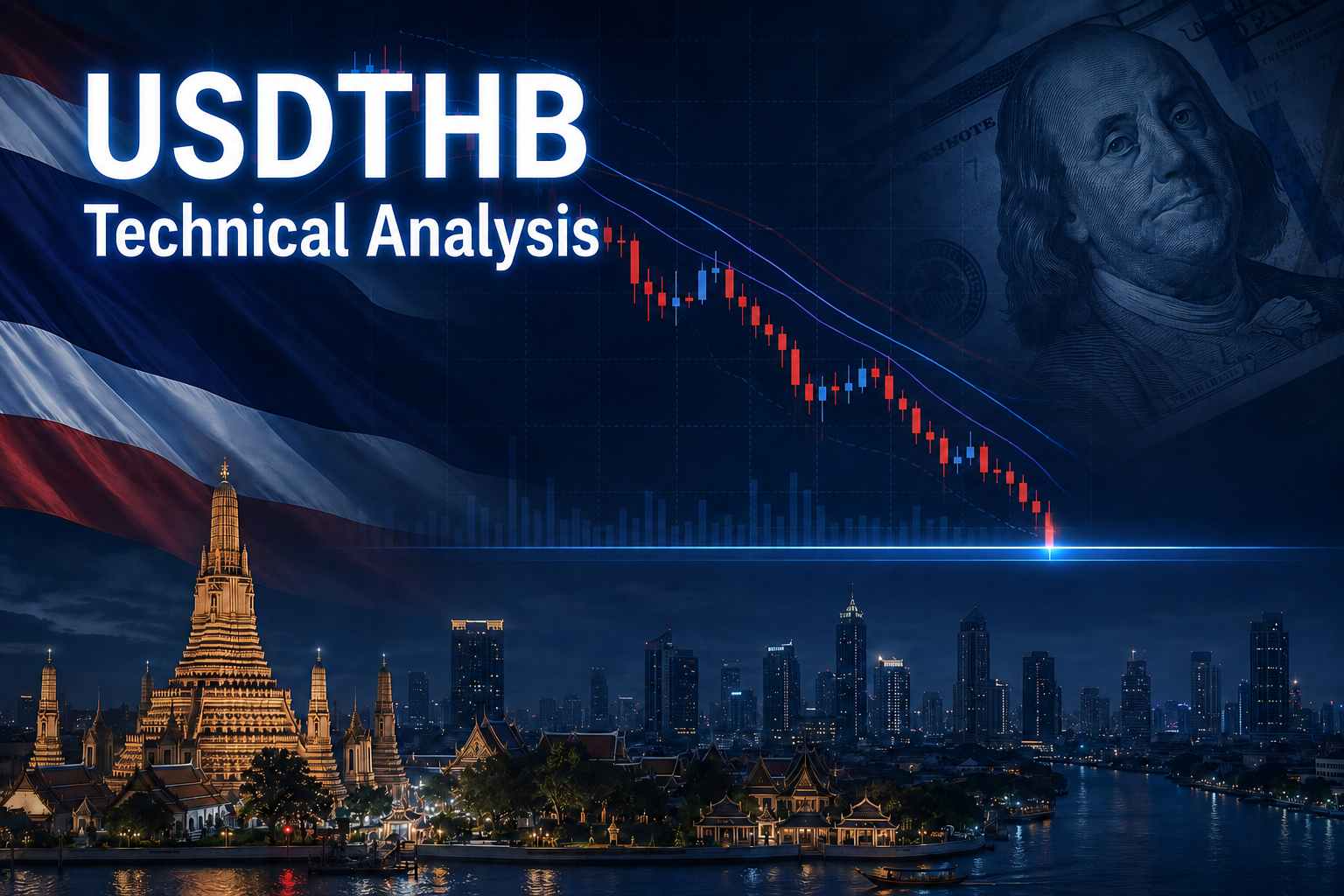
USD/THB is testing the 33 baht area as dollar strength and Thailand’s uneven recovery pull the pair in different directions.
The chart remains constructive while price holds above 33.00, but momentum now depends on whether the pair can push through 33.30. The baht still has support from tourism, exports and a steady Bank of Thailand stance, while the dollar side remains sensitive to Fed expectations and US yields.
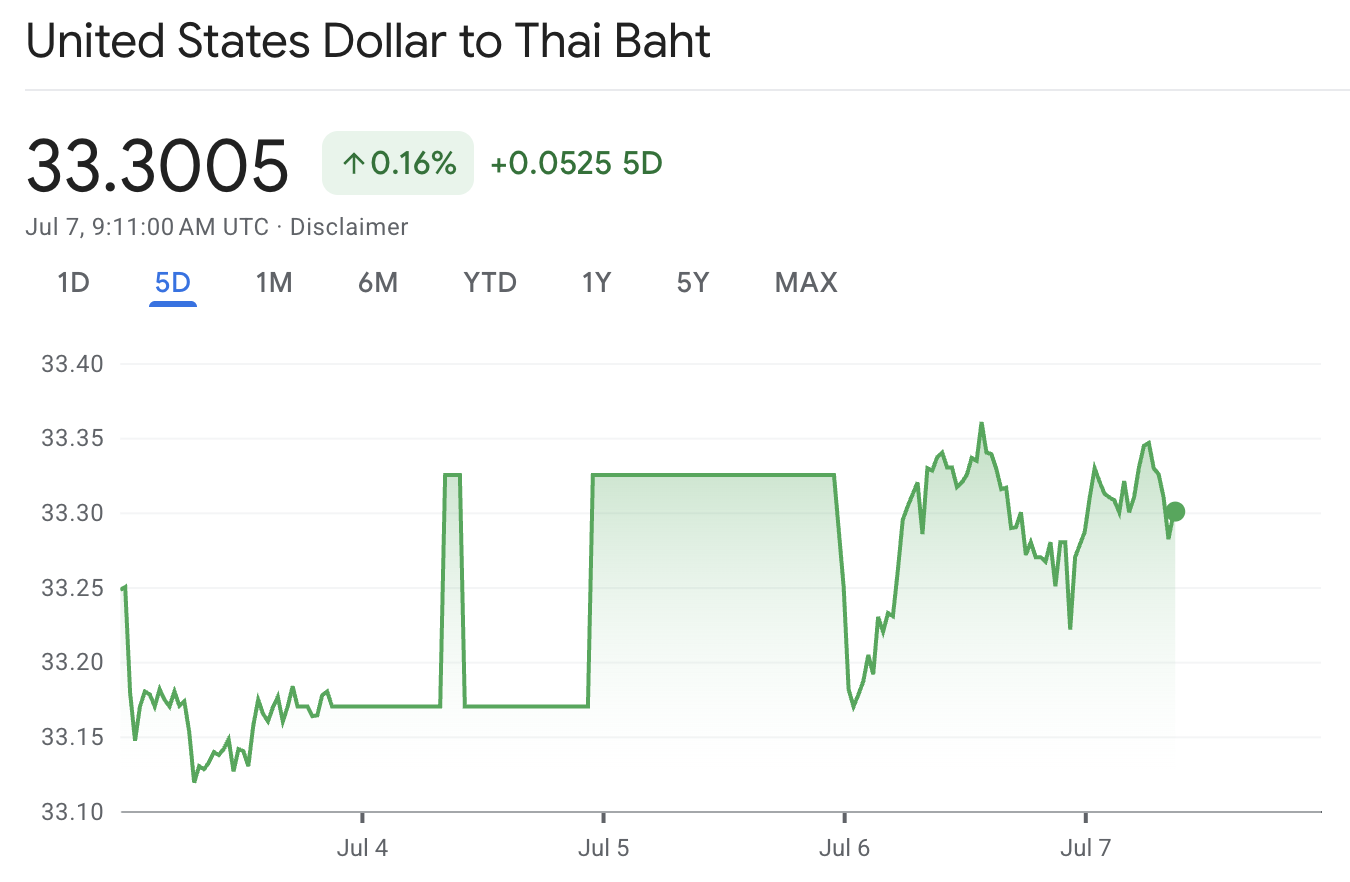
USD/THB is holding near the 33 baht area, making 33.00 the key pivot for short-term direction.
A sustained move above 33.30 could keep dollar-baht upside pressure alive, with 33.60 to 33.80 as the next zone to watch.
The US dollar remains the main driver, especially if Fed expectations, Treasury yields or risk sentiment shift.
Thai exports, tourism inflows and a steady Bank of Thailand stance may help limit baht weakness, but may not be enough without a softer dollar.
USD/THB is trading close to the 33 handle, while the Bank of Thailand’s daily foreign exchange data keeps the pair anchored near the same zone. The setup places 33.00 as the main psychological pivot and 33.30 as the near-term pressure point.
A sustained move above 33.30 would keep dollar-baht upside pressure alive, while failure to hold above 33.00 would suggest baht stability is returning.
| Indicator / Level | Current Role | Quick Read |
|---|---|---|
| 33.00 | Pivot | Above it supports USD/THB; below it favours baht stability. |
| 33.30 | Resistance | A sustained break keeps upside pressure alive. |
| 33.60 to 33.80 | Upside zone | Next area if dollar momentum extends. |
| 32.70 | First support | Downside test if USD momentum fades. |
| 32.30 to 32.50 | Deeper support | Baht recovery zone if selling extends. |
| EMA trend | Trend filter | Price above short and medium EMAs keeps the bias constructive. |
| MACD | Momentum check | Positive momentum supports follow-through; flattening warns of fatigue. |
| RSI | Stretch gauge | Above 50 supports momentum; near 70 suggests the move is stretched. |
The table points to a market that still leans upward, but the setup is not cleanly one-sided. The 33.00 to 33.30 band is the immediate decision area. Above 33.30, traders may watch 33.60 to 33.80. Below 33.00, attention would shift back to 32.70 and whether the baht is regaining control.
USD/THB is partly a Thailand story, but the dollar usually sets the first impulse. When US yields rise, Fed expectations turn more hawkish or risk sentiment weakens, Asian FX pairs often move first through the dollar side.
Recent market coverage shows the dollar holding firm while traders watch Treasury yields, Fed minutes and upcoming inflation data for the next policy signal.
That means traders should not read USD/THB only through Thai data. If DXY rises and Treasury yields stay firm, USD/THB may continue to test resistance even if Thailand’s domestic backdrop is stable. If US data softens and the dollar loses momentum, the pair could fall back below 33.00 without needing a major Thai catalyst.
The Bank of Thailand is not defending a fixed USD/THB level, but its policy stance can shape currency expectations. On June 24, 2026, the Monetary Policy Committee voted unanimously to keep the policy rate at 1.00%. The central bank said growth was stronger than previously assessed, but still low and uneven.
The BOT also projected GDP growth of 2.3% in 2026 and 1.8% in 2027, with headline inflation averaging 2.8% in 2026 before easing to 1.4% in 2027. That mix points to a central bank trying to support recovery while watching inflation, credit quality and currency volatility.
For USD/THB, this can keep the pair from moving too sharply unless the dollar side breaks the range. A steady BOT stance may help limit baht weakness, but it may not be enough to create a clean baht rally if US yields remain supportive for the dollar.
Thailand’s baht often draws support from tourism receipts, exports and regional capital flows.
The BOT said Thailand’s growth has been supported by merchandise exports, private investment linked to the technology and AI cycle, government measures and an improvement in Middle East risks. It also reported May 2026 exports up 9.8% year over year and 14 million year-to-date tourist arrivals as of May.
Tourism matters because visitor spending brings foreign-currency inflows. Exports matter because stronger external demand can improve the current-account backdrop and reduce pressure on the baht. These supports can slow USD/THB upside, even when the dollar is firm.
Even so, the recovery is uneven. The BOT still describes growth as low and uneven, with SMEs and households facing pressure. Tourism and exports may help the baht, but they may not create a strong baht rally unless the dollar also softens.
In a bullish USD/THB scenario, the pair holds above 33.30 and traders begin watching 33.60 to 33.80. This would likely need a firmer dollar, stronger US yields or weaker regional risk sentiment.
In a range scenario, USD/THB holds between 33.00 and 33.30 while traders wait for clearer confirmation from US data, Thai inflation or tourism figures. This would fit a market where neither side has a strong catalyst.
In a baht recovery scenario, USD/THB slips below 33.00 and tests 32.70. That would suggest dollar momentum is fading and local baht supports are starting to carry more weight.
The baht can strengthen when tourism receipts rise, exports improve, foreign inflows increase or the US dollar weakens.
A stronger US dollar, higher US yields, weaker risk sentiment or softer Thai data could push USD/THB higher.
Both matter, but the dollar often drives the first move. Thai tourism, exports and BOT policy then shape how far the baht can resist or recover.
USD/THB near 33 is a balance between dollar strength and baht stability. A sustained move above 33.30 would keep upside pressure alive, while a move back below 33.00 would suggest the baht is regaining control.
Forex trading involves risk, especially around central bank decisions, US data, liquidity shifts and sudden changes in risk sentiment. Traders may want to treat 33.00 as the pivot, 33.30 as the pressure point and 32.70 as the first downside test if dollar momentum fades.