Published on: 2026-04-27
Axis Bank earnings show why bank stocks cannot be judged by loan growth alone. Credit expansion may signal demand, market share and balance-sheet momentum, but it does not guarantee stronger profits unless margins, funding costs, provisions and asset quality move in the same direction.
Axis Bank’s Q4 FY26 results make that point explicit. Advances grew 19% YoY and deposits rose 14% YoY, while net interest income increased 5% YoY to ₹14,457 crore. Yet profit after tax slipped 0.6% YoY to ₹7,071 crore, or 70.71 billion Indian rupees, underscoring the limits of volume-led growth in banking.
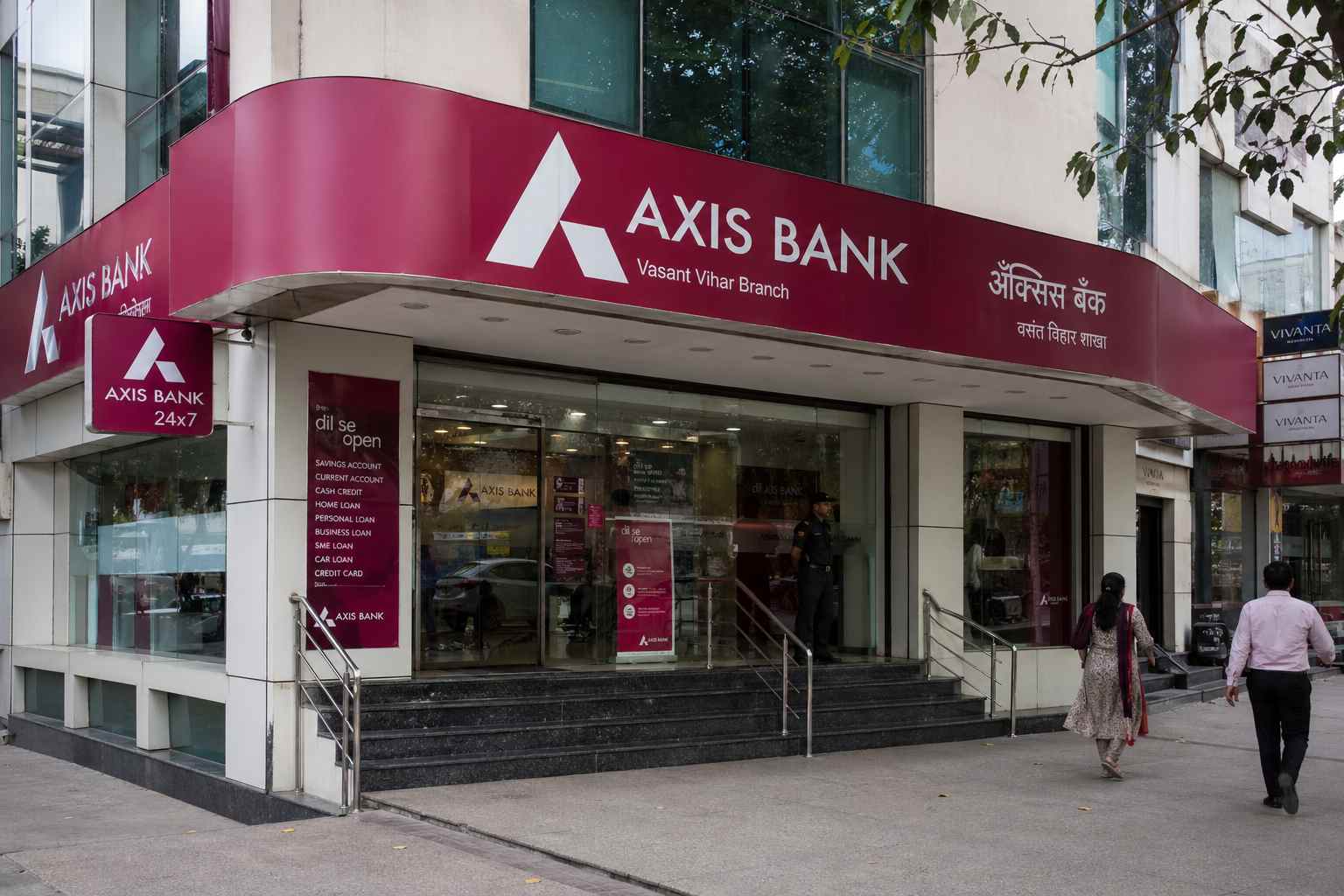
Axis Bank delivered 19% YoY advances growth, but profit after tax declined 0.6% YoY, showing that lending volume alone does not define earnings quality.
Net interest margin stood at 3.62%, placing loan pricing, deposit costs and funding discipline at the centre of the bank’s profitability outlook.
The bank took an additional one-time standard asset provision of ₹2,001 crore, reducing near-term earnings while strengthening prudential buffers.
Asset quality remained stable, with gross NPA at 1.23% and net NPA at 0.37%, shifting the focus from bad-loan stress to earnings conversion.
Return quality matters because bank valuations depend on whether loan growth translates into durable ROA, ROE and capital generation.
Loan growth is often the first number investors notice in bank earnings. It shows whether households and businesses are borrowing, whether credit demand is healthy and whether a lender is gaining market share.
For banks, loans are the main earning asset. A larger loan book should normally increase interest income. That is why strong advances growth often looks positive at first glance.
But loan growth is only the starting point. A bank earns money from the spread between what it charges borrowers and what it pays depositors and other funders. It must also control costs, price credit risk accurately and set aside provisions for potential losses.
Axis Bank illustrates this distinction clearly. Advances expanded sharply, but net interest income rose at a much slower pace. Operating profit fell 7% YoY to ₹10,013 crore, showing that balance-sheet expansion did not fully convert into operating leverage.
A bank can grow quickly by accepting thinner spreads, lending into more competitive segments or taking greater credit risk. That may support near-term balance-sheet expansion, but it can weaken long-term profitability if returns do not compensate for the risk.
Good bank analysis therefore asks three questions:
Is the bank growing loans without sacrificing margin quality?
Is deposit growth strong enough to fund advances efficiently?
Are provisions and asset-quality trends consistent with sustainable lending?
Axis Bank’s Q4 numbers answer those questions with nuance. The bank grew loans and deposits, preserved broadly stable asset quality, and maintained a solid franchise. Yet profit was restrained by provisions, softer operating conversion and income-mix pressure.
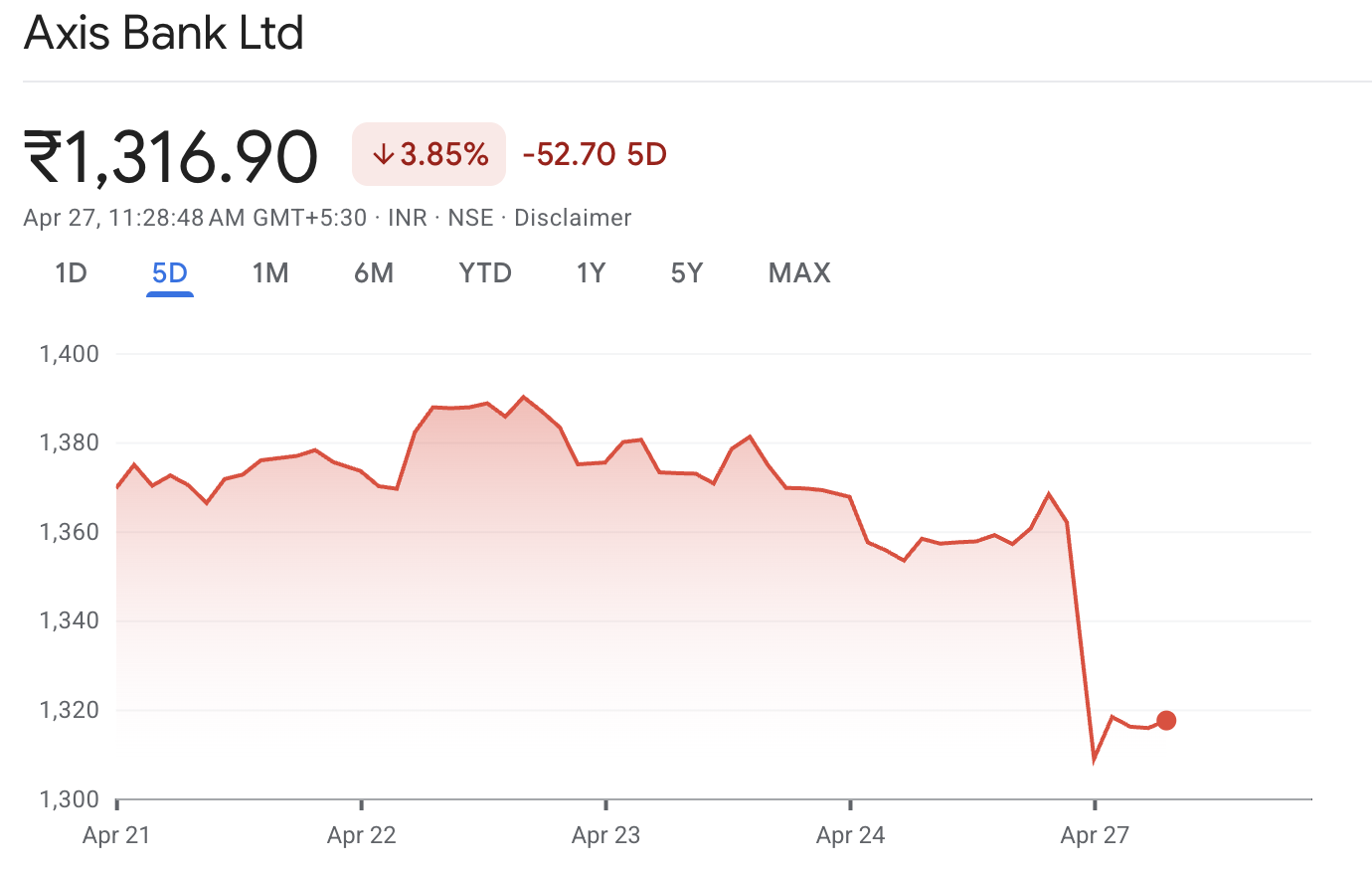
Bank stocks should be analysed through a framework, not a single headline number. The strongest earnings profiles usually combine loan growth, deposit strength, margin resilience, controlled provisions, stable asset quality and healthy return ratios.
| Metric | Axis Bank Q4 FY26 | Why It Matters |
|---|---|---|
| Advances growth | 19% YoY | Shows credit demand and balance-sheet expansion |
| Deposit growth | 14% YoY | Shows funding strength and franchise depth |
| Net interest income | ₹14,457 crore, up 5% YoY | Measures core income from lending |
| Net interest margin | 3.62% | Shows spread earned after funding costs |
| Operating profit | ₹10,013 crore, down 7% YoY | Reveals operating conversion before tax |
| Profit after tax | ₹7,071 crore, down 0.6% YoY | Shows final earnings impact |
| Gross NPA ratio | 1.23% | Measures recognised bad-loan stress |
| Net NPA ratio | 0.37% | Shows residual stress after provisions |
The table shows why Axis Bank’s results were more complex than the headline. The bank delivered strong balance-sheet expansion, but profitability was diluted by higher provisions, weaker other income and softer operating dynamics.
Net interest margin, or NIM, measures how much a bank earns on interest-generating assets after accounting for funding costs. It is one of the clearest indicators of whether lending growth is profitable.
When deposit costs rise or loan yields fall, NIM can compress. That weakens earnings even if the loan book expands. In a competitive banking market, this matters because banks often need to pay more to attract deposits while borrowers seek lower lending rates.
Axis Bank reported Q4 FY26 NIM of 3.62%. The bank also said its cost of funds declined 44 basis points YoY and 1 basis point QoQ, while total deposits continued to grow.
A bank with moderate loan growth and stable margins may create more value than a bank with faster growth and falling spreads. Margins show whether the lender is being paid properly for deploying capital.
For investors, NIM answers a central question: is the bank growing profitably, or is it expanding the balance sheet at thinner economics?
Axis Bank’s 5% YoY growth in net interest income against 19% YoY growth in advances suggests investors should watch margin durability closely in future quarters. Strong loan growth remains positive, but the earnings benefit depends on pricing discipline.
Loan growth receives more attention, but deposit growth is often the stronger long-term signal. Banks that gather stable deposits can fund credit expansion more efficiently. Banks that rely too heavily on wholesale borrowing may face higher costs when liquidity tightens.
Axis Bank’s total deposits grew 14% YoY on a monthly average balance basis. Term deposits rose 16% YoY, while current account and savings account balances also expanded. The bank reported a CASA ratio of 40% on a monthly average balance basis.

Deposit quality affects margin durability. A bank with a strong deposit franchise can protect profitability better than one that depends on expensive or volatile funding.
This is especially important when interest rates are high or deposit competition intensifies. Customers may shift money toward term deposits, fixed-income products or money-market alternatives, forcing banks to pay more for funding.
For bank investors, deposits are not just liabilities. They are the foundation of profitable lending and a key measure of franchise strength.
Provisions are charges banks take to absorb possible future losses. They reduce reported profit, but they can strengthen the balance sheet if risks later materialise.
Axis Bank took an additional one-time standard asset provision of ₹2,001 crore in Q4 FY26. The bank described the provision as prudential and stated that it did not indicate asset-quality concerns or adverse credit developments in its loan or investment portfolio.
This is why lower profit does not necessarily signal deterioration. If provisions rise because asset quality is worsening, investors should be cautious. If they rise because management is building a prudential buffer, the signal is more balanced.
The key questions around provisions are:
Are slippages rising?
Is the provision increase linked to specific stressed sectors?
Is coverage adequate relative to recognised bad loans?
Are provisions recurring or one-off?
Does management describe the move as precautionary or reactive?
In Axis Bank’s case, the additional provision was described as prudential and precautionary, rather than a response to visible deterioration in the loan or investment portfolio.
Asset quality determines whether loan growth is sustainable. Banks can grow quickly by lending aggressively, but weak underwriting often appears later through non-performing assets, higher credit costs and weaker capital generation.
Axis Bank’s asset-quality indicators remained stable. Gross NPA stood at 1.23%, while net NPA stood at 0.37%. Sequentially, gross NPA improved from 1.40%, while net NPA improved from 0.42%.
That stability changes the interpretation of the earnings. The profit decline was not primarily a visible bad-loan story. It reflected provisions, operating dynamics and income mix.
Not all loans carry the same risk and return profile. Retail, SME and corporate loans behave differently across the credit cycle.
Axis Bank reported SME loans up 24% YoY, corporate loans up 38% YoY and retail loans up 8% YoY. Faster growth in corporate and SME lending can support scale and fee opportunities, but it also requires disciplined underwriting because credit sensitivity varies across borrower groups.
For investors, the question is not only how fast a bank is growing. It is where that growth is coming from and whether returns are adequate for the risk taken.
A practical bank-earnings checklist should begin with growth, but it should not stop there.
Investors should review:
Loan growth versus deposit growth
NIM direction and funding costs
Provision trends and credit cost
Gross NPA, net NPA and slippages
Segment-level loan growth
ROA, ROE and capital adequacy
Fee income and non-interest income quality
This framework prevents overreaction to a single number. It also explains why a bank can report strong loan growth and still face valuation pressure after earnings.
Return on assets and return on equity show whether a bank converts scale into shareholder value. A bank may expand loans, deposits and branches, but if returns weaken, valuation support can fade.
This is the central lesson from Axis Bank earnings. Bigger balance sheets do not automatically create better bank stocks. The market rewards banks that grow profitably, protect asset quality and sustain returns through the cycle.
Axis Bank’s profit slipped because higher prudential provisions, weaker other income and a 7% YoY decline in operating profit diluted the benefit of strong advances growth. Loan expansion supported net interest income, but final earnings depended on margins, provisions and operating conversion.
Net interest margin measures the spread between what a bank earns on loans and investments and what it pays for deposits and other funding. A stable or rising NIM usually supports profit growth, while margin pressure can weaken earnings despite loan growth.
Not always. Higher provisions reduce current profit, but they can strengthen the balance sheet if they are precautionary. Investors should check whether provisions reflect visible credit stress or conservative risk management.
Deposits fund loan growth. Stable, low-cost deposits help banks protect margins and reduce dependence on expensive market borrowing. Strong deposit growth is often a sign of franchise quality.
The key indicators are NIM direction, deposit growth, segment-level loan growth, provisions, slippages, gross NPA, net NPA and return ratios. Together, these show whether loan growth is creating durable earnings or simply expanding the balance sheet.
Axis Bank earnings show why loan growth is only the starting point in bank-stock analysis. The bank delivered strong advances and deposit growth, but profit was restrained by provisions, operating profit pressure and income mix.
For investors, the broader lesson is clear. Loan growth signals opportunity, but NIM shows pricing power. Deposits reveal franchise strength. Provisions show risk discipline. Asset quality shows whether growth is sustainable. Return ratios determine whether expansion creates shareholder value.
A strong bank is not simply one that lends more. It is one that lends profitably, funds itself efficiently and protects capital before the credit cycle turns.