Published on: 2026-07-28
Updated on: 2026-07-28
The new US tariff does not cover every Indian export, and it largely replaces a temporary surcharge. The bigger risk lies in the measure’s potential durability and the future textile advantages being prepared for four of India’s Asian competitors.
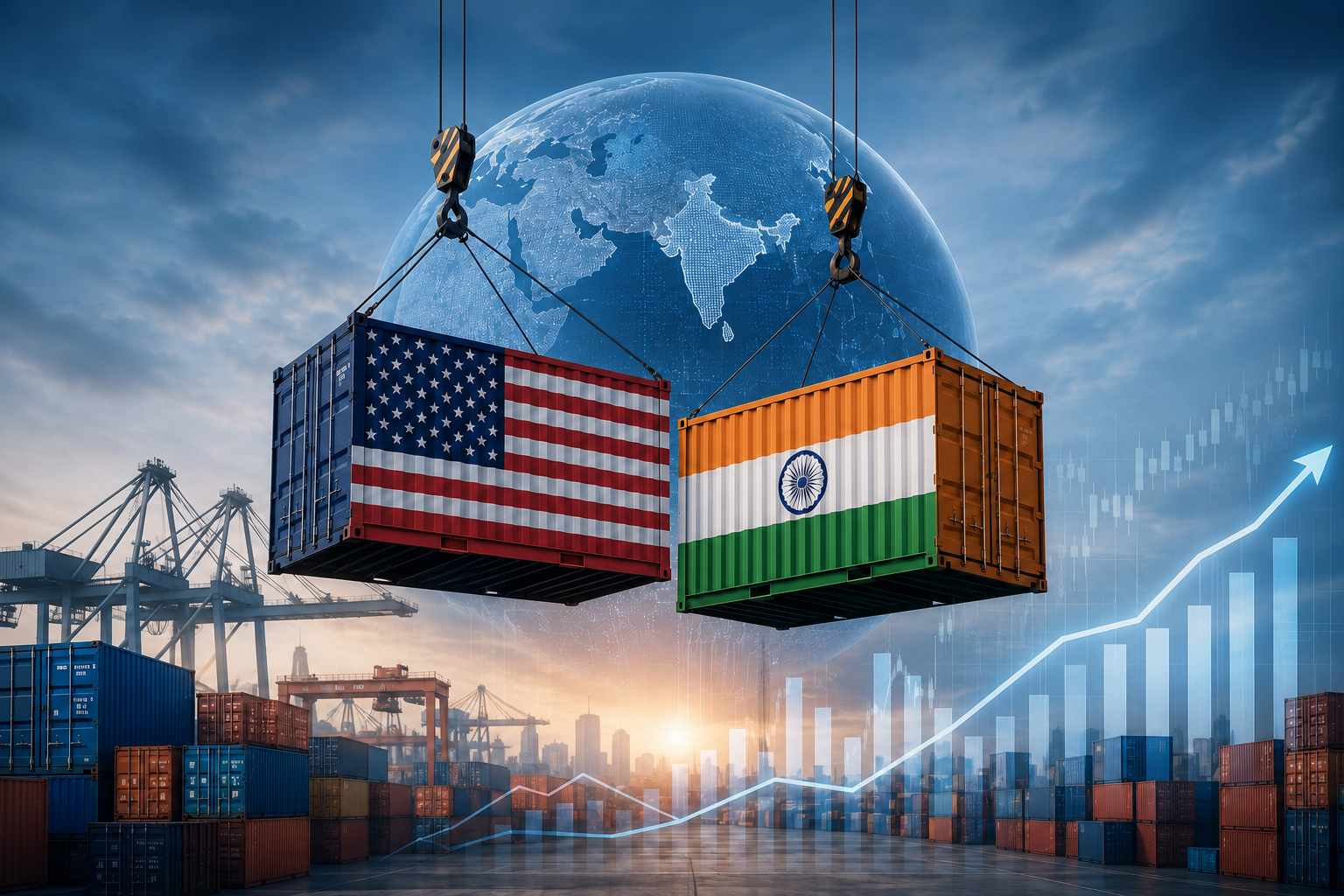
The United States imposed an additional 10% Section 301 tariff on non-exempt Indian goods from 24 July 2026, covering about 55% of exports by the Indian government’s estimate. For many affected products, the measure replaced an expiring 10% Section 122 surcharge, limiting the immediate increase in landed costs.
Textile exporters remain under pressure because four competing Asian economies could eventually receive quota-based relief that India has not secured.
The United States imposed an additional 10% Section 301 tariff on non-exempt Indian goods from 24 July 2026, covering about 55% of India's exports to the US by the Indian government's estimate.
For India, the 10% adds to each product's existing US tariff; the European Union, Taiwan, Japan and South Korea instead see their duties topped up only to a combined ceiling.
For many products, the new duty replaced an expiring 10% Section 122 surcharge, so landed costs did not rise by a fresh 10 percentage points on day one.
The Indian government estimates that about 45% of US exports stay outside the measure, with many generic medicines and smartphones among the protected categories.
Bangladesh, Cambodia, Indonesia and Malaysia could gain textile tariff-rate quotas that would undercut Indian suppliers, but none was in force as of 28 July 2026.
India's clearest route to relief is a bilateral trade agreement with the US, though no tariff concession had been agreed when the measure took effect.
| Economy | New Section 301 treatment | Textile position |
|---|---|---|
| India | Additional 10% on non-exempt goods | No textile TRQ announced |
| Bangladesh | Additional 10% | Future TRQ planned; not active |
| Cambodia | Additional 10% | Future TRQ planned; not active |
| Indonesia | Additional 10% | Future TRQ planned; not active |
| Malaysia | Additional 10% | Future TRQ planned; not active |
| China | Additional 12.5% | No comparable TRQ |
| Vietnam | Additional 12.5% | No comparable TRQ |
| Thailand | Additional 12.5% | No comparable TRQ |
| EU and Taiwan | Top-up to a combined 10% | Product exemptions vary |
| Japan and South Korea | Top-up to a combined 12.5% | Product exemptions vary |
India received more favourable treatment than China, Vietnam and Thailand after adopting a prohibition on imports produced with forced labour.
However, the four planned textile quota arrangements could eventually give Bangladesh, Cambodia, Indonesia and Malaysia an advantage in specified apparel and textile categories.
Until those quotas are established, the relevant goods from those economies remain subject to the applicable 10% tariff.
The new duties apply to covered goods entered for US consumption, or withdrawn from a warehouse for consumption, from 12:01 a.m. Eastern time on 24 July 2026. A narrow transition rule covered qualifying goods already loaded onto a vessel and in transit before the deadline, provided they were entered before 12:01 a.m. on 28 July.
India landed in the 10% tier rather than the 12.5% one after it banned imports made with forced labour, a step it took after USTR published its proposed action in June. Economies that adopted no such prohibition, made no related trade commitment or put only a partial regime in place generally drew the higher 12.5% rate.
The legal change is more significant than the immediate tariff movement suggests. The previous 10% Section 122 surcharge had reached its statutory 150-day limit.
For many Indian goods, the new action preserved a similar surcharge but placed it under Section 301, an authority used to respond to foreign government practices affecting US commerce. That makes the tariff potentially more durable, even where the headline rate did not increase on 24 July. (Ward and Smith, P.A.)
India does not receive the top-up calculation applied to the European Union, Taiwan, Japan and South Korea. For a covered Indian product, the full 10% Section 301 rate is generally added to its existing US tariff.
| Normal US tariff | New India duty | Combined rate |
|---|---|---|
| 0% | 10% | 10% |
| 5% | 10% | 15% |
| 12% | 10% | 22% |
A product that already carries a 6.5% ordinary tariff would therefore face a combined 16.5% rate before any other applicable measures are taken into account. Antidumping duties, countervailing duties, earlier Section 301 measures and customs charges may still be added where relevant. (Ward and Smith, P.A.)
The calculation differs for the five top-up economies. An EU or Taiwanese product with a 6.5% ordinary tariff would attract an additional 3.5% under this action, bringing the two components to 10%. Japan and South Korea receive similar treatment up to a 12.5% threshold. That treatment does not cap every tariff or charge that might apply to the shipment.
India’s government estimates that around 45% of the country’s exports to the US remain outside the action as a result of product-level exclusions or separate tariff treatment. Many generic pharmaceutical products and smartphones are among the principal categories protected, although the precise outcome depends on the product’s Harmonized Tariff Schedule classification. (IDN Financials)
USTR retained exemptions for hundreds of products and added further exclusions after receiving public comments. The lists cover specified pharmaceuticals and pharmaceutical ingredients, vaccines, minerals, semiconductor-manufacturing equipment and other goods for which additional duties could create shortages or broader disruption in the US economy.
Goods already governed by Section 232 actions are carved out of this Section 301 tariff as well, among them steel and aluminium, cars and other products. That is not the same as duty-free: those goods keep paying their own Section 232 duties, and simply avoid taking on this extra Section 301 layer.
The pain concentrates in labour-intensive sectors, whatever the national average shows. Textiles, garments, footwear, leather goods and other manufactures stay fully exposed to the extra 10%, and these are exactly the trades that run on thin margins.
USTR intends to establish tariff-rate quotas for specified textile and apparel products from Bangladesh, Cambodia, Indonesia and Malaysia. The quotas would be linked to each economy’s purchases of US cotton or textile inputs and would allow qualifying shipments within the quota to receive reduced Section 301 treatment.
Those quotas were not in operation as of 28 July. USTR had not established the permitted volumes or announced when the arrangements would begin. Until they are implemented, the relevant goods continue to face those economies’ applicable 10% tariff. (NAM)
The prospective advantage is still commercially important. Once activated, the quotas could allow competing producers to supply selected clothing and textile goods to the US market at lower tariff costs than Indian suppliers. India may therefore avoid the 12.5% tier and still lose relative competitiveness in one of its most employment-intensive export sectors.
The 10% statutory rate does not translate into a 10% rise across India's entire export basket. Exemptions shield several large categories, and the earlier Section 122 surcharge had already lifted costs on many shipments before the new measure arrived.
India’s government estimates that 45% of exports are outside the action. OCBC, using its own analysis of 2025 US import data, estimates an exempt share of 54.4%. The two figures should not be treated as direct substitutes because they may reflect different product classifications, valuation methods and treatment of goods covered by other tariff programmes.
OCBC estimates India’s overall effective rate at 8.2% after exemptions. That figure is an analytical estimate rather than the tariff written into US policy. The statutory treatment remains an additional 10% on covered Indian products.
The difference between the national and sectoral effects is substantial. Exemptions can limit the aggregate export shock while leaving individual textile, footwear or leather manufacturers facing the full additional duty on most of their US-bound sales.
India has said it remains committed to reaching an early bilateral trade agreement with the United States. Discussions include textiles and other sector-specific market-access issues, but no tariff relief under those negotiations had been agreed when the Section 301 measure took effect. (IDN Financials)
India is likely to seek broader product exemptions, concessions for textiles and more predictable access to the US market. Treatment similar to the planned textile quotas would reduce the risk that orders shift towards Bangladesh, Cambodia, Indonesia or Malaysia once those arrangements become operational.
Any agreement would need to distinguish between relief from this Section 301 action and separate measures imposed under other US trade laws. Removing or reducing one tariff does not automatically eliminate Section 232 duties, antidumping measures or product-specific restrictions.
Three developments will determine whether the tariff becomes a manageable cost or a deeper competitive problem for Indian exporters.
The first is whether USTR establishes the textile tariff-rate quotas for Bangladesh, Cambodia, Indonesia and Malaysia. The quota volumes, eligible products and sourcing conditions will determine how large their eventual advantage becomes.
The second is whether the India-US bilateral agreement provides comparable textile access or adds more Indian products to the exemption lists.
The third is USTR’s separate investigation into structural excess capacity and production in manufacturing sectors. India is among the economies covered by that investigation, which could lead to further measures beyond the tariff introduced on 24 July. (United States Trade Representative)