Published on: 2025-12-05
Updated on: 2025-12-05
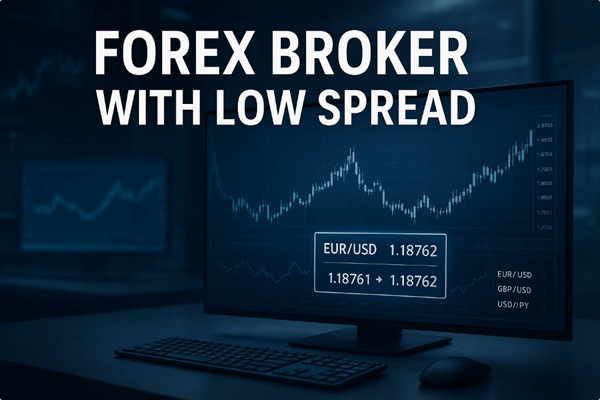
Choosing a forex broker with low spread is one of the simplest yet most powerful decisions a trader can make. Tight spreads reduce trading costs, protect your profit margins, and allow high-precision entries during volatile market conditions.
For active traders, especially scalpers and intraday strategies. Low spreads are not just beneficial; they are essential.
This guide breaks down what makes the best low spread forex broker, how to compare spreads effectively, and why EBC stands out as a top recommendation for traders who demand transparency, stability, and competitive pricing.

Not all brokers with "low spreads" are created equal. Many advertise attractive minimum spreads that rarely appear in real trading conditions. To identify a genuinely low spread forex broker, traders must look beyond the surface.
Here are the characteristics that truly matter:
A great low spread broker maintains stability during:
London open (high volatility)
New York overlap (fastest order flow)
Asian session (thin liquidity)
News events
Some brokers widen spreads dramatically during volatility, negating the benefit of advertised tight pricing. A reliable broker keeps spreads tight most of the day—not only during quiet periods.
Some brokers artificially widen the spread to compensate for zero-commission marketing. A trustworthy broker offers:
Raw spreads
Transparent commissions
No hidden markups
Spreads are a reflection of liquidity. Better liquidity = tighter pricing.
High-end brokers consolidate liquidity from:
Tier-1 banks
Non-bank liquidity providers
Institutional pools
The deeper the pool, the tighter the bid–ask range.
Low spreads mean little if the broker:
Requotes
Slips frequently
Delays execution
Strong regulatory oversight reduces this risk.
A low spread is not simply a "discount" but also a built-in advantage.
Spreads deduct from every trade, visible or not. A small numerical difference creates a large financial impact.
| Daily Trades | Spread (1.2 pips) | Spread (0.2 pips) | Cost Saved |
|---|---|---|---|
| 10 trades/day | 12 pips | 2 pips | 10 pips/day |
| Monthly (20 days) | 240 pips | 40 pips | 200 pips saved |
Traders using strategies that capitalize on small price movements, such as scalping, breakout entries, or reacting to economic news, benefit most from tight spreads. When every fraction of a pip counts, a lower spread can mean the difference between a winning and a losing trade. This is especially critical in fast-moving markets where timing and precision are essential.
Tighter spreads often indicate a broker with strong liquidity and efficient order execution. This means:
Balanced order flow that minimizes gaps between supply and demand
Faster execution, reducing the risk of slippage during volatile periods
Reliable fills even during high-speed trading or major market events
Reduced slippage ensures that trades are executed closer to the intended price, preserving both profit potential and risk control.
Accurate entry and exit points are critical in forex trading. Lower spreads allow traders to:
Enter positions closer to their target price
Exit trades without losing extra pips to the spread
Apply tighter stop-loss or take-profit levels, improving risk-to-reward ratios
In short, trading with low-spread brokers enhances precision, profitability, and overall trading confidence.
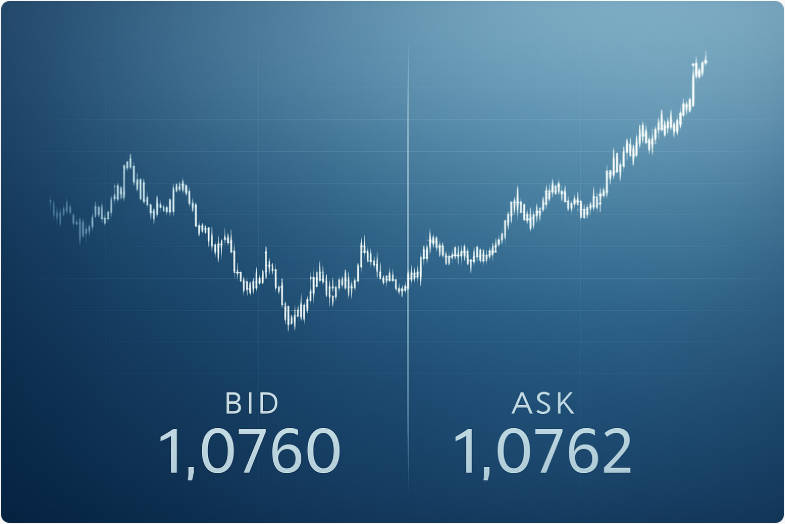
Choosing the right forex broker goes far beyond glancing at a number on their website. Traders must look at minimum spreads, average spreads, account types, and how spreads behave under market volatility to make informed decisions.
Many brokers advertise extremely low minimum spreads, but these numbers are often misleading. Minimum spreads occur only under ideal market conditions and may not reflect the costs most traders actually face.
Average spreads, on the other hand, show what traders can realistically expect during normal market conditions and are far more important for evaluating a broker's pricing.
| Metric | Minimum Spread | Average Spread |
|---|---|---|
| What it is | Lowest possible spread under perfect conditions | Typical real-world spread experienced by traders |
| When it occurs | During extremely calm, low-volume periods | Across all trading sessions and market conditions |
| Reliability | Low | High |
| Important for traders? | Not very | Extremely |
A reputable low-spread broker will publish its average spreads transparently, giving traders a realistic view of trading costs instead of only marketing the best-case scenario.
Account type significantly affects spreads, commissions, and trading style suitability.
ECN / Raw Spread Accounts:
Spread: 0.0–0.2 pips
Commission: Yes, per lot
Best for: Scalpers, high-frequency traders, and those trading high volumes
Why: The raw, direct access to liquidity ensures the tightest spreads, allowing precise entries and exits.
Standard Accounts:
Spread: Marked-up by the broker
Commission: Usually zero
Best for: Beginners or casual traders
Why: The cost is built into the spread rather than as a separate commission, making it simpler but less optimal for frequent trading.
Traders seeking minimal costs almost always prefer ECN or raw spread accounts because even small savings per trade compound into substantial monthly benefits.
Spreads are not static—they widen and narrow depending on market conditions. A trustworthy broker maintains tight, stable spreads even during periods of high volatility, such as:
Non-Farm Payroll (NFP) releases
Consumer Price Index (CPI) announcements
Central bank policy statements or speeches
Many brokers exploit these events by widening spreads excessively, increasing trading costs and creating execution uncertainty. The best brokers, however, implement efficient liquidity routing and risk management systems to keep spreads as narrow as possible, ensuring traders can execute strategies reliably even in fast-moving markets.
When selecting a broker, evaluate more than just the spread figure.
Execution speed determines how close you get to your expected entry price.
Choose brokers regulated by reputable authorities. A safe broker = no price manipulation or spread games.
ECN for ultra-low spreads
Pro for long-term traders
Standard for beginners
More liquidity means fewer requotes and lower spreads.
A strong platform should include:
Real-time depth
One-click trading
Stable chart performance
Low spread brokers open the door to more advanced strategies.
Tight spreads let scalpers extract small but consistent gains.
Low spreads help reduce the cost impact of fast entries and exits.
With quieter movement, low spreads allow tighter stops and cleaner structures.
Algos thrive on stable spreads and predictable environment.

Among global brokers, EBC.com has established a reputation for transparent pricing and institutional-grade execution.
EBC offers some of the lowest spreads on major pairs, backed by deep liquidity routing.
| Forex Pair | EBC.com Typical Spread | Market Average | Advantage |
|---|---|---|---|
| EUR/USD | 0.0–0.2 pips | 0.8–1.2 | Significantly tighter |
| GBP/USD | 0.1–0.3 pips | 1.0–1.6 | Strong advantage |
| USD/JPY | 0.0–0.2 pips | 0.7–1.1 | Major cost savings |
| XAU/USD | 5–12 cents | 18–30 cents | Lower cost volatility |
EBC aggregates liquidity from banks, non-bank LPs, and global venues, ensuring stable spreads even during fast markets.
Execution speeds are optimised for:
News trading
Scalping
Algo execution
High-volume flow
EBC operates under strict regulatory oversight with transparent operational standards. If you are comparing brokers and want a best low spread forex broker, EBC ranks as a strong recommendation.
A forex broker with low spread offers a tight difference between bid and ask prices, lowering trading costs. This benefits traders by preserving profit margins, especially for scalpers and high-frequency strategies that depend on efficient entries and exits.
Low spreads directly reduce transaction costs, allowing traders to keep more of their profits. For active or intraday traders, even small differences in spread can significantly influence long-term results and strategy performance.
Look at average spreads, execution speed, regulation level, liquidity depth, and pricing transparency. Avoid relying solely on minimum spreads, and always examine real-market conditions to identify which broker offers consistent low-cost trading.
EBC.com offers consistently tight spreads, deep liquidity, fast execution, and robust regulation. Traders seeking transparency and cost efficiency often find EBC's trading environment ideal for both scalping strategies and long-term active trading.
Selecting a forex broker with low spread is one of the highest-impact decisions a trader can make. Lower costs improve your long-term profitability, while tight pricing and stable execution allow for more reliable strategies.
If you're looking for a broker that delivers consistent low spreads, strong regulation, and institutional-level execution, EBC remains one of the most dependable and transparent choices available.
A disciplined trading plan plus a high-quality low spread broker is a powerful combination that helps traders maximise every opportunity.
Disclaimer: This material is for general information purposes only and is not intended as (and should not be considered to be) financial, investment or other advice on which reliance should be placed. No opinion given in the material constitutes a recommendation by EBC or the author that any particular investment, security, transaction or investment strategy is suitable for any specific person.