Published on: 2026-03-05
Updated on: 2026-03-05
As markets remain fixated on Strait of Hormuz risk,
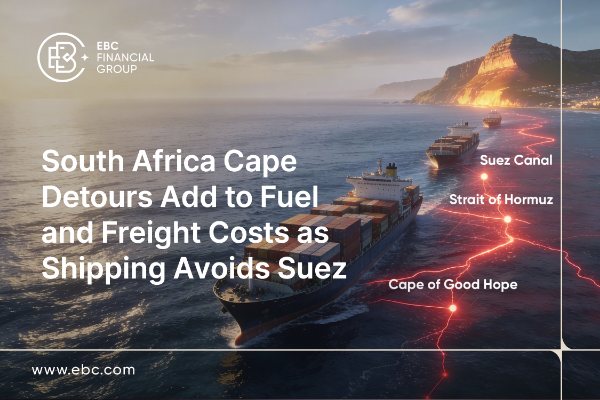
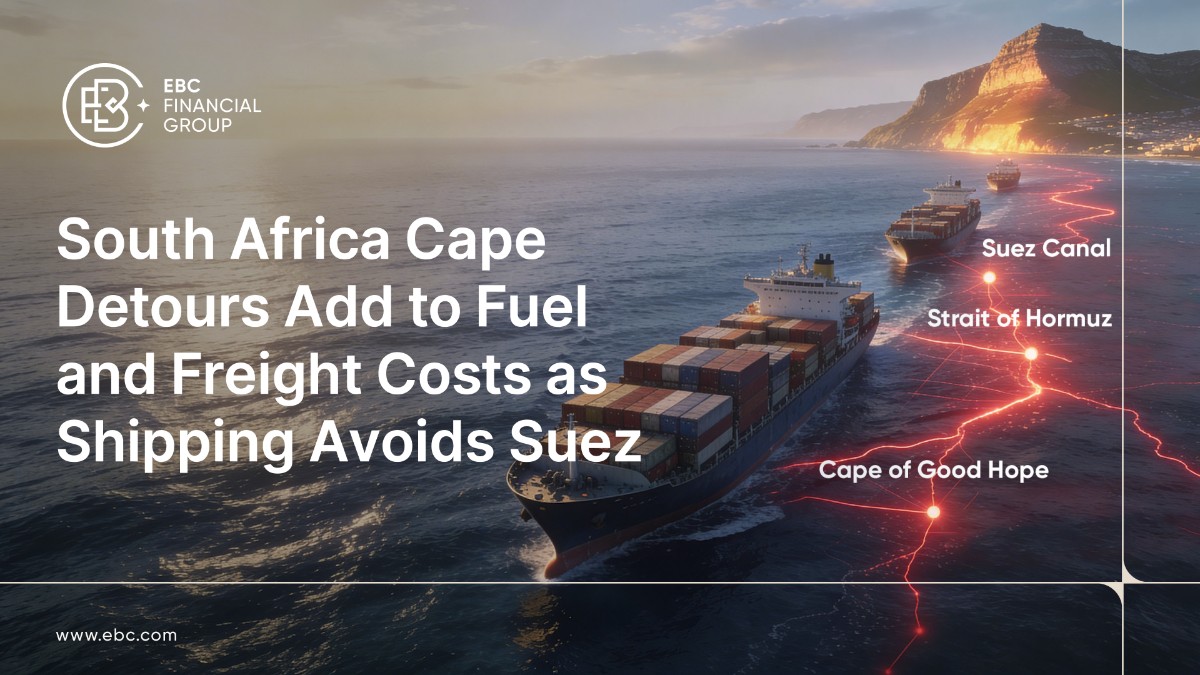
shipping is quietly repricing a second choke point: the practical loss of the
Suez corridor and the return of Cape of Good Hope detours. Major carriers have
again moved services away from Trans-Suez routings, mechanically extending
transit times and adding operating costs that tend to show up later as higher
delivered prices, not just higher oil prints.
"Energy shocks do not land only through the barrel price," said David Barrett, Chief Executive Officer, EBC Financial Group (UK) Ltd. "When routes stretch and insurance resets, the inflation impulse becomes a logistics story, and the market reflex is still the same: a firmer dollar, less patience for Emerging Markets (EM) risk, and tighter financial conditions than the growth backdrop can comfortably absorb."
EBC observes that the current episode looks less like a single-headline oil spike and more like a supply-chain taxation: longer sailing distances, higher fuel burn, tighter vessel availability, and rising war-risk premia. United Nations Trade and Development (UNCTAD) has previously highlighted that rerouting around Africa raises operational costs and pressures supply, with the potential to lift consumer prices if elevated shipping costs persist. The macro translation matters because disruptions at the Suez gateway have historically distorted trade flows and raised transportation costs when cargo is diverted via the Cape route.
For risk assets, EBC sees the "Suez hangover" as a volatility amplifier rather than a simple directional call on crude. Brent can hold a higher risk premium even when demand signals soften, because the delivered cost of energy and goods is being repriced through time and route uncertainty. In FX, that mix often expresses as USD support and EM discounting during volatility spikes, with ZAR typically vulnerable when global funding conditions tighten and import costs rise through freight and fuel-linked channels.
South Africa sits uncomfortably close to the mechanics of the detour. UNCTAD has noted that previous Cape rerouting episodes contributed to increased congestion in South African ports, adding friction just as global schedules become less reliable. Against that backdrop, the South African Reserve Bank's (SARB) repo rate remains at 6.75% (latest published level 27 February 2026), keeping markets sensitive to any logistics-led inflation impulse that complicates the disinflation narrative.
EBC expects near-term repricing to hinge on whether shipping disruptions remain a routing problem or become a sustained cost problem. The next SARB policy signal arrives with the Monetary Policy Committee (MPC) announcement on 26 March 2026. On the commodities side, scheduled market balance updates over 10–12 March 2026 from the U.S. Energy Information Administration (EIA), Organization of the Petroleum Exporting Countries (OPEC) and the IEA are likely to shape how much of Brent's move is treated as transient risk premium versus a broader regime shift.
EBC flags an asymmetric risk: even if geopolitical pressure eases, the inflation impulse can linger if carriers keep contingency routings, insurers hold pricing power, and schedules remain stretched. The market tends to underestimate this "plumbing" effect because it is slow-moving, then overreact once it appears in realised prices and central-bank language.
"The market is pricing Hormuz risk in real time, but the Suez hangover works with a lag," Barrett added. "For South Africa, that lag matters: detours can turn into delivered inflation, and delivered inflation can turn into policy restraint and a tougher environment for EM beta."
EBC highlights UK Brent Crude Spot (XBRUSD) as the clearest single instrument for tracking how energy risk premia and logistics uncertainty are being priced across asset classes, available via EBC's Commodities offering.
Disclaimer: This material is for information only and does not constitute a recommendation or advice from EBC Financial Group and all its entities ("EBC"). Trading Forex and Contracts for Difference (CFDs) on margin carries a high level of risk and may not be suitable for all investors. Losses can exceed your deposits. Before trading, you should carefully consider your trading objectives, level of experience, and risk appetite, and consult an independent financial advisor if necessary. Statistics or past investment performance are not a guarantee of future performance. EBC is not liable for any damages arising from reliance on this information.