Published on: 2026-04-22
Updated on: 2026-04-22
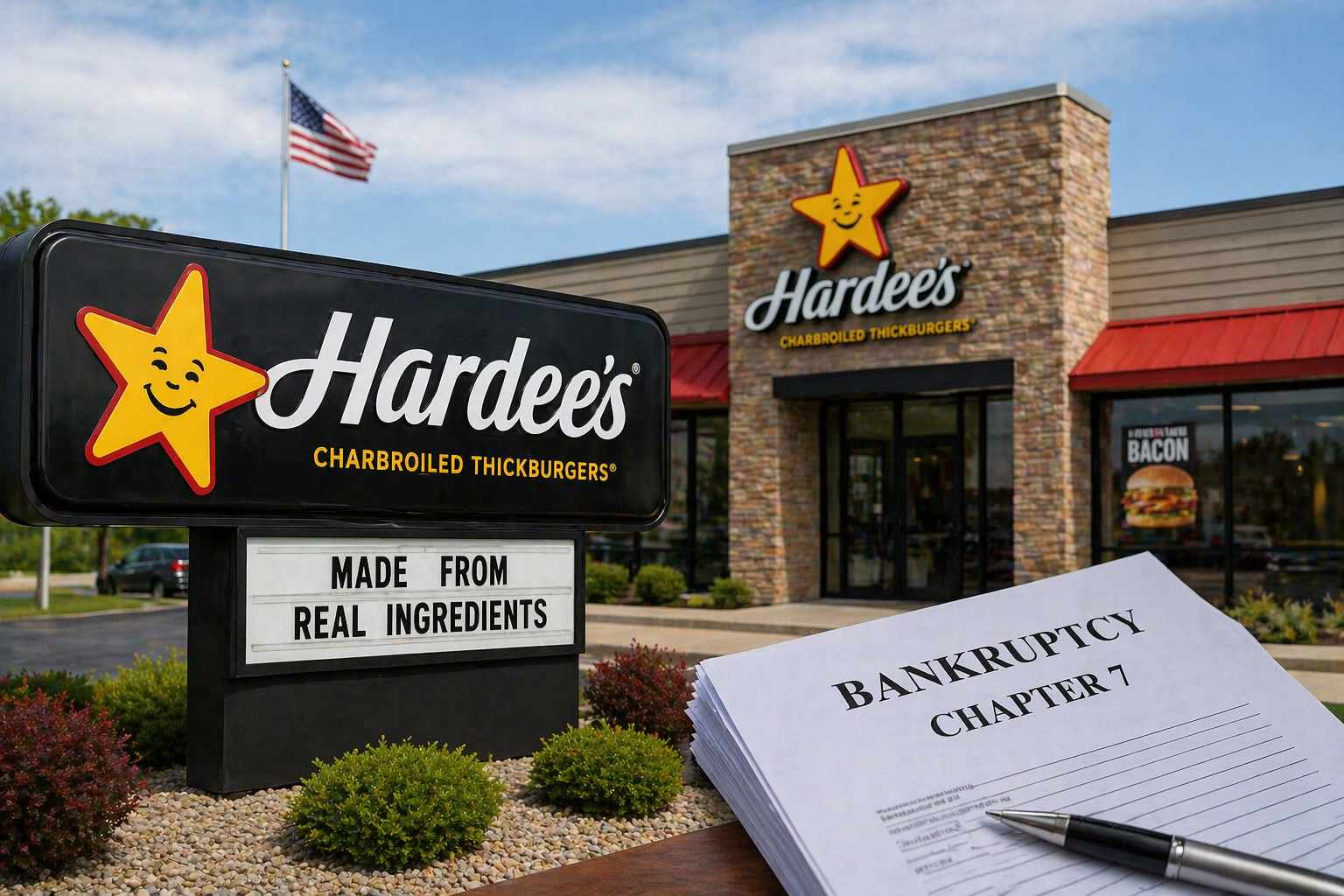
When 77 Hardee’s locations went dark after ARC Burger’s breakdown, the headline looked larger than the underlying event. The more useful financial lesson is not that a well-known chain suddenly failed, but that a franchise system can suffer a severe operating collapse at the store level while the brand and franchisor continue under separate legal and financial structures. Reports on April 21 said ARC Burger, a major Hardee’s franchisee, had filed for Chapter 7 liquidation after the earlier shutdown of its stores.
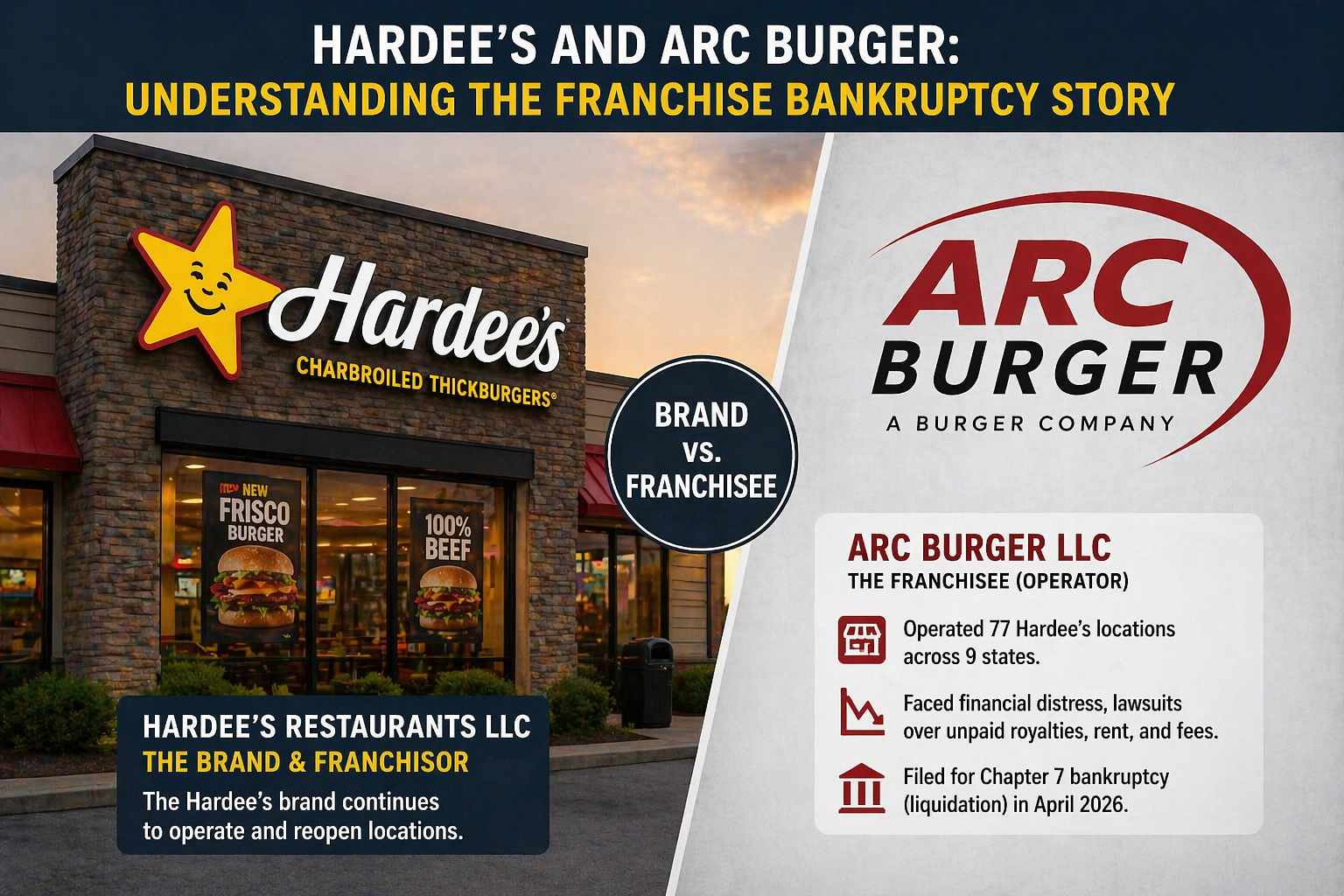
That distinction is the real point of the story. In franchise-heavy sectors such as restaurants and retail, bankruptcy analysis begins with the entity that filed, the contracts it carried, and the obligations it could no longer meet.
Hardee’s had already sued ARC Burger in late 2025 over more than $6.5 million in alleged unpaid royalties, rent, and marketing-related obligations, showing that the financial pressure had been building inside the operator well before the liquidation reports surfaced.
A franchise brand, the franchisor, the franchisee, and the store operator are often different legal and financial entities.
Chapter 7 generally points to liquidation, while Chapter 11 is usually designed to preserve operations through restructuring.
Franchise distress often begins in the fee structure, where royalties, advertising contributions, rent, taxes, technology fees, and training costs sit on top of already thin restaurant margins.
Store closures do not automatically mean the brand has failed. Some former ARC Burger locations were reportedly reopened as corporate-owned Hardee’s restaurants.
A franchise system looks unified from the outside, yet its economics are often spread across several entities. The franchisor owns the brand and the operating model. The franchisee licenses the name and runs a group of locations. Individual stores may be corporate-owned, franchised, leased through affiliates, or tied to separate real-estate arrangements. Once financial stress appears, those layers stop moving together.
That is why a familiar sign on a storefront can create a misleading impression of stability or collapse. If a franchisee falls behind on royalties, rent, or vendor payments, the failing balance sheet may belong to the local or regional operator rather than to the national brand.
The Hardee’s story is useful precisely because the pressure appears to have been concentrated in ARC Burger’s operating structure rather than in the Hardee’s system as a whole.
The public record already pointed in that direction before the reported Chapter 7 filing. Hardee’s Restaurants LLC sued ARC Burger in November 2025, and industry coverage described the dispute as one involving unpaid royalties, advertising fund contributions, rent, taxes, technology fees, and training fees.
ARC Burger was described as a 77-unit franchisee that had acquired roughly 80 Hardee’s locations out of Summit Restaurant Holdings’ bankruptcy in 2023.
By April 21, reporting said ARC Burger had filed for Chapter 7 liquidation after closing all 77 stores and carrying more than $29 million in debt. Even if the debt figure is treated cautiously until the bankruptcy record is more broadly available through court databases, the larger lesson is already clear: the reported filing concerns the franchise operator, not Hardee’s as a national brand.
That is the part many bankruptcy headlines blur. Some former ARC Burger locations in at least three states were reportedly described in job listings as corporate-owned Hardee’s restaurants, and Hardee’s confirmed that some reopenings had taken place.
This is not unusual in franchise distress. A franchisor can reclaim stores, reopen selected units, place them with a new operator, or leave weaker locations closed, depending on the economics of each site.
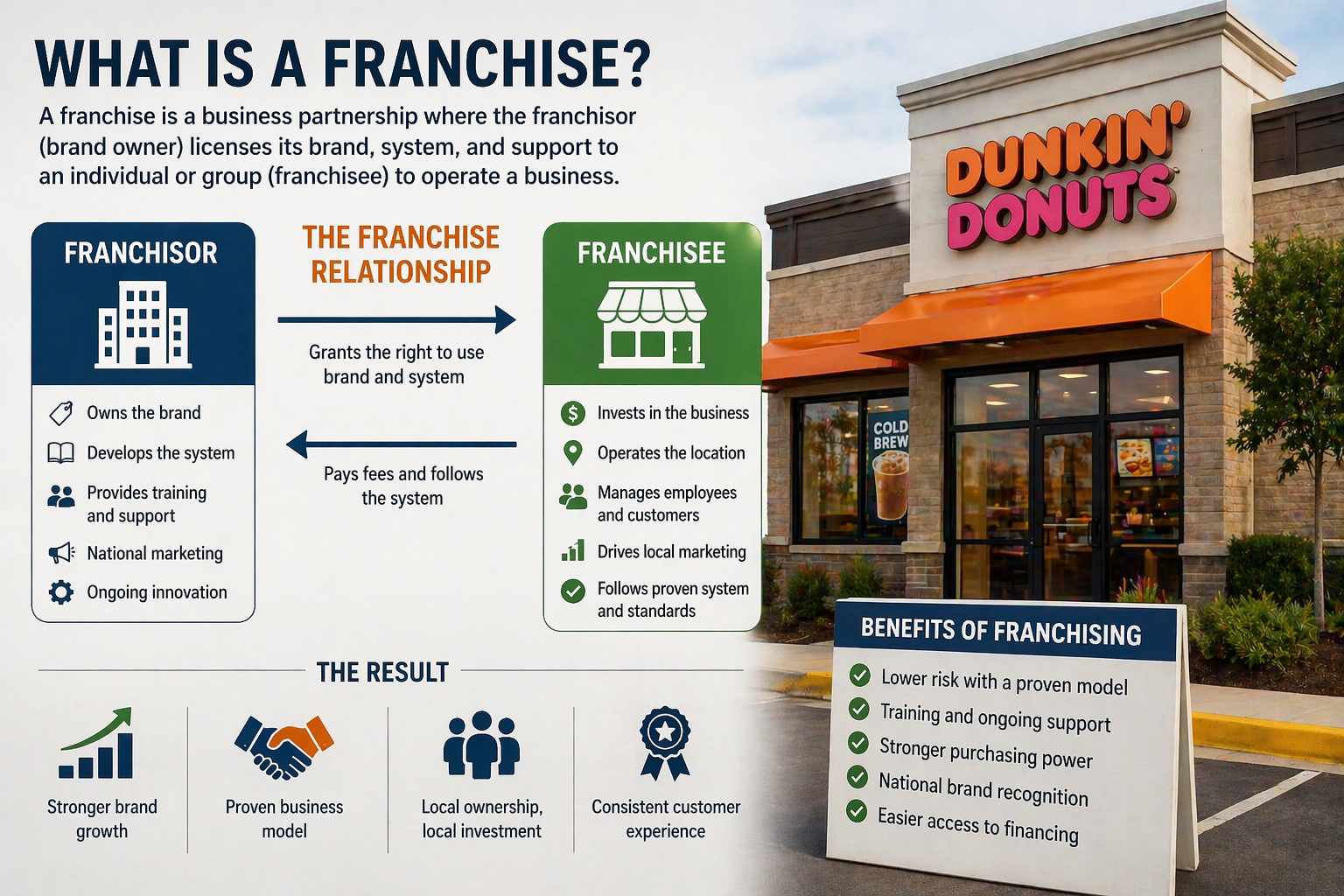
The outcome can look contradictory at first glance. Stores may close, employees may be displaced, and a franchisee may liquidate, while the brand continues operating and even re-enters some of the same markets through another ownership structure. Financially, that is not a contradiction. It is often how franchise systems absorb distress.
Chapter 7 is a liquidation process in which a trustee gathers and sells assets and distributes the proceeds to creditors. Chapter 11, by contrast, is commonly associated with reorganization, where the debtor often remains in possession while continuing to operate and negotiating a plan to restructure obligations.
That legal distinction has direct financial value. A Chapter 7 filing usually signals that the operating entity has run out of viable restructuring room and is moving toward asset sale and wind-down. A Chapter 11 filing may indicate distress, but it can also signal an attempt to preserve enterprise value, renegotiate debt, reject leases, or transfer ownership without shutting the business outright. The same bankruptcy headline can therefore describe very different outcomes.
The Hardee’s dispute is especially instructive because it highlights where franchise models become fragile. A restaurant operator is not only covering food, labor, and utilities. It may also owe recurring royalties, mandatory advertising contributions, rent or sublease payments, technology fees, taxes, and training costs. Those contractual outflows do not disappear when traffic softens or margins compress.
Once that fee stack collides with weak store-level performance, liquidity can unravel quickly. Franchise bankruptcy stories are often less about brand popularity than about capital structure, lease burdens, and the fixed obligations embedded in the franchise agreement.
ARC Burger’s conflict with Hardee’s appears to fit that pattern closely, which makes the case useful as a broader framework for analyzing restaurant distress.
QVC Group’s April 2026 filing offers a useful contrast because the company said it entered Chapter 11 with more than $1 billion in cash on hand and a plan to reduce debt from about $6.6 billion to $1.3 billion. That is not a classic case of an operator simply running out of cash. It is a court-supervised capital-structure reset designed to preserve operations while compressing leverage.
Hooters used Chapter 11 differently. Its restructuring announcement said restaurants would remain open, franchise operations would continue, and the company was moving toward a pure franchise business model. In that case, bankruptcy was less about liquidation than about redrawing the ownership map of the business.
Forever 21 offers a third lesson. F21 OpCo, the U.S. operating company, filed Chapter 11 while Authentic Brands Group continued to own the intellectual property and retained the ability to license the brand to other operators. That structure illustrates a recurring theme in distress analysis: the operating company can fail while the brand remains commercially usable.
When a bankruptcy headline lands in restaurant or retail, the most useful questions are structural:
Who exactly filed? Is it the brand owner, the franchisor, or an operating franchisee? ARC Burger’s reported failure did not mean Hardee’s itself filed for bankruptcy.
Which chapter? Chapter 7 means the filer is winding down. Chapter 11 means the filer is trying to survive with a restructured balance sheet.
What is the stated cause? A debt problem, an operating problem, and an industry-wide decline each point to different risks.
Who are the creditors? In ARC Burger’s case, the franchisor itself was a creditor, a detail that shows how deeply the franchise relationship had broken down before the reported filing.
Those questions usually reveal more than the headline itself. They also help investors separate the public image of a brand from the legal and financial reality of the operator underneath it.
What the Hardee’s bankruptcy story really tells us is not that a famous burger chain suddenly collapsed. It shows how easily a franchisee failure can be mistaken for a brand failure when the legal and financial structure is left out of the headline.
ARC Burger’s reported liquidation, Hardee’s earlier lawsuit over fees and rent, and the reopening of some former ARC locations under corporate ownership all point to the same conclusion: in franchise distress, the real story usually lies with the operator, the contracts, and the balance sheet beneath the sign.