Published on: 2026-08-11
Updated on: 2026-08-11
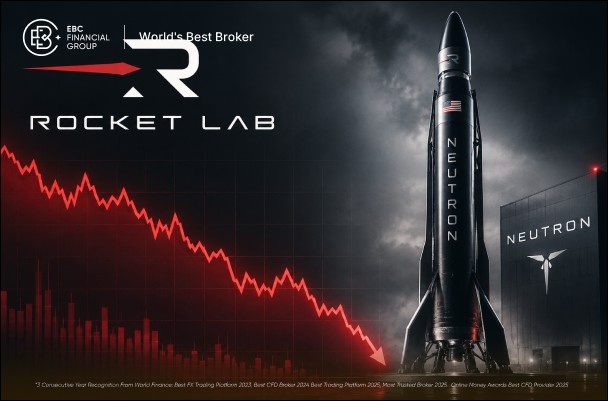
RKLB fell 3.4% during Monday’s regular session and extended the decline after earnings, taking the drop from Friday’s close to roughly 10% at one point in after-hours trading. The weakness came from falling margins, wider projected losses and a narrowing window for Neutron’s first launch.
Rocket Lab has proved it can grow. Neutron now has to prove that growth can support RKLB’s valuation.
Q2 revenue rose 62% to $234.1 million, with Space Systems generating roughly 81% of sales while Launch revenue declined.
Backlog reached a record $2.36 billion, up 137% year over year, giving Rocket Lab substantial visibility into future demand.
Q3 revenue guidance reached $250 million to $265 million, while gross margin falls to 29%–31% and adjusted EBITDA losses widen.
Neutron remains targeted for Q4 2026 pad delivery, while the window for a maiden flight before year-end continues to narrow.
Neutron’s first successful test flight now reaches directly into the earnings path, with management linking that milestone to the shift toward adjusted EBITDA profitability.
RKLB fell 3.4% during Monday’s regular session before extending the decline after earnings, taking the drop from Friday’s close to roughly 10% at one point in after-hours trading. The results accelerated an existing pullback rather than causing the entire move.
At Monday’s $80.04 close, Rocket Lab carried a market value of roughly $48 billion against about $769 million of trailing 12-month revenue, putting RKLB near 63 times trailing sales.
Another strong sales quarter was not enough at that valuation. Weaker Q3 margins, wider projected EBITDA losses and greater Neutron timing risk pressured the future growth and profitability already reflected in RKLB’s price.
Space Systems revenue jumped 94% year over year to $189.5 million, accounting for roughly 81% of Rocket Lab’s Q2 sales. Launch Services moved the other way, falling 4% to $44.6 million despite six Electron missions.
The launch decline mainly reflected revenue-recognition timing rather than fewer missions. Space Systems expanded through spacecraft manufacturing and acquisitions, making it the clear source of Rocket Lab’s 62% company-wide growth.
The distinction changes how the quarter should be read. Rocket Lab’s current financial engine is increasingly spacecraft and components, not simply the number of rockets leaving the pad.
Rocket Lab’s backlog jumped 137% year over year to $2.36 billion, including roughly $1.42 billion from Space Systems and $940 million from Launch Services. About 45% is expected to convert into revenue within 12 months.
Rocket Lab also reported more than $437 million of new Electron, HASTE and Neutron launch contracts, including options, across Q2 and post-quarter signings. Demand is not the immediate weakness in the story.
Profitability remains separate. Large satellite-platform programs sit toward the lower end of Rocket Lab’s Space Systems margin range, while launch contracts only become revenue when missions progress through their scheduled execution. A larger backlog secures future work. It does not secure the margin earned on that work.
Rocket Lab expects Q3 revenue of $250 million to $265 million, above the $238.5 million Wall Street estimate reported by Reuters. Gross margin is guided down to 29%–31%, while the adjusted EBITDA loss is expected to widen to $17 million–$23 million.
| Metric | Q2 actual | Q3 guidance |
|---|---|---|
| Revenue | $234.1m | $250m–$265m |
| Gross margin | 36.1% | 29%–31% |
| Adjusted EBITDA loss | $8.8m | $17m–$23m |
Rocket Lab could post another quarterly revenue high while its adjusted EBITDA loss roughly doubles. Lower-margin satellite programs are weighing on gross margin, while Neutron development and first-flight spending continue to push costs higher.
More revenue is arriving with worse near-term economics.
Neutron already has customers before its first flight. Rocket Lab has sold five dedicated Neutron missions to one confidential customer and holds a place in the U.S. Space Force’s National Security Space Launch Phase 3 Lane 1 program.
A successful first launch would also unlock competition for Space Force Lane 1 task orders. Space Systems Command says providers can compete for upcoming missions after successfully launching at least once, giving Neutron’s maiden flight a direct route into a larger national-security launch market.
Execution remains the hurdle. Rocket Lab is targeting Neutron’s delivery to the launch pad in Q4 2026, with Stage 1 tank production aligned to that schedule. The year-end launch window is narrowing, and final timing still depends on first-stage qualification and other critical tests.
One successful launch will not settle the economics. Neutron still needs repeatable cadence, reliable execution and launch economics capable of supporting a much larger business. RKLB is already priced for that future.
No. Rocket Lab reported a Q2 net loss of $49.3 million and an adjusted EBITDA loss of $8.8 million. Q3 guidance points to a wider adjusted EBITDA loss of $17 million to $23 million as lower-margin Space Systems work and Neutron spending keep profitability under pressure.
Space Systems is driving most of Rocket Lab’s growth, generating $189.5 million, or about 81% of Q2 revenue. Launch Services revenue fell 4%, so the 62% company-wide increase came overwhelmingly from spacecraft and components rather than more launch revenue.
Rocket Lab expects the quarter after a successful Neutron test flight to mark the shift toward adjusted EBITDA profitability. Free cash flow could turn positive about 18 to 24 months later as the company continues funding additional Neutron vehicles and launch infrastructure. This outlook applies to standalone Rocket Lab and would change if the proposed Iridium acquisition closes.
Rocket Lab ended June with about $2.39 billion in cash and marketable securities. Roughly $1.53 billion of gross proceeds came from at-the-market equity offerings during the first half, giving Rocket Lab substantial liquidity while increasing the share count used to fund its expansion.
Neutron delays or a failed maiden flight are the clearest near-term execution risks. Slow launch cadence, weaker Space Systems margins and further dilution could also pressure the economics even if revenue continues to grow. Rocket Lab itself identifies successful Neutron development and operating efficiency as central to its future growth and profitability.
Neutron’s targeted Q4 pad delivery is the next major trigger. Full-stage qualification and the maiden flight will show whether Rocket Lab can move from booked demand to repeatable medium-lift launches. The valuation now demands proof that Neutron can fly, scale and earn.