Published on: 2026-04-17
Updated on: 2026-04-17
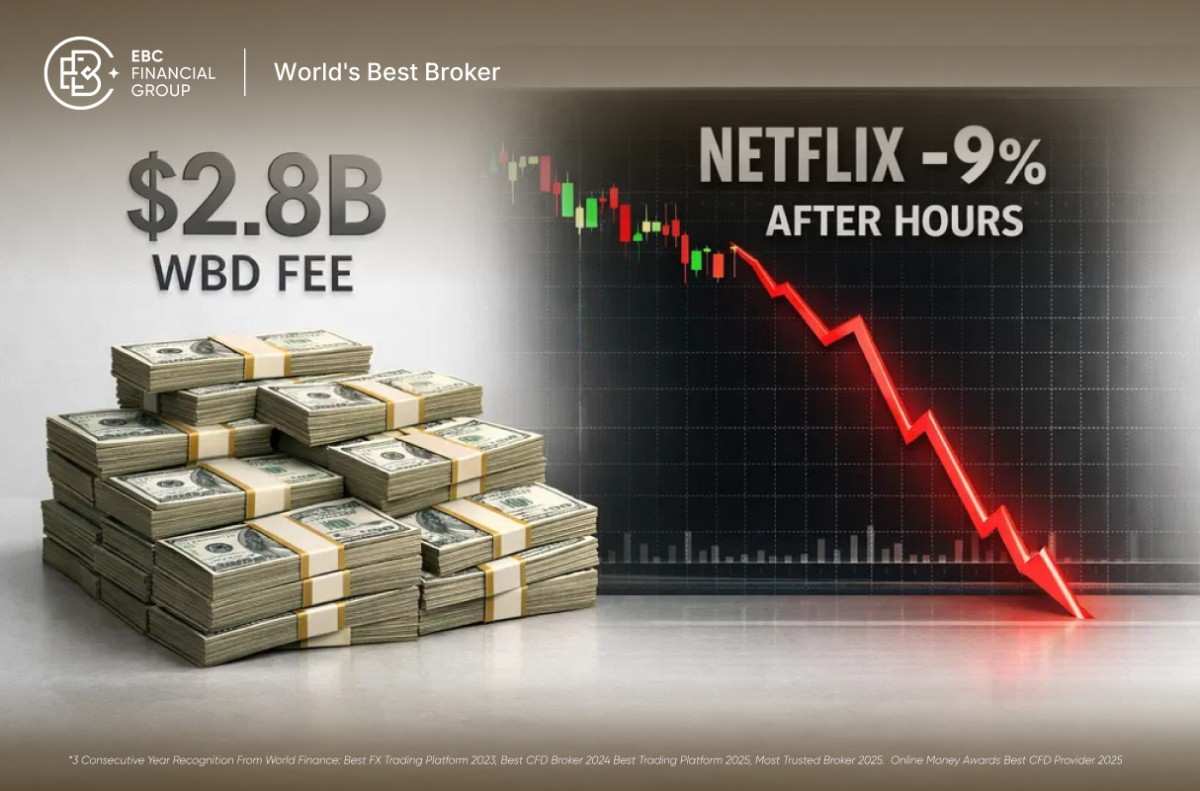
Netflix stock plunged about 9% in after-hours trading because investors looked through the $2.8 billion Warner Bros.-related termination fee and focused on softer forward guidance.
The one-off gain boosted reported EPS, but it did not improve Netflix's operating trajectory for the second quarter, where margins and earnings are set to face heavier content amortization.
The selloff was a guidance reset, not a reaction to weak headline Q1 results.
The $2.8 billion WBD-related fee was nonrecurring and excluded from core operating profit.
Q2 is set to absorb the heaviest year-over-year content amortization growth of 2026, pressuring near-term profitability.
Netflix's underlying business is still expanding, with ad revenue tracking near $3 billion in 2026 and more than 4,000 advertisers on the platform.
Reed Hastings' planned June board exit added leadership optics to an already fragile post-earnings tape.
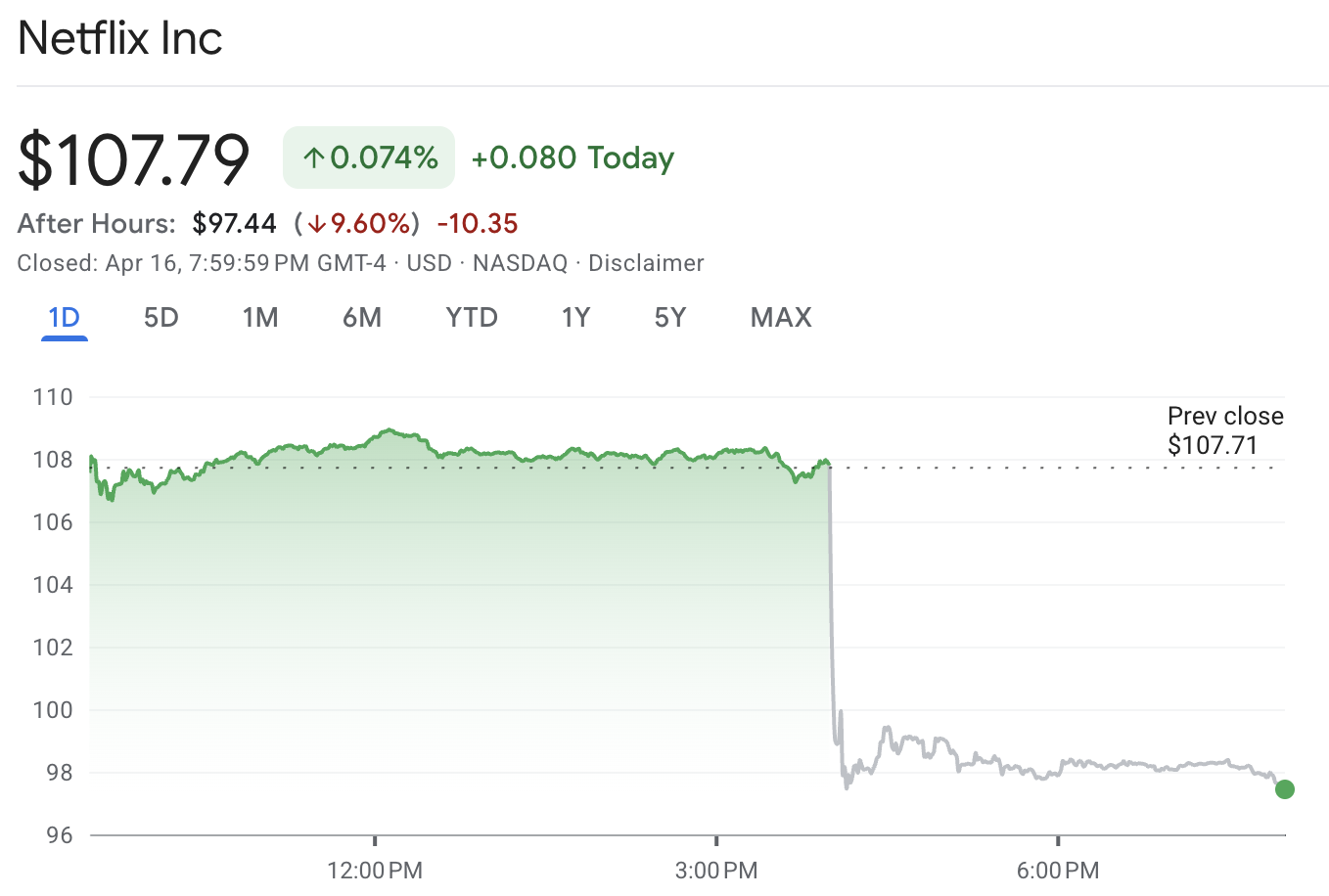
Netflix stock fell because the market judged the quality of earnings, not just the size of the beat. Q1 profit was flattered by a one-time termination fee, while Q2 guidance came in soft and full-year targets were left unchanged. That combination told investors that future earnings power is weaker than the headline quarter implied
| Metric | Q1 2026 actual | Q2 2026 guide | Market read |
|---|---|---|---|
| Revenue | $12.25B | $12.57B | Solid Q1, softer next quarter |
| Diluted EPS | $1.23 | $0.78 | Q1 boosted by fee, Q2 below expectations |
| Operating margin | 32.3% | 32.6% | Margin pressure remains front-half weighted |
| Full-year revenue | $50.7B to $51.7B | Unchanged | No post-fee upgrade |
| After-hours move | Nearly -9% | — | Investors repriced forward expectations |
Table figures combine Netflix's shareholder letter with post-earnings market reporting on the share reaction and consensus comparisons.
The tape treated Q1 as low-quality upside. Management explicitly said the $2.8 billion benefit was recorded below operating income, while Q2 will carry the fastest content amortization growth rate of the year. That is why the bear failed to support the stock. The market was paying for cleaner forward acceleration, and Netflix did not deliver it.
The $2.8 billion item was a termination fee tied to the collapsed Netflix-Warner Bros. Discovery deal. WBD was contractually required to pay it if it exited, but Paramount Skydance's superior proposal included paying that fee on WBD's behalf. For Netflix, it was a cash windfall and accounting gain, not recurring operating income.
That distinction matters. Netflix said the fee lifted diluted EPS and was recognized in "interest and other income." It also drove net cash from operations to $5.29 billion and free cash flow to $5.09 billion in Q1. Management now projects approximately $12.5 billion in free cash flow for 2026, up from the previous estimate of $11 billion, mainly due to the after-tax impact of the fee.
In other words, the fee improved liquidity and buyback capacity, but it did not change the slope of Netflix's core subscription, advertising, or margin engine. Investors correctly separated balance-sheet relief from operating momentum.
Better than the stock reaction suggests, but not explosive enough to justify a cleaner rerating. Revenue still grew 16% year over year, operating income rose 18%, and monetization trends in ads and pricing remain healthy. The issue is that core growth looked solid, while expectations had drifted toward something stronger.
Three operating signals stand out. First, revenue growth remains durable across regions, with UCAN up 14%, EMEA up 17%, LATAM up 19%, and APAC up 20% in Q1. Second, the ads tier continues to scale, representing more than 60% of sign-ups in ads markets.
Third, Netflix now works with more than 4,000 advertisers and still expects about $3 billion in ad revenue this year, roughly double that of 2025.
That is a healthy operating profile. But Netflix is no longer priced like a turnaround story. It is priced like a premium compounder. In that setup, investors demand clean guidance, rising margin confidence, and visible upside revisions. A one-off deal fee cannot substitute for that.
Not materially. The selloff looks more like an expectations reset than a break in fundamentals. Netflix still projects 12% to 14% revenue growth for 2026, a 31.5% operating margin, and roughly $3 billion in ad revenue. The ongoing debate centers on valuation versus execution rather than on whether the business is deteriorating.
The larger takeaway is strategic discipline. In late February, Netflix declined to raise its bid for Warner Bros., calling the transaction no longer financially attractive at the price required to match Paramount's Skydance bid. That choice preserved balance-sheet flexibility, restored buybacks, and avoided turning a "nice to have" acquisition into an overpriced necessity.
Reed Hastings' planned board departure added another headline on a day when investors were already reassessing the quarter. But operational control has long since shifted to Ted Sarandos and Greg Peters, so the market impact was more about sentiment and symbolism than execution risk.
No. The fee helped report earnings and cash flow. The stock declined due to disappointing Q2 guidance, unchanged full-year targets, and investors perceiving the earnings beat as driven by a non-recurring item rather than by stronger core operations.
The fee was tied to WBD's termination of its agreement with Netflix. Still, WBD disclosed that Paramount Skydance's superior proposal included payment of the $2.8 billion termination fee that WBD otherwise would have owed Netflix.
Yes. Netflix said its ad plan accounted for more than 60% of Q1 sign-ups in ad markets, that the company now works with over 4,000 advertisers, and that ad revenue is still expected to reach roughly $3 billion in 2026.
Netflix stock plunged 9% because the market saw through the accounting uplift from the $2.8 billion WBD-related fee. The real story was softer Q2 guidance, heavier near-term content amortization, and unchanged full-year targets.
The fee improved cash flow and capital flexibility, but it did not rewrite the forward earnings path. For investors, this was not a verdict on Netflix's business quality. It was a repricing of expectations.