Published on: 2026-04-08
PANW stock is now a valuation test as much as a growth story, with investors weighing whether AI can defend or extend Palo Alto’s premium multiple.
Palo Alto’s platformization thesis is gaining force as AI increases attack complexity and pushes enterprises toward broader security consolidation.
A higher multiple is possible, but Palo Alto still needs to prove that AI-driven demand can translate into stronger cross-sell, better retention, and durable growth.
PANW stock is trading on a more demanding question than simple cybersecurity demand. Investors are trying to decide whether artificial intelligence will commoditize parts of security or push enterprises toward larger vendors that can secure cloud, network, identity, operations, and AI systems within a single architecture.
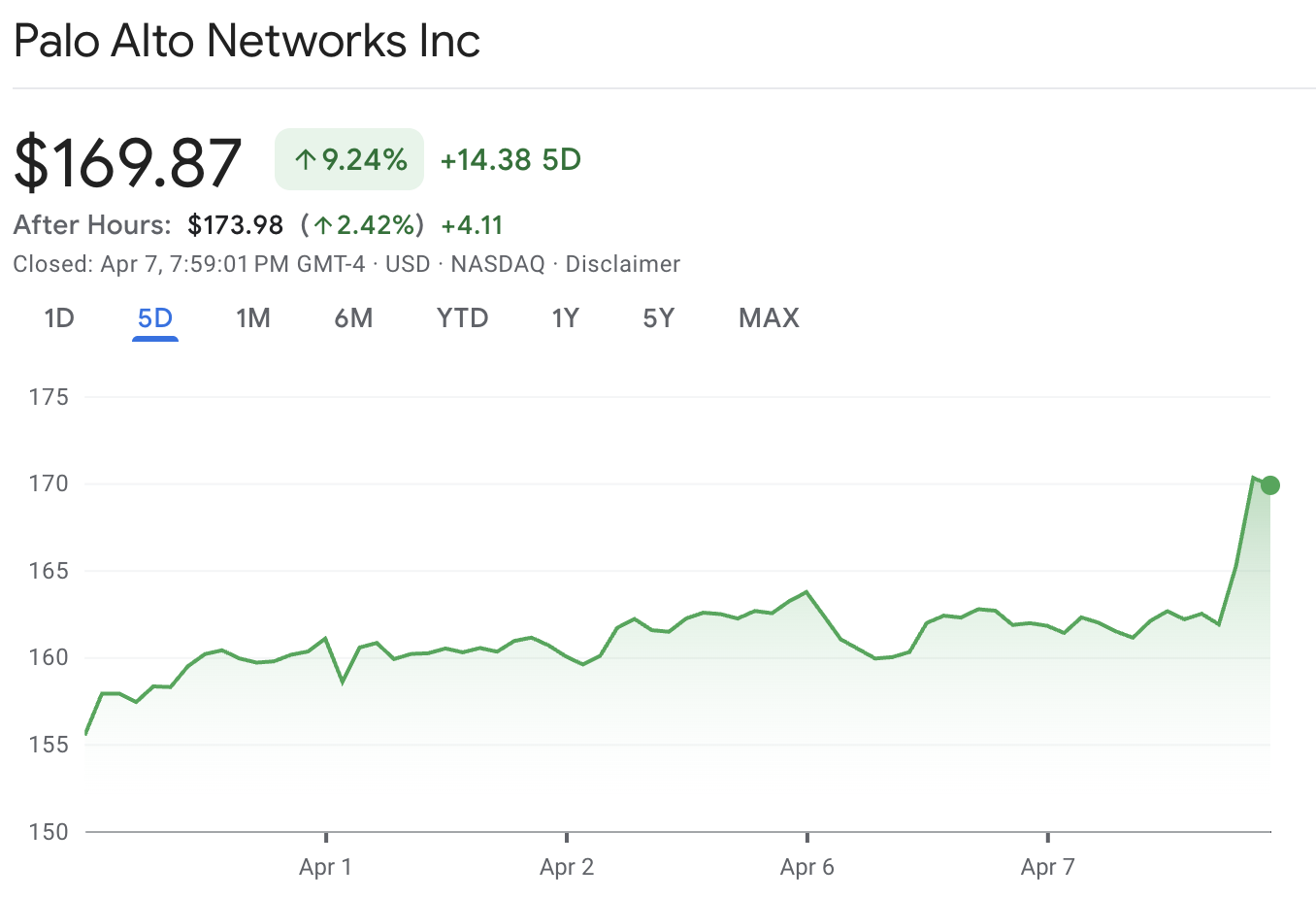
As of April 8, 2026, PANW traded at about $169.87, giving it a market value of roughly $123.3 billion and a trailing P/E ratio of about 96.2.
In fiscal second quarter 2026, revenue rose 15% year over year to $2.6 billion, Next-Generation Security ARR increased 33% to $6.3 billion, and remaining performance obligations climbed 23% to $16.0 billion.
The strongest argument in Palo Alto’s favor is that AI appears to be increasing security complexity rather than simplifying it.
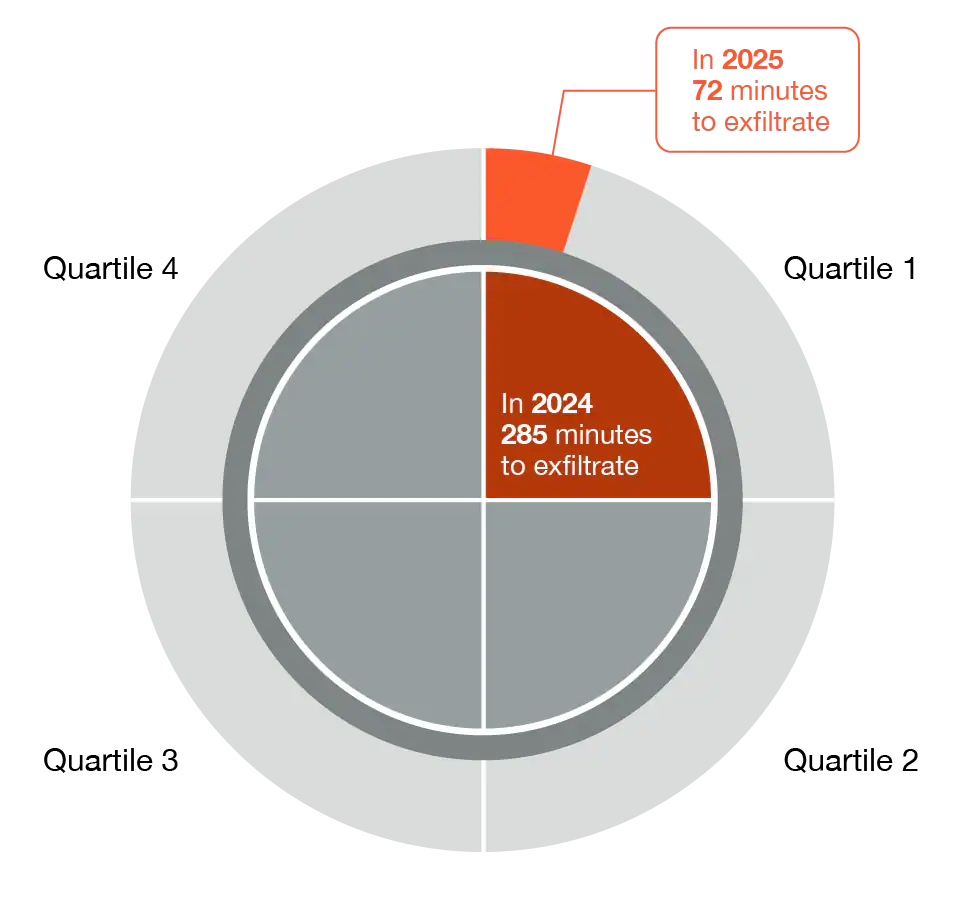
Palo Alto’s 2026 Unit 42 Global Incident Response Report, based on more than 750 high-stakes incidents, found that adversaries are using AI across the attack lifecycle, that attack speeds accelerated fourfold over the past year, and that the fastest attacks reached data exfiltration in just 72 minutes.
The same report said that identity weaknesses were found in 89% of investigations and that 87% of attacks involved multiple attack surfaces.
That matters because fragmented security stacks become harder to defend against when attackers move across identities, cloud workloads, SaaS applications, endpoints, and AI-enabled workflows faster.
In that setting, the buyer’s problem is less about finding the cheapest single tool and more about reducing operational gaps between tools. This is the core reason the platformization story has gained credibility. AI is not just another feature race. It is changing the shape of enterprise risk.
Management has been unusually direct about the strategy. In its February earnings release, Palo Alto said platformization is accelerating because of AI, with customers looking to modernize and normalize their cybersecurity stacks.
That language is important because it links the company’s commercial thesis to actual demand rather than to a speculative future category.
The company has also spent the early part of 2026 expanding the product footprint behind that argument. Palo Alto completed the CyberArk acquisition on February 11, positioning identity security as a core pillar of its platformization strategy. It completed the Chronosphere acquisition on January 29 to add observability.
On February 17, it announced its intent to acquire Koi to secure the “agentic endpoint.” In March, it launched Prisma AIRS 3.0 to secure the full agentic AI lifecycle, expanded Prisma Browser for the agentic AI era, and introduced Secure by Design AI Factories with ecosystem partners.
Taken together, those moves show Palo Alto trying to own more of the enterprise security control plane, not just add adjacent products. Identity, observability, browser security, runtime protection, and AI governance are all becoming more important as enterprises operationalize AI.
The market’s reaction this year shows why the multiple debate is now central. In February, investors sold cybersecurity stocks after Anthropic introduced Claude Code Security, raising fears that frontier AI could automate more security work and pressure pricing across the sector. That was the cleanest expression of the commoditization bear case.
But that interpretation did not hold. On April 7, PANW shares rallied alongside other cybersecurity names after Anthropic announced Project Glasswing, a defensive cybersecurity initiative that included major technology and financial partners.
News reports said the move was read as validation that advanced AI is more likely to be deployed with established cyber platforms than simply against them.
That shift in sentiment matters because it suggests investors are moving from a simplistic “AI replaces cyber tools” view toward a more nuanced view in which AI can increase the value of scaled defense platforms.
This is the real valuation question. Palo Alto already trades at a premium. The issue is not whether the company deserves a strong multiple today. The issue is whether AI can help defend that premium and eventually push it higher.
A higher multiple would need to be supported by evidence, such as:
sustained growth in Next-Generation Security ARR
continued expansion in remaining performance obligations
stronger cross-sell across cloud, SOC, identity, and AI security
clean integration of CyberArk and Chronosphere
proof that AI demand is improving revenue durability, not just product visibility
That is why valuation discipline still matters. AI may strengthen Palo Alto’s platform narrative, but the market will still want proof that broader platform demand is translating into durable financial results.
Palo Alto’s acquisition strategy strengthens the platform argument, but it also raises the execution bar.
CyberArk and Chronosphere expand the company’s reach in identity and observability, yet investors will want evidence that these businesses are being integrated into a cleaner customer experience rather than becoming another source of complexity.
Palo Alto itself flags integration, compatibility capture, market acceptance, and retention risks in its earnings materials.
The broader cybersecurity industry is also moving quickly. AI can lower the cost of building some features, which means leadership will depend less on feature volume and more on platform depth, data advantage, distribution, and customer trust.
Palo Alto has scale, partner reach, and more than 70,000 customers, but a higher multiple requires continued proof that customers are consolidating onto the platform rather than merely buying around it.
This is the simplest risk. Strong results may be enough to defend the current valuation, but not enough to expand it.
For PANW to rerate higher, investors will likely want to see:
several more quarters of strong ARR growth
rising backlog and durable demand visibility
successful integration of recent acquisitions
clearer AI-related monetization across the platform
That is a higher threshold than simply delivering another good quarter.
Because investors are reassessing whether AI weakens cybersecurity pricing or increases demand for integrated security platforms. Palo Alto is central to that debate because its results and product expansion point toward broader platform adoption.
Right now, the evidence looks more supportive than harmful. AI is increasing attack speed, complexity, and identity risk, which strengthens the case for broader security platforms with unified visibility and control.
The key figures are revenue growth, Next-Generation Security ARR, remaining performance obligations, operating margin, and free cash flow margin. Those metrics show whether platform demand is translating into durable financial performance.
Yes. As of April 8, 2026, PANW’s market capitalization was about $123.3 billion and its trailing P/E ratio was about 96.2, which means investors already expect strong execution.
A stronger case would require continued ARR growth, larger backlog, smooth integration of CyberArk and Chronosphere, and evidence that AI, identity, cloud, and SOC offerings are driving broader platform wins.
The PANW stock debate has matured. The market is no longer asking only whether Palo Alto can keep growing. It is asking whether AI makes the company more strategically important and whether that strategic importance warrants a richer valuation.
On the evidence available now, AI appears to be strengthening the case for platform demand rather than commoditizing it. Attackers are moving faster, enterprise environments are becoming more complex, and Palo Alto is broadening its reach across identity, observability, browser security, and agentic AI protection.
Disclaimer: This material is for general information purposes only and is not intended as (and should not be considered to be) financial, investment or other advice on which reliance should be placed. No opinion given in the material constitutes a recommendation by EBC or the author that any particular investment, security, transaction or investment strategy is suitable for any specific person.