Published on: 2026-03-02
Updated on: 2026-03-02
The CAST initial public offering (IPO) is structured as a direct listing on Nasdaq rather than a traditional underwritten IPO. This distinction is significant because it affects the pricing mechanism for the first trade, potential volatility during the opening week, and the interpretation of 'expected pricing' for investors monitoring the FreeCast IPO.
FreeCast’s regulatory path is clear. The SEC’s notice of effectiveness shows the company’s Form S-1 became effective on February 11, 2026 at 4:30 p.m. What changed was the calendar, as after initially pointing to a March 3 market debut, FreeCast announced it rescheduled its direct listing instead, and now FreeCast listing is expected to take place on March 10, 2026, under the ticker CAST.
FreeCast said its direct listing, originally scheduled for March 3, will now take place on March 10, 2026. Treat that “launch date” as a target rather than a guarantee, because direct listings can still shift based on readiness and market conditions.
| Item | Details |
|---|---|
| Launch Date | March 10, 2026 (rescheduled direct listing date) (Business Wire) |
| Listing Method | Direct listing of Class A common stock (resale registration, not an underwritten IPO) |
| Exchange / Ticker | Nasdaq Global Market / CAST |
| Shares Registered For Resale | Up to 19,782,084 Class A shares |
| Proceeds To FreeCast From Resale | None from selling shareholders’ resales |
| Advisor For Listing Process | Maxim Group LLC as financial advisor for the direct listing process |
| Post-Listing Funding Option | Equity Purchase Agreement for up to $50 million of potential share sales (subject to limits) |
| Share Class Structure | Dual-class voting, with the CEO expected to retain control voting power under stated assumptions |
If you are searching for the CAST IPO price or a “FreeCast IPO pricing range,” the filing makes the structure clear: there is no traditional underwritten range. Instead, the opening print is formed through Nasdaq’s direct listing process.
FreeCast outlines a 'Display Only' period followed by a 'Pre-Launch' period, during which Maxim Group LLC, the company’s financial advisor, is responsible for notifying Nasdaq when shares are 'ready to trade.' This decision is contingent upon market conditions, including whether sufficient trading volume exists to facilitate effective price discovery.
In a direct listing, the primary indicator is not a published 'IPO price,' but rather the size and direction of orders as Nasdaq approaches the opening cross. Limited liquidity can render early price indications unreliable.
FreeCast registered 19,782,084 Class A shares for resale. The actual volume of shares offered on the first day is a significant determinant of initial trading behavior, as selling shareholders are not required to participate.
The company discloses that, based on its stated assumptions, approximately 41.3% of the Class A shares outstanding immediately after listing will not be subject to leak-out agreements. This structure may increase volatility, as relatively minor changes in demand can disproportionately affect the share price in the short term.
Given that CAST will open via an auction, the most effective method for discussing valuation is to convert potential opening prices into implied market capitalization, utilizing the company’s disclosed share counts.
FreeCast’s filing shows that after the offering assumptions used in the prospectus summary, total Class A and Class B shares outstanding would be 40,857,460.
| Assumed Opening Price | Implied Market Cap (Total Class A + B Shares) |
|---|---|
| $2 | ~$81.7 million |
| $5 | ~$204.3 million |
| $8 | ~$326.9 million |
| $10 | ~$408.6 million |
| $12 | ~$490.3 million |
These calculations are mechanical and based on the share counts disclosed in the registration statement; they do not constitute a prediction of the stock’s opening price.
FreeCast’s reported revenue base remains small:
FY 2025 total revenue: $628,149
FY 2025 net loss: $(14,065,948)
That means any valuation in the hundreds of millions implies investors are paying almost entirely for an option on scale, not for current earnings power. The market can do that in early-stage platform stories, but it also means the stock often trades on a narrow set of proof points: partner wins, monetization rates, and funding visibility.
FreeCast positions itself as a streaming technology and media infrastructure provider, built on a Platform-as-a-Service ecosystem designed to help partners deploy streaming TV and video distribution with built-in monetisation tools.
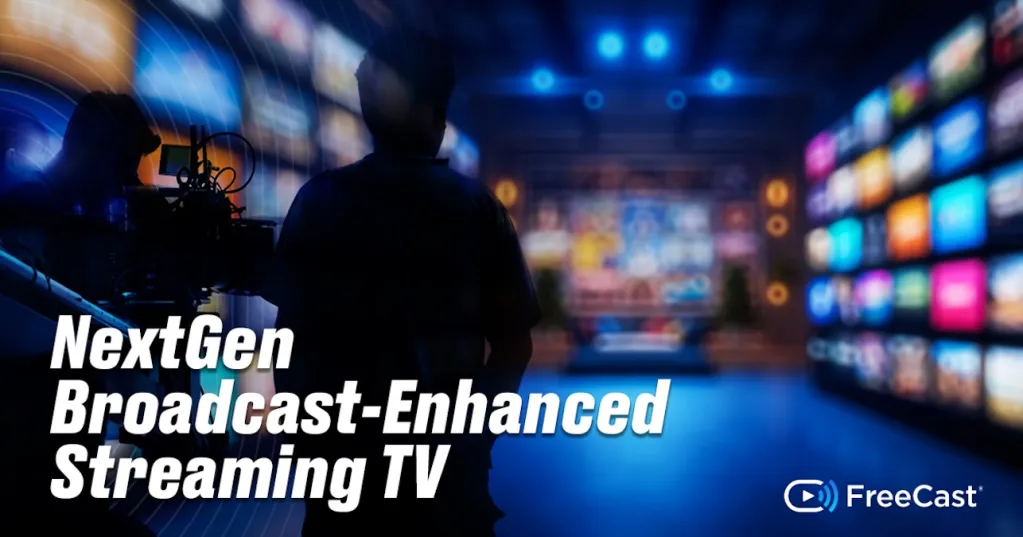
The commercial bet is not “win subscribers one by one” in a crowded consumer app market. The bet is licensing and distribution through partners that already control audiences and billing relationships. This B2B2C approach can scale quickly if it lands the right channels, but it also tends to concentrate risk around partner conversion and economics.
FreeCast’s filing provides both annual results for the fiscal year ended June 30 and a recent quarterly snapshot for the three months ended September 30, 2025. While revenue is increasing, losses remain substantial relative to sales.
| Period | Revenue | Net Loss |
|---|---|---|
| FY 2024 | $507,920 | $(12,446,216) |
| FY 2025 | $628,149 | $(14,065,948) |
| 3 Months Ended Sept. 30, 2025 | $195,860 | $(2,862,349) |
As of September 30, 2025, FreeCast reported cash holdings of $345,723, a working capital deficit, and an expectation that additional equity financing will be required to meet its obligations over the subsequent 12 months.
This is why the Equity Purchase Agreement matters. FreeCast entered an EPA under which an investor committed to purchase up to $50 million of Class A stock, subject to conditions and limits. The EPA can be a backstop if the stock trades well. It can also become an overhang if investors believe future issuance will cap rallies.
Dilution risk is not theoretical here. The filing discloses:
| Potential Dilution / Supply Source | Amount | What It Means |
|---|---|---|
| Warrants Outstanding | 8,056,087 | Shares that could be issued if warrants are exercised, increasing share count. |
| Options Outstanding | 931,779 | Shares issuable upon option exercise, adding incremental dilution. |
| Incentive Plan Reserve | 2,068,221 | Shares available for future equity awards (RSUs/options), potential future dilution. |
| EPA Capacity | Up to $50 million | Company may sell additional shares over time under the Equity Purchase Agreement, creating supply overhang. |
In small-cap listings, this consideration is important because market participants frequently factor anticipated future share supply into current pricing.
FreeCast’s structure is explicitly a “controlled company” profile. The filing states that, under its stated assumptions, the CEO would hold roughly 75.55% of voting power after completion of the offering mechanics described.
For long-term investors, this structure presents a trade-off. Concentrated control may facilitate a consistent strategic direction, but it can also diminish the influence of outside shareholders and, in some cases, negatively affect valuation multiples.
A direct listing is often better approached as an event-driven setup than as a classic “IPO pop” narrative.
Practical principles that matter:
Day one can be misleading. Focus on whether spreads tighten, volume builds, and the stock can hold levels after the opening cross.
Auction-driven openings can gap. Limit orders reduce the odds of being filled at a transient print.
The EPA exists for a reason. If investors sense it will be used quickly, the stock can trade heavier even on positive headlines.
The filing includes historical stock transaction prices, but the company also highlights that public trading can diverge sharply from private levels once liquidity and supply change.
FreeCast’s direct listing, often referred to as the FreeCast IPO, is scheduled for March 10, 2026, after the company rescheduled the previously planned date.
It is a direct listing. The SEC registration statement covers resale of shares by existing shareholders, and FreeCast does not receive proceeds from those selling shareholders’ resales.
There is no traditional IPO price range. In a direct listing, the opening price is formed through Nasdaq’s auction process, with the financial advisor determining when the stock is “ready to trade” based on order flow and price discovery.
Valuation depends on the opening price and the share count. Using FreeCast’s disclosed post-offering share totals, even single-digit prices can translate into a market cap in the hundreds of millions.
FreeCast reported FY 2025 revenue of $628,149 and a net loss of $14,065,948, and it also reported a net loss for the quarter ended September 30, 2025.
The CAST IPO is structured as a direct listing and is expected to function primarily as a price discovery event rather than a conventional IPO. The SEC effectiveness date has been established, and the company has rescheduled its Nasdaq debut to March 10, 2026. Initial trading will be influenced by the opening auction, prevailing liquidity, and the volume of registered shares that become available.
The central consideration for investors is whether FreeCast can rapidly convert its platform strategy into measurable revenue growth to alleviate funding pressures, while effectively managing dilution risks associated with warrants, options, and potential EPA-related share issuances.
Disclaimer: This material is for general information purposes only and is not intended as (and should not be considered to be) financial, investment or other advice on which reliance should be placed. No opinion given in the material constitutes a recommendation by EBC or the author that any particular investment, security, transaction or investment strategy is suitable for any specific person.
SEC Notice Of Effectiveness (Form EFFECT), FreeCast, Inc. (February 11, 2026)
FreeCast S-1/A Registration Statement (Amendment No. 11, filed January 23, 2026)
Business Wire: FreeCast Reschedules Direct Listing To March 10, 2026 (February 27, 2026)