Published on: 2026-04-16
In today’s increasingly accessible financial markets, investors can choose between actively managing their trades or leveraging the expertise of others. Two popular approaches, copy trading and manual trading, offer distinct advantages and risks. Understanding how each works is essential before committing capital.
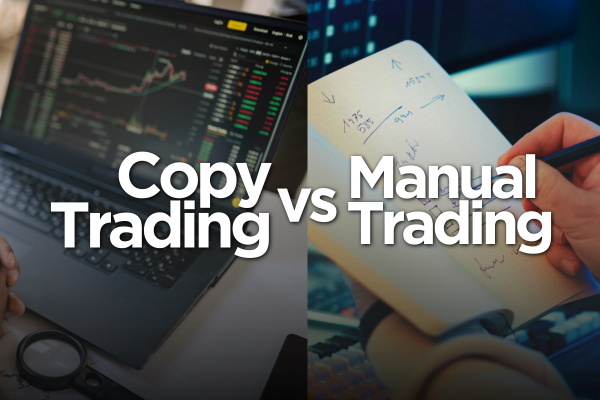
Copy trading allows beginners to mirror experienced traders but reduces control.
Manual trading offers full autonomy but requires time, skill, and discipline.
Risk management differs significantly between the two approaches.
Market conditions in 2026, driven by AI, retail flows, and macro volatility, impact both strategies.
The best approach depends on your experience level, time commitment, and risk tolerance.
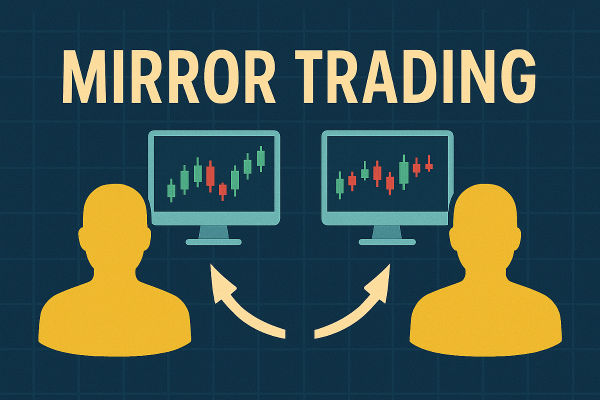
Copy trading is a strategy where investors automatically replicate the trades of experienced traders in real time. This is typically done through trading platforms that rank traders based on performance, risk level, and strategy.
You select a trader (or multiple traders) to follow.
Your account mirrors their trades proportionally.
When they open, modify, or close a position, the same action is executed in your account.
An investor may choose to copy a trader who focuses on major U.S. equities like Apple (AAPL), Microsoft (MSFT), and NVIDIA (NVDA). If the trader increases exposure to AI-related stocks during a rally, your portfolio will automatically follow suit.
Beginner-friendly: No need for deep market knowledge.
Time-efficient: Minimal monitoring required.
Access to expertise: Benefit from experienced traders’ strategies.
Limited control: You rely entirely on another trader’s decisions.
Performance variability: Past results do not guarantee future returns.
Hidden risks: Some traders may take excessive risks to boost short-term returns.
Manual trading involves making independent trading decisions based on your own analysis, strategy, and risk management rules.
You research markets, analyse data, and identify opportunities.
You execute trades manually via a trading platform.
You monitor and adjust positions in response to market developments.
A manual trader might analyse macroeconomic trends, such as Federal Reserve interest rate expectations, and decide to trade the S&P 500 ETF (SPY) or gold (XAU/USD) accordingly.
Full control: Every decision is yours.
Custom strategies: Tailor trades to your risk tolerance and goals.
Skill development: Builds long-term trading expertise.
Time-intensive: Requires continuous learning and monitoring.
Emotional bias: Fear and greed can impact decisions.
Steep learning curve: Beginners may struggle initially.
Over-leveraged traders: Some top-performing traders may use high leverage.
Lack of diversification: Copying a single trader concentrates risk.
Delayed reactions: Market conditions may change faster than the trader adapts.
Overtrading: Frequent trades can lead to higher costs and losses.
Poor discipline: Ignoring stop-loss levels can amplify losses.
Information overload: Misinterpreting data can lead to poor decisions.
The trading landscape in 2026 is shaped by several key trends:
AI-driven strategies: Many traders now use algorithmic tools, making performance harder to evaluate in copy trading.
Retail participation: Increased market access has intensified competition.
Macro volatility: Ongoing geopolitical tensions and shifting interest rate cycles create rapid market swings.
In such an environment, copy trading can expose investors to strategies they do not fully understand, while manual trading demands faster decision-making and deeper knowledge.
Copy trading may be suitable if you:
Are new to trading and want exposure without deep analysis.
Have limited time to monitor markets.
Prefer a hands-off investment approach.
However, it is essential to:
Diversify across multiple traders.
Monitor performance regularly.
Set risk limits (e.g., maximum drawdown thresholds).
Manual trading may be more appropriate if you:
Have a strong interest in financial markets.
Are willing to invest time in learning and analysis.
Want full control over your portfolio.
It is particularly beneficial for traders focusing on:
Macro strategies (e.g., interest rates, inflation trends).
Technical analysis (e.g., price patterns, indicators).
Specific sectors (e.g., AI, energy, commodities).
Yes. Many investors adopt a hybrid strategy:
Allocate a portion of capital to copy trading for diversification.
Use the remaining capital for manual trading to develop skills.
60% in copy trading (diversified across 3–5 traders)
40% in manual trades (focused on specific strategies)
This approach balances passive exposure with active learning.
Copy trading can be accessible for beginners, but it is not risk-free. Performance depends on the trader you follow. Beginners should diversify across multiple traders and monitor risk metrics such as drawdown and leverage usage.
Yes, losses are possible. If the trader you copy experiences losses, your account will mirror them. Market volatility in 2026 increases the likelihood of sudden drawdowns, especially with leveraged strategies.
Manual trading can require several hours daily, depending on your strategy. Active traders monitor markets continuously, while swing traders may spend time on research and periodic trade management.
Profitability depends on execution and discipline, not the method itself. Skilled manual traders may outperform, but consistent copy trading of disciplined traders can also generate steady returns.
Most professional traders do not rely on copy trading. However, some use it as a diversification tool or to allocate capital across different strategies managed by other experienced traders.
Copy trading and manual trading represent two fundamentally different approaches to market participation. Copy trading offers convenience and accessibility, making it attractive for beginners or time-constrained investors. Manual trading, on the other hand, provides full control and the opportunity to build expertise, but requires significant effort and discipline.
Ultimately, the right choice depends on your goals, experience, and commitment. A balanced approach combining both methods can often deliver the best of both worlds in today’s dynamic financial markets.
Disclaimer: This material is for general information purposes only and is not intended as (and should not be considered to be) financial, investment or other advice on which reliance should be placed. No opinion given in the material constitutes a recommendation by EBC or the author that any particular investment, security, transaction or investment strategy is suitable for any specific person.