Published on: 2026-08-18
A commodity ETF can rise less, rise more or move differently from the commodity price it follows. These products can hold the physical commodity, futures contracts, or shares of commodity-related companies, each with different sources of return. For futures-based ETFs, the futures curve and the effect of rolling contracts can create the largest differences.
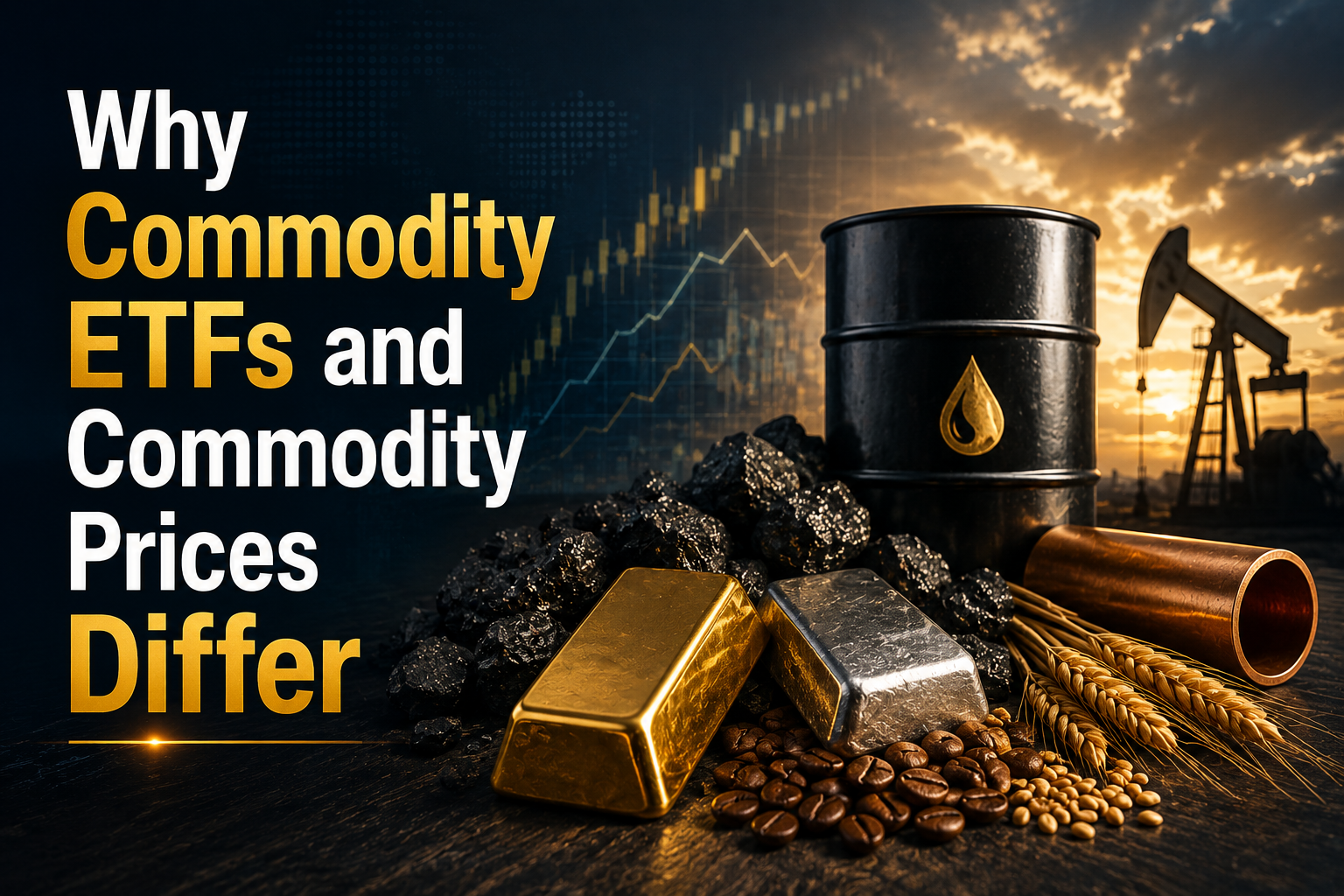
Commodity ETFs can use physical holdings, futures contracts or commodity-related stocks, so the fund structure affects how closely returns follow the underlying commodity.
Futures-based ETFs track futures contracts rather than simply copying the commodity’s spot price, and those contracts expire and must be replaced.
Contango can create a negative roll effect, while backwardation can create a positive one, although the result depends on how the futures curve changes and how the fund rolls its contracts.
Before comparing an ETF with a commodity price, check what the fund owns, which benchmark it follows, how it rolls futures, and what costs apply.
The simplest reason is that a commodity ETF does not necessarily own the commodity whose name appears on the fund. Its return comes from the assets it actually holds.
A physically backed gold product, for example, can hold bullion directly. SPDR Gold Shares (GLD) is designed for its shares to reflect the performance of gold bullion, less expenses. A futures-based natural gas product such as the United States Natural Gas Fund (UNG) instead uses short-term natural gas futures to obtain its exposure.
Commodity-stock funds work differently again because they hold businesses such as miners or energy producers. Their share prices can react to commodity prices, while earnings, operating costs, debt and broader equity-market conditions also affect returns.
Product structure |
Main exposure |
Why returns can differ |
Physical |
The commodity itself |
Fund expenses, trading costs and premiums or discounts |
Futures-based |
Commodity futures contracts |
Futures prices, contract rolls, collateral income and expenses |
Commodity stocks |
Producers, miners or related companies |
Company earnings, costs, debt and equity-market movements |
Physically backed products generally have the most direct link to the asset they hold. Futures-based products introduce another layer because their returns depend on futures contracts with specific expiration dates. Commodity-stock funds can diverge even more because owning a company is different from owning the commodity it produces.
A commodity can have a current spot price and several futures prices at the same time. A futures contract sets a price for a specified quantity of a commodity tied to a future delivery date, and contracts for different months can trade at different prices.
A simplified natural gas market could look like this:
Contract |
Price |
Near-term price |
$3.00 |
Next-month futures |
$3.10 |
Two-month futures |
$3.22 |
Three-month futures |
$3.35 |
A futures-based ETF may hold one or more of those contracts rather than the physical commodity. That already creates the potential for its return to differ from the price someone sees quoted for natural gas.
Futures also expire. A fund seeking continuous exposure cannot hold the same contract indefinitely, so it periodically closes or reduces the contract as it approaches expiration and establishes exposure in a later one. The CFTC identifies this rolling process as one reason commodity exchange-traded products can perform differently from their underlying commodities over time.
The price relationship between those contracts determines whether rolling helps or hurts the fund.
Contango occurs when futures prices are above the spot price, producing an upward-sloping futures curve under the standard definition. Storage, financing and insurance costs can contribute to this structure in physically delivered commodity markets.
For a futures-based ETF, contango means the later contract used to maintain exposure may be more expensive than the contract approaching expiry. Repeatedly rolling through that structure can weigh on returns when the curve remains in contango.
Backwardation is the opposite structure. Spot prices are above later futures prices, creating a downward-sloping curve. It can appear when immediate access to a physical commodity becomes particularly valuable, such as when inventories are tight.
A fund rolling through backwardation may gain exposure to a cheaper later contract. That can produce a positive roll effect if the market structure develops in its favour.
Neither outcome is automatic. Futures curves change continuously, so contango can flatten or disappear, and backwardation can weaken or reverse. The fund's contract selection and rolling rules also affect the result.
A useful simplified model is:
ETF return ≈ futures price movement + roll effect + collateral income − expenses
That's why knowing the commodity's direction alone may not be enough to predict the ETF’s return.
Assume natural gas rises from $3.00 to $3.30 over several months, a 10% increase.
It would be tempting to expect a futures-based natural gas fund to gain roughly 10% as well. Its actual return can differ because the fund holds and replaces futures contracts during those months rather than continuously owning natural gas at the original $3.00 price.
Suppose the futures curve remains in contango. Each time the fund moves its exposure forward, the next contract is trading above the expiring one. Repeated exposure to that curve can reduce the return the fund captures, even as the underlying commodity rises.
UNG shows how the mechanism works in a real product. Its investment objective is tied to daily percentage changes in a specified short-term NYMEX natural gas futures contract, plus interest earned on collateral, less expenses. Its benchmark normally uses the near-month contract, then moves to the next-month contract as expiration approaches.
USCF’s 2026 roll schedule states that UNG changes its benchmark futures exposure by selling the near-month contract and buying the next-month contract over four days.
The key point is straightforward: a 10% rise in natural gas does not automatically translate into a 10% return from a futures-based natural gas fund. The futures contracts held during that period and the cost or benefit of maintaining the exposure also affect the result.
Before comparing a commodity ETF with the headline price of gold, natural gas or another commodity, check four things:
What does it own? Determine whether exposure comes from the physical commodity, futures contracts or commodity-related stocks.
What benchmark does it follow? The benchmark shows what the fund is actually designed to track.
If it uses futures, how does it roll? Check which contract months it holds and when exposure moves to later contracts.
What other returns and costs apply? Management expenses, trading costs and income earned on collateral can all affect the final return.
For futures-based products in particular, the prospectus and benchmark methodology often explain expected behaviour better than the fund name alone.
Not always. Physically backed products may follow the underlying commodity relatively closely, while futures-based ETFs hold contracts with specific expiration dates. Futures prices, rolling and fund expenses can therefore change the final return.
Yes. A commodity can rise while a futures-based ETF performs poorly if futures-contract movements, negative roll effects and expenses outweigh the gain. Commodity-stock ETFs can also fall because company-specific factors influence their share prices.
No. Persistent contango can create a negative roll effect for some futures-based strategies, although the actual result depends on how the futures curve changes and which contracts the fund holds and rolls.
Physical ownership can be impractical for commodities that require storage, transportation or specialised handling. Futures provide exposure to commodity prices without requiring the fund to store large quantities of the physical asset.
A commodity ETF is not necessarily a direct bet on the commodity’s spot price. Physical products can track the asset relatively closely, while futures-based products also depend on futures prices, contract rolls, collateral income and costs.
Before comparing an ETF return with a commodity price, check what the fund actually owns and which benchmark it follows. Those two details usually explain why two products linked to the same commodity can produce very different results.