Published on: 2023-09-12
Updated on: 2026-06-23
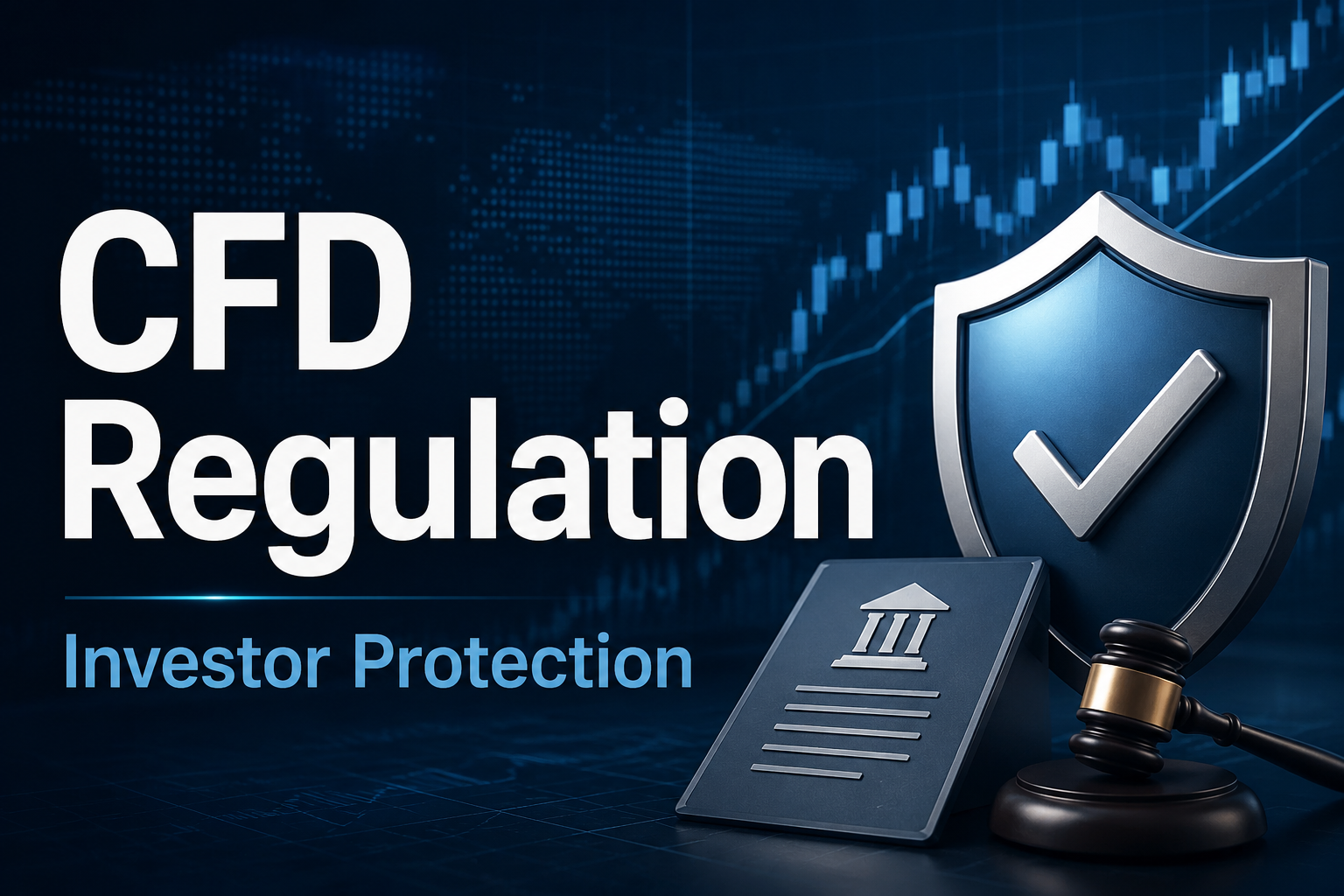
A global forex regulator is often discussed as if one single authority controls the foreign exchange market. In reality, forex regulation is built through a network of national and regional agencies that supervise brokers, enforce trading rules, protect Client funds, and reduce misconduct in one of the world’s largest financial markets.
That structure matters more today than it did a few years ago. Global OTC foreign exchange turnover reached $9.6 trillion per day in April 2025, up 28% from 2022, amid increased volatility, rate divergence, and cross-border trading activity. Strong forex regulation helps ensure that this vast market remains transparent, orderly, and fair for both institutions and retail traders.
Forex regulators oversee the firms and market practices that shape foreign exchange trading. Their role is not to predict currency prices or protect traders from normal market losses. Their job is to ensure brokers operate legally, treat clients fairly, and clearly disclose risk.
The main responsibilities of foreign exchange regulatory agencies include:
Licensing forex brokers: Regulators approve firms that meet capital, governance, risk management, and reporting standards.
Monitoring fair trading practices: They review pricing, execution, advertising, fees, and conflicts of interest.
Protecting client money: Many regulators require client funds to be segregated from company operating funds.
Restricting excessive leverage: Retail leverage limits reduce the chance that small price movements wipe out accounts.
Taking enforcement action: Regulators can fine firms, suspend licences, ban individuals, or require compensation.
Warning the public: Agencies publish alerts about scams, clone firms, and unauthorised brokers.
This is why regulation should be one of the first checks before opening a forex trading account. A regulated broker is not risk-free, but an unregulated broker removes many of the basic protections traders rely on.
The Financial Conduct Authority, or FCA, regulates financial services firms in the United Kingdom. It was established on 1 April 2013 and now regulates around 42,000 businesses, setting standards for firms and holding them accountable when they fail to meet those standards.
For forex and CFD traders, the FCA is important because it focuses heavily on consumer protection, fair value, client communication, and the risks of leveraged products. In 2025, the FCA warned that some CFD investors were being pressured to give up retail protections by being reclassified as professional clients. Those protections, including leverage limits and loss protections, prevent nearly 400,000 people a year from risking more than their original stake in CFDs.
ASIC is Australia’s integrated corporate, markets, financial services, and consumer credit regulator. It began operating in 1991 as the Australian Securities Commission and was renamed the Australian Securities and Investments Commission in 1998 after gaining broader consumer protection responsibilities.
ASIC is especially relevant for retail forex and CFD trading because it has imposed product intervention rules on high-risk derivatives. In January 2026, ASIC secured nearly $40 million in refunds for more than 38,000 retail investors after reviewing 52 licensed CFD issuers. The review found weaknesses in product distribution, client onboarding, marketing, and reporting.
In the United States, retail forex is supervised through a strict framework involving the Commodity Futures Trading Commission, or CFTC, and the National Futures Association, or NFA.
The CFTC has jurisdiction over certain leveraged retail foreign currency transactions. NFA sets and enforces rules for registered members, including forex dealer members. US rules require only certain regulated entities, such as registered retail foreign exchange dealers and futures commission merchants, to act as counterparties to off-exchange retail forex trades.
This structure makes the US one of the most restrictive retail forex markets. Broker choice is narrower, but oversight is stronger.
Japan’s Financial Services Agency, or FSA, oversees banks, securities firms, insurance companies, and other financial institutions. It plays a key role in maintaining confidence in Japan’s financial system and supervising firms offering leveraged trading products.
Japan is also known for strict retail forex leverage controls. These limits are designed to reduce excessive speculation and protect individual traders from rapid account losses during volatile currency moves.
FINMA is Switzerland’s integrated financial market regulator. It was established in 2009 through the merger of three predecessor institutions: the Swiss Federal Banking Commission, the Federal Office of Private Insurance, and the Anti-Money Laundering Control Authority.
FINMA supervises banks, insurers, securities firms, trading venues, and other financial intermediaries. For forex traders, its strength lies in Switzerland’s long-standing emphasis on financial stability, capital discipline, and anti-money-laundering controls.
In the European Union, the European Securities and Markets Authority, or ESMA, works with national regulators to support consistent investor protection rules. ESMA’s CFD product intervention framework includes leverage limits, mandatory risk warnings, margin close-out rules, negative balance protection, and restrictions on incentives offered to retail traders.
In 2026, ESMA reminded firms that leveraged derivatives marketed as perpetual futures or similar products may still fall within CFD rules if they meet the definition of a CFD. This shows how regulators are adapting to new product designs that can expose retail traders to the same risks as those posed by traditional leveraged forex and CFD products.
| Regulator | Region | Main Forex Role | Key Trader Protection |
|---|---|---|---|
| FCA | United Kingdom | Regulates brokers, CFDs, financial promotions, and conduct | Leverage limits, client protection, Consumer Duty |
| ASIC | Australia | Supervises financial services and retail OTC derivatives | Product intervention, refunds, distribution rules |
| CFTC and NFA | United States | Regulates and supervises retail forex counterparties | Registration, member rules, strict counterparty limits |
| FSA | Japan | Oversees financial institutions and leveraged trading firms | Retail leverage controls and market supervision |
| FINMA | Switzerland | Integrated supervision of financial intermediaries | Capital standards, AML controls, firm oversight |
| ESMA and national regulators | European Union | Coordinates EU investor protection standards | Negative balance protection, leverage limits, risk warnings |
Forex regulation promotes fair trade by reducing information gaps between brokers and clients. Retail traders usually cannot inspect a broker’s balance sheet, liquidity arrangements, execution systems, or client money controls. Regulators create minimum standards so traders do not have to rely only on advertising claims.
Regulation also improves transparency. A licensed broker must provide clearer disclosure on spreads, commissions, funding costs, margin requirements, and risk. In the CFD market, this matters because financing costs and leverage can turn small price movements into large losses.
Another important function is misconduct prevention. Regulators monitor misleading promotions, aggressive sales tactics, unsuitable client classification, bonus schemes, and offshore redirection. IOSCO’s 2025 work on finfluencers highlighted that unlicensed individuals often promote complex products such as forex, crypto assets, and CFDs, sometimes without clear risk disclosure or professional oversight. (IOSCO)
Before choosing a broker, traders should verify the licence directly with the regulator, not only on the broker’s website.
A basic check should include:
Search the broker’s legal entity name on the regulator’s official register.
Confirm the licence number, address, and approved activities.
Check whether the licence covers forex, CFDs, or only limited financial services.
Review warnings, disciplinary history, or restrictions.
Make sure the trading account is opened under the same regulated entity advertised.
Avoid firms that pressure clients to move offshore for higher leverage.
This final point is increasingly important. Some brokers market high leverage through offshore entities where protections are weaker. Higher leverage may look attractive, but it usually increases liquidation risk and reduces the margin for error.
No. Forex is regulated mainly by national and regional authorities. The FCA, ASIC, CFTC, NFA, FSA, FINMA, ESMA, and other regulators each supervise firms within their own legal jurisdictions. Global coordination exists, but enforcement remains local.
Regulation helps protect traders from fraud, misleading advertising, misuse of client funds, and unfair dealing practices. It does not remove market risk, but it creates enforceable standards for broker conduct, client money protection, leverage limits, and transparent risk disclosure.
No broker is completely risk-free. Regulation reduces operational and misconduct risks, but traders can still lose money due to leverage, volatility, poor strategy, or market gaps. Regulation protects the trading environment, not individual trade outcomes.
Offshore brokers may offer higher leverage, weaker disclosure, fewer complaint channels, and limited investor protection. If a dispute arises, recovery may be difficult because the trader’s local regulator may lack authority over the offshore entity.
A global forex regulator is best understood as a network of authorities rather than one central agency. The strongest regulators promote fair trading by licensing brokers, enforcing disclosure requirements, restricting excessive leverage, protecting client funds, and taking action against misconduct.
The need for regulation is rising, not fading. With daily FX turnover at record levels, retail participation expanding, and online promotions becoming more aggressive, traders must look beyond spreads and platform features. A broker’s regulatory status, legal entity, and client protection framework should be treated as core trading conditions. In forex, fair trade begins before the first order is placed.
Disclaimer: This material is for general information purposes only and is not intended as (and should not be considered to be) financial, investment or other advice on which reliance should be placed. No opinion given in the material constitutes a recommendation by EBC or the author that any particular investment, security, transaction or investment strategy is suitable for any specific person.