Published on: 2025-12-04
Updated on: 2026-06-30
Bollinger Bands help traders instantly visualize volatility by showing whether price is running hot, cooling down, or preparing for a breakout.
As one of the most widely used technical indicators in modern trading, Bollinger Bands offer a simple yet powerful framework for understanding market movement.
By combining a moving average with volatility-based upper and lower bands, the indicator helps traders interpret price extremes, trend strength, and potential turning points across forex, stocks, indices, commodities, and cryptocurrencies.
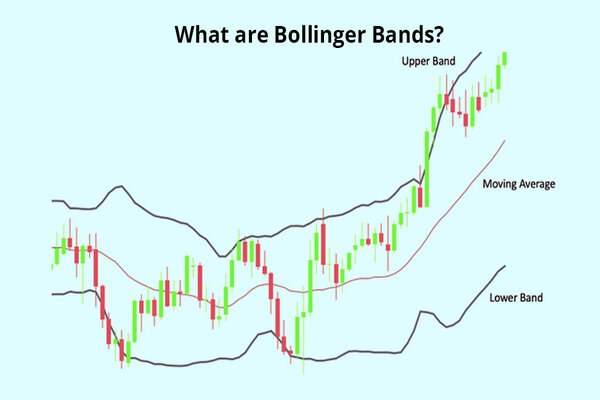
Bollinger Band is a volatility-based indicator that plots an average price with upper and lower bands to show how high or low price moves relative to recent market activity.
It consists of three lines plotted around price: a middle moving average, an upper band, and a lower band.
These bands expand when volatility increases and contract when volatility decreases, helping traders understand market conditions and identify potential price extremes.
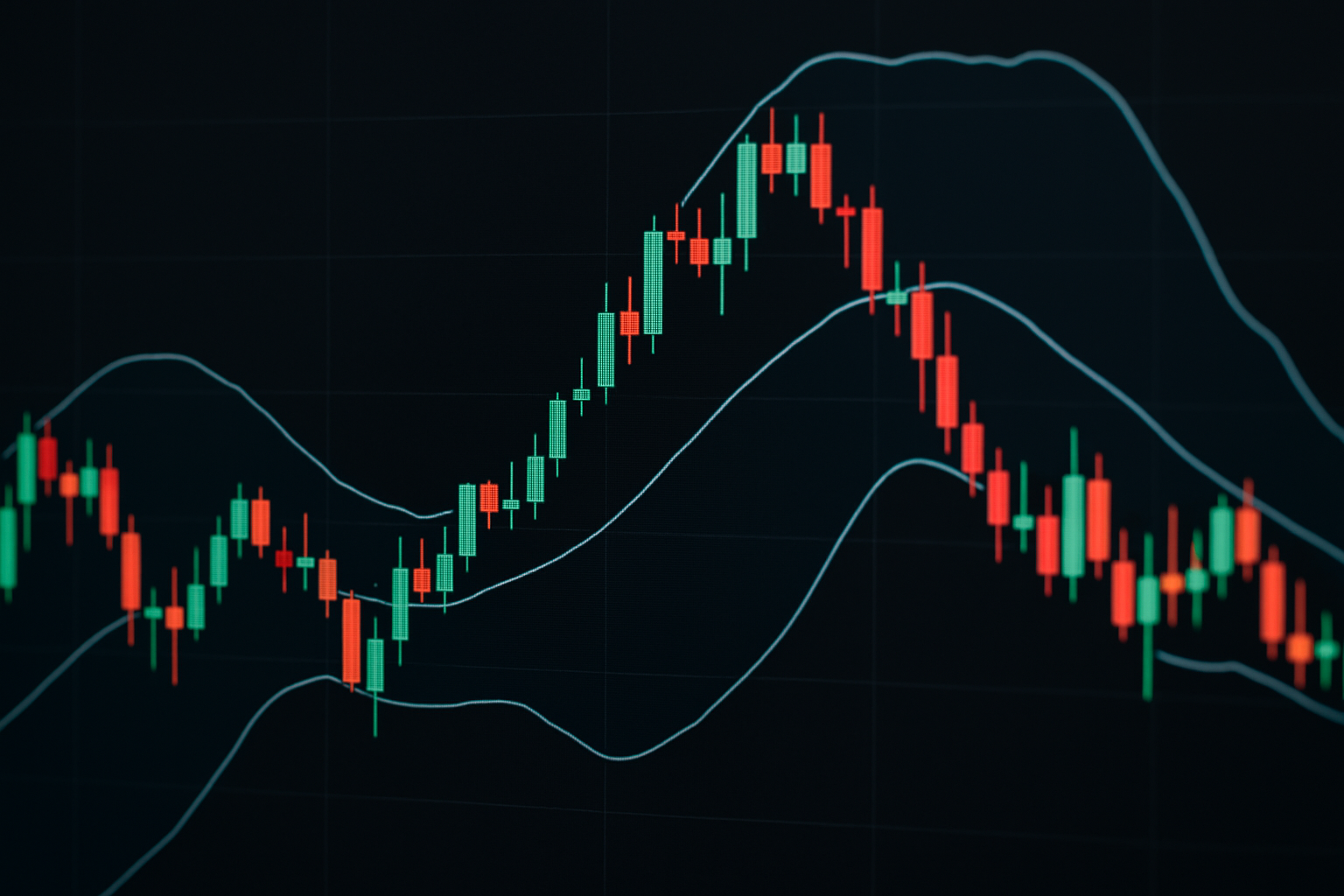
This table gives traders a visual representation of price relative to recent volatility.
| Element | Description |
|---|---|
| Middle Band | A Simple Moving Average (SMA), commonly set to 20 periods. |
| Upper Band | The SMA plus a selected standard deviation multiplier. |
| Lower Band | The SMA minus a selected standard deviation multiplier. |
| Volatility-Based Movement | Bands expand during high volatility and contract during low volatility. |
Identify relative overbought and oversold conditions.
Detect volatility squeezes before potential breakouts.
Judge whether a trend is gaining or losing strength.
Spot price extremes compared with recent movement.
Confirm trade ideas with RSI, MACD, volume, support, or resistance.
Bollinger Bands work best as a context tool. A touch of the upper or lower band is not a complete trading signal by itself.
The formula for Bollinger Bands involves three lines: the middle band is a simple moving average (SMA), and the upper and lower bands are calculated by adding and subtracting a multiple of the standard deviation from the middle band.
The standard formula uses a 20-period SMA and a 2 standard deviation multiplier.
Upper Band = 20-day SMA + (20-day standard deviation of price x 2)
Middle Band = 20-day simple moving average (SMA)
Lower Band = 20-day SMA - (20-day standard deviation of price x 2)

When price approaches or touches the upper band, it means the market is trading near the high end of its recent range.
This does not automatically mean “sell”; instead, it suggests:
Price is strong relative to recent movement
The market may be trending upward
The move could continue if momentum remains
Reversal signals must be confirmed with other tools
When price moves toward or touches the lower band, the market is trading near the low end of its recent range. This suggests:
Weakness or downward pressure
A possible continuation of the downtrend
A potential bounce only if confirmed by other indicators
The middle band acts like a short-term value area or balance point.
When price moves above the middle band:
Buyers are generally in control
The market may be trending upward
When mves below the middle band:
Sellers are stronger
The trend may be turning downward
When the upper and lower bands move farther apart, the market is becoming more volatile.
This can indicate:
Strong trending movement
Breakouts with high momentum
Possible continuation of the current direction
Widening bands often appear during sudden news or strong trend legs.
A “squeeze” happens when the bands move closer together. This signals:
Low volatility
Market compression
A strong breakout may be approaching
The squeeze is one of the most important Bollinger Band signals.
In strong trends, price may “walk” along the upper or lower band.
Walking the upper band: bullish strength
Walking the lower band: bearish strength
This is a confirmation of trend continuation rather than a reversal signal.
Bollinger Bands should not be used alone to enter trades, because band touches can happen repeatedly in strong trends, traders use confirmations such as:
RSI (to check momentum or divergence)
Volume (to confirm breakouts)
Candlestick patterns (for signals of rejection or continuation)
Support and resistance levels
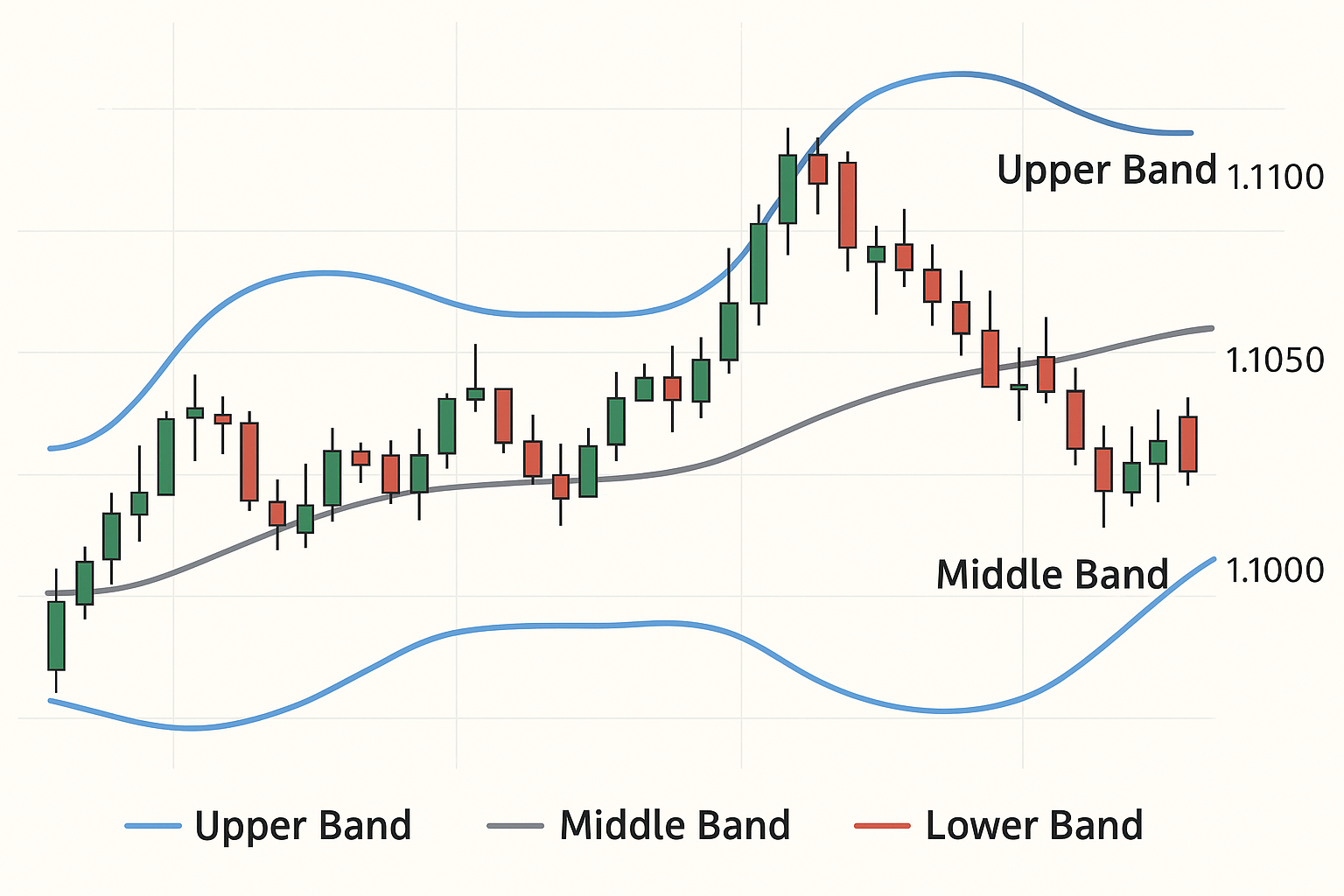 Imagine a currency pair trading around 1.1000 for the past several days.
Your chart calculates the average of the last 20 candles, and the 20-day SMA comes out to 1.1050.
This value becomes your Middle Band.
The market has been moving up and down moderately, and the platform measures this fluctuation as a standard deviation of 0.0025. Since Bollinger Bands use 2 standard deviations, the platform multiplies this value by 2 to create the “volatility cushion”.
SMA + (σ × 2)
= 1.1050 + (0.0025 × 2)
= 1.1050 + 0.0050
= 1.1100
SMA − (σ × 2)
= 1.1050 − (0.0025 × 2)
= 1.1050 − 0.0050
= 1.1000
Middle Band: 1.1050
Upper Band: 1.1100
Lower Band: 1.1000
How a trader would read this:
If price reaches near 1.1100, it’s on the high side compared to recent movement.
If price dips near 1.1000, it’s on the low side compared to recent movement.
If the bands are far apart, the market is very active.
If the bands are tight, the market is calm and could be getting ready for a big move.
It is simply a way to measure how much price has been jumping around recently.
Bigger jumps = bigger cushion.
Smaller jumps = smaller cushion.
Suppose price touches the upper band twice while the bands widen. A beginner might assume this means “sell”, but Bollinger Bands do not signal exact entries. Instead, the touch indicates that price has moved to a relative high compared to recent volatility.
To confirm a trade decision, the trader might combine it with RSI divergence, candlestick patterns, or trendline support.
This example shows traders that Bollinger Bands are best used in context, not alone.
A Bollinger Squeeze happens when the upper and lower bands move closer together. This shows that volatility is low and the market is trading in a narrow range.
A squeeze often appears before a bigger price move, but it does not show the direction of that move. Traders usually wait for price to break above resistance or below support before acting.
A simple squeeze setup may look like this:
Bullish signal: Price closes above the upper band after a tight squeeze.
Bearish signal: Price closes below the lower band after a tight squeeze.
Confirmation: Momentum improves, volume rises, or price breaks a key level.
Risk control: Avoid entering before the breakout is confirmed.
Bollinger Bands can also help traders follow a trend.
In an uptrend, price often stays above the middle band and moves toward the upper band. When price pulls back toward the middle band and holds, buyers may still be in control.
In a downtrend, price often stays below the middle band and moves toward the lower band. When price rises back toward the middle band but fails to break above it, sellers may still control the market.
This setup works best when the trend is clear. If price keeps crossing above and below the middle band, the market may be ranging instead of trending.
| Indicator | Focus | How It Differs |
|---|---|---|
| Bollinger Bands | Volatility and price extremes | Uses moving average and standard deviation |
| Keltner Channels | Price channels | Based on ATR instead of standard deviation |
| Moving Averages | Trend direction | No volatility component |
Moving Average: A calculated average of past prices used to smooth market noise and reveal trend direction.
Standard Deviation: A statistical measure showing how much price moves away from its average, commonly used to gauge volatility.
Volatility: The speed and magnitude of price changes within a market over a given period.
RSI (Relative Strength Index): A momentum indicator that measures the strength of recent price moves to identify overbought or oversold conditions.
Breakout: A price movement that pushes above resistance or below support, often signaling the start of a new trend.
Most beginners start with 20 periods and 2 standard deviations. This is the standard setting on most trading platforms and gives a balanced view of price and volatility.
Yes. Bollinger Bands work on short-term and long-term charts. The meaning of “20 periods” varies by chart. On a daily chart, it means 20 trading days. On an hourly chart, it means 20 hourly candles.
Yes. Bollinger Bands are popular in forex because currency pairs often move through periods of range, compression, and breakout. The indicator helps traders see when volatility is low, when price is stretched, and when momentum may be expanding.
No. Bollinger Bands do not predict reversals by themselves. A band touch shows that price is high or low relative to recent volatility. Reversal signals need confirmation from momentum, support, resistance, or price rejection.
Tight Bollinger Bands show low volatility and market compression. This can appear before a breakout, but it does not show direction. Traders usually wait for a confirmed move above resistance or below support.
No. Bollinger Bands are stronger when used with other tools such as RSI, MACD, volume, support and resistance, or candlestick patterns. This helps traders avoid reacting to every band touch.
Bollinger Bands give traders a clear visual guide to market volatility by plotting an average price line with dynamic upper and lower boundaries.
These boundaries adjust automatically based on how actively price has been moving, helping traders identify overbought and oversold zones, spot volatility squeezes, and evaluate trend strength.
While Bollinger Bands are versatile and beginner-friendly, they work best when combined with additional tools such as RSI or support and resistance analysis.
By understanding how the bands expand, contract, and interact with price, traders can make more informed decisions and better navigate changing market conditions.
Disclaimer: This material is for general information purposes only and is not intended as (and should not be considered to be) financial, investment or other advice on which reliance should be placed. No opinion given in the material constitutes a recommendation by EBC or the author that any particular investment, security, transaction or investment strategy is suitable for any specific person.



World's Best Broker