Published on: 2025-12-05
Updated on: 2025-12-05
Account Balance is the foundation of every trading decision, shaping position sizing, margin usage, and overall risk exposure from the very first trade.
In modern financial markets, especially as retail participation grows across forex, crypto, equities, and CFDs, understanding the real meaning of account balance helps traders avoid unnecessary losses and apply robust risk management.
The term remains one of the most searched technical concepts among new traders due to rising interest in leveraged products and algorithmic trading.
In the trading industry, the account balance is the amount of cash or settled equity available in a trading account before considering any open positions. It represents the trader’s starting capital after deposits, withdrawals, realized profit, and realized loss.
Unlike equity, the account balance does not fluctuate with market movement. It changes only when a trade is closed or when funds enter or leave the account.
This distinction is especially important for leveraged markets such as forex, crypto derivatives, and index CFDs, where unrealized gains and losses can be large relative to the initial balance.
Platforms show the account balance as a static number that updates after the system accounts for completed transactions.
All incoming and outgoing transfers directly modify the account balance. For example, a retail trader who deposits 1,000 USD to open a forex account begins with a balance of exactly 1,000 USD.
Only closed trades affect the account balance. If a trader closes a position with a 50 USD profit, the balance increases by 50 USD. If the position is closed with a 50 USD loss, the balance decreases by the same amount.
Trading fees such as spreads, commissions, rollover charges, and transaction costs impact the final realized result of each trade. Once applied, they adjust the balance accordingly.
Some trading environments allow structured rebates or program-based incentives. These can increase the account balance but depend on terms related to trading volume or settlement conditions.
Many beginners confuse account balance with equity because both appear in trading dashboards. The difference is essential.
| Concept | Definition | Changes When | Importance |
|---|---|---|---|
| Account Balance | Cash value after realized profits and losses | Only when trades close or funds move | Used for evaluating past performance |
| Equity | Balance plus unrealized P&L | Market price moves | Used to determine margin availability |
| Free Margin | Equity minus margin used | Position size or market price changes | Helps prevent margin calls |
| Margin Level | Equity divided by margin used | Market volatility | Critical metric for leveraged trading |
Understanding the relationship between these metrics helps traders maintain a healthy risk profile, especially in volatile conditions.
Account balance sets the baseline for determining appropriate lot sizes and leverage. A trader with a balance of 2,000 USD must calculate risk per trade relative to this figure to avoid excessive drawdowns.
Even though margin calls relate more to equity than balance, a low account balance limits a trader’s ability to open new positions or buffer market swings.
Professional traders evaluate monthly or quarterly performance by reviewing how the balance changes after all positions close. This allows accurate assessments independent of open-trade volatility.
Trading institutions require clear documentation of client account balances for auditing, reporting, and ensuring adherence to local financial standards. This protects traders and strengthens market integrity.
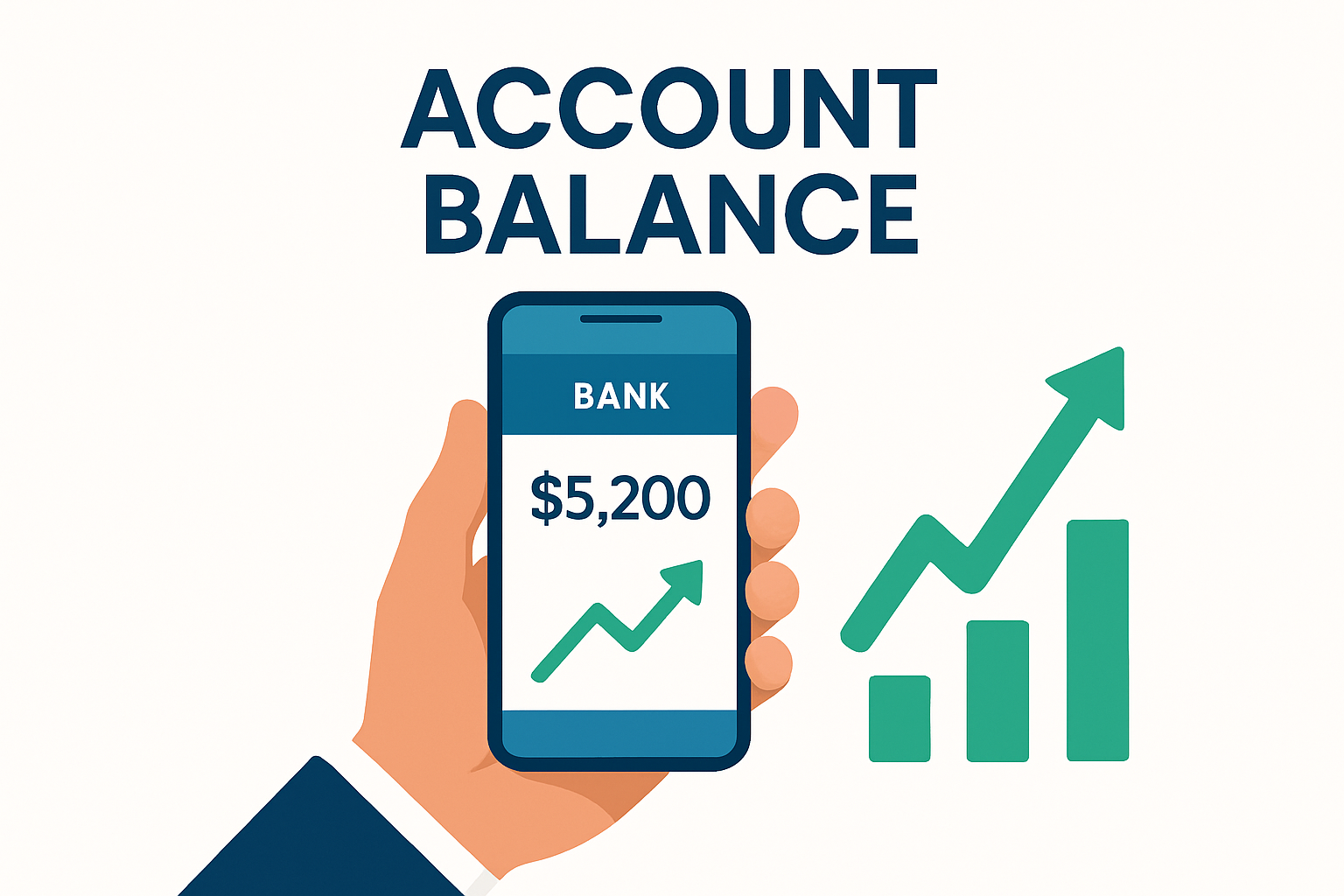
Imagine a trader deposits 5,000 USD and opens a EURUSD long position. As the trade runs, equity fluctuates with every pip, but the account balance remains fixed at 5,000 USD. Once the position closes with a 200 USD profit:
Account Balance: 5,200 USD
Equity: Matches account balance if no other trades are open
Available Margin: Increases, allowing new positions
This separation between floating results and actual account balance helps traders maintain discipline.
Using equity as a proxy for account balance can give a false sense of available capital, especially during market spikes.
A trade that appears profitable in the chart may result in a smaller realized gain once spreads and commissions settle.
When traders base position sizes solely on the balance, they may ignore floating losses that could reduce equity below safe levels.
On some platforms, swap charges or overnight funding fees apply at specific times. These adjust the balance only after settlement, which can confuse new traders.
Traders often design risk rules based on a percentage of account balance. For instance, risking 1 percent per trade ensures consistent exposure across different account sizes.
Traders use the balance to determine when to scale in or out. A rising balance may justify increasing position size within predefined limits.
Ending a trading session with a balance significantly lower than the start requires evaluation. Drawdown thresholds help traders avoid emotional decisions.
Automated systems rely on account balance to calculate acceptable trade sizes dynamically. If the balance drops, the algorithm reduces exposure to maintain consistency.
It is the amount of settled cash in a trading account after deposits, withdrawals, and closed trades. It does not include unrealized gains or losses.
No. It only updates when a position closes or when funds move in or out of the account.
Traders calculate position sizes and exposure limits based on a percentage of account balance, ensuring consistent risk-taking.
Account balance is the cornerstone metric for every trader, representing the settled capital available after accounting for all completed activity. It guides risk control, position sizing, strategic planning, and compliance reporting.
By distinguishing account balance from equity and free margin, traders avoid many common mistakes seen in leveraged markets and build a more structured, disciplined approach to trading.
Understanding this concept helps both new and experienced traders navigate fast-moving markets with clarity and control.
Disclaimer: This material is for general informational purposes only. It should not be considered financial or investment advice, nor should it be relied upon as a recommendation. Copy trading involves risk, and past performance does not guarantee future results.



World's Best Broker