Published on: 2025-12-04
Updated on: 2026-08-20
A demo account holds virtual money, not yours. You place real orders at live prices and keep every lesson, but you cannot withdraw a cent of the profit.
Opening one takes minutes and no deposit. EBC runs demo accounts on MetaTrader 4 and MetaTrader 5, desktop and mobile.
Four things change when the money is real: execution in fast markets, spreads around news, overnight funding costs, and your own behavior.
Expiry rules differ from one provider to the next, and several publish none at all. Check the expiry, the reset policy, and which platforms your login covers before you sign up anywhere.
A demo account for trading is a practice account funded with virtual money that runs on live market prices, so you place real orders and see real outcomes without risking capital. It carries no fee and no minimum deposit. Everything behaves like a live account except the money itself, which you can't withdraw. At EBC, the live account it prepares you for starts at USD 50.
 What is a Demo Account for Trading?
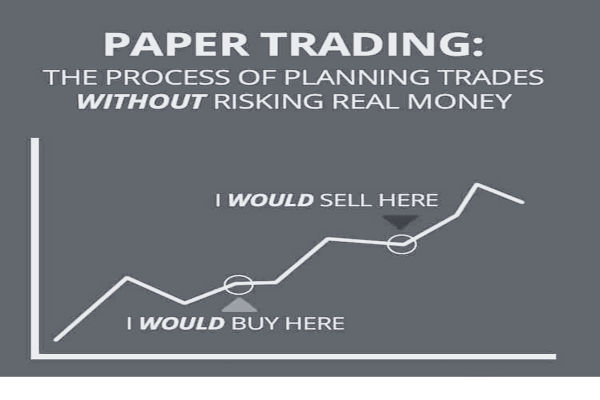
A demo account is a trading account credited with virtual funds that quotes the same prices as the live market. You buy, you sell, you set a stop-loss, and the profit or loss lands in a balance that exists only on paper. Nothing leaves your pocket.
You will also see it called a practice account, a paper trading account, or a trading simulator, and there is no meaningful difference between those three labels beyond which company happens to be doing the naming.
Price feed is what makes it worth your time. A simulator running on invented numbers teaches you nothing about how gold behaves at 3pm on a payrolls Friday. Live quotes show you exactly that.
Two things are missing. Your capital, and the consequence.
Almost everything a live account does. The exception is taking money out.
Beginners are the obvious users. Experienced traders open one too, usually to test an unfamiliar platform or to run a new idea a few dozen times before it touches live capital.
Learn the platform. Order types, stop-loss and take-profit placement, modifying a position, closing half of one. Boring, and it is the part that costs people money later.
Test an idea against real conditions. Run the same setup twenty times and count what happened, rather than remembering the three trades that worked.
Watch how an instrument moves. EBC lists more than 200 instruments across five asset classes on one account, spanning forex, commodities, indices, share CFDs and ETFs, so you can follow a currency pair and a stock index through the same week and see how differently they behave.
Practice on past data. MetaTrader’s strategy tester replays historical prices, which compresses months of price action into an afternoon.
A CFD, or contract for difference, is an agreement that pays the difference between your entry and exit price without you owning the underlying asset. That is what most demo accounts simulate. Worth knowing before you assume you are buying shares.
Register, download, log in. Most people place a first practice trade within ten minutes of starting.
Register. An email address and a few basic details. No deposit, and typically no identity documents at the demo stage.
Pick your platform. Download MT4 or MT5 for desktop or mobile, or open the web version. MetaTrader issues a separate account number and password per platform, so an MT4 demo login will not open MT5.
Log in with the demo credentials. Your virtual balance is already sitting there.
Place a trade you would place with real money. Same size logic, same stop. A demo trade you would never take in the first place teaches you nothing at all.
You are handing an email address to a company, so it is fair to ask who is on the other end. EBC Financial Group (UK) Limited is authorized and regulated by the Financial Conduct Authority under reference number 927552, and you can check that number yourself on the FCA register before you type anything into a signup form.
Demo terms vary more than people expect. The differences start to bite in week two, not on day one.
| What to Check | Why It Matters |
|---|---|
| Starting virtual balance | Commonly USD 10,000 to USD 100,000 across the market; too large and position sizing stops meaning anything |
| Expiry period | Published windows across the market run from 30 days to no expiry at all, and several providers state no policy |
| Reset or refill policy | Decides whether one bad week ends your practice |
| Platforms the login covers | A demo on a platform you will not trade live is practice you cannot use |
| Documents needed | Most demos need none; the live account will |
| Live minimum that follows | Sets what your first real position can actually be |
One quirk worth knowing: on MetaTrader, some demo servers keep an expired account alive while a position is still open, then cut access the moment it settles. Close your trades before the end date, not after.
Prefer testing to reading? A demo costs nothing to open and runs on the same MT4 and MT5 platforms as a live trading account. Open a demo with EBC.
Four things change. Only one of them is the money.
Execution. In a demo, your order is matched against a quote and nothing sits in front of it. On a live account in a fast market, the price can move between your click and your fill, which is called slippage, and it is the single most common surprise for traders arriving from a practice account. Most demo environments never reproduce it.
Spreads under pressure. Spread, the gap between the buy and sell price, widens around major data releases on a live account, sometimes sharply and for several minutes at a time. Demo pricing often stays smoother than the market it is quoting.
Carrying costs. Hold a leveraged position overnight, and a financing charge applies. Demos frequently ignore it. That quietly flatters any strategy holding positions for days, and while leverage and margin work identically in both environments, the cost of using them does not always show up in the practice version.
You. This is the big one. No platform simulates it.
Three or four weeks with a plan beats three months of just drifting without direction.
| Stage | What to Test | Ready When |
|---|---|---|
| Week 1: the platform | Order types, stop placement, closing part of a position | You can open, change and close a trade without checking a guide |
| Week 2: one instrument | A single pair or index, watched through a full week including data releases | You can describe how it usually moves without opening the chart |
| Week 3: sizing | The same setup at different position sizes, recording margin used each time | Your size comes from your stop distance, not from a round number |
| Week 4: the record | Every trade logged with the reason for entering and the reason for leaving | Your log shows a process repeating, not a run of unrelated decisions |
Somewhere around week four the demo stops teaching, which is a judgment rather than a rule, and the reason is that the only lesson left by then is the one it structurally cannot deliver.
A virtual loss is information. Losing real money is information plus a physical reaction, and that reaction is what changes how people size positions, how long they hold, and when they finally exit.
So the bridge is not a bigger demo balance. It is a first live position small enough that losing it would be genuinely boring, held to the rules you wrote down in week four, and scaled only after those rules survive contact. Demo results are hypothetical and are not indicative of live results.
It depends entirely on the provider. Published expiry windows run from 30 days to no stated limit at all, and some providers publish no policy on their demo page whatsoever. Confirm the expiry and the reset policy before you register. Both decide how much practice you actually get.
No. Profits on a demo account are virtual and cannot be withdrawn, because no capital was ever deposited in the first place. What you take out is the experience and the trade record.
Usually not. Most demo registrations ask only for contact details, while a live account requires identity verification because regulated firms are obliged to run those checks. Requirements vary by provider and by the entity you open with, so check before you register.
Not on the demo itself. Every position there settles in virtual funds. The risk worth naming is a different one: habits built where losses cost nothing transfer directly to an account where they do.
No single answer exists, so judge it on four things. Does it run on the platform you intend to trade live on, does it price the instruments you actually want to trade, does it last long enough to finish a plan like the one above, and can you reset the balance if you exhaust it? A demo failing any of those will waste your month.
Yes, for a defined stretch, with something specific to learn. A demo account for trading answers a narrow question well: can you operate the platform, and does your idea survive contact with live prices? It cannot answer the wider one, which is how you will behave when the number moving on the screen belongs to you.
Use it for the first question. Answer the second with a small live position and the rules you wrote while nothing was at stake.
An EBC demo costs nothing to open on MT5, and the funding page sets out what a live account needs once you decide you are ready.