Published on: 2026-04-09
Updated on: 2026-04-09
Many traders build strategies that deliver impressive backtest results, only to see them underperform or fail entirely in live markets. This disconnect is not accidental. It reflects fundamental differences between simulated environments and real-world trading conditions.
Backtesting reflects ideal conditions that rarely exist in live markets.
Execution costs, slippage, and spreads can materially reduce performance.
Over-optimised strategies often fail when exposed to new data.
Market conditions evolve, making historical results less reliable.
Consistent execution matters more than a “perfect” backtest.
Backtesting is the process of applying a trading strategy to historical data to evaluate how it would have performed in the past. It is an essential step in strategy development, allowing traders to assess profitability, risk, and consistency.
However, backtesting operates in a controlled and simplified environment. It assumes:
Immediate order execution at desired prices
Stable spreads and minimal transaction costs
Reliable and complete historical data
No emotional or behavioural interference
For example, a trader may test a trend-following strategy on the S&P 500 over the past decade and observe consistent returns across different market cycles. While informative, this result reflects a best-case scenario rather than real-world conditions.
Live trading introduces complexity that backtests cannot fully replicate. Markets are dynamic systems influenced by liquidity, macroeconomic developments, and participant behaviour.
In real-time trading, factors such as:
Sudden volatility spikes
Delayed order execution
Changing bid-ask spreads
Shifts in market sentiment can significantly impact outcomes.
For instance, in the 2025–2026 environment, characterised by elevated interest rates and heightened volatility, stocks like NVIDIA have experienced rapid price swings. A strategy that performs smoothly in backtesting may struggle to adapt to such conditions in live execution.
Backtests often assume trades are executed at exact prices. In reality, this is rarely the case.
Slippage occurs when the execution price differs from the intended price.
Spreads widen during periods of volatility, increasing trading costs.
Even small differences can compound over time. A strategy that shows 15% annual returns in backtesting may deliver significantly lower returns once realistic execution costs are applied.
Backtesting relies on historical data that is often cleaned and structured. Live markets, however, are far less perfect.
Key issues include:
Missing or delayed price feeds
Differences between tick data and aggregated data
Survivorship bias, where failed companies are excluded
This means your backtest may be based on data that is more accurate and more favourable than what you encounter in live trading.
Curve-fitting occurs when a strategy is excessively tailored to historical data.
Too many parameters can “force” a strategy to fit past price movements.
The strategy may capture noise rather than a genuine edge.
A useful rule of thumb:
The smoother and more perfect a backtest appears, the more cautious you should be.
Such strategies often fail when exposed to new, unseen market conditions.
Backtests assume perfect discipline. Live trading does not.
In practice, traders may:
Exit positions early due to fear.
Ignore signals after a series of losses.
Increase risk following short-term gains.
In backtesting, rules are followed automatically. In live trading, they must be followed under pressure. This gap between theory and execution is one of the most underestimated reasons for performance divergence.
While it is impossible to eliminate the difference entirely, traders can take structured steps to reduce it.
1. Backtesting: Validate the idea
Test whether the strategy has a logical and statistical foundation.
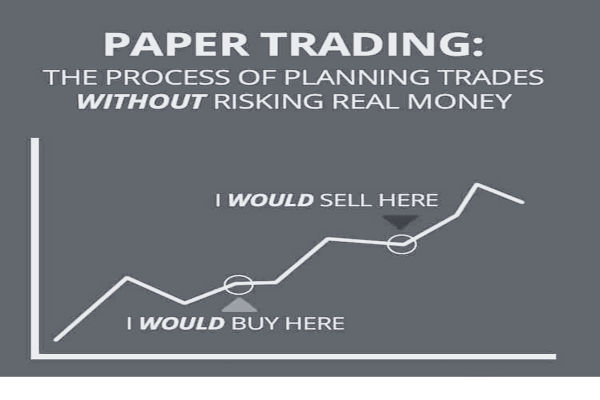
2. Forward Testing (Paper Trading): Test execution
Run the strategy in real-time without risking capital to observe how it performs under live conditions.
3. Live Trading (Small Capital): Test behaviour
Start with smaller positions to evaluate psychological discipline and execution consistency.
Incorporate realistic slippage and transaction cost assumptions.
Use out-of-sample and walk-forward testing instead of static optimisation.
Test strategies across different market regimes (bull, bear, high volatility).
Avoid excessive parameter tuning.
These steps help ensure that a strategy is not only profitable in theory but also resilient in practice.
The difference between backtesting and live trading can be understood through three layers:
Model Risk: Flawed assumptions and overfitting
Market Risk: Changing conditions and liquidity constraints
Execution Risk: Slippage, latency, and psychological factors
The larger these gaps, the more likely live results will diverge from backtested performance.
Backtests often ignore real-world "friction" such as slippage, variable spreads, and execution delays. Additionally, many strategies suffer from over-optimisation; they are so perfectly tuned to historical data that they lack the flexibility to handle new, changing market conditions.
A 20% to 50% reduction in performance is common when transitioning from a backtest to a live environment. Short-term and high-frequency strategies typically experience the largest drops because they are highly sensitive to execution costs and millisecond-level market fluctuations.
Yes, backtesting is a critical starting point. It allows beginners to understand a strategy's logic, risk profile, and historical drawdown without risking capital. However, it should be viewed as a feasibility study rather than a guarantee of future profits.
Forward testing (or paper trading) involves running a strategy in real time using live data feeds without risking actual capital. This is the "bridge" that helps traders evaluate execution quality, observe current market behaviour, and test their own psychological discipline before committing real funds.
While rare, it is possible if current market conditions become more favourable than the historical period tested, or if broker execution exceeds the assumptions made in the test. However, prudent traders should always assume that live performance will be less favourable than backtest results.
A flawless backtest does not guarantee success in live markets. Real-world trading introduces friction, uncertainty, and emotional pressure, factors that no historical simulation can fully capture.
Successful trading is not about building perfect strategies, but about executing robust ones consistently under imperfect conditions.
Disclaimer: This material is for general information purposes only and is not intended as (and should not be considered to be) financial, investment or other advice on which reliance should be placed. No opinion given in the material constitutes a recommendation by EBC or the author that any particular investment, security, transaction or investment strategy is suitable for any specific person.