Published on: 2026-07-03
Updated on: 2026-07-03
In the late 1980s and early 1990s, Japan was widely seen as the economy most likely to challenge American dominance. The concern was not baseless: in 1990, Japan was the world’s second-largest economy, with nominal GDP of about $3.2 trillion versus about $6.0 trillion for the United States. But the asset bubble burst, debt pressure grew, and demographics later turned a confident forecast into a warning.
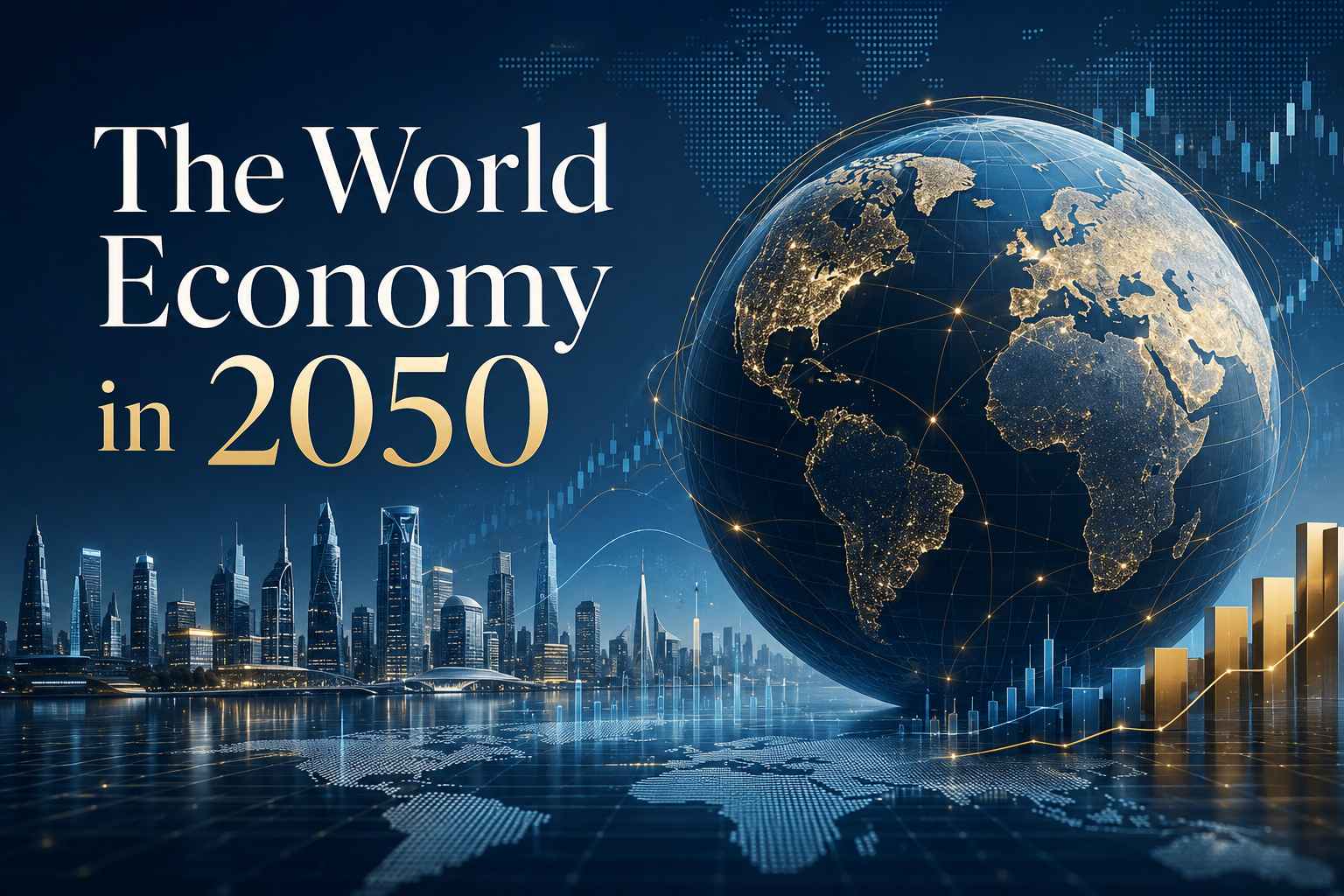
That is worth remembering whenever someone confidently names the leading economic power of 2050, whether it is China, the United States, or India. GDP measures size. It does not measure dependence, and dependence is what economic power actually means: who controls the currency, technology, energy, and supply chains other economies rely on.
The real question for 2050 is not who will have the biggest GDP. It is what economic power will mean by then, and who will hold it.
GDP alone will not decide the leading economic power in 2050. Economic power will also depend on currency trust, technology control, energy security, supply chains, demographics and institutions.
China has the strongest claim if the measure is economic scale. Its manufacturing base, PPP GDP leadership and industrial capacity support its case, but ageing demographics, debt, resource dependence and productivity risks weaken the certainty.
The United States may remain the centre of global financial power. Even if it loses the top GDP ranking, the dollar, US capital markets, technology ecosystem and legal credibility still give it system-level influence.
India may be the most important growth story, not the guaranteed winner. Its young population and digital economy are major advantages, but low per-capita income, infrastructure gaps, energy dependence and execution risks remain.
Resource-rich and strategically placed regions may gain more power than GDP rankings suggest. The EU, ASEAN, the Middle East, Africa and Latin America could influence the 2050 economy through regulation, minerals, energy, logistics and supply chains.
The 2050 economy may not have one clear winner. China may lead in scale, the US in finance, India in growth momentum, and resource economies in strategic leverage.
A country can have enormous output and still depend on systems it does not control. It can rely on someone else’s currency to settle trade, someone else’s chips to run its industries, someone else’s shipping lanes to move its goods, or someone else’s capital markets to finance its growth. Size without control is not the same as power.
By 2050, economic power will likely sit across several layers rather than one scoreboard.
| Type of power | What it measures | Why it counts in 2050 |
|---|---|---|
| Nominal GDP | Dollar value of output | Trade, debt, earnings, and global purchasing power |
| PPP GDP | Purchasing-power-adjusted output | Domestic scale and internal demand |
| GDP per capita | Average income level | Whether size becomes prosperity |
| Reserve currency power | Global trust in a currency | Who funds, settles, and prices international risk |
| Technology control | Chips, AI, cloud, defence, and software | Productivity and strategic dependence |
| Resource leverage | Energy, food, minerals, and logistics | Bottleneck power even for smaller economies |
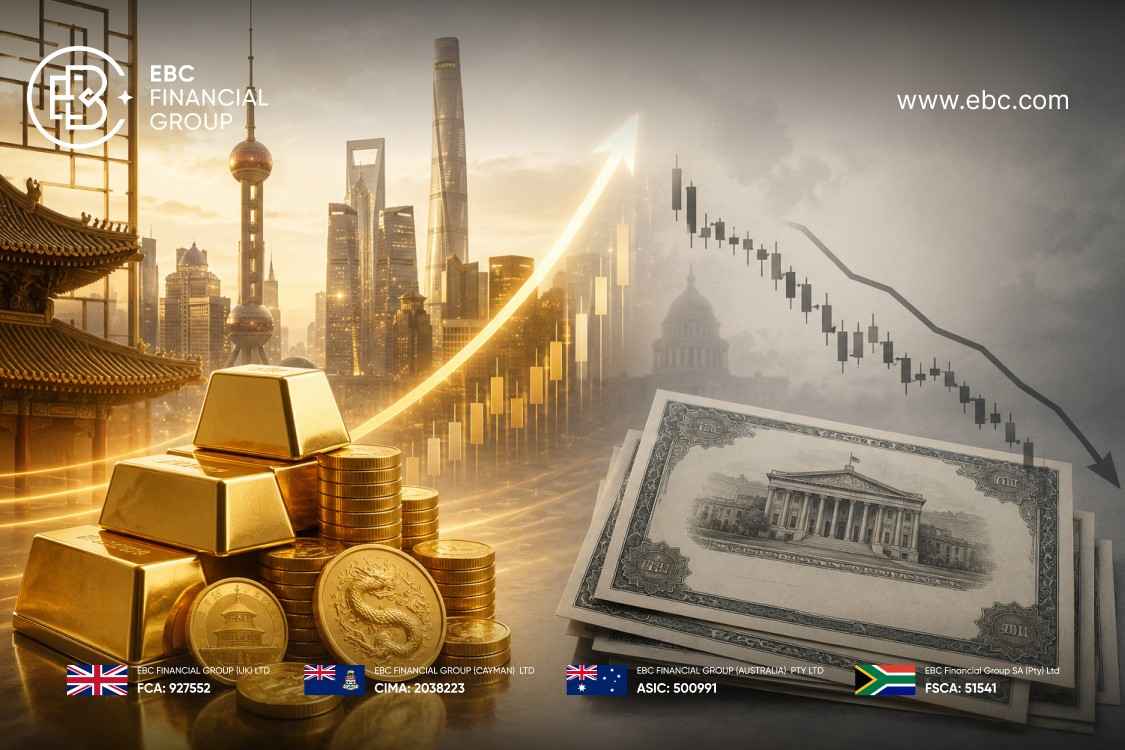
If the only measure is total economic output, China has the strongest claim. Long-range projections from PwC and Goldman Sachs both place China at or near the top of the 2050 economy, especially when purchasing-power parity is used. Those forecasts support China’s scale case, but they should be read as scenarios, not certainties.
The latest available numbers already show why measurement changes the answer. In nominal terms, China’s GDP is about $19.5 trillion, still below the United States at about $30.8 trillion. In PPP terms, however, China already ranks ahead. Manufacturing also remains central to the story, accounting for roughly a quarter of China’s GDP.
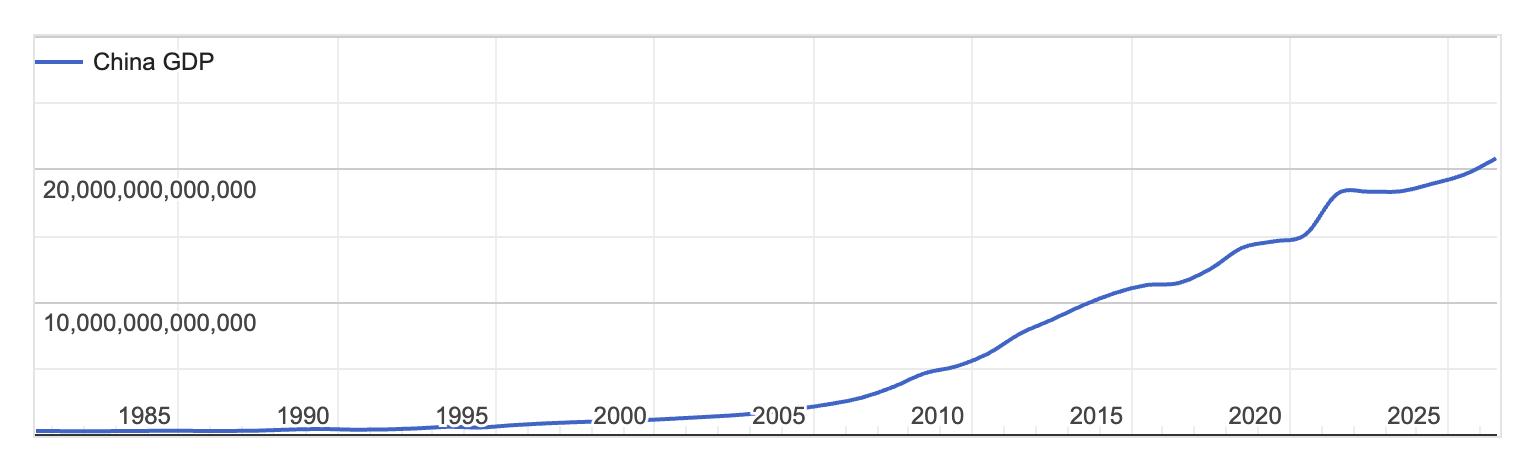
Trade deepens the picture. China’s exports of goods and services are around one-fifth of GDP, while imports are slightly lower. China is no longer only the low-cost export machine of the 2000s. It is also a large domestic economy with rising consumer, industrial, and technology demand.
The import side is the pressure point. China’s industrial system still depends on crude oil, integrated circuits, iron ore, petroleum gas, copper ore, and other strategic inputs from abroad. In 2050, China’s strength will depend not only on what it can produce, but on whether it can secure the energy, chips, food, and minerals needed to keep production moving.
Scale is not destiny. China faces an ageing population, high local government and corporate debt, property-sector weakness, and export restrictions from trading partners trying to reduce dependence on Chinese supply chains. Productivity growth, which powered China’s rise for decades, usually slows as economies mature.
China may have the strongest scale argument, but scale becomes less powerful if productivity, capital confidence, resource access, and demographics weaken together.
Many long-range projections suggest the US may not always rank first by total GDP in 2050. Writing the US out of the story would still be a mistake.
The US holds a different kind of advantage: it prices global risk, funds global innovation, and anchors global finance. The dollar remains the dominant reserve currency and the default unit for international trade and debt.
The US dollar was on one side of about 89% of global foreign-exchange trades in April 2025, and it still accounted for about 57% of official foreign-exchange reserves at the end of 2025. The euro was far behind at roughly 20%, while the renminbi remained below 2%.
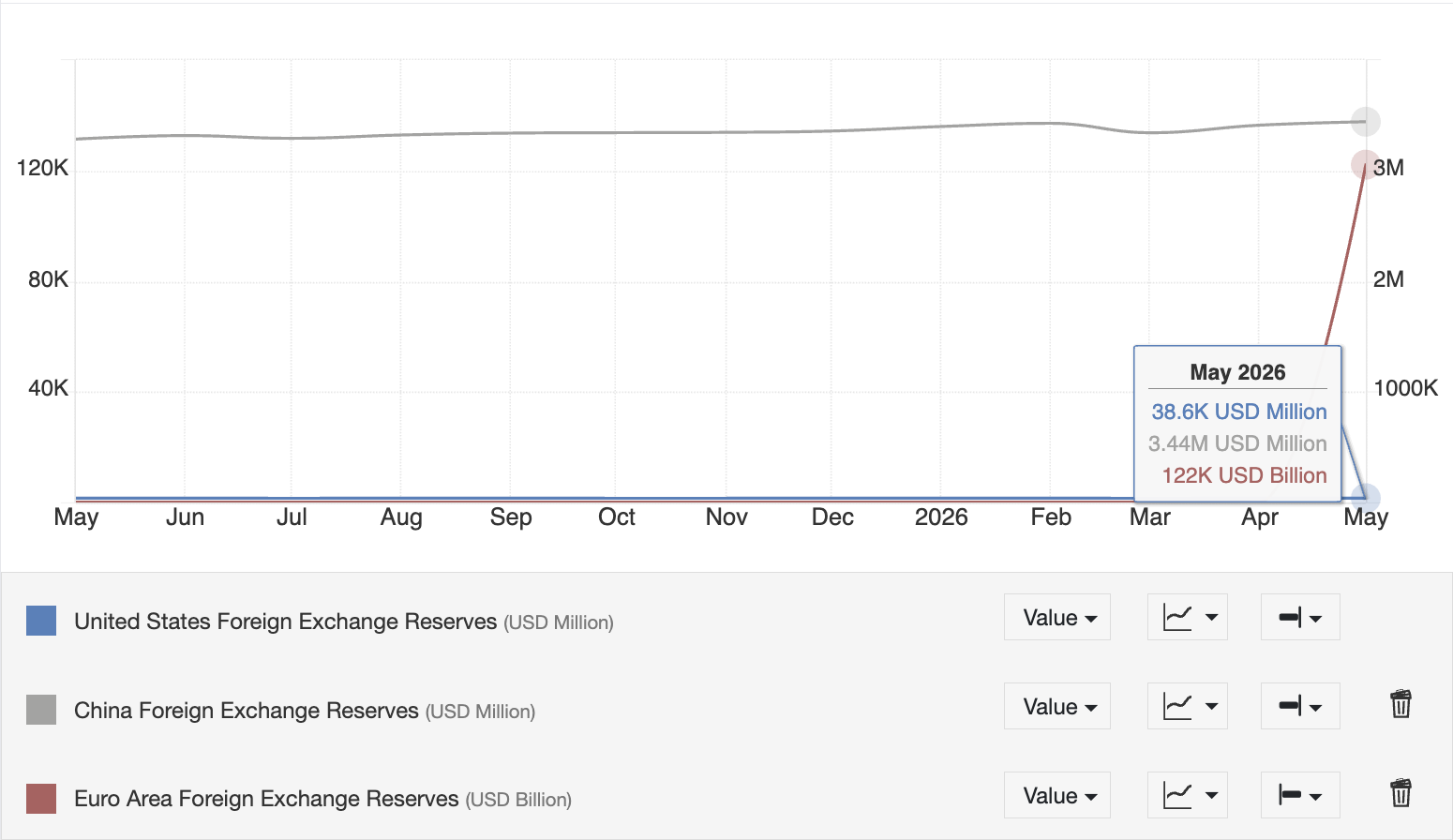
US capital markets add another advantage. US equity markets represent nearly half of global market capitalisation, and US fixed-income markets account for about 40% of worldwide securities outstanding. American venture capital, technology platforms, defence innovation, and research universities continue to attract talent and capital from abroad.
The US is also less trade-dependent than many major economies because of its huge domestic market. Exports and imports each sit in the low-to-mid teens as a share of GDP. Still, the US imports heavily through consumer goods, industrial inputs, electronics, pharmaceuticals, and supply-chain-linked products.
The US does not need the largest GDP to remain powerful. It needs to remain the place where the rest of the world routes money, innovation, and risk. That is why the US case should be framed less as “staying number one” and more as remaining the system other systems plug into.
The weakness in the US case is trust. High public debt, fiscal pressure, political dysfunction, and weaker institutional credibility could slowly erode the premium attached to US assets. The dollar system is powerful, but not automatic. It depends on the rest of the world continuing to believe US markets are liquid, reliable, and legally credible.
India is frequently cast as the automatic winner of the next few decades. Growth potential is not the same as economic leadership.
India’s advantages are real: a young and large population, fast-growing digital public infrastructure, a strong services sector, and rising manufacturing ambition as companies diversify supply chains away from single-country dependence. These are valuable advantages, especially as China ages and advanced economies face slower labour-force growth.
But tailwinds are not guarantees. India still faces gaps in physical infrastructure, low per-capita income, uneven labour-force participation, weaker female participation, uneven education quality across states, rising energy demand, and inconsistent administrative capacity.
The latest available data show why the leadership claim needs caution. India’s economy is near $3.9 trillion, far below China and the United States. Its GDP per capita is around $2,700, compared with about $13,900 for China and about $90,000 for the United States.
| Economy | Latest GDP level | GDP per capita | Trade exposure | What the number shows |
|---|---|---|---|---|
| United States | About $30.8T | About $90,000 | Low-to-mid teens | Deep domestic market and financial power |
| China | About $19.5T | About $13,900 | Around one-fifth of GDP | Huge scale with input dependence |
| India | About $3.9T | About $2,700 | Low-20s share of GDP | Large upside, lower income, and energy exposure |
India’s 2050 story will depend heavily on energy. It is already one of the world’s major crude oil importers, and rising fuel demand can pressure its external balance when oil prices rise or the rupee weakens. A stronger India in 2050 would need services, manufacturing, infrastructure, energy security, and broader income growth moving together.
Whether India converts its demographic advantage into broad-based prosperity, or simply into a larger economy with persistent inequality, will depend on choices made over the next two decades, not population trends alone.
India may be the most important growth story of 2050, but growth potential and economic leadership are not the same thing.
A three-way comparison between China, the US, and India misses a large part of the picture. Several regions may carry more influence in 2050 than their GDP ranking suggests because they control resources, rules, capital, or strategic geography.
| Region | Why it may hold influence |
|---|---|
| European Union | Regulation, green technology, industrial standards, luxury goods, and institutional capital |
| ASEAN | Manufacturing relocation, young consumers, and supply-chain diversification |
| Middle East | Energy wealth, sovereign funds, logistics, AI infrastructure, and data centres |
| Africa | Fast labour-force growth, minerals, and future consumer markets |
| Latin America | Food, energy, copper, lithium, and water resources |
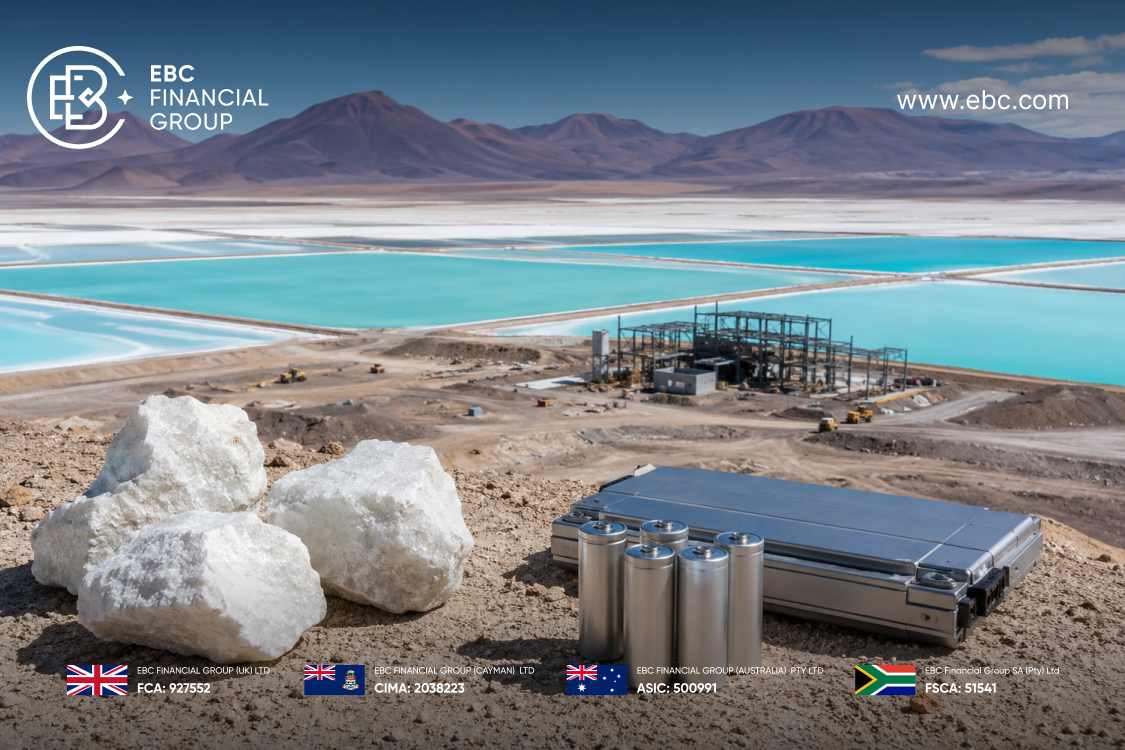
Critical minerals strengthen this argument. Lithium demand rose nearly 30% in 2024, while demand for nickel, cobalt, graphite, and rare earths increased by around 6% to 8%, driven by electric vehicles, battery storage, renewables, and grid investment.
China is also the leading refiner for most strategic minerals tracked by the IEA, with an average market share of about 70%.
Resource power in 2050 will not only come from where minerals are mined. It will also come from who processes, finances, ships, and stockpiles them.
The honest answer does not fit in one sentence.
If GDP is the measure, China has the strongest claim. If financial power is the measure, the US may remain the centre of gravity. If growth momentum is the measure, India may carry the strongest long-term expansion story.
If strategic leverage over resources and supply chains is the measure, energy and mineral-rich economies may carry more weight than their GDP ranking implies.
The 2050 economy may not produce one winner. It may split power across several systems, each dominant in a different layer of how the global economy actually functions.
The question worth asking is not only which country becomes the biggest economy in 2050. The more useful question is which country, or which system, controls the things economic power is built on: money, technology, energy, supply chains, demographics, and trust.
That is harder to answer than a GDP ranking. It is also the only question that will still matter in 2050.