Published on: 2026-07-06
The Korean won is still down about 6% in 2026 despite the AI memory boom because Korea’s export strength is not converting cleanly into KRW demand. Semiconductor shipments have surged, USD/KRW remains near 1,530, and the currency market is still giving more weight to capital outflows, dollar retention and offshore hedging than to record chip sales. Korea is exporting the AI cycle, while the won is still trading the capital-flow cycle.
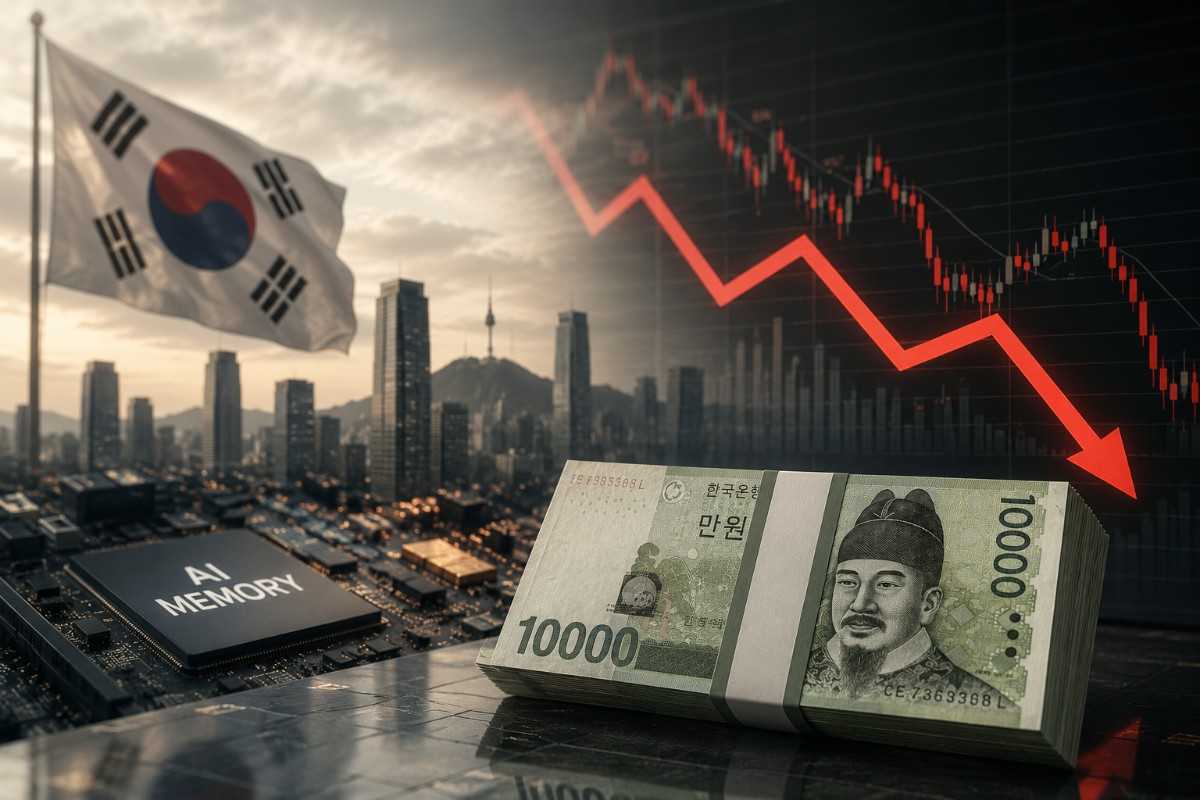
KRW is down about 6% against the US Dollar in 2026, with USD/KRW still near 1,530.
June exports reached $102.25 billion and chip exports hit $44.82 billion, confirming that the AI memory boom is already visible in Korea’s trade data.
Dollar retention, overseas asset purchases and hedging are absorbing part of the chip-cycle benefit.
Samsung, SK Hynix and Korea ETFs can rally before KRW strengthens, because equity and currency exposures move through different channels.
The won needs capital inflows, not just another record export month.
Korea’s currency is weak even as Korea’s AI export data is strong.
| Category | Latest reading | Market message |
|---|---|---|
| Korean won | Down about 6% in 2026 | KRW has not joined the AI rally |
| USD/KRW | Near 1,530 | Dollar demand remains firm |
| June exports | $102.25 billion | Korea’s trade engine is strong |
| Chip exports | $44.82 billion | AI memory demand is real |
That is the mismatch. Korea is earning more from AI memory, but USD/KRW remains high and KRW remains weak.
Dollar demand is still absorbing Korea’s export surplus. Overseas asset purchases, foreign equity outflows and hedging demand are keeping USD/KRW elevated even as chip exports rise. The FX market is not rejecting the AI boom. It is asking where the dollars settle.
The Bank of Korea’s April balance-of-payments data showed a $28.29 billion current-account surplus and a $25.46 billion rise in financial-account net assets. The surplus shows external earnings strength. The rise in financial-account assets shows capital still moving abroad.
Korean authorities have signalled action against excessive won volatility and one-sided FX moves, but smoothing volatility is different from defending a fixed USD/KRW level. Policy can slow disorderly moves near 1,530, while capital flows decide whether the won can sustain a recovery.
That split explains why a trade surplus can coexist with a weaker won. The problem is not AI demand. The problem is capital direction.
The export boom is already visible in the data. June shipments crossed $102.25 billion, while semiconductor exports reached $44.82 billion after a 199.5% annual surge.
The 199.5% increase partly reflects a weaker comparison base, so the more durable signal is the absolute level: chip exports reached a record $44.82 billion.
The FX impact depends on conversion. Export receipts support KRW only when companies sell dollars and buy won. AI memory producers also need dollars for overseas capex, equipment purchases, supply-chain payments and balance-sheet flexibility.
Strong exports raise Korea’s dollar income. They do not force immediate buying of won.
Samsung and SK Hynix prove the boom, but earnings and FX conversion clear through different channels.
Samsung’s first-quarter revenue reached KRW 133.9 trillion, with operating profit at KRW 57.2 trillion. SK Hynix reported KRW 52.5763 trillion in revenue and KRW 37.6103 trillion in operating profit, with a 72% operating margin. The earnings data confirms that AI memory has become Korea’s profit engine.
AI profits can lift Samsung, SK Hynix and Korea-linked equity products before the currency responds. Equity markets price earnings first. FX markets price settlement, hedging and capital movement.
EWY shows the split clearly. SK Hynix accounts for 24.64% of the iShares MSCI South Korea ETF and Samsung Electronics accounts for 21.82%, placing nearly half the fund in the two AI-memory names. Korea exposure has become an AI equity trade before it has become a won recovery trade.
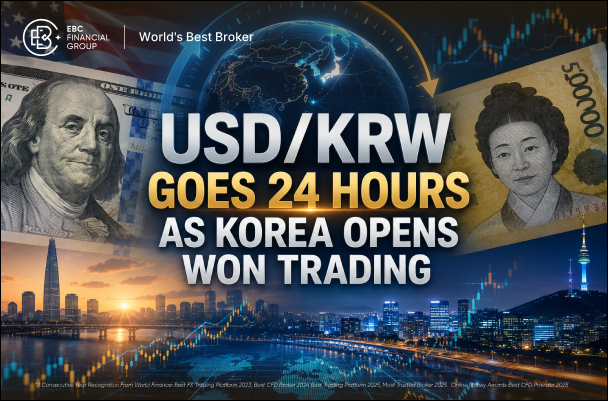
South Korea launched 24-hour weekday won trading on July 6, extending the market from the previous 17-hour window. The reform improves global access and strengthens Seoul’s case for eventual inclusion in the MSCI developed-market index.
Longer trading hours can reduce Korea’s access discount. They can also give offshore accounts more time to hedge KRW exposure, react to US data and adjust positions during New York hours.
The launch did not reverse the won’s weakness. Better access improves market structure before it changes currency direction.
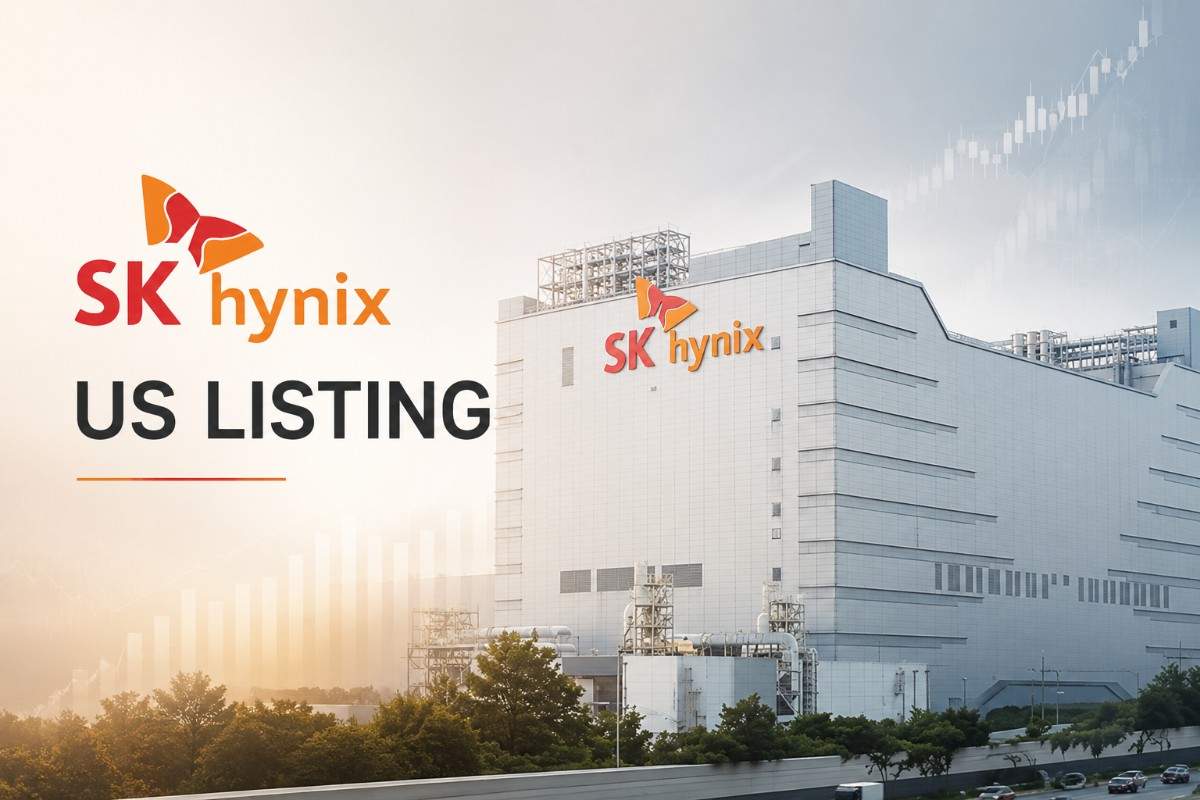
SK Hynix’s planned Nasdaq ADR listing could change where Korea’s AI memory trade is bought. The company plans to issue 17.79 million new shares, with trading expected to begin on July 10, and the offering is reported to be valued at roughly $29 billion.
The listing can widen global access to SK Hynix. It can also reduce the need to buy won-denominated local shares for the same exposure.
The FX impact is not one-way. The listing may bring capital into Korea’s industrial base, while part of the AI trade migrates into US-listed instruments. The won benefits only if proceeds and follow-on flows create real KRW demand.
Exporters convert more AI-linked dollar revenue into won.
Foreign equity flows return to Korean shares without heavy FX hedging.
Korean overseas securities demand slows.
USD/KRW breaks below 1,500 while exports remain strong.
24-hour trading improves liquidity without amplifying offshore hedging.
The won needs proof that AI income is reaching the FX market. Stronger chip shipments alone are not enough.
The Korean won is weak because chip exports generate dollar income, not automatic won buying. Export revenue can stay offshore, fund equipment purchases, support overseas capex or sit in corporate balance sheets. KRW strengthens only when enough of that dollar income returns to the local FX market.
Samsung and SK Hynix benefit first because equity markets price earnings, margins and AI memory demand directly. The won reacts to a different channel: settlement flows, hedging, overseas investment and foreign capital movement. That gap allows AI-linked stocks to rally while USD/KRW stays elevated.
Not immediately. 24-hour won trading improves access, liquidity and price discovery, but it does not decide direction on its own. The reform helps KRW only if longer trading hours attract durable, unhedged capital rather than simply giving offshore accounts more time to hedge won exposure.
Yes, but the FX impact is not one-way. A Nasdaq listing can widen global access to SK Hynix and support Korea’s AI capital story. It can also shift part of the AI trade into US-listed instruments, reducing the need to buy won-denominated local shares for the same exposure.
The Korean won needs more than strong chip exports to recover. USD/KRW would need to break below 1,500 while Korea keeps posting chip-led surpluses, foreign equity flows return to local markets, and hedging pressure fades. That combination would show AI export income is finally reaching the currency market.
May balance-of-payments data and SK Hynix’s planned Nasdaq ADR debut will test whether Korea’s AI cycle is pulling capital back into KRW. Export data already proves the chip boom. The unresolved question is whether that boom creates domestic currency demand or gives global markets cleaner ways to own Korean AI memory without owning the won.
If USD/KRW stays near 1,530 while chip exports keep breaking records, Korea has an AI boom with a currency leak.