Published on: 2026-08-24
Updated on: 2026-08-24
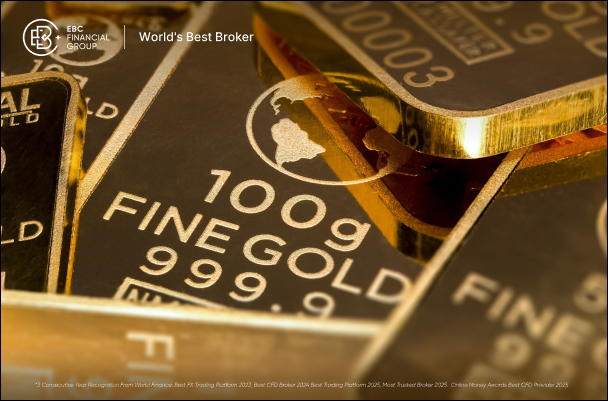
Gold and gold-mining ETFs can move in the same direction but by very different amounts. On August 19, 2026, U.S. gold futures rose about 2.8%, SPDR Gold Shares (GLD) gained 3.3%, while the VanEck Gold Miners ETF (GDX) jumped 9.25%.
The reason is operating leverage. Gold miners sell gold but incur substantial costs to produce it. When gold prices rise faster than those costs, miners' margins and expected earnings can rise by a much larger percentage than the metal itself. The same effect can work in reverse when gold falls.
Gold-miner ETFs own mining companies rather than bullion, so they are affected by company profits as well as the gold price.
A 10% rise in gold can produce a much larger percentage increase in a miner's margin if production costs remain relatively stable.
GDX's 9.25% gain on August 19 does not mean it is a 3x gold product. The extra sensitivity comes from the economics and valuation of the mining companies it owns.
Production, costs, debt, mine quality, political risk and stock-market valuations can all change how strongly miners respond to gold.
Operating leverage works in both directions, so miners can also fall much faster than gold.
The easiest way to understand the difference is through a simplified mining example.
Suppose gold trades at $4,000 per ounce and a miner has total production costs of $2,500 per ounce.
The simplified margin between the selling price and production cost is therefore:
$4,000 - $2,500 = $1,500 per ounce
Now suppose gold rises 10% to $4,400, while the miner's cost remains at $2,500.
The margin becomes:
$4,400 - $2,500 = $1,900 per ounce
| Gold at $4,000 | Gold at $4,400 | |
|---|---|---|
| Gold price | $4,000 | $4,400 |
| Illustrative cost per ounce | $2,500 | $2,500 |
| Simplified margin per ounce | $1,500 | $1,900 |
| Gold-price change | — | +10.0% |
| Margin change | — | +26.7% |
Gold has risen 10%, but the miner's simplified margin per ounce has increased 26.7%.
That amplification is operating leverage.
A miner's production costs do not automatically increase dollar for dollar with the gold price. When costs stay relatively stable, a larger portion of the higher selling price can flow through to the economics of each ounce produced.
The $1,500 and $1,900 figures are simplified operating spreads, not accounting profit. Mining companies still face taxes, interest costs, corporate expenses, exploration spending and other charges. The example is designed to show why their earnings can be much more sensitive to gold than the metal itself.
This distinction is important.
GDX does not mechanically target two or three times the daily return of gold. It owns shares of gold-mining companies.
GLD, by comparison, is designed to provide much more direct exposure to the gold price through bullion holdings.
That means the two funds respond to different things.
For a physical gold ETF, the main question is:
What is happening to the gold price?
For a gold-miner ETF, the question becomes:
What will that gold price do to the profits and valuations of mining companies?
That extra step is what creates the potential for larger moves.
When gold rises, the market may revise miners' expected margins, earnings and cash flows higher.
Mining shares can then rise by more than the underlying metal even though the ETF itself does not use a fixed leverage multiple.
The August 19 move illustrates that difference. Gold futures rose about 2.8%, while GDX gained 9.25%. That does not establish a permanent three-to-one relationship. It shows how strongly mining equities can react when higher gold prices materially change expectations for their underlying businesses.
The margin example explains the basic mechanism, but real mining companies are more complicated. Six factors can strengthen or weaken that operating leverage.
A higher gold price is more valuable when a miner can maintain or increase production.
If a company produces more ounces while gold prices rise, revenue can benefit from both higher prices and higher volumes.
The reverse is also true. Equipment failures, lower ore grades, mine disruptions or delayed projects can reduce production and offset some of the benefit from stronger gold prices.
A miner's results therefore depend on both the price received for gold and the amount of gold it can sell.
The earlier example assumes costs remain at $2,500 per ounce. In practice, mining costs change.
Labour, fuel, electricity, equipment, processing and maintenance all affect the cost of producing gold.
If gold prices rise while these costs remain contained, margins can expand quickly. If production costs rise at nearly the same pace as gold, the benefit becomes much smaller.
This is why two gold rallies can produce very different results for miners.
Debt can add another layer of sensitivity.
A miner with a heavy debt load still needs to meet interest and repayment obligations regardless of the gold price. Rising gold prices can therefore improve cash flow and balance-sheet expectations quickly, while falling prices can make those obligations more difficult to manage.
Companies with different debt levels can consequently react very differently to the same move in gold.
Not every mine has the same economics.
Ore grade, extraction difficulty, reserve life, infrastructure and location all affect how expensive it is to produce an ounce of gold.
A low-cost operation can remain profitable across a wider range of gold prices. A higher-cost mine may be much more sensitive to movements in the metal because its starting margin is smaller.
That can produce stronger upside when gold rises, but also greater downside if gold falls.
Gold bullion itself does not need a mining permit. Mining companies do.
Taxes, royalties, environmental rules, licences, labour laws and government policy can all affect mine profitability.
A change in regulation or taxation can therefore move a mining company's shares even when the gold price has barely changed.
That helps explain why gold-miner ETFs are never pure substitutes for holding gold.
Gold miners are also stocks.
Their share prices reflect not just current earnings, but how much the market is willing to pay for expected future profits.
If gold rises, analysts may raise earnings forecasts for miners. At the same time, the market may become willing to assign those earnings a higher valuation.
That means two things can happen together:
Expected profits rise, and investors pay more for those profits.
This can push mining shares higher than the change in gold alone would suggest.
The process can also reverse during a broad stock-market sell-off, when miners may fall even if bullion remains relatively firm.
The same arithmetic that amplifies gains can amplify losses.
Return to the earlier example.
Gold starts at $4,000, production costs remain at $2,500, and the simplified margin is $1,500.
Now let gold fall 10% to $3,600.
The margin becomes:
$3,600 - $2,500 = $1,100
| Gold price | Gold move | Simplified margin | Margin move |
|---|---|---|---|
| $4,400 | +10% | $1,900 | +26.7% |
| $4,000 | Base | $1,500 | Base |
| $3,600 | -10% | $1,100 | -26.7% |
A 10% fall in gold has reduced the simplified margin by 26.7%.
Real-world downside can become even stronger if falling gold prices coincide with higher costs, production problems, heavy debt or lower equity valuations.
That is why the same characteristics that make mining ETFs attractive during strong gold rallies can make them considerably more volatile when conditions reverse.
Gold-miner ETFs often move with gold because the metal's price directly affects the revenue potential of the companies they own. Their returns, however, also reflect production costs, output, debt, mine quality, political risk and stock-market valuations.
That makes them fundamentally different from holding physical gold exposure.
A gold ETF such as GLD mainly asks whether the price of gold is rising or falling.
A miner ETF such as GDX adds another question:
How much will that move change the profits of the companies producing it?
When gold rises faster than mining costs, margins can increase by a much larger percentage than the metal itself. Earnings expectations and equity valuations can amplify the move further.
When gold falls, the same mechanism works in reverse.
That is why gold can move roughly 3% while a gold-miner ETF moves 9% in the same session. Gold miners do not simply track bullion. They turn changes in the gold price into changes in business profitability, making their shares more sensitive to both the upside and the downside.