Published on: 2026-08-03
Updated on: 2026-08-03
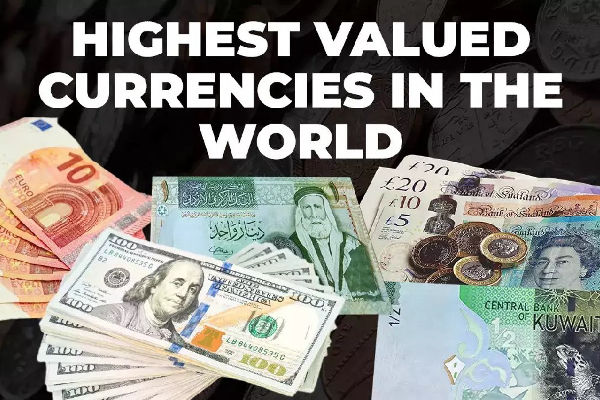
The Kuwaiti dinar is the highest-valued currency in the world in 2026, with one KWD buying approximately $3.26 on August 3. Eleven currency units now rank above the US dollar, although eight depend on fixed or managed exchange-rate systems. Denomination and exchange-rate policy determine unit value; economic power depends on scale, liquidity and global use.
The Kuwaiti dinar leads the Bahraini dinar by about $0.60, leaving first place well insulated from ordinary market moves.
Eight of the 11 currencies rely on fixed or managed rates, showing that policy design drives most of the ranking.
Four separate pound currencies share sterling’s $1.35 value, although only GBP trades widely outside its home market.
The US dollar ranks below all 11 by unit value yet appears in 89.2% of global FX trades.
The Swiss franc sits about $0.04 above the Cayman Islands dollar, making ninth place the likeliest to change.
The ranking compares how many US dollars one unit of each official currency buys. Floating currencies use August 3, 2026 market rates, while managed and pegged currencies use official central-bank rates or statutory parity arrangements.
| Rank | Currency | Value in USD | Regime |
|---|---|---|---|
| 1 | Kuwaiti dinar (KWD) | $3.26 | Managed basket |
| 2 | Bahraini dinar (BHD) | $2.66 | USD peg |
| 3 | Omani rial (OMR) | $2.60 | USD peg |
| 4 | Jordanian dinar (JOD) | $1.41 | USD peg |
| 5 | British pound (GBP) | $1.35 | Floating |
| 6 | Gibraltar pound (GIP) | $1.35 | GBP parity |
| 7 | Falkland Islands pound (FKP) | $1.35 | GBP parity |
| 8 | Saint Helena pound (SHP) | $1.35 | GBP parity |
| 9 | Swiss franc (CHF) | $1.24 | Floating |
| 10 | Cayman Islands dollar (KYD) | $1.20 | USD peg |
| 11 | Euro (EUR) | $1.15 | Floating |
The top four are stabilised through official exchange-rate systems, while GBP, CHF and EUR can change position through daily market moves. GBP, GIP, FKP and SHP are tied at the displayed value because the three territorial pounds track sterling one-for-one.
Rates are rounded to two decimal places. KWD, GBP, CHF and EUR values use Central Bank of Kuwait rates dated August 3, 2026. BHD, OMR and JOD use official central-bank rates, while GIP, FKP, SHP and KYD use official parity arrangements.
The four highest-valued currencies do not float freely against the US dollar. Kuwait manages the dinar against an undisclosed currency basket, while Bahrain, Oman and Jordan maintain official dollar pegs.
Kuwait returned to its basket system in May 2007 to stabilise the dinar’s external value and contain inflationary pressure. Bahrain and Oman maintain fixed dollar rates, while Jordan supports its peg through foreign reserves, external funding and interest-rate policy.
Energy exports and reserves can make these systems easier to defend, but they do not determine the price of one currency unit. A redenomination can change that price overnight without making the economy richer or poorer.
The Gibraltar, Falkland Islands and Saint Helena pounds are fixed one-for-one to British sterling, so all four currencies share the same dollar value. Each territory issues its own notes for local circulation, making GIP, FKP and SHP legally separate currencies even though their exchange rates move with GBP.
Their identical values do not give them equal reach. Sterling trades globally, while the three territorial pounds remain largely confined to their home markets. Saint Helena, for example, states that its pound is accepted only on Saint Helena and Ascension.
One Kuwaiti dinar buys more than three US dollars, yet the dollar remains the central currency of international finance. The BIS Triennial Central Bank Survey found that USD appeared on one side of 89.2% of global foreign-exchange trades in April 2025, when daily turnover reached $9.6 trillion.
The IMF’s COFER data showed that the dollar represented about 57.1% of allocated global foreign-exchange reserves in the first quarter of 2026. The euro ranked second with approximately 20.0%.
Global currency power comes from liquidity, reserve demand, trade invoicing and access to financial markets, not the price of one unit. Most higher-ranked currencies lack the dollar’s reach and international settlement network.
The Kuwaiti dinar is the world’s highest-valued currency unit. One KWD bought approximately $3.26 on August 3, 2026.
The British, Gibraltar, Falkland Islands and Saint Helena pounds are legally separate currencies. Gibraltar, the Falkland Islands and Saint Helena issue their own notes but maintain one-for-one parity with sterling, so all four share the same dollar value while circulating in different markets.
Yes, but KWD, BHD and OMR trade with far less depth and availability than USD, EUR, GBP or JPY. Their fixed or managed exchange rates also produce smaller daily movements than freely floating major currencies.
The yen is denominated in much smaller units, so one yen buys far fewer US dollars than one Kuwaiti dinar. Unit size says little about economic scale, productivity or financial influence.
Yes. GBP, CHF and EUR move continuously against the dollar, allowing their positions to change through normal trading. Pegged currencies usually move only when an official rate changes, while the territorial pounds follow GBP.
The Swiss franc sits near $1.24, only about $0.04 above the Cayman Islands dollar’s $1.20 official peg. If one franc falls below approximately $1.20, KYD would move into ninth place.
Markets can reshuffle the lower ranks. Policy anchors the top.
Disclaimer: This material is for general information purposes only and is not intended as (and should not be considered to be) financial, investment or other advice on which reliance should be placed. No opinion given in the material constitutes a recommendation by EBC or the author that any particular investment, security, transaction or investment strategy is suitable for any specific person.