Published on: 2025-04-18
Updated on: 2026-07-02
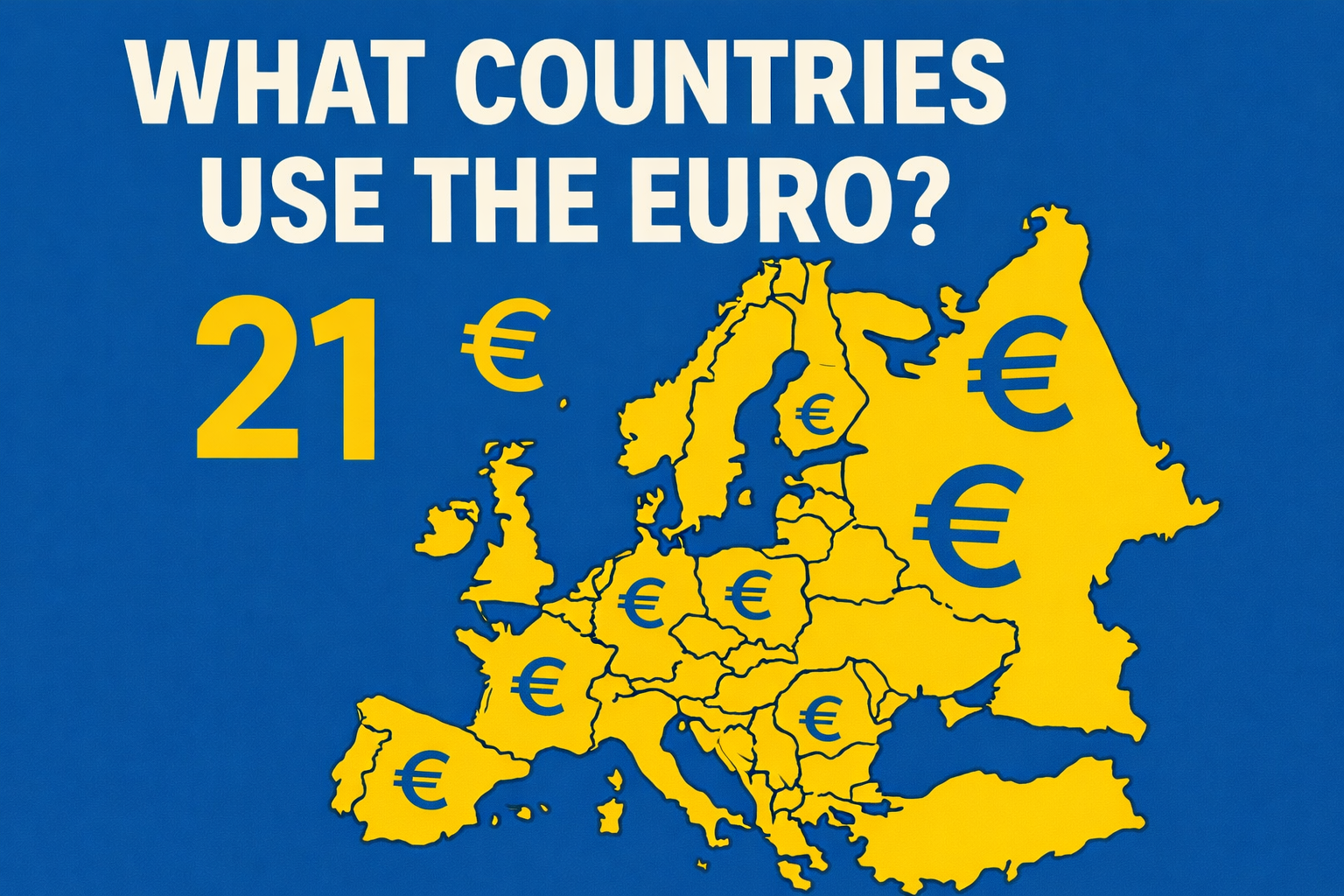
In 2026, 21 EU countries use the euro after Bulgaria adopted it on 1 January 2026. The euro is also used by several non-EU European states, including Andorra, Monaco, San Marino, Vatican City, Kosovo and Montenegro. The EU has 27 members, but only 21 use the euro: Denmark, Sweden, Poland, Czechia, Hungary and Romania still use their own currencies.
21 EU countries use the euro in 2026, with Bulgaria the newest euro-area member.
Six EU countries still do not use the euro: Denmark, Sweden, Poland, Czechia, Hungary and Romania.
Several non-EU European states use the euro, including Andorra, Monaco, San Marino, Vatican City, Kosovo and Montenegro.
Euro use extends beyond the eurozone, because some territories linked to eurozone countries also use it.
EU membership, eurozone membership and casual euro acceptance are different things, which is why some EU countries do not use the euro while some non-EU places do.
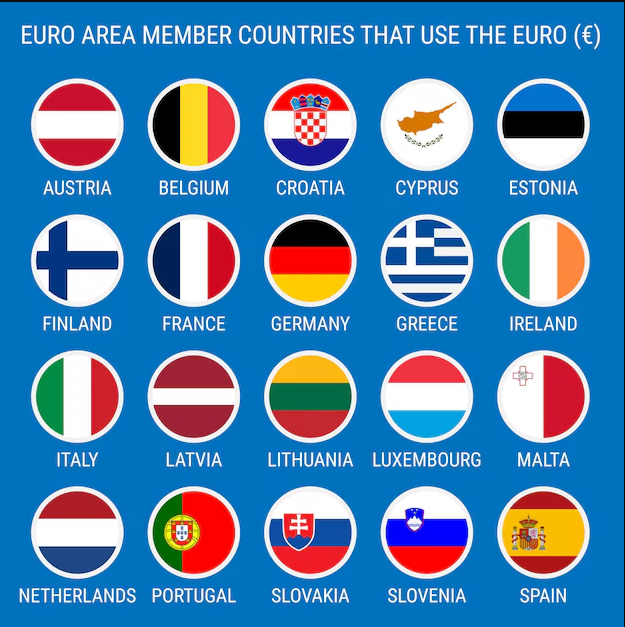
The eurozone, officially called the euro area, is the group of EU countries that use the euro as their official currency. In 2026, the 21 eurozone countries are:
| Eurozone country | Joined the euro |
|---|---|
| Austria | 1999 |
| Belgium | 1999 |
| Finland | 1999 |
| France | 1999 |
| Germany | 1999 |
| Ireland | 1999 |
| Italy | 1999 |
| Luxembourg | 1999 |
| Netherlands | 1999 |
| Portugal | 1999 |
| Spain | 1999 |
| Greece | 2001 |
| Slovenia | 2007 |
| Cyprus | 2008 |
| Malta | 2008 |
| Slovakia | 2009 |
| Estonia | 2011 |
| Latvia | 2014 |
| Lithuania | 2015 |
| Croatia | 2023 |
| Bulgaria | 2026 |
The table covers the official EU euro area. Euro use outside that group falls into three categories: non-EU states, linked territories, and places where euros are accepted informally.
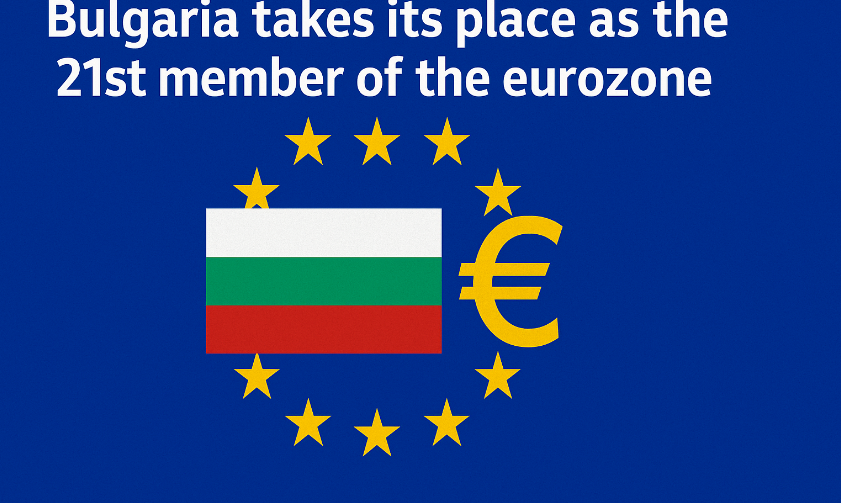
Bulgaria adopted the euro on 1 January 2026, replacing the Bulgarian lev and becoming the eurozone’s 21st member.
The Bulgarian lev had been fixed at 1.95583 per euro since 1999. By the time Bulgaria joined the eurozone, the exchange-rate relationship had already been stable for decades.
EU membership and euro use are not the same thing. In 2026, six EU countries still use their own national currencies:
| EU country | Currency used |
|---|---|
| Denmark | Danish krone |
| Sweden | Swedish krona |
| Poland | Polish zloty |
| Czechia | Czech koruna |
| Hungary | Hungarian forint |
| Romania | Romanian leu |
Denmark is the special case because it has a formal opt-out from adopting the euro. Sweden, Poland, Czechia, Hungary and Romania are expected to adopt the euro once they meet the required conditions, although there is no automatic joining date.
Romania is often watched as a future euro candidate, but it has no confirmed adoption date, and the leu is not yet in ERM II, the exchange-rate mechanism normally required before euro adoption.
The euro is also used outside the European Union. Some non-EU states use it under formal monetary agreements, while others use it unilaterally.
| Non-EU euro user | Euro status |
|---|---|
| Andorra | Uses the euro under a monetary agreement |
| Monaco | Uses the euro under a monetary agreement |
| San Marino | Uses the euro under a monetary agreement |
| Vatican City | Uses the euro under a monetary agreement |
| Kosovo | Uses the euro unilaterally |
| Montenegro | Uses the euro unilaterally |
Andorra, Monaco, San Marino and Vatican City have monetary agreements that allow them to use the euro and issue limited numbers of euro coins. Kosovo and Montenegro use the euro in practice, although they are not EU members and do not take part in eurozone monetary policy.
The euro also applies in some territories connected to eurozone countries.
Examples include:
Canary Islands, Ceuta and Melilla, which are part of Spain.
Madeira and the Azores, which are autonomous regions of Portugal.
French Guiana, Guadeloupe, Martinique, Mayotte and Réunion, which are French overseas regions.
Saint Pierre and Miquelon and Saint Barthélemy, which are French overseas territories that use the euro.
Akrotiri and Dhekelia, British sovereign base areas in Cyprus that use the euro.
These places are not separate eurozone countries, but they matter when checking where the currency is used.
Some countries accept euros in hotels, shops or tourist areas even though they have their own official currency. Switzerland, Turkey and parts of the Balkans may accept euros in limited situations, but the local currency usually controls prices, change and card payments.
Casual euro acceptance can help with small payments, but it does not make a country part of the euro area.
EUR/USD reflects more than one national economy. German industrial output, French fiscal pressure, Italian bond spreads, Spanish growth and ECB inflation forecasts can all influence euro sentiment.
The European Central Bank sets one monetary policy for countries with different growth, inflation and debt conditions. That is why euro analysis often looks regional: the currency moves on bloc-wide data, national stress points and market expectations for ECB policy.
In 2026, 21 EU countries use the euro as their official currency. Bulgaria became the newest euro-area member on 1 January 2026.
The EU countries that do not use the euro are Denmark, Sweden, Poland, Czechia, Hungary and Romania.
Andorra, Monaco, San Marino and Vatican City use the euro through monetary agreements. Kosovo and Montenegro also use the euro, although they are not part of the EU or the eurozone.
Yes. Bulgaria adopted the euro on 1 January 2026 and became the 21st country in the euro area.
Sometimes. Some places accept euros in tourist areas, but acceptance is not the same as official currency use. The local currency usually controls pricing, change and card settlement.
Bulgaria’s 2026 adoption shows why euro-country lists need dates. The eurozone is not frozen, and future changes will depend on whether remaining EU countries meet the economic and political conditions for joining.
For now, the clean split is enough: eurozone members, EU countries outside the euro, non-EU euro users and territories linked to euro-area states. Keeping those groups separate avoids the most common confusion: EU membership, eurozone membership and informal euro acceptance are three different things.
Disclaimer: This material is for general information purposes only and is not intended as (and should not be considered to be) financial, investment or other advice on which reliance should be placed. No opinion given in the material constitutes a recommendation by EBC or the author that any particular investment, security, transaction or investment strategy is suitable for any specific person.