Published on: 2026-01-05
Updated on: 2026-01-05
When people ask, "What currency is worth the most in 2026?", they usually mean one simple thing: which currency buys the most U.S. currency per 1 unit.
By that measure, the winner in 2026 is not the U.S. dollar, the euro, or the British pound. It remains the Kuwaiti dinar, with $3.27 per 1 KWD.
This listicle ranks the top 20 highest-value currencies in 2026 (as of January 5, 2026) and explains what actually keeps them "expensive," what can change that in 2026, and what traders should watch.
| Rank | Currency | Code | 1 unit ≈ $ | Regime | Why it stays high |
|---|---|---|---|---|---|
| 1 | Kuwaiti dinar | KWD | $3.27 | Managed (basket-linked) | Tight policy framework and high unit value set historically |
| 2 | Bahraini dinar | BHD | $2.66 | Pegged | Fixed peg at 0.376 per $1 keeps value stable |
| 3 | Omani rial | OMR | $2.60 | Pegged | Long-standing fixed peg at $2.6008 per 1 OMR |
| 4 | Jordanian dinar | JOD | $1.41 | Managed peg | Stability-focused policy keeps JOD high vs $ |
| 5 | Saint Helena pound | SHP | $1.35 | Pegged | Fixed at par with GBP, so it tracks GBP/USD |
| 6 | Gibraltar pound | GIP | $1.34 | Pegged | Fixed at par with GBP, so it tracks GBP/USD |
| 7 | British pound | GBP | $1.34 | Floating | High-rate, deep market, and strong reserve-currency status |
| 8 | Falkland Islands pound | FKP | $1.34 | Pegged | Fixed at par with GBP, so it tracks GBP/USD |
| 9 | Swiss franc | CHF | $1.26 | Floating | Safe-haven demand and conservative monetary stance |
| 10 | Cayman Islands dollar | KYD | $1.20 | Pegged | Fixed rate around 1 KYD ≈ $1.20 |
| 11 | Euro | EUR | $1.17 | Floating | Large reserve bloc and $ weakness into 2026 |
| 12 | U.S. dollar | USD | $1.00 | Floating | Base currency for most global trade and pricing |
| 13 | Bermudian dollar | BMD | $1.00 | Pegged | Pegged at par with USD |
| 14 | Bahamian dollar | BSD | $1.00 | Pegged | Pegged at par with USD |
| 15 | Panamanian balboa | PAB | $1.00 | USD-linked | Trades at par with USD |
| 16 | Singapore dollar | SGD | $0.78 | Managed float | Policy framework targets stability and competitiveness |
| 17 | Brunei dollar | BND | $0.78 | Pegged to SGD | Interchangeable at par with SGD under formal agreement |
| 18 | Canadian dollar | CAD | $0.73 | Floating | Commodity linkage and rate expectations drive moves |
| 19 | Australian dollar | AUD | $0.67 | Floating | China cycle, commodities, and risk sentiment |
| 20 | New Zealand dollar | NZD | $0.58 | Floating | Dairy terms of trade and global risk appetite |
Rates shown are approximate and rounded for readability. Even for pegged currencies, quoted rates can differ slightly across sources because updates aren't always published at the same time.
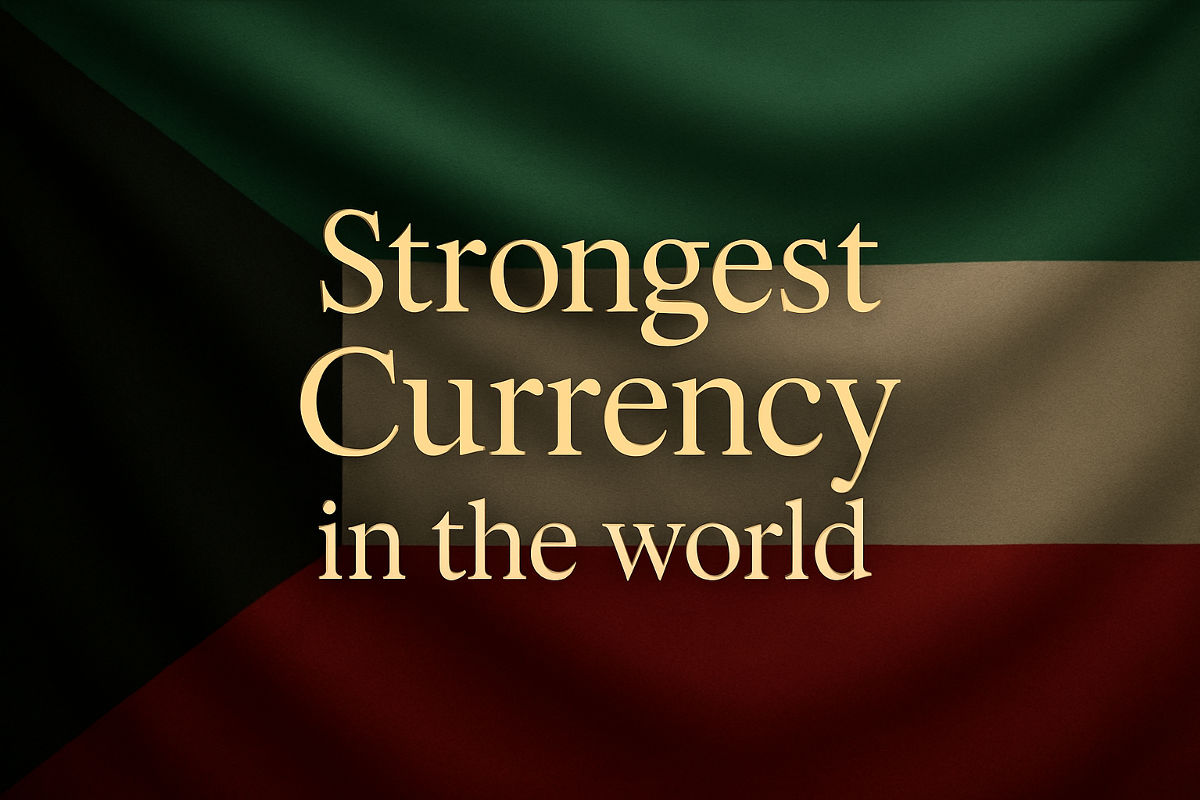
Kuwait publishes daily exchange rates via its central bank. On January 5, 2026, the posted USD rate was 0.305650 KWD per $1, which implies roughly $3.27 per 1 KWD.
The dinar's level is supported by a managed regime and Kuwait's external balance profile. However, the "expensive" unit value is also historical. Kuwait did not choose a low face value unit and then later redenominate upward.
Bahrain's policy is straightforward. The central bank states the peg at 0.376 BHD per $1, which mathematically implies about $2.66 per 1 BHD.
That is why BHD barely moves day to day in $ terms unless the peg regime changes.
Oman's central bank explains that the fixed peg has been unchanged at $2.6008 per 1 OMR for decades.
That fixed structure keeps the currency "high" on the value ranking, even when global FX volatility picks up.
GIP, FKP, and SHP may not be significant global currencies, yet they are pegged at par with the pound, causing their values to align closely with the GBP/USD exchange.
Their positions can shuffle by a few tenths of a cent depending on timing, but the driver remains the same: they track sterling.
One thing readers and traders must know is that a currency can be "worth more" per unit for reasons that have nothing to do with living standards or economic size.
Face value is partly a design choice. Some countries have historically chosen a higher unit value and then maintained it through a peg or a tightly managed foreign-exchange regime. That is why Gulf currencies dominate the top of the ranking.
This is also the reason that a currency such as the Japanese yen may appear "inexpensive" per unit, yet continues to be a significant reserve currency. The unit size is just different.
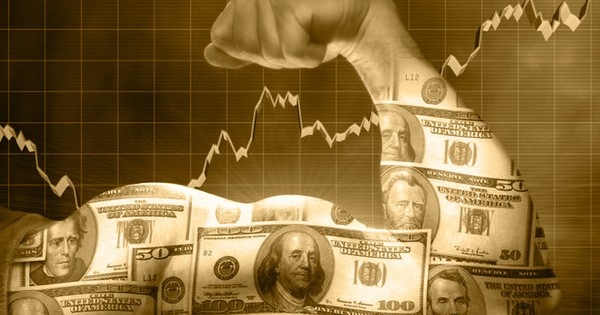
Major news coverage to start 2026 has focused on a dollar rebound after a weak 2025, with traders watching U.S. data and the path for rate cuts.
If the dollar weakens again, EUR, CHF, and GBP can rise in $ terms and climb the ranking, even if nothing changes domestically.
For pegged currencies, day-to-day volatility is low, but the real risk is regime risk. A peg can endure for years, and then one policy statement alters everything. That is rare, but it is the risk traders must respect.
Several currencies in this list are indirectly tied to commodity dynamics, either through fiscal balances or broader risk sentiment.
In practice, commodity-linked FX tends to move with changes in growth expectations, rather than solely when spot commodities rise or fall.
Based on official rates available in early January 2026, the Kuwaiti dinar (KWD) is the most valuable currency unit, at roughly $3.27 for 1 KWD.
Since "most valuable" in this context refers to dollar per unit rather than overall significance. The U.S. dollar remains the predominant currency in worldwide trade and finance, yet its unit value is defined as $1.
Not always. In many cases, it reflects currency design and policy choices (like pegs), not pure economic strength.
Yes, they have separate currency codes and local notes and coins, but they are structured to remain with GBP under currency-board arrangements.
In conclusion, the ranking of the "most valuable currency" continues to be led by currencies that maintain high unit values intentionally, frequently via pegs or closely controlled exchange-rate frameworks.
That is why KWD sits at the top, followed by BHD and OMR, while GBP-pegged territory currencies cluster close to sterling's value.
Floating majors like GBP, CHF, and EUR can shift places more, but their rank changes mostly because the dollar moves with rates and risk sentiment.
Disclaimer: This material is for general information purposes only and is not intended as (and should not be considered to be) financial, investment or other advice on which reliance should be placed. No opinion given in the material constitutes a recommendation by EBC or the author that any particular investment, security, transaction or investment strategy is suitable for any specific person.