Published on: 2026-07-02
Updated on: 2026-07-02
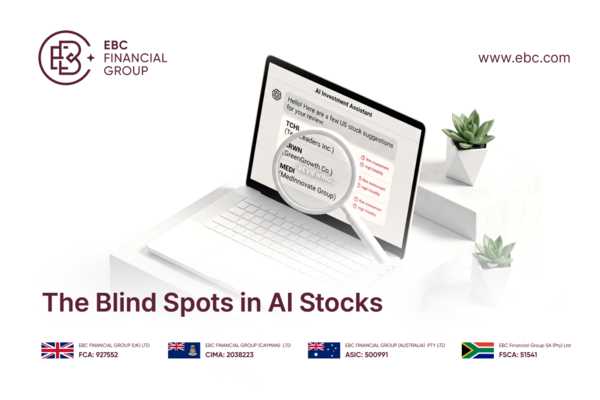
AI can generate a stock idea in seconds. It often finishes before a trader has even opened the company's latest report, summarising the business, building the bull case, benchmarking competitors and pulling together information that would take an analyst hours to compile by hand.
Even a clear answer might miss important details. The source may be unclear, the data may be old, or the valuation and risk may not be properly explained. An AI stock pick is just an idea suggested by a tool. It is not a full trading plan, at best a starting point for a trader's own research rather than a final decision.
AI can help with market research, but it might also repeat common market stories or overlook recent changes. It can also make a list of stocks seem more diverse than it really is, especially when most of those stocks depend on the same trend. Traders still need to check the facts behind the answer.
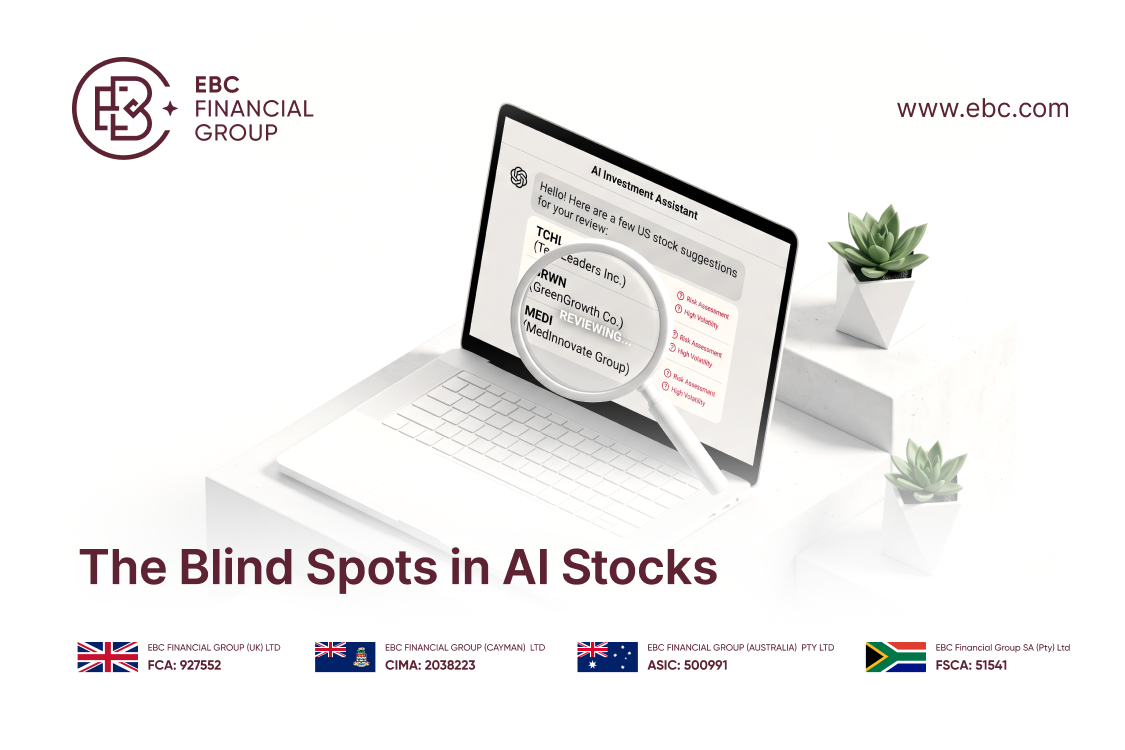
AI is most helpful at the start of research, when a trader is still gathering information. It can summarise long reports, explain market terms in plain language, compare companies within the same industry, and lay out the case for or against a stock.
A bull case explains why a stock idea might succeed. A bear case explains why it might not work out.
This can save time when a trader wants to understand a company, industry, or market trend, such as artificial intelligence or cloud computing. AI can also help build a research checklist or turn a long company update into shorter notes.
It’s risky to treat the answer as a recommendation. AI is most useful for helping traders ask better questions, not for skipping the checks that should come next.
AI-generated stock ideas often focus on companies that frequently appear in news stories, on websites, in analyst reports, and in market conversations.
Well-known names can make an answer seem more trustworthy. If a company is mentioned everywhere, AI has more to work with. But that does not mean the stock is a better trade.
A National Bureau of Economic Research (NBER) working paper looked at household portfolios, meaning portfolios built for individual investors rather than institutions. The researchers found that the portfolios in the study tended to be undiversified. They also leaned toward large companies, momentum names, and firms with more media attention. Momentum names are stocks that have already been moving strongly in one direction.
One working paper does not prove that all AI tools act the same way. Still, it shows that AI-generated ideas can be influenced by common market narratives, the way the question is asked, and the sources used.
If a market story is repeated often, AI might repeat it too, without adding much new judgement.
Even if the stock names are different, they can still have similar risks.
Concentration risk means having too much exposure to a single company, industry, or shared factor, such as AI spending, chip demand, or interest rates. A market theme is a story that links different companies. Artificial intelligence, semiconductors, and cloud computing are examples.
An AI tool might suggest five different stocks. The list might look diverse at first, but the risk could still be concentrated if most of the companies rely on the same trend.
For example, one company might make chips. Another might run data centres. Others could sell cloud software, provide cyber security, or make cooling systems. These businesses are not the same, but they may all depend on growing demand for AI chips, data centres, and related technology spending.
If investors lose interest in paying for AI-related growth, these stocks could drop together.
A list of stocks is not truly diversified if most of the companies rely on the same trend. Traders should check whether the ideas depend too heavily on a single industry, theme, or market factor.
Markets change fast. An AI answer depends on the model, the data it has, the sources it uses, and whether it can access up-to-date information.
Some AI tools might not have the latest data. Others can browse the internet but may still miss important updates. They might also rely on outdated articles, forums, unsourced opinions, or summaries that omit the price reaction.
A company might have released new earnings. It may have changed its forecast for revenue, profit, demand, or business conditions. New rules or legal updates could have changed the risk. Analysts might also have changed their expectations.
The stock price might have already moved. If good news has pushed the price up, some of that optimism could already be included in the price. This means the same story might not help the stock go higher.
Cash flow also needs checking. Cash flow is the money moving in and out of a business. A company might show profits on paper but still struggle to generate real cash.
AI does not always rely on old information. Still, traders should check the date, the source, the stock price's movement, and any recent news that could change the outlook.
AI tools are designed to give clear answers. But a smooth answer might still be based on missing sources, outdated data, or general risks that could apply to many stocks.
An AI answer might seem balanced because it lists both positives and risks. But the risks could be too general. The sources might be missing. The answer might also fail to explain what could change the outlook.
Valuation is a good example. It means judging whether a stock is expensive or cheap relative to its earnings, sales, growth, or assets. An AI answer might tell a strong company story but not say if the price already reflects that story.
A good market idea should explain what supports it, what could prove it wrong, and what risks are involved. If an AI answer only discusses the positives, the research is incomplete.
Before trusting the answer, traders should be able to see:
What sources support the idea
What the main risk is
What would make the idea wrong
Whether the stock has already priced in the good news
Whether the idea is company-specific or part of a crowded theme
Whether earnings, valuation, and risk all support the same view
A crowded theme means many investors already own stocks based on the same idea. If too many people share the same view, the price can be more sensitive to shifts in expectations.
If an AI tool suggests a stock idea, the next step is to review it carefully before making any moves.
Start with the source. Is the answer based on company filings, earnings calls, analyst notes, trusted financial news, or market opinions without sources? Company filings and earnings calls come straight from the company, while unsourced opinions might just repeat what others are saying.
Next, look at the date. Is the information up to date, or is it based on an old story about the company?
The stock’s price reaction also matters. Has it already moved after the news? If the price has jumped, a good company update might not be as useful for trading.
Concentration is another issue to review. Does this idea rely on the same trend as other stocks you own or watch? Different company names can still have similar risks.
Valuation comes next. Is the stock already priced for big growth? Even a strong business might not be a good trade if expectations are already high.
Earnings should also support the story. Do revenue, margins, guidance, and cash flow back it up? Revenue is sales. Margins show how much profit the company keeps. Guidance is what the company expects next. Cash flow shows whether the business is generating real cash.
Then ask what could go wrong. A good idea should include the risks, not just the reasons to be hopeful.
Liquidity and volatility also deserve attention. Liquidity is how easily you can buy or sell without moving the price much. Volatility is how much the price changes over time. Stocks with low liquidity or high volatility can move a lot, especially when news comes out.
The idea also needs to fit the trader. AI does not know your full financial situation, risk tolerance, capital, time frame, product knowledge, or trading experience. Time frame means how long you plan to hold, watch, or test an idea. What works for one person might not work for another.
Finally, look at the product itself. Are you looking at the actual share, a contract for difference (CFD) on the share, an exchange-traded fund (ETF), or another instrument linked to the same company or theme?
Before moving from research to trading, review the instrument as well as the stock idea. An AI answer may mention a company name, but traders still need to know what product they are actually looking at.
A share CFD tracks the price movement of a stock without giving ownership of the underlying shares. For traders reviewing an AI-generated stock idea, EBC’s Share CFDs page can be a useful reference for checking which share CFD markets are available as part of the wider research process.
AI is more helpful when traders use it to test ideas, not just to come up with them.
Instead of asking, “What should I buy?”, traders can ask questions that reveal what is missing in the research.
Useful examples include:
“What are the main risks to this stock idea?”
“What would make the bullish case wrong?”
“Is this company exposed to the same risk as other AI or semiconductor stocks?”
“What recent earnings or guidance updates should I check?”
“What sources should I verify before trusting this?”
“Build a research checklist for this stock, but do not give me a buy or sell recommendation.”
AI is best used to support research. It can help organise the work, but the final judgement should come from the trader.
AI is helpful when it lays out the case for and against a stock, then points to the questions that still need answers.
A quick answer still needs careful judgement.
If a trade goes wrong, the loss is the trader’s responsibility, not the tool’s. AI stock picks should be seen as starting points for research, not as full trading plans.