Published on: 2026-06-17
Updated on: 2026-06-17
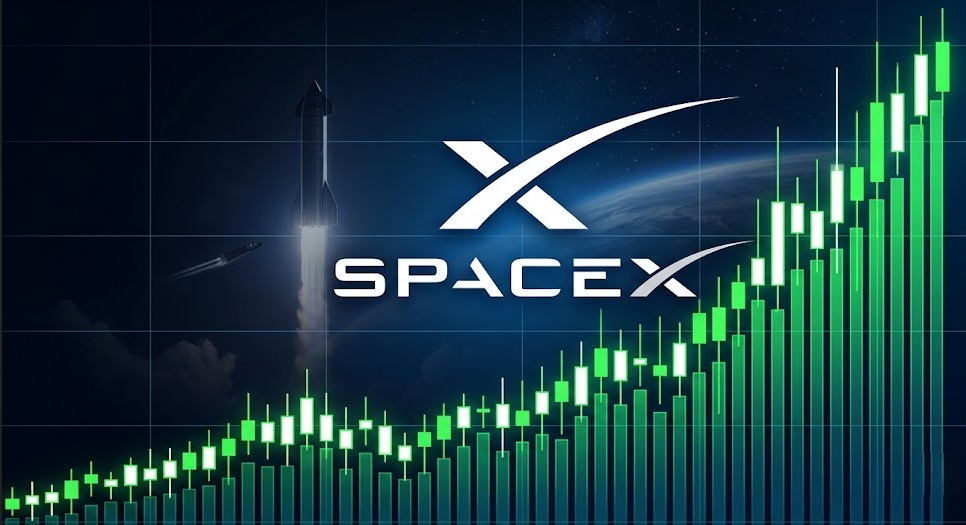
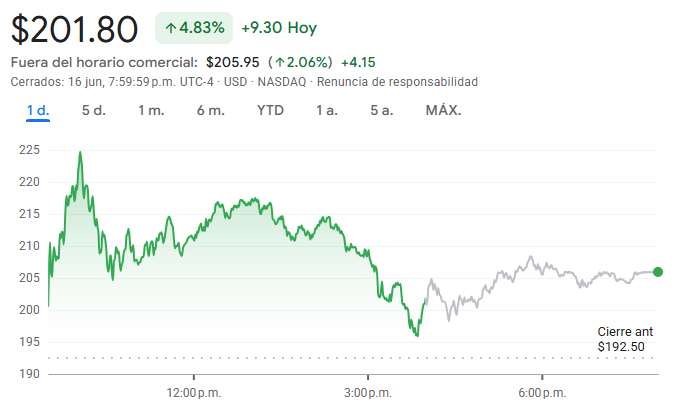
It’s officially the biggest financial story of the year, if not the decade. Space Exploration Technologies Corp. has absolutely taken Wall Street by storm. Following its highly anticipated initial public offering (IPO) on Friday, June 12. 2026, the SpaceX stock price has kept up an incredibly aggressive upward run, officially crossing the $200 mark during Tuesday’s trading session.
This market debut hasn't just shaken up the global aerospace industry; it has also completely rewritten the global wealth leaderboard. Trading under the Nasdaq ticker SPCX, the company brought in an astonishing $75 billion, making it the single largest public offering in corporate history. The immediate spike in the SpaceX stock price also did something once thought impossible: it officially pushed company founder and CEO Elon Musk into the history books as the world’s very first trillionaire.
SpaceX chose to skip the usual market games right out of the gate. Instead of giving investors a vague, speculative price range to guess at, the company set a rock-solid, fixed initial public offering price of $135 per share. A lot of Wall Street insiders openly wondered if the massive $1.77 trillion valuation tied to that starting price would leave any room for the stock to actually grow.
Those doubts vanished within minutes. When public trading finally opened around midday on Friday, an absolute flood of institutional demand pushed the stock to open way above its listing price at $150. By the time the closing bell rang, the SpaceX stock price had jumped by nearly 20%, settling at $160.95 and instantly pushing the company's market capitalization past $2.1 trillion.
And the hype didn't cool down over the weekend. As everyday retail investors rushed to get a piece of the newly public aerospace giant, Monday and Tuesday saw non-stop buying. On Tuesday, June 16, SPCX hit an intraday high of $225.64 before experiencing a completely normal late-afternoon dip, finally closing out at $201.68. That is an insane 25% gain from its fixed IPO price in less than three days of trading, pushing the total SpaceX valuation to a jaw-dropping $2.6 trillion.
Financial analysts are pointing to a perfect storm of factors behind the explosive rise of the SpaceX stock price. The public offering was reportedly up to four times oversubscribed before the opening bell even rang, meaning the demand from big funds completely overwhelmed the 555 million shares actually made available to the public.
On top of the raw hype, Tuesday's major catalyst was the company's bombshell announcement that it is exercising its option to buy the AI-powered coding platform Cursor for a massive $60 billion, utilizing newly issued equity.
When you look at how the company actually makes its money, it’s easy to see why Wall Street is treating SPCX as a must-own asset:
Starlink's Massive Cash Flow: While launching rockets into space requires an incredible amount of upfront cash, the Starlink satellite internet network has turned into a highly profitable recurring revenue machine. Recent financial data shows Starlink’s connectivity business is booming, bringing in billions of dollars in highly predictable income.
The AI and Cursor Acquisition Premium: The massive $60 billion deal for Cursor shows that SpaceX is aggressively positioning itself as an AI powerhouse, complementing its data infrastructure goals and its deep ties to Musk's xAI ecosystem.
A Literal Monopoly on Launching: With the steady progress of the massive Starship platform and practically zero real competition for commercial and military satellite launches, SpaceX has the private space economy completely cornered.
Even with all the excitement pushing up the SpaceX stock price, a vocal group of more traditional investors is warning people to be careful. At its current market capitalization of $2.6 trillion, SpaceX is trading at a price-to-sales (P/S) multiple of well over 100 times its trailing revenue. To put that in perspective, the average company in the S&P 500 trades at a much lower single-digit multiple.
The company's recent regulatory filings also showed that while the satellite internet side of things is booming, the core deep-space exploration and Starship development programs are still burning through billions of dollars a year. In fact, for the previous fiscal year, SpaceX reported an overall net loss of $4.94 billion on revenues of roughly $18.67 billion.
On top of that, because the company only made a small fraction of its shares available to the public (less than 5%), you have a relatively small amount of stock being chased by an absolute ocean of global money. This kind of setup naturally forces the price up in the short term, but it also means things could get incredibly volatile if the mood on Wall Street suddenly sours.
There are also some technical hurdles that might keep big institutional buyers on the sidelines for a bit. Standard & Poor's has strict rules requiring companies to show consistent net profits before they can join the S&P 500. Because of that, major index funds and retirement portfolios might have to wait a year or more before they can automatically buy the stock, leaving the current price action completely in the hands of active hedge funds and retail day traders.
The unbelievable performance of the SpaceX stock price is already sending shockwaves through Silicon Valley. For the past year, highly valued tech "unicorns" have been terrified of going public because the broader economy has felt so unpredictable.
The success of SPCX seems to have broken that dam wide open. Rumors are already swirling that AI startup Anthropic has confidentially filed to go public, while OpenAI is reportedly speeding up its own timeline for a massive debut later this year. Fund managers are already shifting their money around, pulling cash out of older semiconductor and hardware companies just to make room for this new wave of space and AI stocks.
At the same time, the debut has restarted a massive political conversation about extreme wealth. Because Elon Musk owns roughly half of SpaceX’s equity, his personal net worth has comfortably flown past the trillion-dollar mark, hitting an estimated $1.3 trillion. This kind of unimaginable wealth accumulation has already drawn sharp criticism from progressive lawmakers in Washington, who are using the SpaceX IPO to push for aggressive new wealth taxes on the ultra-rich.
The market debut of SpaceX will go down as a true watershed moment for global finance. By taking a highly speculative, incredibly expensive aerospace business and turning it into a multi-trillion-dollar public powerhouse, the company has completely broken the old rules of corporate finance.
While the current SpaceX stock price clearly carries a massive premium—one that assumes the company will execute its future plans perfectly without a single mistake—the sheer momentum here is impossible to ignore. Whether SPCX can actually keep up this breathtaking pace depends entirely on whether Starlink can bring in enough cash to fund Musk’s ultimate dreams of Mars exploration and AI dominance. For now, Wall Street is more than happy to buy the ticket and enjoy the wild ride.