Published on: 2026-03-03
The MMED IPO is not a biotech psychedelics story. It is the planned US debut of MiniMed Group, Medtronic’s diabetes business, targeting a listing on the Nasdaq Global Select Market under the ticker MMED.
With a tight price range and Medtronic set to keep control after the IPO, MMED is best seen as a focused carve-out meant to reset how investors value growth, margins, and innovation in diabetes tech, not a typical venture-style IPO.
MiniMed has started its IPO roadshow and plans a standard underwritten listing, not a direct listing. IPOs usually price near the end of the roadshow, and market calendars are pointing to early March 2026, with March 5, 2026, widely seen as the target pricing date.
This date should be considered a target rather than a guarantee, as IPO timelines are subject to change based on demand and prevailing market conditions.

| Item | Details |
|---|---|
| Issuer | MiniMed Group, Inc. (Medtronic diabetes business carve-out) |
| Exchange / Ticker | Nasdaq Global Select Market / MMED |
| Shares Offered | 28,000,000 shares |
| Expected Price Range | $25 to $28 |
| Gross Proceeds (Top Of Range) | Up to ~$784m |
| Over-Allotment Option | Up to 4,200,000 additional shares |
| Implied Market Value (Top Of Range) | Up to ~$7.86bn |
| Lead Underwriters | Goldman Sachs, BofA Securities, Citigroup, Morgan Stanley |
| Post-IPO Medtronic Ownership | ~90.03% (or ~88.70% with full over-allotment) |
| Intended Use Of Proceeds | Fund operations, retain ~$350m cash, repay intercompany debt and pay consideration for transferred assets |
MiniMed’s roadshow began in late February 2026 with an indicated offer range of $25 to $28 for 28,000,000 shares, implying gross proceeds of up to $784m and a potential market value near $7.86bn at the top end.
The market impact is expected to be immediate due to the limited float at launch. Medtronic anticipates retaining approximately 90.03% of MiniMed after the IPO (or about 88.70% if the over-allotment is fully exercised), a structure that may amplify volatility during early trading.
The indicated price range of $25 to $28 per share conveys two primary implications for investors.
First, the deal is priced with discipline, which can help the stock hold up after listing if demand is real. In carve-outs, the goal is not a big first-day jump. It is a fair price that builds trust and supports future fund-raising without heavy dilution.
Second, the float will be small. Medtronic will still own about 90% after the IPO, so fewer shares will trade. With limited supply, even modest news can move MMED sharply up or down because it takes less buying or selling to shift the price.
At the top end of the proposed range, reporting tied to the filing suggests MiniMed could debut with a market value of around $7.86bn. At the midpoint ($26.50), IPO coverage has implied a market cap of around $7 bn.
Using the market value anchor cited at $28, the implied share count works out to roughly 281m shares outstanding (market value divided by price). That yields the following mechanical scenarios:
| Assumed IPO Price | Implied Market Cap |
|---|---|
| $25 | ~$7.0bn |
| $26.50 | ~$7.4bn |
| $28 | ~$7.9bn |
The figures presented above represent valuation calculations and do not constitute a forecast of MMED’s future trading price.
MiniMed’s filing-linked figures show real scale, not concept-stage revenue:
FY2025 revenue: $2.72bn, net loss $198m
Six months ended Oct. 24, 2025: revenue about $1.5bn, net loss about $21m
An approximate $7.4 billion market capitalization implies a price-to-sales multiple of nearly 2.7x based on FY2025 revenue.
Within the medtech sector, this valuation level typically requires evidence of operating leverage and sustainable competitive differentiation, rather than solely top-line growth.
MiniMed sells an integrated ecosystem for diabetes management. The product stack spans insulin delivery, CGM sensors, and software-driven automation that increasingly behaves like a platform rather than a single device line.
Medtronic has positioned the separation as an initiative to establish a standalone diabetes-focused company with enhanced strategic focus and accelerated product development cycles.
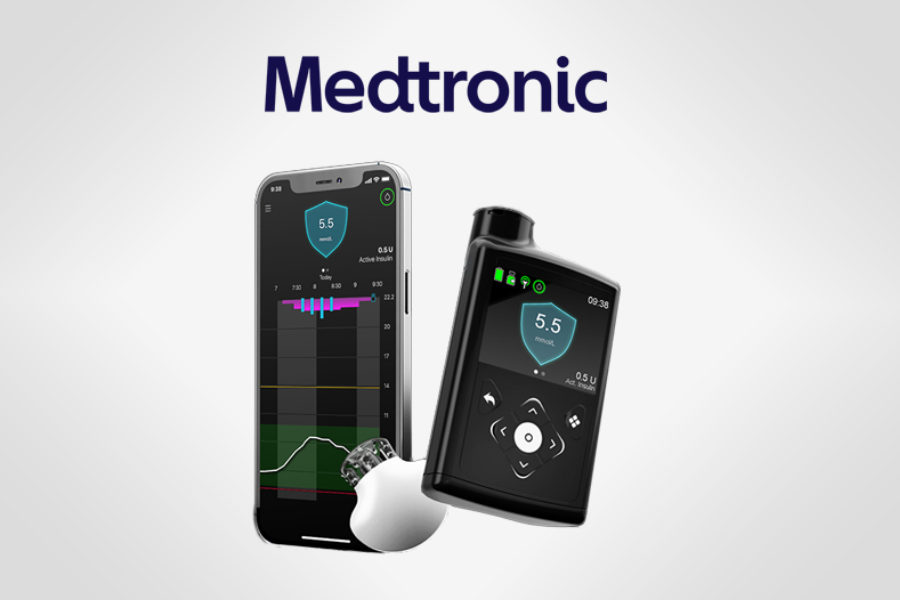
The investment question is not whether diabetes technology is a growth market. It is whether MiniMed can defend share and expand adoption while the category shifts toward smaller form factors, tighter CGM integration, and more seamless automation.
MiniMed’s near-term narrative is built around product refresh and pipeline execution.
MiniMed Flex: described as already submitted to the FDA for approval, with a CE mark submission expected in Q1 2026.
MiniMed Fit patch pump: planned for FDA submission in the fall of calendar 2026, targeting the fast-growing patch-pump segment.
This is significant for IPO investors, as medtech valuations are often closely linked to the timing and reliability of product launches. A transparent and timely pipeline reduces concerns that growth remains perpetually deferred.
MiniMed’s disclosed financial profile indicates substantial investment to remain competitive within the diabetes technology sector.
| Period | Revenue | Net Loss | Adjusted EBITDA |
|---|---|---|---|
| FY2025 | $2.72bn | $(198m) | $253m |
| 6M Ended Oct. 24, 2025 | ~$1.5bn | $(21m) | $128m |
| 6M Ended Oct. 24, 2024 | ~$1.3bn | $(23m) | N/A (not consistently reported in coverage) |
Two takeaways matter most for public-market pricing:
The business is large enough that small margin improvements can translate into meaningful earnings power.
The loss profile underscores that the competitive bar is high, especially as CGM and pump ecosystems converge.
Medtronic has said it expects to hold roughly 90% of MiniMed after the IPO. That ownership concentration creates a controlled profile in practice, even if the company is publicly listed. It also shapes the forward trading setup:
Near-term: limited float can magnify moves.
Medium-term: future distributions or split-off steps can expand float, which may improve liquidity but also create supply overhang.
It is essential for investors to distinguish between the underlying business fundamentals and the mechanical effects associated with float expansion.
The insulin delivery and CGM market is crowded and fast-moving. Share loss can occur quietly through payer formularies, clinic preferences, or sensor ecosystem lock-in. Any stumble in integration or user experience can show up as slower new starts.
MiniMed’s 2026 catalyst set is pipeline-driven. Delays in approvals, labeling, manufacturing quality, or rollouts can compress valuation quickly because the public market prices the next 12 to 24 months, not the last 12.
A parent retaining about 90% can support stability, but it also raises governance questions and can limit market-driven repricing. Investors will watch how independent MiniMed’s capital allocation and operating decisions are in practice.
With FY2025 net loss at $198m on $2.72bn of revenue, the market will demand a credible margin narrative, especially if growth slows.
MiniMed’s IPO is likely to behave less like a “hot tech IPO” and more like an institutional carve-out where pricing discipline and float mechanics dominate early trading.
If spreads tighten and volume builds after day one, the stock is more likely to trade on fundamentals. If liquidity remains thin, price moves can be more technical than informational.
Underwritten IPOs can trade at issue below if allocations are tight, if broader markets sell off, or if sector sentiment turns.
Medtronic’s retained stake is not static. Any signals around timing and method of distribution can change MMED’s supply outlook and investor base.
MiniMed launched its roadshow in late February 2026 and is expected to price in early March, with multiple market sources pointing to March 5, 2026, as the likely pricing date, subject to change.
The indicated range is $25 to $28 per share for 28,000,000 shares, with an option for underwriters to purchase up to 4,200,000 additional shares.
No. MindMed trades on Nasdaq as MNMD and previously used MMED as a Canadian symbol. The MMED IPOdiscussed here refers to MiniMed Group, Medtronic’s diabetes business carve-out.
Public reporting tied to MiniMed’s filing indicates FY2025 revenue of about $2.72bn, reflecting a scaled global diabetes device business rather than an early-stage concept company.
Medtronic has said it expects to retain about 90.03% of MiniMed following the offering (about 88.70% if the over-allotment is fully exercised), which implies a limited float at launch.
Coverage of the prospectus indicates MiniMed expects to retain about $350m in cash for general corporate purposes, with remaining proceeds used to repay intercompany debt to Medtronic and provide consideration for transferred assets.
The MMED IPO is a rare 2026 medtech carve-out with real revenue scale, clear deal terms, and a valuation band that forces investors to focus on execution rather than storytelling.
With pricing guidance of $25 to $28 per share, potential gross proceeds of up to $784 million, and an implied market value approaching $7.86 billion, the primary consideration is not the scale of MiniMed.
Rather, the key issue is whether product development cadence, integration quality, and margin trajectory can justify public-market valuation multiples within a competitive diabetes technology landscape.
For long-term investors, the principal catalyst for MMED is the 2026 product roadmap, particularly the timelines for Flex and the Fit patch pump, and the extent to which independence enhances execution.
Disclaimer: This material is for general information purposes only and is not intended as (and should not be considered to be) financial, investment or other advice on which reliance should be placed. No opinion given in the material constitutes a recommendation by EBC or the author that any particular investment, security, transaction or investment strategy is suitable for any specific person.