Published on: 2026-01-14
Oil prices influence markets, currencies, and inflation, which is why traders pay close attention to them.
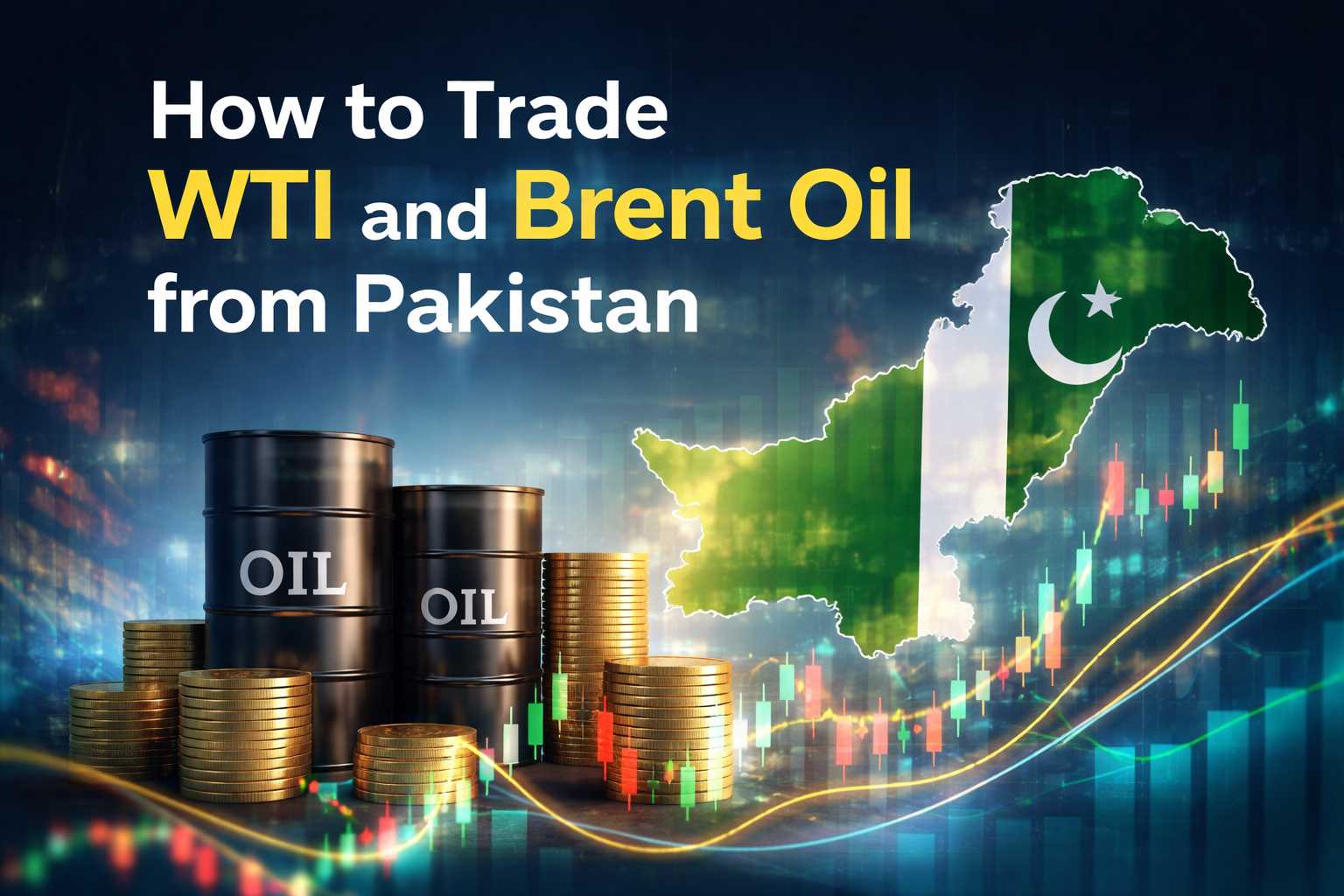
Looking to trade crude oil from Pakistan? WTI and Brent crude are now accessible through international markets and brokers, allowing disciplined traders to participate directly in two of the world’s most liquid and macro-driven assets.
In Pakistan, crude oil trading has evolved into a structured opportunity for both retail and professional traders. With the right broker access, market participants can engage directly with WTI and Brent oil, instruments that sit at the core of global price discovery and macroeconomic sensitivity.
WTI and Brent oil can be traded directly from Pakistan through international CFD brokers, without using futures contracts or handling physical delivery.
Understanding barrel pricing and contract structure is essential, as oil is priced per barrel in US Dollar terms, combining market volatility with currency exposure.
WTI and Brent behave differently despite strong correlation, with WTI driven more by US inventories and Brent shaped by geopolitics and OPEC policy.
Leverage is a risk-management decision, not a profit tool, and position sizing must reflect oil’s frequent sharp price swings.
Execution quality matters as much as strategy, making liquidity depth, slippage control, and transparent trading conditions critical for consistent performance.
Understanding these differences is essential when learning how to trade WTI and Brent oil from Pakistan, as each benchmark responds to different market drivers.
| Specification | WTI Crude Oil | Brent Crude Oil |
|---|---|---|
| Global Role | US benchmark | Global benchmark |
| Pricing Currency | US Dollar | US Dollar |
| Contract Size | 1 contract = 1,000 barrels | 1 contract = 1,000 barrels |
| Typical CFD Symbol | XTIUSD | XBRUSD |
| Primary Volatility Drivers | US inventories, shale output | OPEC policy, geopolitics |
| Trading Behaviour | Sharper intraday moves | Cleaner macro trends |
Pakistan does not host a domestic crude oil derivatives exchange, but this does not restrict participation. International brokers bridge this gap by offering oil CFDs that track real-time benchmark pricing.

As long as traders operate through compliant banking channels and reputable brokers, oil trading remains accessible and practical.
This structure allows Pakistani traders to go long or short, trade intraday or swing setups, and access global liquidity without the complexity of futures delivery or contract rollovers.
Supply and demand balance: Production levels, consumption trends, and inventory data form the core of oil pricing. Output decisions by major producers, including coordinated supply adjustments, can quickly shift market equilibrium and trigger price revaluations.
Geopolitical risk: Political instability, sanctions, military conflict, or disruptions in key producing or transit regions often introduce risk premiums, increasing volatility and pushing prices away from fair value.
Macroeconomic indicators: Economic growth data, industrial output, inflation trends, and labour market reports influence energy demand expectations and shape market sentiment toward crude oil.
Weather and natural disruptions: Extreme weather events and natural disasters can interrupt production, refining, or transportation infrastructure, leading to sudden supply constraints and abrupt price movements.
Oil is inherently volatile. Daily moves of 2–4% are common, and during inventory releases or geopolitical events, intraday swings can extend further. Leverage allows traders to control meaningful exposure with limited capital, but only when applied with precision.
Professional oil traders focus on effective leverage rather than headline leverage. In practice, this often means structuring positions so that a 1% move in oil translates to no more than 0.5–1% impact on account equity. Position size is adjusted so that routine price fluctuations do not materially damage the account, even during volatile sessions.
For Pakistani traders seeking professional access to WTI and Brent oil, EBC Financial Group offers a regulated trading environment built around execution quality, transparency, and market stability.
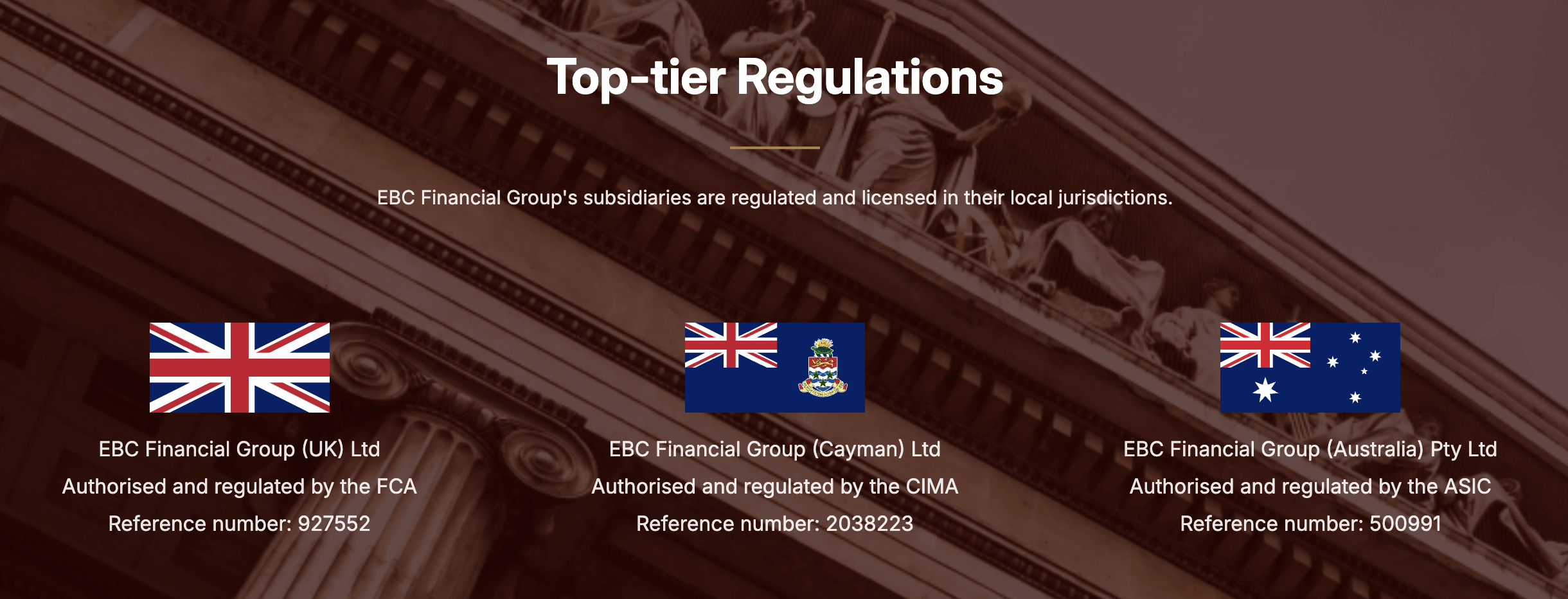
EBC provides access to WTI (XTIUSD) and Brent (XBRUSD) crude oil CFDs within a globally regulated framework, ensuring that traders operate under recognised compliance and risk standards. The infrastructure focuses on fast execution, reliable liquidity, and consistent pricing during volatile conditions.
Regulated trading environment - EBC operates under established regulatory oversight, providing transparency, client protection, and operational integrity.
Competitive leverage with risk balance - Leverage is structured to support capital efficiency while allowing disciplined position sizing in volatile oil markets.
Institutional-grade execution - Deep liquidity and fast order processing reduce slippage during inventory data releases and OPEC-driven moves.
Transparent contract specifications - Clear margin, lot size, and swap details help traders understand true trading costs upfront.
Professional trading platforms - MetaTrader access supports advanced charting, execution control, and risk management tailored to oil trading.
Opening an account with EBC Financial Group is a straightforward process that prioritises security, compliance, and efficient market access.
Start by accessing EBC Financial Group’s official website. Always ensure you are on the correct domain to protect your personal and financial information.
Select the account type that aligns with your trading objectives. EBC offers account structures suitable for both active retail traders and more advanced market participants, with flexible conditions for trading commodities such as WTI and Brent oil.
Fill in the required personal details, including your name, country of residence, email address, and contact information. This information is used solely for account setup and regulatory verification.
To comply with global regulatory standards, EBC requires identity verification. The verification process is typically efficient, allowing traders to proceed without unnecessary delays.
Once verified, you can fund your account using the available payment methods supported for Pakistani clients. EBC ensures secure transactions and transparent funding procedures.
After funding, download or log in to the trading platform provided by EBC, such as MetaTrader. You can then access WTI (XTIUSD), Brent (XBRUSD), and other global instruments from a single professional interface.
With your account active, you can start trading crude oil CFDs using EBC’s competitive leverage, low-slippage execution, and institutional-grade pricing environment.
Crude oil trades almost around the clock, but liquidity and volatility vary by session. Timing entries during active periods improves execution quality and reduces noise.
| Session | UTC Time | Pakistan Time (PKT) | Market Characteristics |
|---|---|---|---|
| Asian Session | 23:00 – 07:00 | 04:00 – 12:00 | Thinner liquidity, range-bound price action |
| London Session | 07:00 – 15:00 | 12:00 – 20:00 | Liquidity improves, Brent-led moves |
| New York Session | 13:00 – 21:00 | 18:00 – 02:00 | Peak liquidity and volatility, WTI focus |
| Daily Maintenance | ~21:00 – 22:00 | ~02:00 – 03:00 | Brief pause on some platforms |
Note: Most CFD brokers keep oil markets open Monday to Friday with a short daily maintenance break. Exact timings may vary slightly by broker.
Oil markets move fast, and small mistakes compound quickly. These principles are about staying in the game, not maximising short-term returns.
Limit risk per trade to a small percentage of equity - Keeping risk around 1% per position ensures that normal oil volatility does not cause disproportionate damage to the trading account.
Reduce position size before major inventory releases - US crude inventory data often triggers sharp, unpredictable moves. Smaller exposure reduces the impact of sudden price spikes or slippage.
Avoid reactive trading during volatility surges - Fast moves can widen spreads and degrade execution. Chasing price action usually increases risk without improving probability.
Factor in overnight financing costs - Holding oil positions beyond the trading day incurs swap charges, which can materially affect returns on swing or position trades.
Account for US Dollar exposure - Since oil is priced in the US Dollar, currency fluctuations can amplify gains or losses for non-USD-based accounts.
Yes. Pakistani residents can trade WTI and Brent crude oil through internationally regulated brokers offering oil CFDs, which is the most common way traders approach oil markets from Pakistan. Brokers such as EBC Financial Group operate within recognised regulatory frameworks and support compliant banking channels for Pakistani clients.
You are trading price movements of crude oil benchmarks rather than physical barrels. Platforms offered by brokers like EBC mirror real-time WTI and Brent pricing through CFD contracts.
Oil is quoted per barrel in US Dollar terms. Trading platforms convert this pricing into lots or contract sizes, allowing precise exposure control and flexible position sizing.
WTI typically reacts more sharply to US inventory data, while Brent reflects broader global demand, geopolitical developments, and OPEC policy. Many traders access both benchmarks through EBC and select based on market conditions and strategy.
Yes. Holding oil positions overnight involves swap or financing charges. These costs vary by instrument and market conditions and should be factored into swing or position-trading strategies.
Yes. EBC provides CFD access to both WTI and Brent crude oil with transparent contract specifications, competitive leverage structures, and execution designed to handle oil market volatility.
Trading WTI and Brent oil from Pakistan isn’t complicated anymore, but it does demand seriousness. Oil is fast, volatile, and deeply tied to global economics. If you don’t understand how barrels are priced, how leverage really works, or why fundamentals matter, the market will expose that very quickly.
WTI and Brent reward traders who stay structured. That means respecting risk, knowing when volatility is meaningful and when it is just noise, and ensuring execution never works against you. Strategy matters, but the environment you trade in matters just as much.
With regulated access to WTI and Brent CFDs, efficient leverage, and reliable execution, EBC Financial Group gives traders in Pakistan the tools to approach oil the right way. Not as a gamble, but as a professional market.
In oil trading, consistency comes from discipline and good decisions repeated over time. The right broker simply makes sure those decisions are not undermined by poor pricing, slippage, or execution.
Disclaimer: This material is for general information purposes only and is not intended as (and should not be considered to be) financial, investment or other advice on which reliance should be placed. No opinion given in the material constitutes a recommendation by EBC or the author that any particular investment, security, transaction or investment strategy is suitable for any specific person.