Published on: 2026-01-14
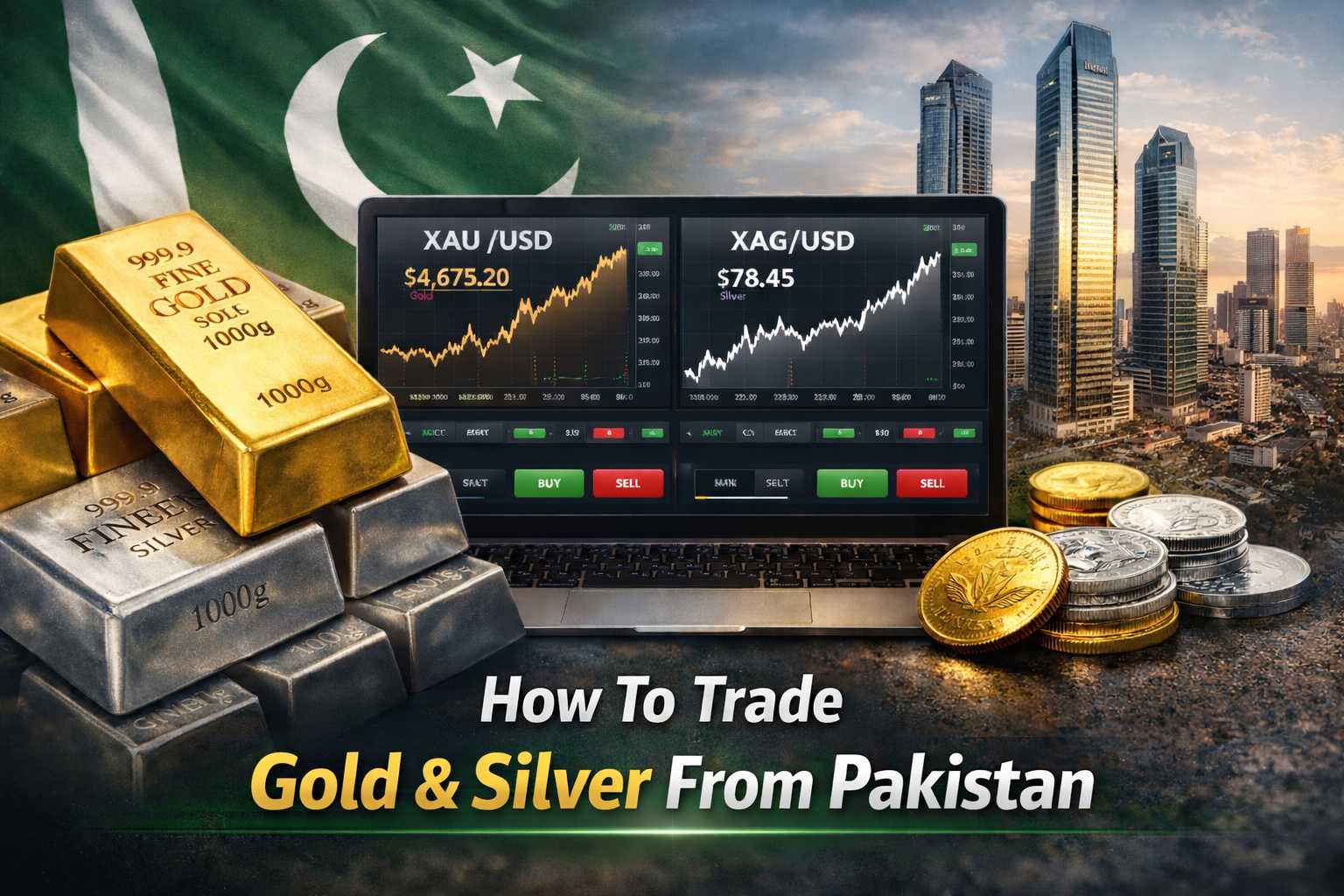
Spot gold is trading in the $4,600s per ounce, while silver has decisively broken above long-term historical ceilings, with an all-time-high $90, remaining highly volatile.
Gold and silver have entered 2026 in a structurally different position from previous cycles. These are no longer marginal defensive assets activated only during crises. They now sit at the center of global capital allocation as monetary credibility, fiscal discipline, and geopolitical stability are reassessed across major economies.
For traders in Pakistan, this repricing is particularly relevant as the rupee remains structurally exposed to external financing cycles, energy import costs, and global dollar liquidity conditions. As a result, gold and silver have evolved from passive stores of value into actively traded instruments that offer liquidity, flexibility, and real-time global price discovery through online markets.
Gold (XAU/USD) and silver (XAG/USD) allow direct exposure to global precious metals prices against the US Dollar.
Online trading removes storage, purity, and liquidity constraints associated with physical bullion.
Silver materially outperformed gold today, confirming its high-beta role within the metals complex.
Medium-term price structure keeps gold supported in the $4,500–$5,000 zone, while silver remains underpinned by supply tightness and industrial demand.
Broker execution quality, risk controls, and platform stability determine long-term trading outcomes more than directional bias.
This structural backdrop explains why precious metals trading volumes from Pakistan have risen sharply and why gold and silver are now treated as core trading instruments rather than emergency hedges.
Capital allocation into precious metals is being driven by structural forces rather than short-term fear. Real interest rate compression, elevated sovereign debt levels, and rising geopolitical fragmentation have weakened confidence in fiat currency purchasing power over the medium term.
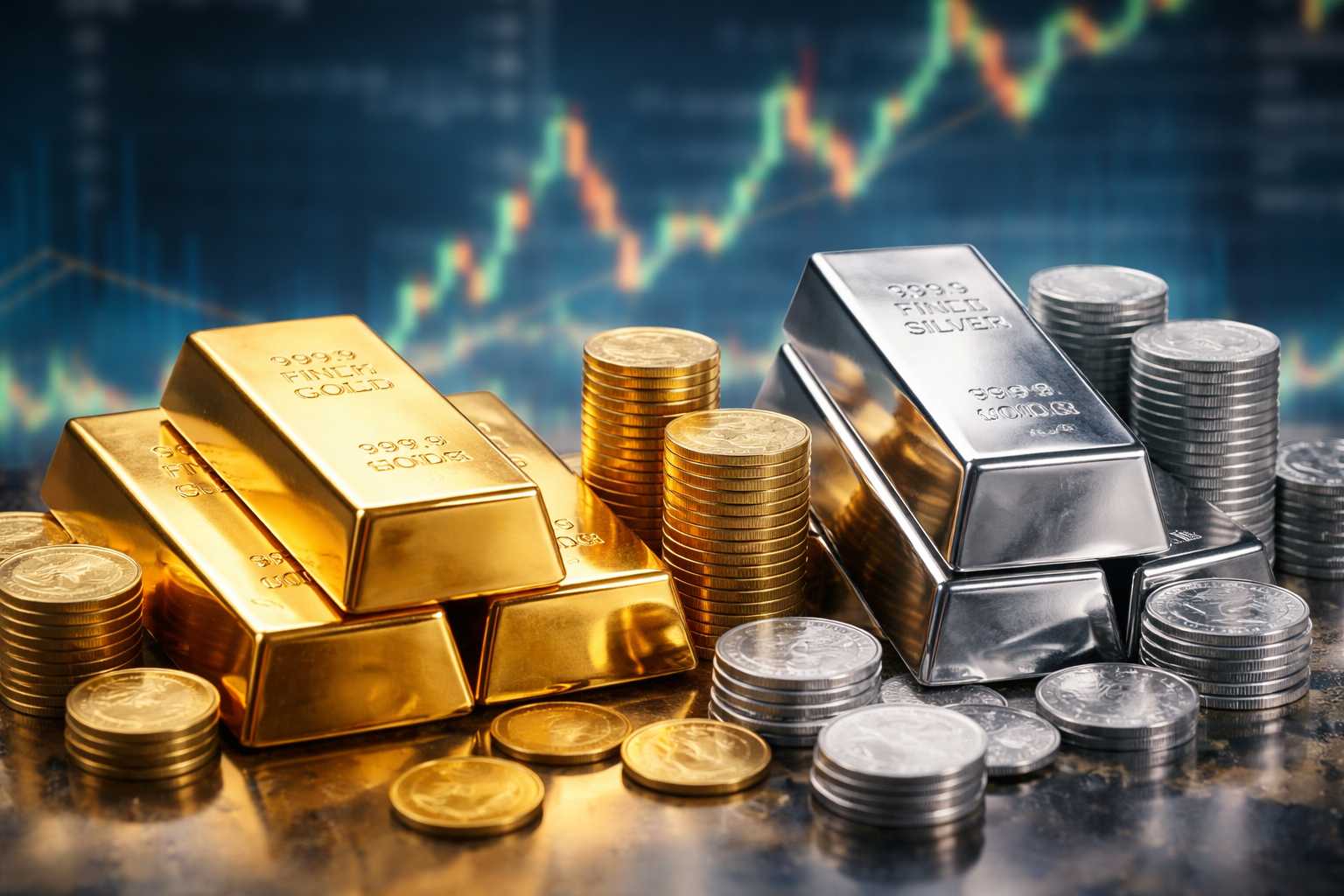 Gold benefits directly from this environment. It acts as a monetary hedge when real yields fall, and currency volatility rises. Silver complements this role but adds an industrial growth dimension, with demand tied to renewable energy, electric vehicles, electronics, and advanced manufacturing.
The interaction between these drivers creates a dynamic trading environment:
Gold typically leads during periods of macro stress and liquidity tightening.
Silver accelerates once momentum builds, delivering higher volatility and sharper percentage moves.
Together, they provide Pakistani traders with both stability and opportunity across different market regimes.
Real interest rate expectations rather than nominal rates
Central bank reserve diversification away from paper assets
Geopolitical risk premiums embedded in futures pricing
Global US Dollar liquidity and balance sheet conditions
Gold’s current price structure reflects persistent demand from both official institutions and private capital seeking long-duration protection.
Rapid expansion in industrial demand, particularly in clean energy
Structural supply constraints due to underinvestment in mining
Gold-to-silver ratio compression during momentum phases
Faster reaction to shifts between risk-on and risk-off sentiment
Silver’s volatility makes it unsuitable for passive exposure but highly effective for tactical trading when managed correctly.
The permissibility of gold and silver trading depends on structure rather than asset type. There is no single universal ruling, and interpretations vary across scholars and jurisdictions.
From a structural perspective, spot-style trading executed transparently and without interest-based mechanisms is generally viewed more favorably. The primary concern arises from overnight interest charges, excessive uncertainty, and leveraged structures tied to interest calculations.
This is why many Pakistani traders opt for swap-free or Islamic trading accounts. These remove overnight interest charges and are designed to align more closely with Islamic finance principles. Traders should always review contract terms carefully and seek guidance from a qualified religious advisor based on personal belief.
Gold and silver are most commonly traded by Pakistani traders through Contracts for Difference (CFDs), which provide direct exposure to global precious metals prices without owning physical metal. Gold CFDs (XAU/USD) and silver CFDs (XAG/USD) track international spot prices, allowing traders to participate in both upward and downward market movements with precision and flexibility.
CFD trading removes many of the structural limitations associated with physical bullion. There are no storage or insurance costs, pricing closely follows global benchmarks, and positions can be adjusted instantly in response to macroeconomic developments.
This makes gold and silver CFDs particularly suitable for traders seeking to capitalize on volatility driven by interest rates, currency movements, and geopolitical risk.
Trading precious metals requires more than directional accuracy. Execution reliability, pricing transparency, and risk controls define long-term performance.
As the World’s Best Broker, EBC Financial Group provides Pakistani traders with direct access to global gold and silver markets through a regulated, institution-grade environment designed for volatile conditions.
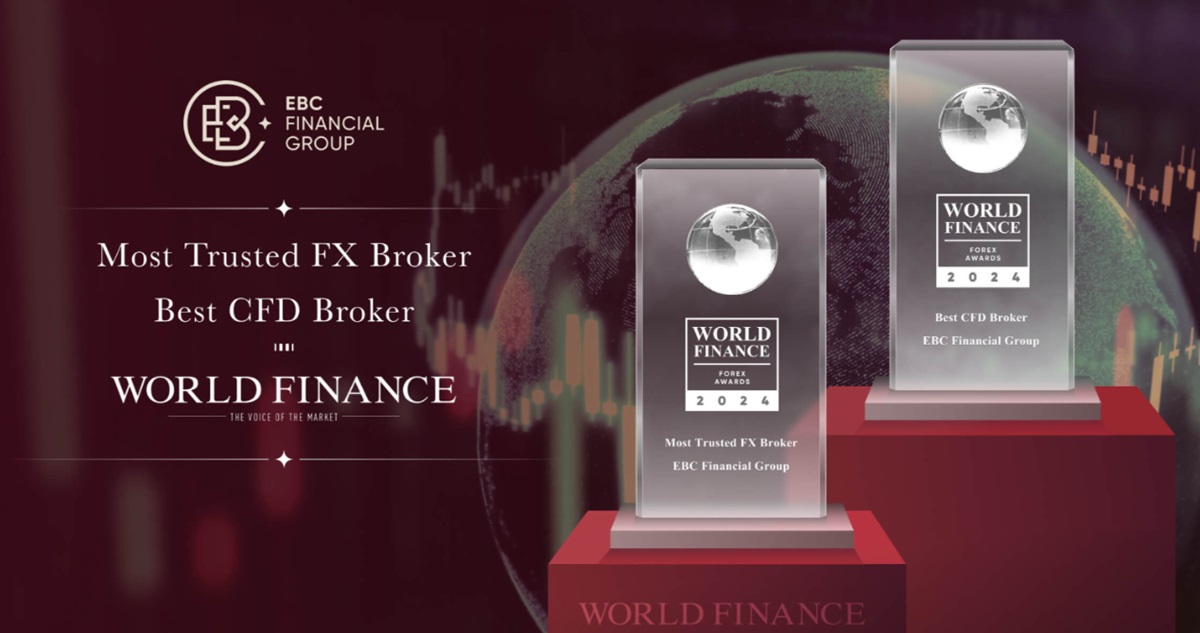 Core advantages:
Tight pricing on XAU/USD and XAG/USD
Stable execution during high-volatility sessions
Professional trading platforms
Advanced risk management tools
Dedicated client support
EBC’s infrastructure mirrors institutional standards, allowing precise execution and disciplined risk control.
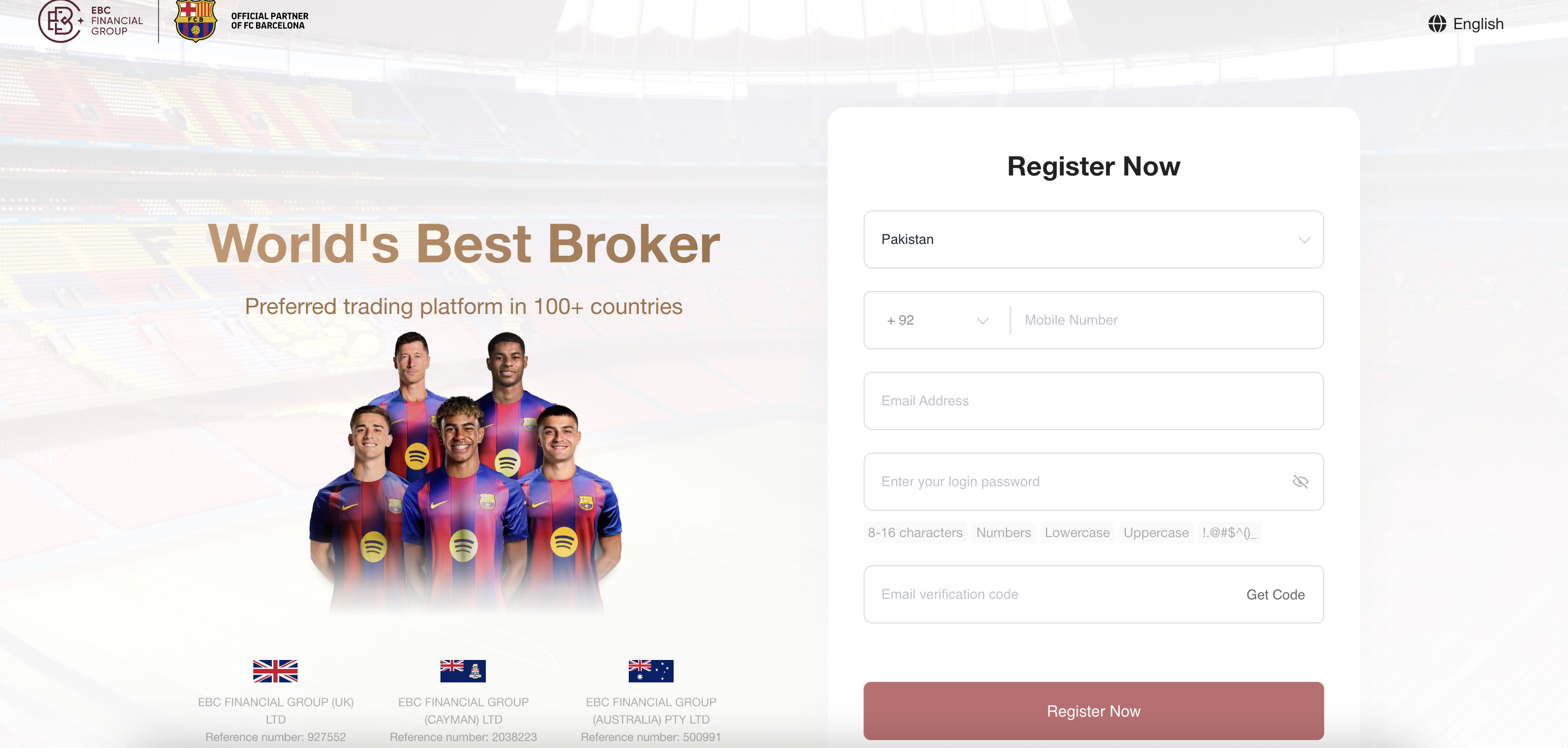
1. Open an Account
Access the official website. Complete the digital registration process and select an account type that suits your trading approach.
Upload the required documents to activate full trading functionality.
Deposit using supported payment methods available to Pakistani clients. Entry requirements remain accessible at $50, allowing flexible participation.
Monitor live pricing on XAU/USD and XAG/USD.
Define position size, stop-loss, and take-profit levels before entering any trade.
Gold and silver trade nearly 24 hours a day, but liquidity conditions vary significantly.
| Session | PKT Time | Liquidity | Market Behavior |
|---|---|---|---|
| Asian | 5:00 AM – 2:00 PM | Low–Moderate | Range-bound, slower moves |
| London | 12:00 PM – 9:00 PM | High | Trend development |
| New York | 6:00 PM – 3:00 AM | High | Volatility around US data |
| London–New York Overlap | 6:00 PM – 9:00 PM | Very High | Tightest spreads, strongest momentum |
The London–New York overlap consistently delivers the cleanest execution and is preferred by active traders.
Define maximum risk per trade before entry,
Use stop-loss orders without exception,
Avoid excessive leverage during macro releases,
Limit correlated exposure across instruments,
In precious metals, survival and consistency matter more than prediction.
Yes. Pakistani residents can trade gold and silver through regulated international brokers that accept clients from Pakistan. These platforms provide access to global precious metals markets priced against the US Dollar, without requiring physical ownership.
No. Online trading allows you to gain direct price exposure to gold (XAU/USD) and silver (XAG/USD) without purchasing or storing physical metal. This removes concerns around purity, security, storage costs, and liquidity constraints.
The best broker is one that offers strong regulation, transparent pricing, tight spreads, reliable execution, and robust risk management tools. EBC Financial Group meets these criteria by providing regulated trading conditions, a professional platform, and access to XAU/USD and XAG/USD for Pakistani traders.
There is no single universal ruling. Permissibility depends on how trading is structured and individual interpretation. Spot-style trading without interest-based charges is generally viewed more favorably, which is why many traders opt for swap-free or Islamic accounts. Traders should review account terms carefully and consult a qualified religious advisor if needed.
The most active trading period is during the London and New York session overlap, when liquidity is highest, and spreads are typically tighter. This window is often preferred by active traders seeking more reliable price action.
Gold is generally more stable and less volatile, making it easier for beginners to manage. Silver moves faster and exhibits higher volatility, which may be better suited for experienced traders with strong risk control.
EBC Financial Group operates within a regulated framework and provides institutional-grade trading infrastructure designed to protect client interests. Key considerations include transparent pricing, robust execution systems, and risk management controls. Pakistani traders should always review regulatory disclosures and account terms to ensure alignment with their trading requirements.
Trading gold and silver from Pakistan has transitioned into a globally integrated opportunity defined by liquidity, transparency, and strategic flexibility. With precious metals positioned to remain structurally strong through 2026, traders have compelling reasons to engage these markets actively.
By trading with EBC Financial Group, Pakistani traders gain professional market access, robust execution, and the tools required to navigate volatility with confidence. In an environment shaped by currency pressure and global uncertainty, gold and silver remain among the most strategically relevant markets to trade.
Disclaimer: This material is for general information purposes only and is not intended as (and should not be considered to be) financial, investment or other advice on which reliance should be placed. No opinion given in the material constitutes a recommendation by EBC or the author that any particular investment, security, transaction or investment strategy is suitable for any specific person.