Published on: 2026-04-15
Central banks rarely describe currency stress as a crisis. Instead, they use terms such as volatility, disorderly market conditions, or external pressure. That choice of language is important because modern currency defence is rarely about holding a fixed line.

India offers a clear case study. The Reserve Bank of India states explicitly that its foreign exchange intervention is designed to maintain orderly market conditions and contain excessive volatility, without targeting any specific exchange rate level or band.
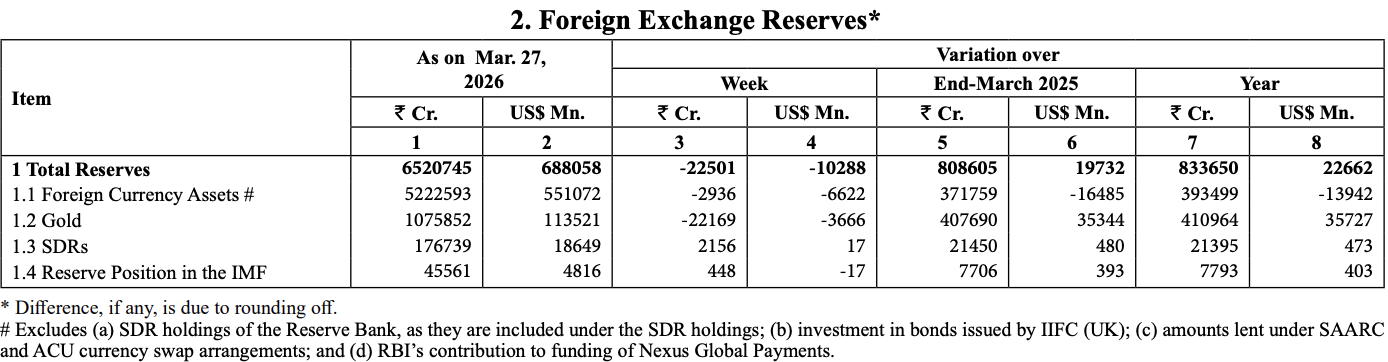
For the week ended March 27, 2026, India’s foreign exchange reserves stood at $688.1 billion, down $10.3 billion from the previous week. The move shows how quickly reserve use can enter the market narrative, even when policymakers avoid the language of crisis.
When investors hear that a central bank is defending a currency, they often think first of outright dollar sales and domestic-currency purchases. That tool remains important, but it is only one element of a broader policy framework. In practice, central banks defend a currency by preventing markets from becoming one-sided, illiquid, and destabilising.
The RBI’s own language is instructive. It says intervention is intended to modulate excessive exchange-rate volatility and preserve orderly market conditions, so that monetary policy can remain focused on domestic macroeconomic objectives. That is very different from committing to defend a specific rupee level at all costs.
The distinction is important. A central bank that defends a fixed exchange-rate level can invite speculative pressure. One that focuses on market functioning, liquidity, and volatility retains greater flexibility. It can intervene aggressively when needed, step back when conditions improve, and still maintain policy consistency because the objective is orderly markets, not a fixed number on the screen.
The first line of defence is foreign exchange reserves. RBI’s Weekly Statistical Supplement shows total reserves at $688.1 billion as of March 27, 2026, including $551.1 billion in foreign currency assets and $113.5 billion in gold. These holdings matter because they provide the central bank with the firepower to sell foreign currency when market conditions become disorderly.
The second line of defence is liquidity management. The RBI’s annual report explains that spot intervention alters domestic liquidity conditions and may therefore require sterilisation.
In practical terms, when the central bank sells dollars and absorbs rupees, it may need to offset that tightening through open market operations to ensure that currency defence does not turn into an unintended monetary squeeze.
The third line of defence is the swap market. On January 27, 2026, the RBI announced a $10 billion long-term USD/INR buy-sell swap auction with a three-year tenor. Under this structure, banks sell US dollars to the RBI in the first leg and receive rupee liquidity, before reversing the transaction at a later date.
This makes swaps a flexible tool for managing rupee liquidity and market conditions without relying solely on outright spot intervention.
Quick summary:
| Tool | How it works | Why it matters |
|---|---|---|
| Spot intervention | RBI buys or sells foreign currency in the market | Smooths abrupt rupee moves |
| Reserves management | Uses large foreign-currency assets and gold buffers | Gives credibility to intervention |
| Sterilisation | Uses OMOs to offset liquidity effects | Prevents FX action from distorting monetary policy |
| USD/INR swaps | Injects or absorbs rupee liquidity through swap auctions | Adds flexibility beyond spot-market action |
Calling a situation a currency crisis can make it worse. It can entrench market narratives, encourage speculative positioning, and increase hedging demand from importers and corporates. That is why central banks prefer terms such as “orderly market conditions” and “excessive volatility.” The language is not cosmetic. It is part of the policy response.
India’s framework shows how this works in practice. The RBI does not commit to defending a fixed rupee level. Instead, it emphasizes reserve adequacy, flexible intervention, and the capacity to sterilise or inject liquidity when necessary. That approach keeps markets uncertain about the central bank’s tolerance range while preserving policy credibility.
A country can draw on reserves, use swaps, and lean against disorderly market moves without being close to an external financing breakdown.
India’s reserve metrics still compare favourably with its import needs and short-term external obligations, which is why the more accurate description is "pressure management" rather than "emergency defense".
Investors should look beyond the daily move in USD/INR and focus on the policy signals that reveal whether pressure is temporary or becoming more serious.
The pace of reserve change is the first signal to watch. A one-week decline matters less than a sustained drawdown accompanied by worsening external indicators. That is why reserve adequacy matters as much as the headline reserve number. The RBI’s reserve report tracks import cover, short-term debt ratios, and the share of volatile capital flows relative to reserves for precisely this reason.
Liquidity action is the second signal. If spot intervention is followed by sterilisation or swap operations, it usually means the central bank is defending the currency while trying to keep domestic monetary conditions aligned with its broader policy goals. The RBI’s annual report shows that this balancing act sits at the core of intervention strategy.
The official language is the third signal. When central banks refer to “orderly market conditions” rather than “fundamentals,” they are often signalling that they are managing the pace of depreciation and containing volatility, not fighting an outright currency breakdown. For investors, that distinction is critical.
Taken together, these signals help distinguish a manageable policy episode from a genuine external-stress event. The rupee chart may show the pressure, but reserves, liquidity tools, and central-bank language reveal how serious it really is.
Because selling dollars and buying the domestic currency can reduce disorderly depreciation and smooth volatility in FX markets.
Yes. Reserves can fall due to intervention, valuation changes, or balance-of-payments flows, without implying an external-financing emergency.
It is FX intervention offset by liquidity operations, such as OMOs, so the central bank can influence the currency without fully changing domestic monetary conditions.
They let a central bank manage market liquidity and funding conditions without depending solely on outright spot-market intervention.
The clearest way to understand modern currency defence is this: central banks rarely defend a currency with a single dramatic move. Instead, they rely on a broader toolkit that includes reserves, market intervention, swaps, sterilisation, and communication.
India is a useful case study because the RBI describes this approach in practice, even if it avoids the language of crisis.
For investors, the lesson is straightforward. Currency defence should not be read solely through the exchange-rate chart. Reserves, liquidity operations, swap activity, and reserve-adequacy metrics need to be assessed together. That is where the real story lies when central banks defend a currency without openly acknowledging market pressure.
Disclaimer: This material is for general information purposes only and is not intended as (and should not be considered to be) financial, investment or other advice on which reliance should be placed. No opinion given in the material constitutes a recommendation by EBC or the author that any particular investment, security, transaction or investment strategy is suitable for any specific person.