Published on: 2026-06-09
Updated on: 2026-06-09
A dead cat bounce is a quick, temporary rise in price after a sharp drop. It might seem like the start of a recovery, but the rally usually fades and the price drops again. The risk for traders is buying during the bounce before there is real evidence that the downtrend is over. Even if the price is going up, the cause of the earlier drop might still exist.
The term comes from the saying that even a dead cat will bounce if it falls from high enough. In trading, this 'bounce' does not mean the asset has recovered. It just means the drop was steep enough to cause a short-lived rise.
A dead cat bounce can happen in stocks, indices, forex, commodities, and other markets. It often appears during strong downtrends, bear markets, or after bad news like weak earnings, poor forecasts, higher interest rates, or a general market sell-off.
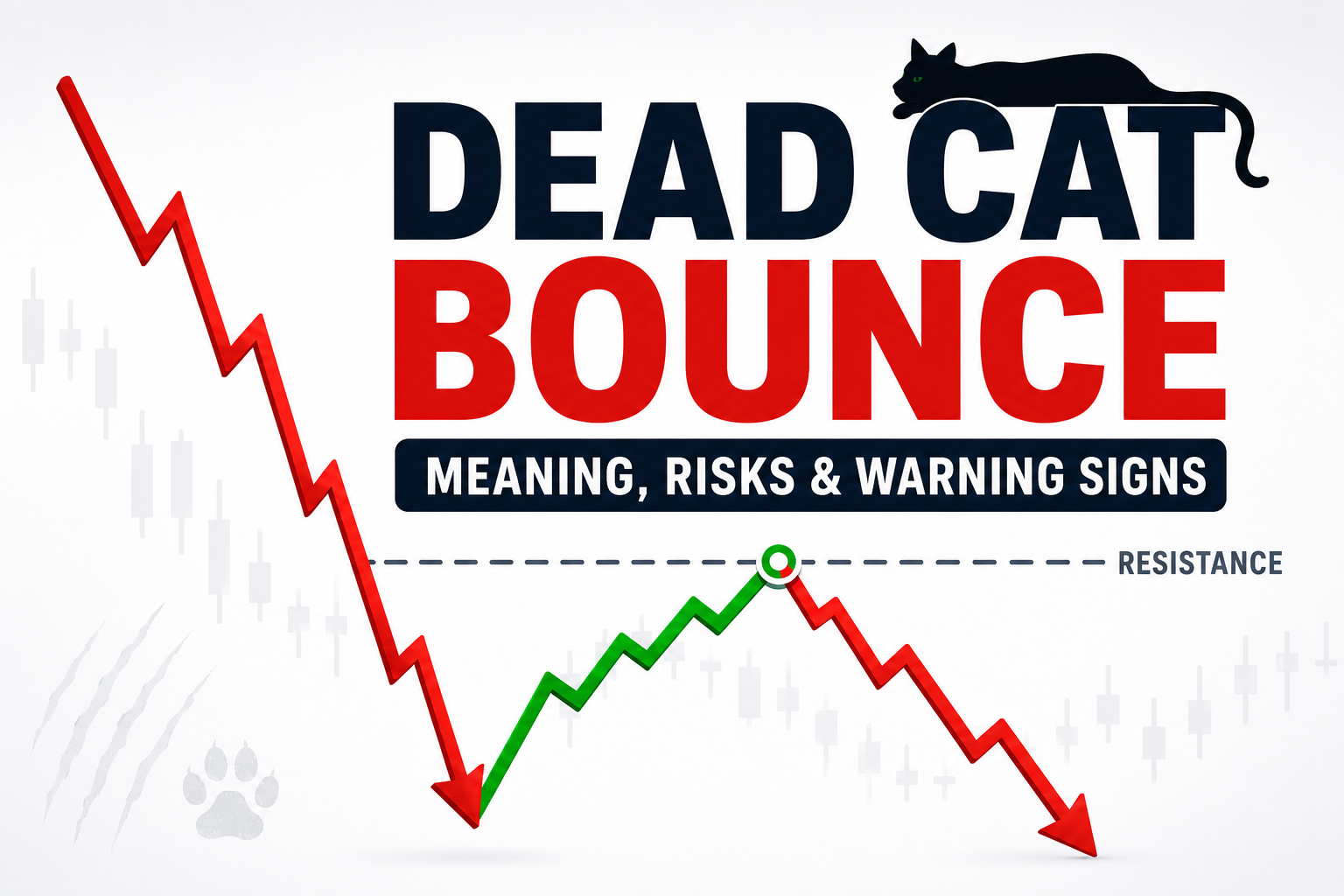
A dead cat bounce often begins after heavy selling. When prices drop fast, some traders believe the asset is oversold and start buying. Short sellers might also buy to close their trades and take profits. This buying can push the price up temporarily.
The rebound can seem real, especially after a quick drop. But if the asset’s situation has not gotten better, the bounce often loses strength. Sellers come back, buyers pull back, and the price falls again.
For example, imagine a stock drops from $100 to $60 after weak earnings. It then rises to $72 as bargain hunters buy and short sellers take profits. But the stock struggles near resistance, falls below $60 again, and drops to $52. The jump from $60 to $72 was the dead cat bounce.
The main takeaway is that a price rebound does not mean the market has truly recovered.
A dead cat bounce is risky because it feeds on hope. After a big drop, many traders want to believe the worst has passed. A few rising prices can make the market seem stronger than it actually is.
This is where many new traders get trapped. They see prices going up and think the market has bottomed. But the bounce might just be from short covering, bargain hunters, or a brief pause after heavy selling.
The problem is that prices can look better before the real situation improves. If the asset is still facing problems, the rebound can end quickly.
A dead cat bounce does not signal a recovery. Instead, it warns that the market might be tempting impatient buyers.
Traders often cannot confirm a dead cat bounce while it is happening. It usually becomes clear only after the price drops again. Still, there are warning signs that can help traders stay careful.
A rebound may be a dead cat bounce if:
The price rises but stays below a major resistance level.
Trading volume is weak during the bounce.
The asset forms a lower high.
The original bad news has not improved.
The price falls back below its recent low.
Weak volume is especially worth watching. If price rises but few buyers are involved, the rebound may lack conviction. A failed move near resistance is another warning sign, indicating that sellers remain active.
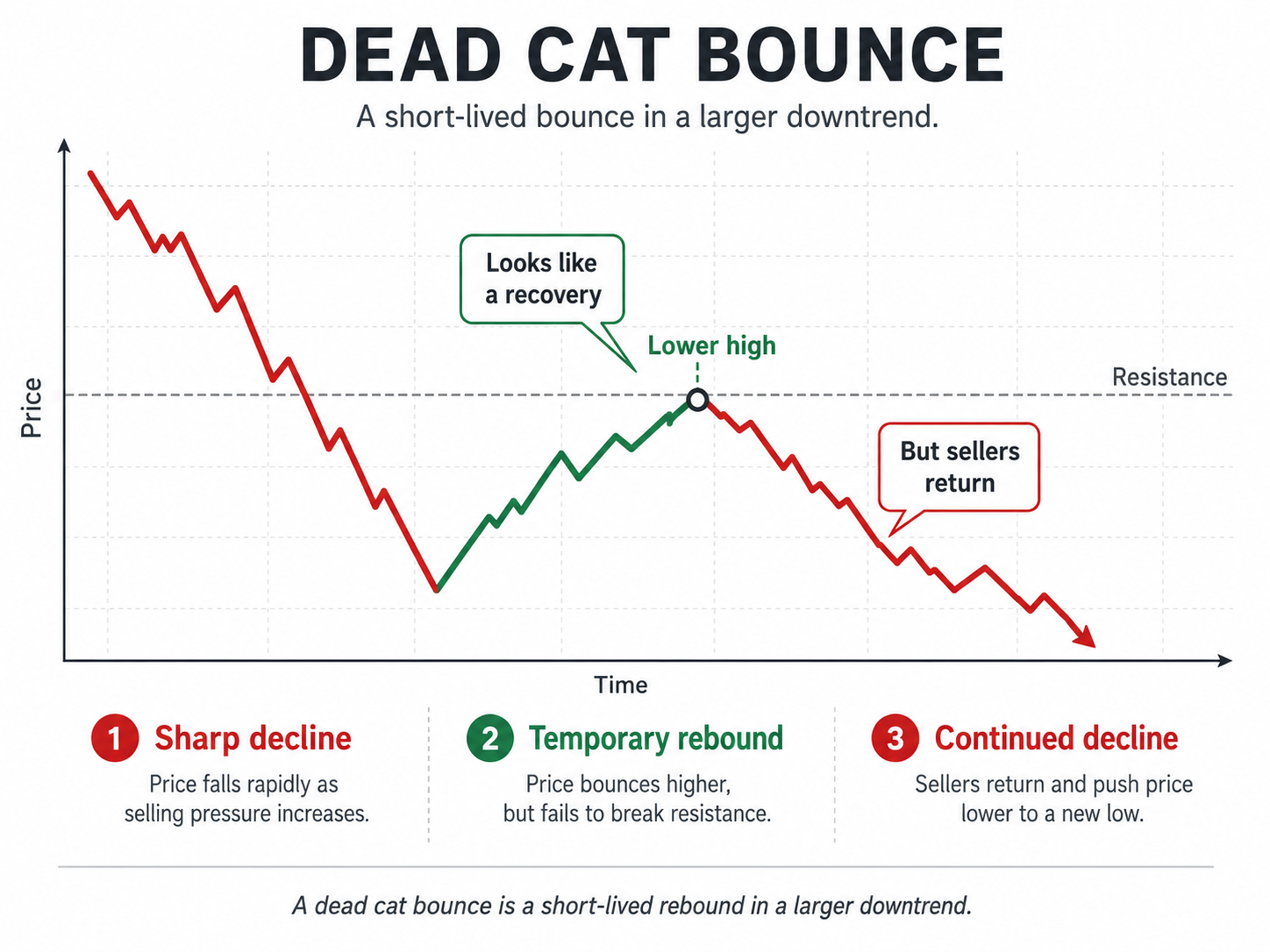
A dead cat bounce is just a short-term rise during a bigger downtrend. A true recovery shows clearer signs that the market is turning around. It remains at higher levels, breaks above resistance, and attracts more buyers. The asset may also make higher lows and higher highs, showing that buyers are taking charge.
A true recovery often has a clear reason, like better earnings, stronger forecasts, improving economic data, or a rebound in the sector. In a dead cat bounce, these signs are missing. The price goes up briefly, cannot hold the gains, and then falls again.
Traders can lower the risk of buying during a dead cat bounce by waiting for confirmation. Rather than buying at the first sign of a rebound, they should look for stronger proof that the downtrend is ending.
This could mean waiting for the price to break above resistance, see higher trading volume, form a higher low, or notice better news about the asset. Traders can also use stop-loss orders to manage risk if the bounce does not last.
The aim is not to buy at the absolute bottom. Instead, it is to avoid buying too soon when sellers are still in control.
Bear Market: A period when prices fall for a prolonged time, usually with weak investor confidence.
Bull Trap: A false bullish signal that attracts buyers before the price falls again.
Relief Rally: A short-term price rise that occurs after selling pressure or negative news eases.
Short Covering: Buying by short sellers who close their positions, which can lift prices briefly.
Resistance Level: A price area where selling pressure may stop or slow a rebound.
Trend Reversal: A change in market direction from falling to rising, or from rising to falling.
A dead cat bounce is usually bearish. The price rises briefly, but the larger downtrend often continues. It is a warning sign when the rebound fails and the price drops again.
A dead cat bounce can last from a few days to several weeks. How long it lasts depends on the market, news, and trader mood. The key is whether the price can keep rising or quickly lose strength.
Traders watch for signs such as weak volume, a failure near resistance, a lower high, and no real improvement in the asset’s outlook. A dead cat bounce is usually confirmed only after the price drops again.
Some traders try to make money by trading the short-term rise or by shorting after the bounce fails. Both strategies are risky because timing is hard. New traders should focus on spotting the setup and managing risk first.
A dead cat bounce is a short-lived price rise after a sharp drop. It can lead traders to believe the market has bottomed, but the rebound often fails, and the downtrend continues.
For new traders, the lesson is simple: do not trust a rebound just because prices are going up. A real recovery needs proof from price action, trading volume, and the reasons behind the move.