Published on: 2026-03-27
Updated on: 2026-03-27
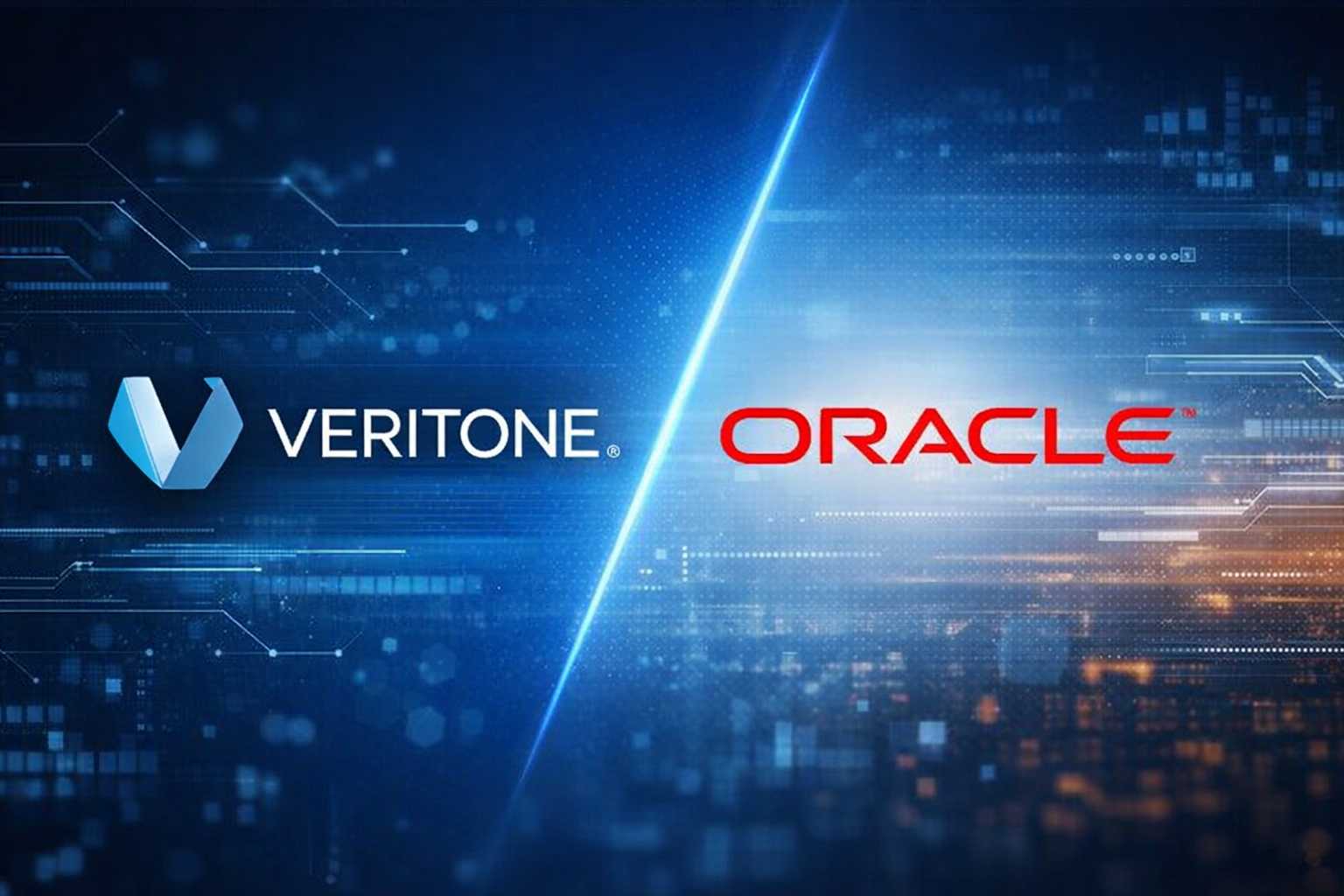
Veritone (VERI) stock moved back into focus on March 26, 2026, after striking a multi-year Oracle cloud deal and pairing it with preliminary fourth-quarter 2025 results, stronger-than-expected 2026 guidance, and signs of a growing pipeline in its Veritone Data Refinery business.
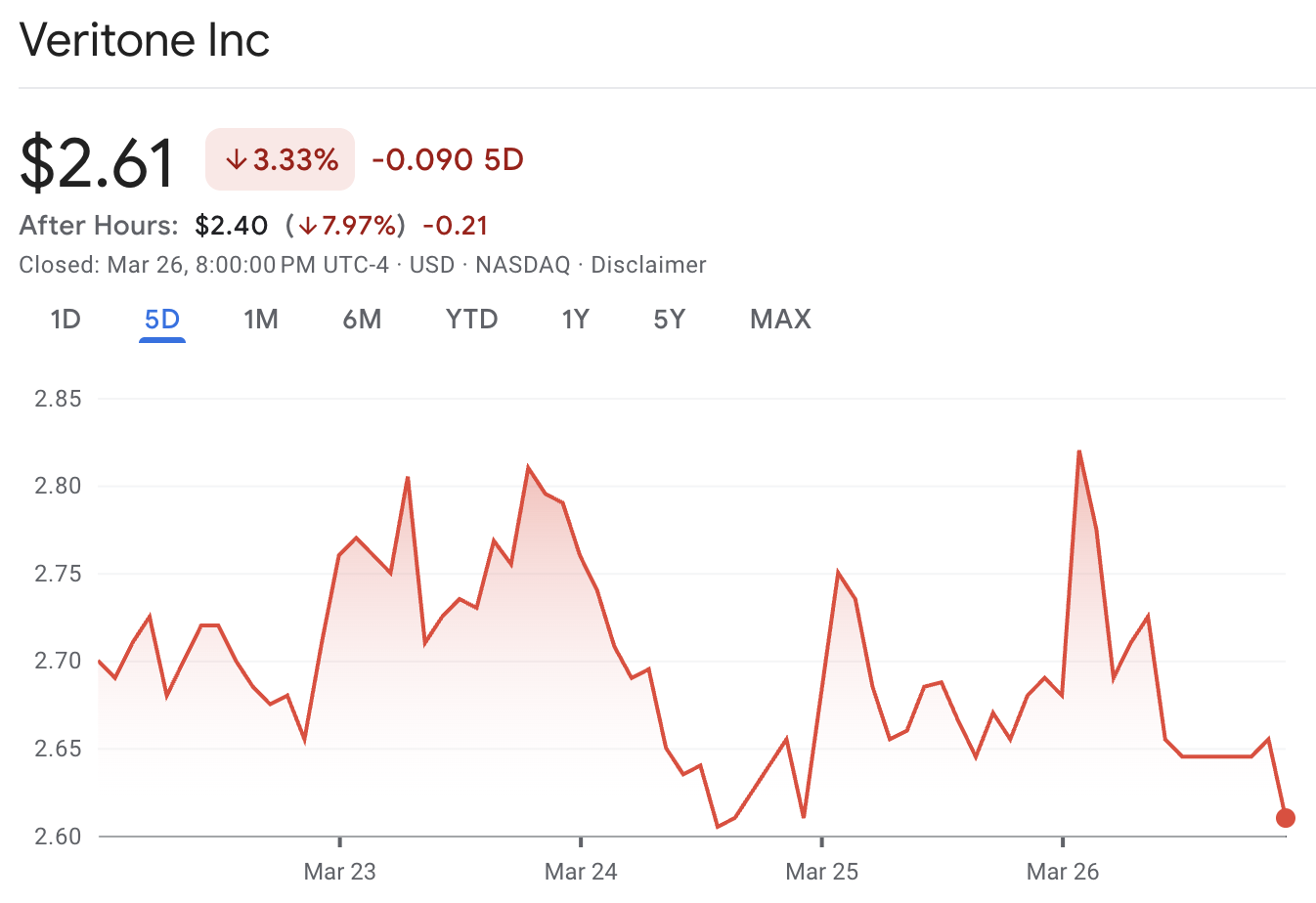
Shares traded at $2.61 on March 27, valuing the company at about $266 million. A wide intraday range suggested investors were reassessing the story as the Oracle partnership, improved outlook, and broader enterprise AI push put VERI stock back on the radar.
Veritone has secured a multi-year cloud infrastructure agreement with Oracle, representing a significant milestone that may reshape the company’s approach to scaling its enterprise AI platform.
The company launched the Veritone Data Marketplace and entered into a content licensing agreement with The Washington Post, thereby expanding its presence within the data economy.
Veritone’s 2026 revenue guidance exceeded analyst consensus, with the company targeting substantial year-over-year growth.
The upside potential is contingent on effective execution, as the most recent Veritone earnings update was preliminary and included a broad revenue range.
Under the March 26 announcement, Veritone will migrate key AI products to Oracle Cloud Infrastructure, including aiWARE, Veritone Data Refinery, and Veritone Data Marketplace.
The company said OCI will become a preferred cloud and infrastructure provider for its next phase of expansion.
For an enterprise AI platform, this decision extends beyond hosting; it encompasses considerations of scale, security, and credibility.
Veritone said OCI will support commercial customers in media, sports, entertainment, and news, while also helping it serve public-sector users in environments built to meet CJIS and FedRAMP requirements.
While the Oracle agreement is the primary headline, March also featured a broader pattern of product launches and partnership activity that contributed to a more coherent narrative for Veritone.
The three pillars of the Oracle Veritone partnership break down as follows:
| Sector | Application |
|---|---|
| Commercial (Media, Sports, News) | Digital Media Hub supports content management and licensing workflows for media and sports organizations, including NCAA, CBS News, and ESPN |
| Public Sector | Intelligent Digital Evidence Management operates on infrastructure designed to meet FedRAMP and CJIS compliance requirements |
| AI Data Economy | Veritone Data Refinery and Veritone Data Marketplace extend the company’s AI data and model-development ecosystem on Oracle Cloud Infrastructure |
AI data marketplace: Veritone launched Veritone Data Marketplace on March 10 as a rights-cleared exchange linking data owners with accredited AI developers. The company positioned it as an alternative to scraped data and as a way to monetize high-quality archives.
Washington Post collaboration: On March 5, Veritone announced a multi-year agreement to license The Washington Post’s video archive globally, boosting its content licensing and archive monetisation business.
Privacy and public safety push: On March 17, Veritone said its Redact software was being used alongside Data Refinery to remove personally identifiable information from unstructured data before refinement, reinforcing a privacy-first AI positioning.
Collectively, these announcements demonstrate that Veritone is not focused solely on a single AI application. Instead, the company is developing a broader technology stack encompassing enterprise AI software, AI-ready data, licensing, privacy, and public-sector workflows.
The latest Veritone Q4 earnings update offered both encouragement and caution to investors. On March 26, the company reported preliminary, unaudited fourth-quarter 2025 revenue of $18.1 million to $30.0 million, alongside a fiscal 2026 revenue outlook of $130 million to $145 million.
It also guided to a non-GAAP net loss of $22.5 million to $13.5 million for 2026.
Veritone said Veritone Data Refinery exited 2025 with total new bookings and near-term pipeline above $50 million, up more than 25% from its November estimate and up 250% from the fourth quarter of 2024.
It also said it closed 257 enterprise software and licensing contracts and 60 public sector contracts.
Yes, but only in a qualified sense. The Oracle deal changes the narrative around Veritone by strengthening the company’s enterprise AI platform story, supporting regulated use cases, and tying directly into the higher-value parts of the business, such as Data Refinery and the AI data marketplace.
Whether it changes the stock outlook in a lasting way depends on execution.
The market now has a clearer reason to watch Veritone, but the company still needs to convert bookings, partnerships, and infrastructure upgrades into cleaner revenue growth and narrower losses.
For now, Oracle improves the setup. It does not settle the case.
| Period | Performance | Reference Point | Reading |
|---|---|---|---|
| 1D | -2.97% | $2.61 on March 26 versus $2.69 on March 25 | The one-day drop shows the market is still treating the latest headlines with caution. |
| 1W | -3.69% | $2.61 on March 26 versus $2.71 on March 20 | The weekly move suggests sentiment has stabilized somewhat, but not enough to signal a clear turn in momentum. |
| 6M | -52.06% | Six-month quoted performance | The longer-term decline remains severe, underscoring that Veritone still needs sustained execution to change the stock’s trajectory. |
The bull case rests on operating leverage and positioning. Veritone ended 2025 with $27.4 million in cash and cash equivalents and $45.6 million of convertible debt, after paying down all of its senior secured term loan and roughly half of its 2026 convertible notes.
The company said that debt reduction cut annualized carrying costs by about $13.0 million.
That cleaner balance sheet matters because it gives management more room to invest in the enterprise AI platform without the same financing pressure.
Should Oracle enhance infrastructure efficiency and if Data Refinery and the AI data marketplace successfully convert pipeline into recognized revenue, Veritone may transition from a niche AI stock to a credible infrastructure and data company.
The risks are still easy to see. Veritone remains loss-making, its latest figures are preliminary, and the revenue range is unusually wide for a company trying to build investor confidence.
The company also still has convertible notes due in 2026, and the market will want to see that recent commercial wins lead to durable revenue rather than one-off headlines.
There is also a competitive risk. Enterprise AI infrastructure, governed data, and public sector AI workflows are crowded markets.
Oracle can improve Veritone’s platform story, but it does not eliminate the need to prove that customers will increase spending and remain on the platform.
Analyst sentiment on VERI remains cautious, with some ratings reflecting the stock’s execution risk and small-cap volatility. Investors should review current ratings and do their own due diligence before making any decisions.
The company guided for full-year 2026 revenue of $130 million to $145 million, representing roughly 47% growth at the midpoint compared to the lower end of its 2025 preliminary results.
Oracle Cloud Infrastructure becomes the preferred backbone for Veritone’s aiWARE platform and data services, delivering cost efficiencies, improved security, FedRAMP-compliant government deployments, and financial incentives to help scale operations.
The stock is reacting to a mix of fresh catalysts, including the Oracle agreement, March product launches, and preliminary earnings that came with wide revenue ranges and updated guidance.
Veritone now presents a more compelling investment case compared to the previous month.
The Oracle agreement enhances the credibility of the infrastructure, recent product launches broaden the enterprise AI platform narrative, and the company’s AI data marketplace and public sector offerings are integrated into a more unified strategic framework.
However, VERI stock requires more than positive headlines. The primary challenge is whether Veritone can convert its robust pipeline, improved cloud positioning, and new partnerships into consistent revenue growth and a reduced loss profile.
Until such outcomes are realized, the Oracle partnership increases Veritone's probability of success but does not eliminate existing uncertainties.