Published on: 2026-04-08
Updated on: 2026-04-08
Oligopolists are firms that operate in a market dominated by a small number of large competitors, where each company has significant pricing power and must consider rivals’ reactions when making decisions. These market structures are common in industries such as technology, telecommunications, and semiconductors, making them especially important for investors to understand.
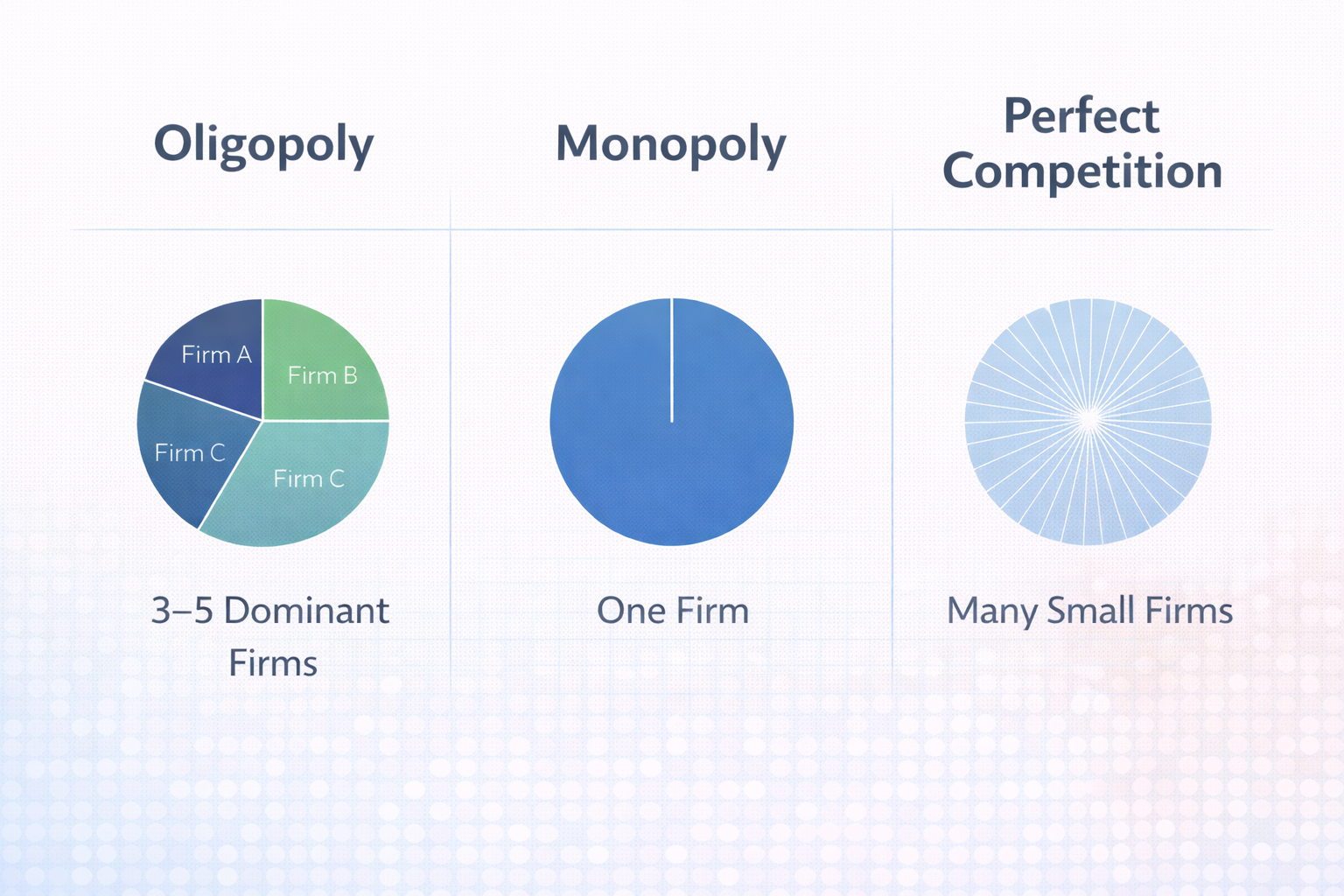
Oligopolists operate in markets with few dominant firms and high barriers to entry.
Firms are interdependent, meaning strategic decisions are influenced by competitors.
Oligopolies often feature stable pricing and strong profit margins.
Examples of oligopolists include major airlines, tech companies, and car manufacturers.
Oligopolists exist in a market structure known as an oligopoly, which sits between perfect competition and monopoly. In this environment, a handful of firms control most of the market share, giving them meaningful influence over pricing and output.
Unlike in highly competitive markets, where companies are price takers, oligopolists can shape pricing. However, they cannot act independently. Every major decision, such as lowering prices, expanding production, or launching new products, must take into account how competitors are likely to respond.
This interdependence creates a cautious competitive environment. Firms often avoid aggressive moves that could trigger retaliation, such as price wars, which would reduce profitability across the entire industry.
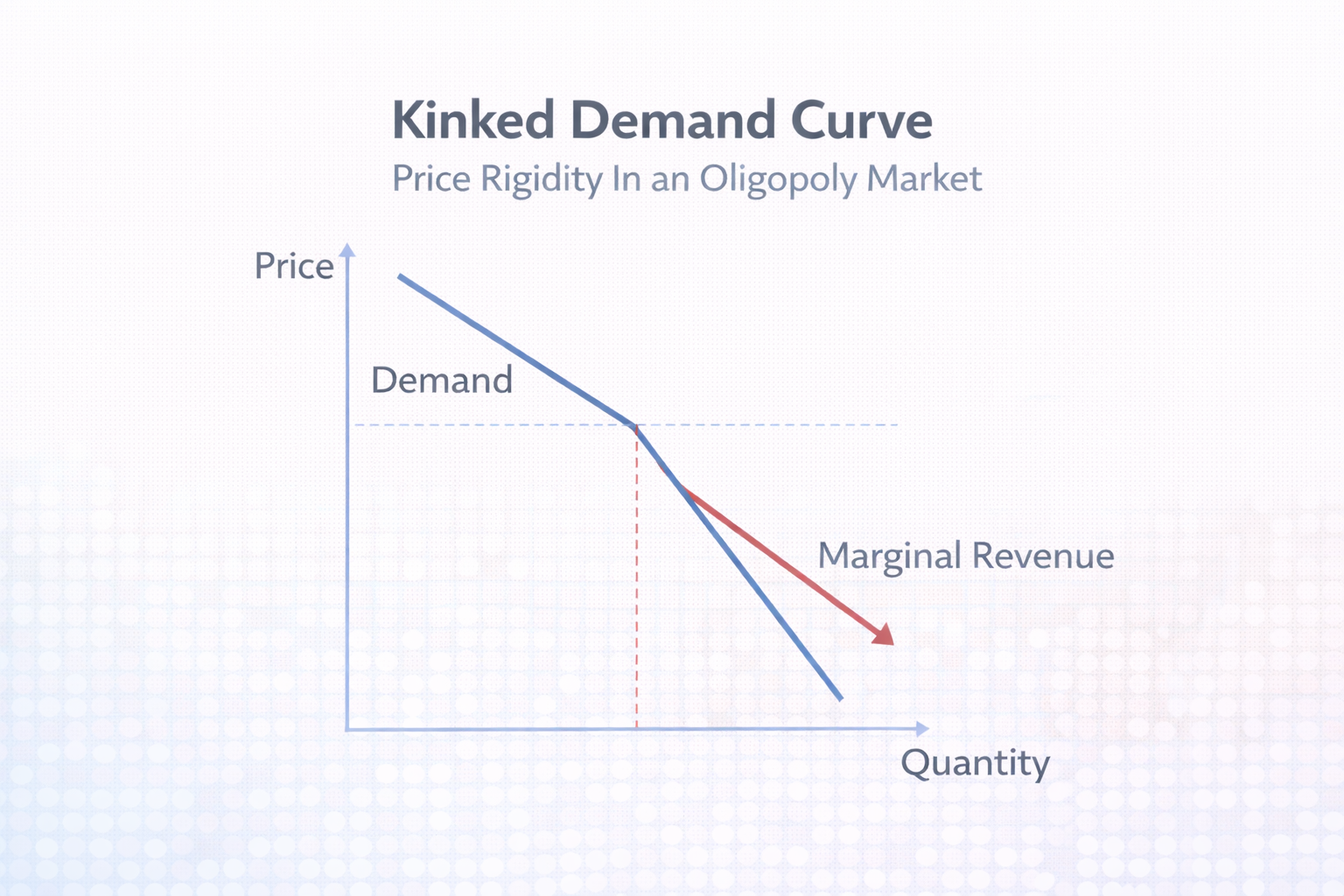
Oligopolists operate in a highly strategic environment in which each firm anticipates its competitors' reactions. For example, if one company reduces prices, others are likely to follow, leading to lower margins across the industry. This encourages cautious and calculated decision-making.
Oligopolistic markets are difficult to enter due to:
Large capital requirements
Regulatory and licensing hurdles
Strong brand loyalty
Established infrastructure and supply chains
These barriers protect existing firms and help maintain market concentration over time.
Prices in oligopolies tend to be relatively stable. Firms often avoid frequent price changes because aggressive pricing strategies can prompt immediate responses from competitors, reducing profitability for all participants.
Instead of competing primarily on price, oligopolists focus on differentiation through:
Product innovation
Branding and marketing
Customer experience
Technology and features
This allows firms to compete while preserving margins.
Investors can identify oligopolistic industries using the following criteria:
A small number of dominant firms (typically two to ten)
High market concentration ratios
Significant barriers preventing new entrants
Firms react to each other’s strategic decisions
Stable or “sticky” pricing over time
Industries that meet most of these conditions are likely operating as oligopolies.
In 2026, the semiconductor industry is a clear example of oligopolistic power. A small number of firms dominate advanced chip manufacturing, benefiting from sustained demand driven by artificial intelligence, cloud computing, and electric vehicles.
With limited competition, oligopolists can influence prices without immediately losing customers. This supports higher profit margins compared to fragmented industries.
Oligopolistic industries often generate stable and recurring revenues. For example, telecommunications companies benefit from subscription-based models that provide consistent income.
High barriers to entry create long-term advantages, often referred to as economic moats. These make it difficult for new competitors to disrupt established firms.
Firms in oligopolies tend to behave rationally because aggressive competition harms all players. This discipline helps maintain profitability across the sector.
To evaluate companies in oligopolistic industries, investors should focus on:
Gross margins: Indicate pricing power
Market share trends: Reflect competitive positioning
Return on invested capital (ROIC): Measures efficiency
Capital expenditure (CapEx): Signals barriers to entry and reinvestment
Strong and stable performance across these metrics often indicates a well-functioning oligopoly.
If one firm breaks industry discipline, competitors may follow with aggressive price cuts, reducing profitability across the sector.
Governments may impose fines, restrictions, or structural changes to prevent anti-competitive behaviour, particularly in large or influential industries.
Innovation can lower barriers to entry, allowing new competitors to challenge established firms.
Excess supply in the market can weaken pricing power and pressure margins.
This comparison highlights how oligopolists balance competition with control, offering both strategic advantages and limitations.
Several macro trends continue to reinforce oligopolistic structures:
AI-driven demand: Concentrating power in semiconductor and cloud infrastructure firms
Increased regulation: Governments are tightening antitrust policies, especially in technology sectors
Supply chain shifts: Reshaping competitive advantages globally
Ecosystem dominance: Firms strengthening control through integrated platforms and services
These trends suggest that oligopolies will remain a defining feature of modern markets.
An oligopolist is a company that operates in a market dominated by a small number of large firms. These companies have pricing power and must consider competitors’ reactions when making decisions, creating a highly strategic and interdependent business environment.
Oligopolies have high barriers to entry, including large capital requirements, regulatory restrictions, and strong brand loyalty. Established firms also benefit from economies of scale, making it difficult for new entrants to compete effectively or gain significant market share.
Oligopolies can benefit investors through stable profits and strong pricing power. For consumers, they may lead to higher prices but can also drive innovation and efficiency due to the scale and resources of dominant firms.
Oligopolists typically compete through innovation, branding, product features, and customer experience. This allows them to differentiate their offerings while maintaining stable pricing and avoiding destructive price competition that could reduce industry profits.
Yes, oligopolies can weaken due to technological disruption, regulatory changes, or new entrants lowering barriers to entry. Changes in consumer preferences and innovation can also shift market dynamics, reducing the dominance of existing firms.
Oligopolists are powerful firms operating in markets with limited competition, where strategic decision-making and pricing power are central. These industries often provide stable returns and strong margins, making them attractive to investors.
However, success in analysing oligopolies requires understanding both their advantages, such as barriers to entry and industry discipline, and their risks, including regulation and disruption.
Disclaimer: This material is for general information purposes only and is not intended as (and should not be considered to be) financial, investment or other advice on which reliance should be placed. No opinion given in the material constitutes a recommendation by EBC or the author that any particular investment, security, transaction or investment strategy is suitable for any specific person.