Published on: 2026-04-08
Updated on: 2026-04-08
In financial markets, the speed and execution of trades can significantly influence investment outcomes. One order type that addresses the need for rapid execution is the IOC (Immediate or Cancel) order.
This type of order ensures that traders can act quickly while limiting exposure to unexecuted positions. Understanding IOC orders is essential for beginner investors seeking to navigate stock markets, ETFs, or other liquid assets efficiently.
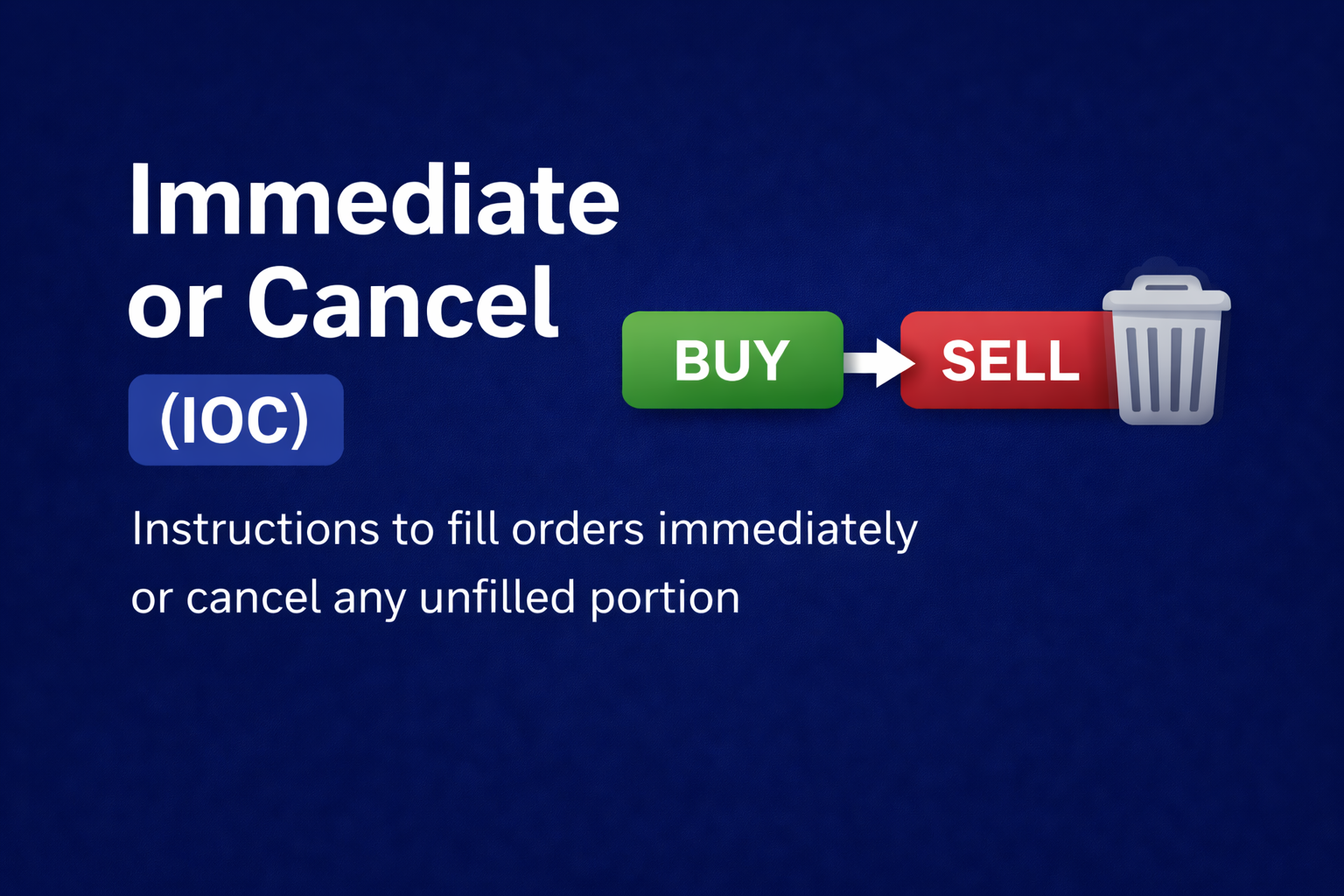
IOC orders aim for immediate execution while cancelling unfilled portions.
Partial execution is allowed, making it flexible in fast-moving markets.
IOC orders differ from FOK (Fill or Kill) and GTC (Good Till Cancelled) orders in execution strategy.
They are particularly useful for day traders, algorithmic trading, and volatile market conditions.
Understanding IOC helps investors manage execution risk and improve trading efficiency.
An IOC (Immediate or Cancel) order is a type of trading instruction where a trader specifies that the order must be executed immediately, either in full or partially. Any portion of the order that cannot be executed instantly is automatically cancelled. Unlike standard limit orders that may sit in the order book until fully filled, IOC orders prioritise speed and efficiency over complete execution.
For example, if an investor wants to purchase 1,000 shares of a stock at $50 per share, and only 600 shares are available at that price, an IOC order would execute the purchase of the 600 shares immediately and cancel the remaining 400 shares. This approach ensures that the investor does not unintentionally enter a position at a later, potentially less favourable price.
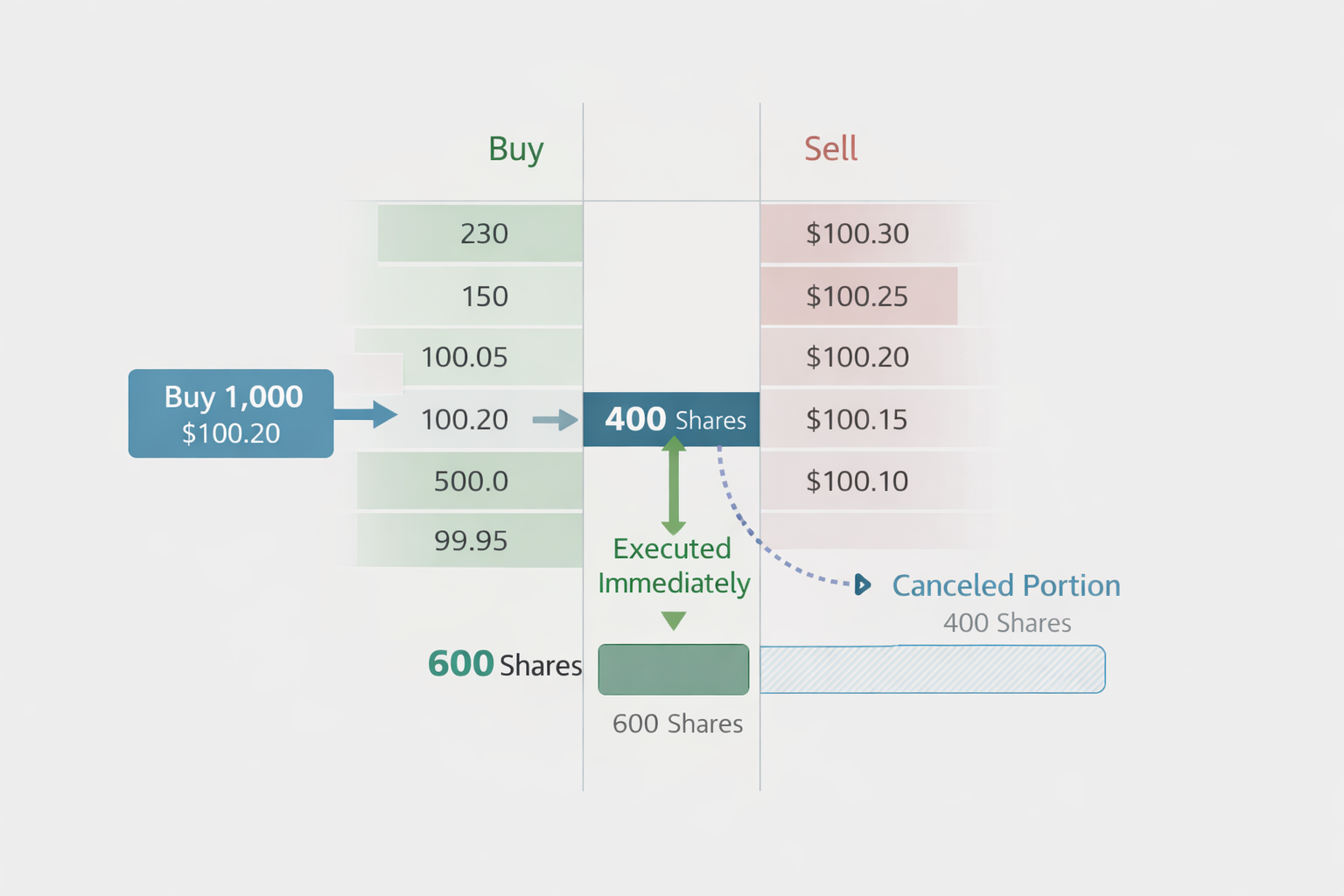
The IOC orders function within the market by interacting directly with the order book. The exchange attempts to fill as much of the order as possible at the specified price, and any unfilled portion is removed instantly. This mechanism is particularly beneficial in fast-moving markets, where prices can change within seconds.
Consider an investor in Apple Inc. (AAPL) during a volatile trading session in 2026. The trader places an IOC order to buy 5,000 shares at $180. If only 3,000 shares are available at that price, the order immediately executes for 3,000 shares, and the remaining 2,000 shares are cancelled. This prevents the investor from waiting and potentially buying at a higher price.
Suppose a trader is buying shares of the SPDR S&P 500 ETF Trust (SPY) to capitalise on a market dip. They place an IOC order for 10,000 shares at $450, but only 7,500 shares are immediately available. The IOC order fills the 7,500 shares instantly, cancelling the remaining 2,500 shares. The trader benefits from swift execution while avoiding unexpected exposure to price fluctuations.
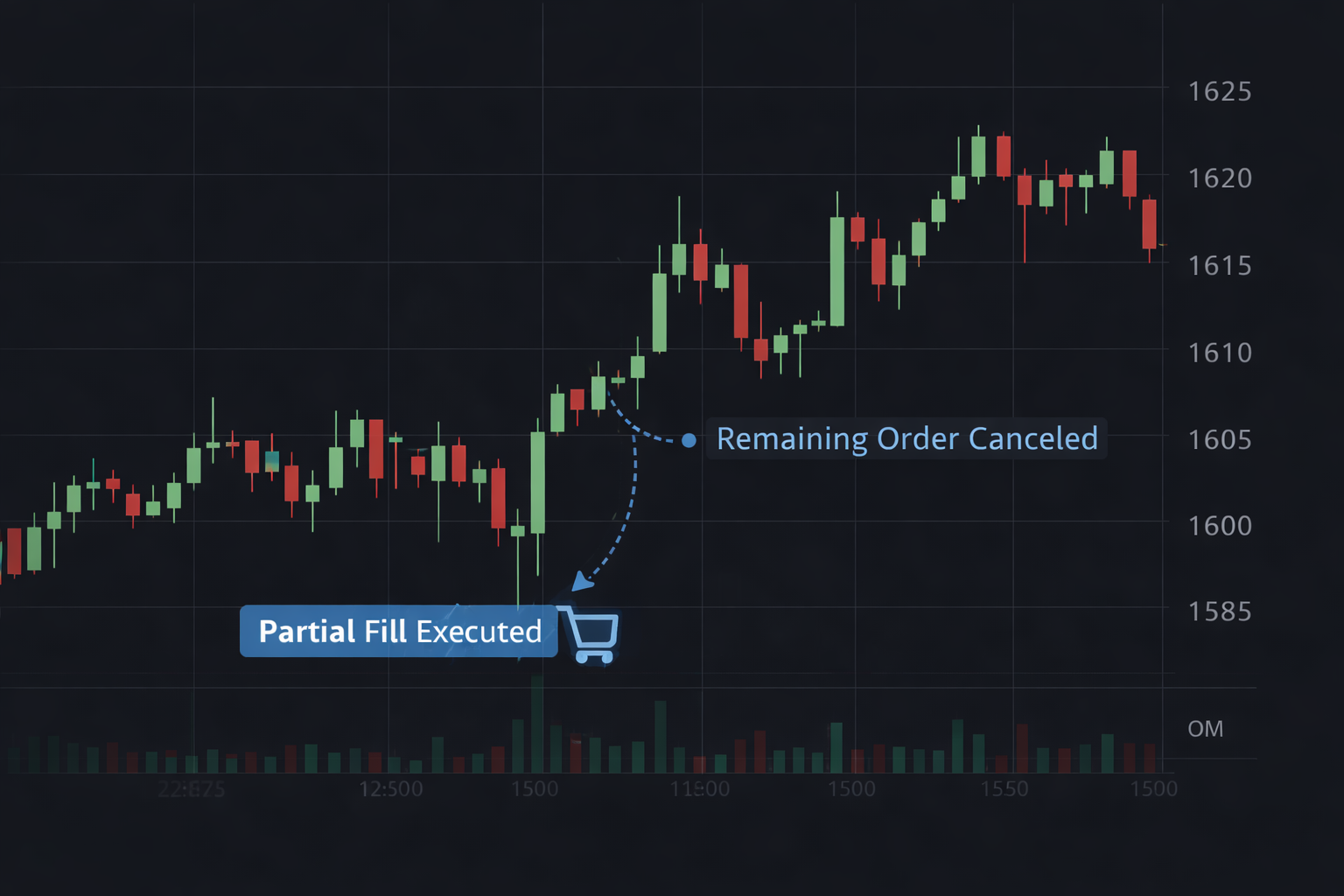
Speed of Execution: IOC orders are designed for markets where every second counts, ensuring rapid trade fulfilment.
Partial Execution Flexibility: Traders can secure a portion of their desired position without waiting for full availability.
Risk Management: Automatically cancels unfilled portions to avoid unwanted exposure or price slippage.
Market Responsiveness: Useful in volatile conditions or during news-driven price movements.
IOC orders are ideal in scenarios such as:
High-frequency or algorithmic trading, where speed is critical.
Trading during volatile sessions, where prices fluctuate rapidly.
Partial fills are acceptable, and traders want immediate execution.
Managing liquidity constraints, especially in less liquid stocks or ETFs.
FOK (Fill or Kill): Requires full execution immediately; partial fills are not allowed.
GTC (Good Till Cancelled): Stays in the market until fully filled or manually cancelled.
Limit Orders: Executed only at the specified price or better, but can remain in the order book for extended periods.
This distinction is critical for investors who need to balance execution speed, price certainty, and flexibility.
An IOC, or Immediate-Or-Cancel order, is a type of trade instruction that prioritises speed. It executes any available portion immediately and cancels the remainder, allowing traders to act quickly in fast-moving markets without waiting for full order fulfilment.
If an IOC order cannot be filled right away, any unexecuted portion is automatically cancelled. This prevents unintended market exposure, ensuring traders only transact at available prices while avoiding delays or partial positions lingering in the market.
Yes. IOC orders allow partial execution, meaning the portion of the order that can be matched is completed instantly, while any remaining unfilled quantity is cancelled. This makes IOC orders different from Fill-or-Kill orders, which require the entire order to execute or be cancelled.
IOC orders are best suited for active traders and those operating in volatile markets who prioritise immediate execution. Long-term or less frequent investors may prefer limit or GTC (Good-Till-Cancelled) orders to maintain control over pricing and execution timing.
IOC orders provide traders with a mechanism to execute trades swiftly while controlling the risk of unfilled positions. By allowing partial fills and cancelling remaining orders, IOC offers flexibility and efficiency in fast-moving markets. Whether trading stocks, ETFs, or other financial instruments, understanding IOC orders helps investors execute strategies effectively while managing market risk.
Disclaimer: This material is for general information purposes only and is not intended as (and should not be considered to be) financial, investment or other advice on which reliance should be placed. No opinion given in the material constitutes a recommendation by EBC or the author that any particular investment, security, transaction or investment strategy is suitable for any specific person.