The next U.S. jobs report is scheduled for Friday, April 3, 2026, at 8:30 a.m. Eastern Time. The Bureau of Labor Statistics identifies that release as "The Employment Situation for March 2026." As of today, March 19, 2026, that is the next official monthly payroll report on the U.S. calendar.

That answer is simple, but the report matters because it is one of the most market-moving releases each month.
The Federal Reserve's mandate includes maximum employment and stable prices, which is why traders, economists, and investors treat the jobs report as a core signal for interest rates, growth, and recession risk.
| Item | Detail |
|---|---|
| Next release | Employment Situation for March 2026 |
| Date | Friday, April 3, 2026 |
| Time | 8:30 a.m. Eastern Time |
| Published by | U.S. Bureau of Labor Statistics |
| Main market focus | Nonfarm payrolls, unemployment rate, wages |
The BLS confirms both the date and the time on its Employment Situation release pages and calendars.
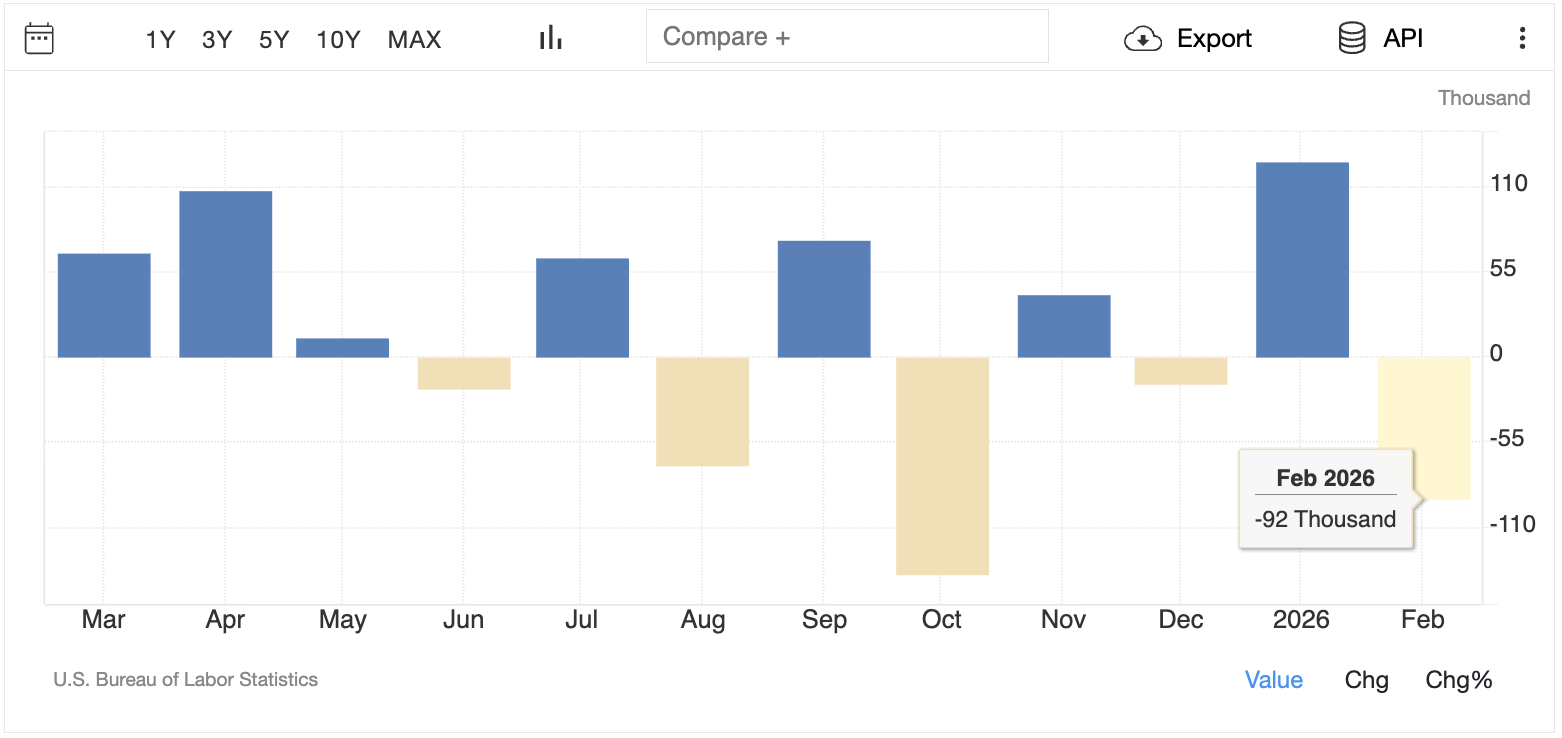
The latest report, published on March 6, 2026, analyzed data from February 2026. Total nonfarm payroll employment decreased by 92,000. Meanwhile, the unemployment rate remained steady at 4.4%.
The BLS also noted a decrease in employment within the health care sector, attributed to strike activity, as well as a continued downward trend in the information sector and federal government employment.
The wage data remained firm. Average hourly earnings for all employees on private nonfarm payrolls rose by 15 cents, or 0.4%, to $37.32 in February, and were up 3.8% from a year earlier. The labor force participation rate remained at 62.0%, and the employment-population ratio was steady at 59.3%, with little change over the month.
That mix is one reason the April 3 report matters. Payrolls weakened in February, but wage growth remained solid, leaving markets to wonder whether the labor market is cooling in an orderly way or becoming more fragile beneath the surface.
The upcoming March 2026 report is significant for markets, as it will indicate whether the February payroll decline was a one-time event or the start of a downward trend.
The February report included a note from the BLS stating that health care employment was affected by strike activity, suggesting that some of the reported weakness might not reflect a broader economic decline.
At the same time, the report also showed downward pressure in information and federal government employment, plus downward revisions to prior months.
For investors, that means April 3 is not only about the payroll headline. It is also about the composition of job growth, the stability of wage gains, and whether unemployment remains anchored near current levels.
If the labor market weakens more sharply, expectations for Fed easing can increase. If payrolls rebound and wages stay firm, markets may conclude that the Fed still has room to remain cautious.
The BLS release calendar already lists the remaining major 2026 Employment Situation dates. Here are the next several reports after April.
| Report month | Release date | Release time |
|---|---|---|
| March 2026 | Friday, April 3, 2026 | 8:30 a.m. ET |
| April 2026 | Friday, May 8, 2026 | 8:30 a.m. ET |
| May 2026 | Friday, June 5, 2026 | 8:30 a.m. ET |
| June 2026 | Thursday, July 2, 2026 | 8:30 a.m. ET |
| July 2026 | Friday, August 7, 2026 | 8:30 a.m. ET |
| August 2026 | Friday, September 4, 2026 | 8:30 a.m. ET |
One detail stands out. The jobs report is often labelled a "first Friday" event, but the official schedule indicates that it is merely a guideline, not a guarantee.
In 2026, the April report is released on the second Friday of May, while the June report is scheduled for Thursday, July 2, instead of Friday, July 3.
Markets usually react immediately at 8:30 a.m. ET, because that is when the embargo lifts and the data becomes public.
Treasury yields, the dollar, stock-index futures, and rate-sensitive sectors often move within seconds of the release if the numbers differ sharply from expectations. That speed is one reason the report remains one of the most closely watched economic releases in the United States.
The most significant market reactions typically occur when the report alters the narrative surrounding the Federal Reserve.
A jobs number that is much stronger than expected can push rate-cut expectations further out, while a softer report can do the opposite. The report does not decide policy on its own, but it remains one of the most influential inputs.
The upcoming U.S. jobs report is the March 2026 Employment Situation, scheduled for Friday, April 3, 2026.
The next report is scheduled for 8:30 a.m. Eastern Time.
No. It often arrives early in the month, but the BLS calendar shows exceptions. In 2026, the April report is scheduled for Friday, May 8, and the June report for Thursday, July 2.
The February 2026 report indicated a drop in payrolls by 92,000, an unemployment rate of 4.4%, and average hourly earnings increased by 0.4% for the month and 3.8% for the year.
In conclusion, the upcoming U.S. jobs report is scheduled for release on Friday, April 3, 2026, at 8:30 a.m. Eastern Time.
February's report showed a decline in payroll, a steady 4.4% unemployment rate, and still-firm wage growth. That makes the April release more important than a routine calendar event. It will help set the tone for how markets interpret the labor trend as the Fed and growth debates enter the next stretch.
Disclaimer: This material is for general information purposes only and is not intended as (and should not be considered to be) financial, investment or other advice on which reliance should be placed. No opinion given in the material constitutes a recommendation by EBC or the author that any particular investment, security, transaction or investment strategy is suitable for any specific person.