Published on: 2026-07-29
Updated on: 2026-07-29
Between May 21 and 28, Thailand's stock market moved higher, with the SET Index reaching 1,570.95 points on May 27. Trading activity was strong at about ฿70.3 billion. The move was helped by growing interest in electronics and AI-related components. Stronger economic data also gave investors more reason to pay attention to Thailand.
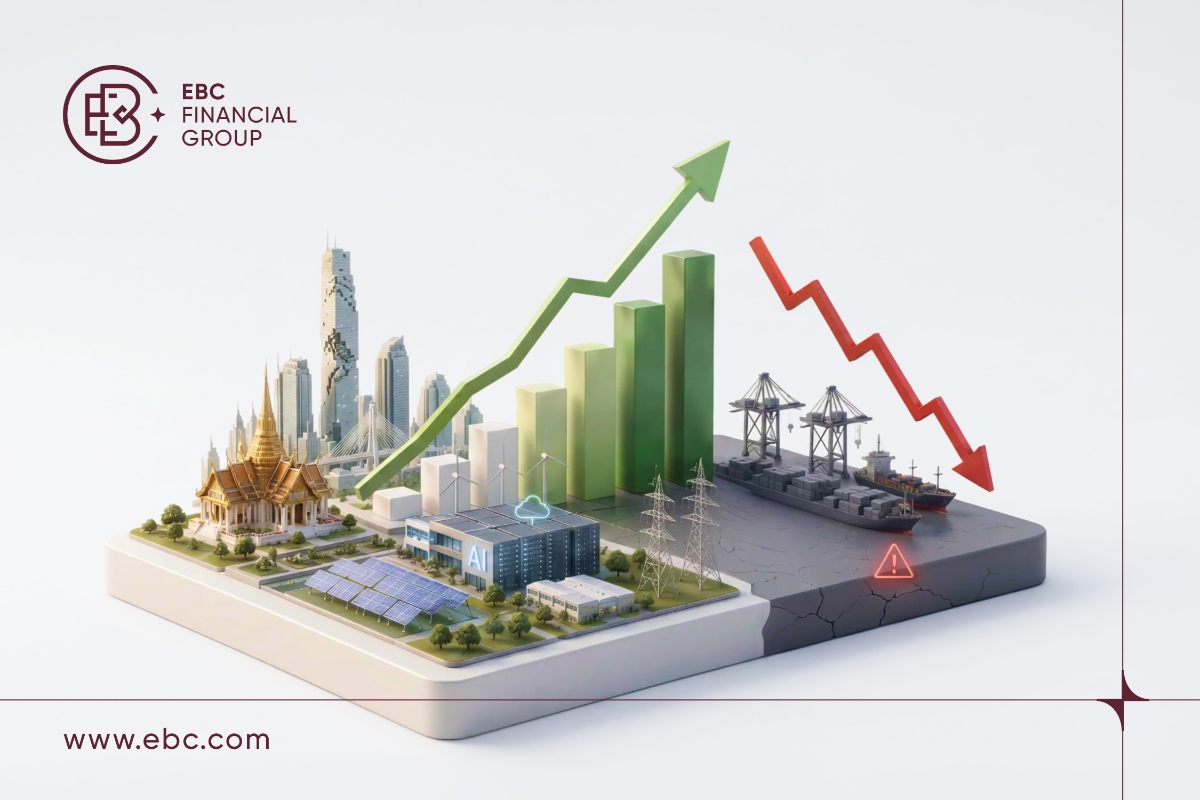
The spotlight is on Thailand's Gross Domestic Product (GDP).
Thailand's grew 2.8% year-on-year in Q1 2026, ahead of the expectation of 2.2%, this matters because the country spent the past few years trying to rebuild momentum across tourism, exports, investment and domestic demand. A strong GDP reading does not indicate that all is well, but it may suggest that certain parts of the economy are performing better than previously expected.
The outlook is not entirely straightforward. Full-year GDP growth is still forecast at 1.5% to 2.5%, with a midpoint of 2%. Inflation remains negative at -0.88%, while the Bank of Thailand has lowered its policy rate to 1.00% from 1.25% in February.
Plainly speaking, Thailand is doing better in some areas, but the picture isn't clear yet, growth is expected to stay modest this year. However slight, prices are falling which can be a sign that demand is not where it needs to be, when central banks cut interest rates, it usually means it wants to prop up the economy.
So, the picture is mixed, there are positives here, but it is not yet the kind of recovery where policymakers or investors can relax.
One of the bigger stories this year has been investment.
The country continues to attract attention from companies that are looking to invest into digital expansion, infrastructure, energy projects and supply-chain diversification.
According to the Board of Investment (BOI), Thailand has seen some strong foreign application activities that has helped keep sectors such industrial estates, utilities and technology infrastructure in the spotlight.
That said, investment applications are not the same as completed projects.
There is a need to create this distinction, because when companies apply for investment promotions or are granted approvals, it doesn't mean factories, data centres or energy projects appear from thin air.
Land acquisitions, permits, financing, construction, equipment delivery and commercial operations still need to happen before anything can kick start, so in other words one of the investments Thailand need to make is time, among others.
Yes, the BOI numbers matter, they are best read as a pipeline indicator rather than instant economic output, especially for data centres and AI-linked infrastructure.
Reports often speak of AIas merely software, chips, and apps, there are also physical components that often gets overlooked;
Data centres need land, reliable power, a lot of water for cooling, stable fibre connectivity and reliable supporting infrastructure.
This is the reason why Thailand's industrial estate and utilities sectors get spoken of so often in this discussion. If more digital infrastructure is being built, demand would go beyond just servers and software, it would encapsulate land, electricity, water, cooling systems and reliable internet connections.
Those are exactly the things industrial estates and utilities companies help provide.
Thailand's other role for the region is as a host for major international events.
They are scheduled to host the International Monetary Fund (IMF) and World Bank Group Annual Meetings this October at the Queen Sirikit National Convention Center in Bangkok. This will be the second time since 1991 that Thailand is hosting this event.
More than 15,000 delegates from around 190 countries are expected to attend.
This could be important for a few reasons.
First, when a large international meeting like this brings business travellers, policymakers, financial institutions and media attention into the country, it generates an influx of spending into the local hospitality, transportation and related businesses.
Second, it puts Thailand in front of a global audience at a time when the country is trying to position itself as a regional investment destination.
Third, the timing overlaps with other major events, including Gastech 2026 in September. For the hospitality sector, back-to-back events in Bangkok could support demand during the second half of the year.
All this is well and good, but it should be viewed as a tourism and business activity factor, not a guaranteed earnings outcome. Hospitality operators may benefit from higher occupancy and event-driven demand, but earnings will depend on room rates, operational cost, influx of tourists, flight capacity even travel conditions.
Geopolitics also matters here, if tensions continue to push energy prices up, airlines may face higher operating costs, which will affect flight frequencies, travel demand and that will feed the impact onto tourism and hospitality.
Energy was also highlighted in a Ministry of Energy report where several policy discussions will shape the industry, that includes the expected Power Development Plan in Q3 2026, a two-tier electricity tariff structure and the proposed ฿400 billion Energy Emergency Decree.
These are not small details. Energy policies affect power producers, industrial users, household costs and the broader investment environment.
For companies operating in power generation, pricing mechanisms and long-term contracts can influence earnings stability. For industrial users, electricity costs can affect margins and investment decisions. For Thailand more broadly, reliable and competitively priced power is important if the country wants to attract data centres, advanced manufacturing and energy-intensive industries.
This is where the energy story connects back to the data centre story.
Large-scale data centres require consistent electricity. They also require confidence that future power supply will be available at a scale that supports expansion. If Thailand wants to grow as a digital infrastructure hub, power planning cannot be separated from industrial policy.
That does not mean every energy policy announcement automatically benefits every company in the sector. Details matter. Project allocation, tariff structure, approval timing, contract terms and regulatory decisions all shape the actual outcome.
The technology side of the market remains closely linked to the global AI cycle.
DELTA Electronics was one of the key stocks in focus during the week, supported by global interest in AI semiconductor demand. This reflects a broader market pattern, where companies connected to AI supply chains have continued to attract investor attention.
But reports also flag a risk: the possibility of DELTA approaching the SET's cash balance threshold after a sharp rally.
For general readers, cash balance rules are basically a cooling mechanism. When a stock becomes very active or volatile, the exchange can require stricter trading conditions. That can reduce speculative activity, but it can also lead to sharper price movements in the short term.
So, while AI demand remains an important theme, valuation, trading rules and market concentration still need to be watched.
This is a useful reminder that strong themes can still carry short-term risks. A company can be linked to a genuine global trend and still experience volatility if the share price moves too quickly.
Banks were another area of interest, helped by the stronger-than-expected Q1 GDP number.
For banks, economic growth matters because it can influence loan demand, asset quality and credit conditions. If businesses and consumers are more stable, banks may see fewer signs of stress in their loan books. If growth slows, credit risk can become more important.
Reports also note interest in major commercial banks, including KBANK and BBL, supported by improving economic signals and continued foreign investor activity.
Again, this does not mean the banking sector has no risks. Interest margins, household debt, credit quality, foreign flows and economic momentum all remain relevant. But stronger GDP data does provide a more supportive backdrop than a weaker growth print would have.
A Bangkok Post report highlights the Thai Chuay Thai Plus stimulus programme, expected to begin disbursement in Q3 2026.
The idea is straightforward. If stimulus supports consumer spending, retail activity may improve. That can matter for convenience stores, shopping centres and other domestic consumption-linked businesses.
But stimulus is not magic.
Its impact depends on timing, size, consumer confidence and how much of the money flows into spending rather than saving or debt repayment. It also depends on whether households feel secure enough to spend.
This is why the domestic consumption story remains mixed. Support measures can help, but they do not fully remove pressure from weak purchasing power, rural income concerns or cautious consumer behaviour.
Reports identify four key risks for the second half of 2026.
The first is trade tension. The US-China trade truce is expected to expire in November 2026, and any renewed tariff pressure could affect export sentiment and supply-chain investment flows. For Thailand, this matters because the country benefits from some China+1 investment, but it is also exposed to global trade cycles.
The second is weather risk. El Niño and drought conditions could affect agricultural output, especially crops such as rice, cassava and corn. That matters because weaker farm income can reduce rural purchasing power, which then affects domestic consumption.
The third is global growth and interest rates. If the Federal Reserve keeps rates higher for longer, the US dollar may remain strong. A stronger dollar can pressure regional currencies, including the baht, and make foreign investors more cautious.
The fourth is financial market volatility. If the European Central Bank or Bank of Japan signals tighter policy, global borrowing costs could rise. Thai companies with foreign-currency debt may face higher financing pressure, especially if exchange rates move against them.
None of these risks mean the market must turn negative. But they explain why investors are still cautious even when headline data improves.
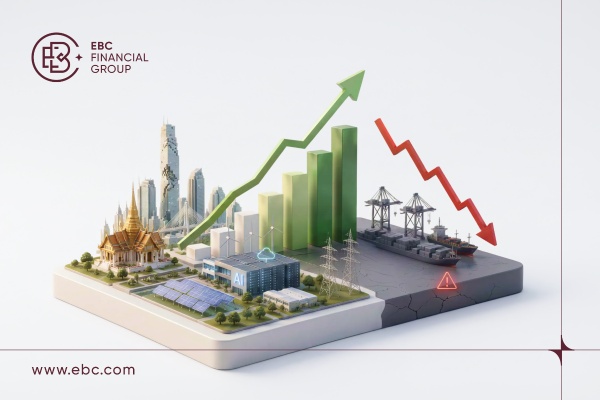
The week of May 21 to 28 shows a Thailand market that is being pulled by both opportunity and risk.
On one side, GDP growth beat expectations, investment activity remains visible, and Thailand is preparing to host major international events. Energy policy, digital infrastructure and AI-linked demand are also giving investors several themes to follow.
On the other side, external risks have not gone away. Trade tensions, oil prices, global interest rates, weather disruption and currency volatility can all affect the second half of the year.
That is why the market is not just reacting to one number.
It is reacting to a mix of better domestic data, policy expectations and global uncertainty.
For now, the key is not to assume that stronger data automatically means a smooth path ahead. The more useful approach is to watch whether investment approvals become real projects, whether tourism demand holds up, whether energy policy becomes clearer, and whether external risks remain manageable.
Thailand's economy is showing signs of movement. The next question is whether that movement can continue once the second-half risks start to matter more.
This article is intended for informational purposes only and does not constitute investment advice, a recommendation, or a solicitation to buy or sell any securities. Readers should conduct their own research and seek independent professional advice before making investment decisions.