Published on: 2026-03-10
Updated on: 2026-03-10
In financial markets, the terms bullish and bearish are widely used to describe price direction and investor sentiment. A bullish outlook suggests that investors expect prices to rise, while a bearish outlook reflects expectations of declining prices. These terms can apply to the broader stock market, individual sectors, currencies, commodities, or even a single asset.
Understanding the difference between bullish and bearish sentiment is essential for traders and investors, as market sentiment often influences trading decisions, risk management, and strategy selection. Markets rarely move randomly; they tend to develop trends shaped by investor psychology, economic conditions, and shifts in supply and demand.
Bullish markets indicate rising prices and optimistic investor sentiment.
Bearish markets indicate falling prices and cautious or pessimistic sentiment.
Understanding the difference helps traders choose appropriate strategies.
Technical indicators and economic factors can help identify market trends.
Investor psychology plays a major role in shaping bullish and bearish movements.

A bullish market describes a period when investors expect prices to rise and market sentiment becomes increasingly optimistic. In a bullish environment, demand for assets tends to increase as investors anticipate further growth.
In financial markets, a commonly used benchmark defines a bull market as a period in which prices rise by at least 20% from a recent market low. When this threshold is reached, and the upward trend continues, it signals that strong buying momentum may be driving the market higher.
During bullish periods, investors are typically more confident and more willing to invest in growth opportunities. From a technical perspective, bullish trends often exhibit higher highs and higher lows, indicating sustained buying pressure over time.
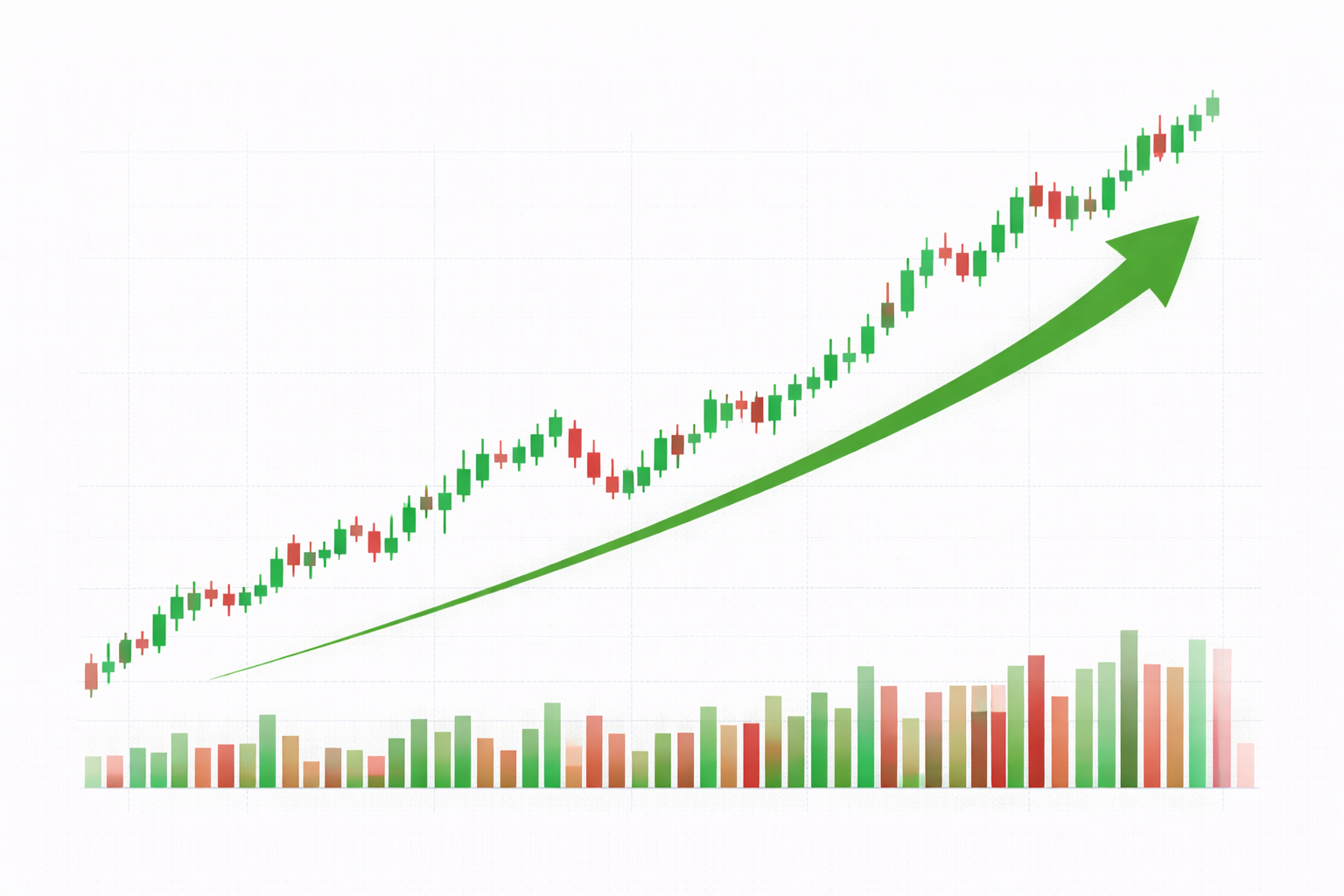
Bullish periods tend to encourage long-term investing strategies and momentum trading, as investors anticipate that prices may continue rising.

A bearish market refers to a period when investors expect prices to fall and overall sentiment becomes more cautious or pessimistic. Bearish conditions often develop during periods of economic uncertainty, weak corporate performance, or declining investor confidence.
In financial markets, a bear market is commonly defined as a decline of 20% or more from a recent market high. When prices fall to this level and the downward trend persists, it indicates that selling pressure is dominating the market.
During bearish phases, investors often focus more on protecting capital rather than pursuing aggressive growth. Traders may reduce exposure to risky assets or adopt defensive strategies.
Technically, bearish markets typically display lower highs and lower lows, showing that sellers are consistently pushing prices downward.
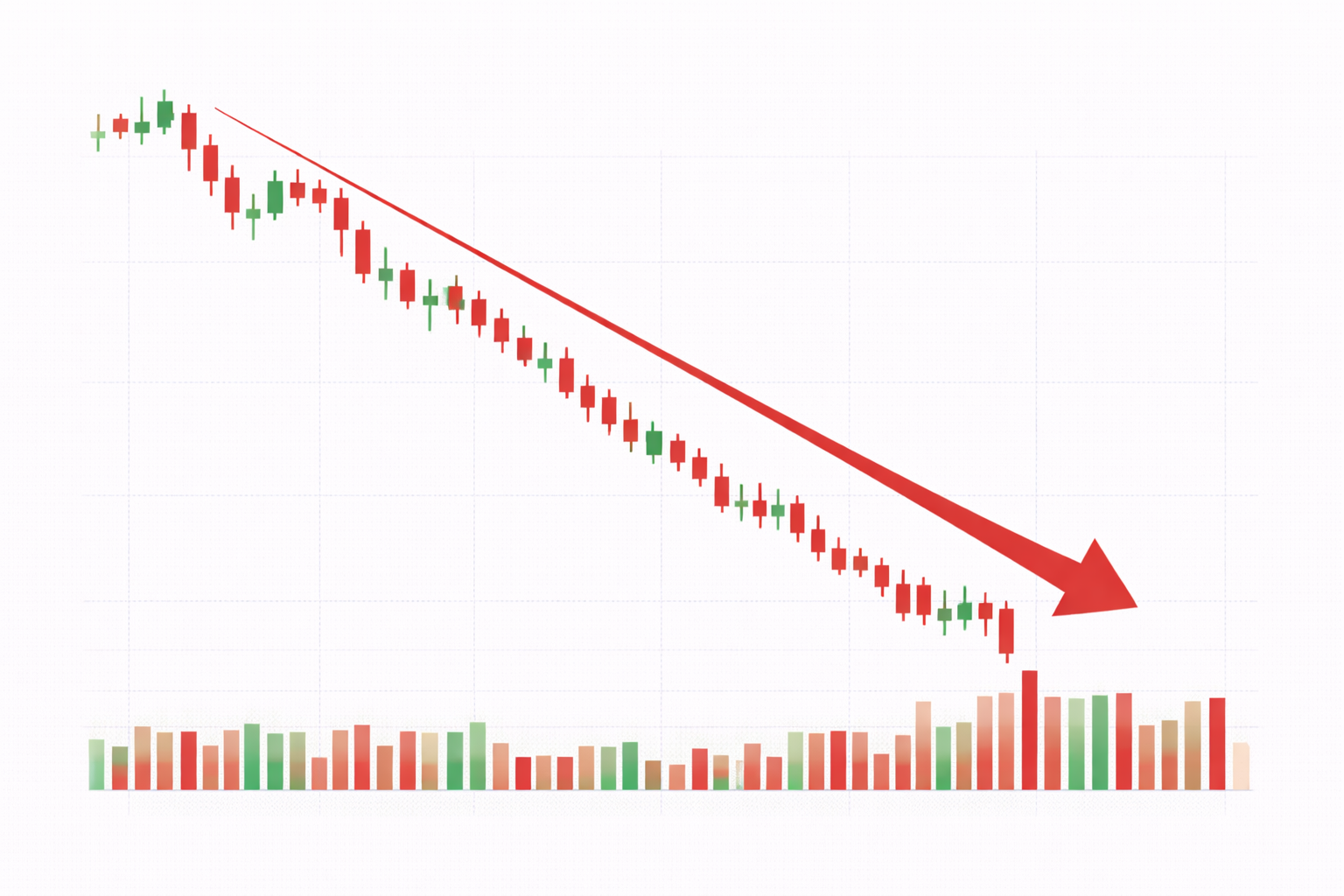
Bearish markets can also lead to higher volatility, as uncertainty drives sudden price movements and sharp rebounds.
Although bullish and bearish markets represent opposite expectations, the difference goes beyond price direction. Each market environment influences investor behaviour, risk tolerance, and trading strategies.
In bullish markets, traders often focus on identifying growth opportunities and maintaining exposure to rising assets. In contrast, bearish markets usually call for greater emphasis on risk management and defensive positioning.
Use a combination of tools: Traders rely on both technical indicators and fundamental factors rather than a single signal to identify trends.
Analyse moving averages: Moving averages smooth out short-term price fluctuations and reveal the underlying trend. Prices consistently above rising averages suggest a bullish market, while prices below declining averages indicate a bearish trend.
Use momentum indicators: tools like the Relative Strength Index (RSI) indicate whether an asset is overbought or oversold. The MACD (Moving Average Convergence Divergence) assesses the strength and direction of momentum.
Consider fundamental factors: Economic data, corporate earnings reports, inflation levels, and interest rate changes can influence investor expectations and shape overall market sentiment.
Account for market psychology: Growing confidence often increases buying activity, reinforcing bullish trends, while fear or uncertainty leads to aggressive selling, reinforcing bearish conditions.
Successful traders understand that strategies should adapt to changing market conditions. A strategy that works well in a rising market may perform poorly in a declining one.
In bullish markets, traders often focus on trend-following strategies. They may buy assets showing strong upward momentum and hold them as long as the trend remains intact.
In bearish markets, the emphasis typically shifts toward capital preservation and risk control. Some traders may hedge positions or reduce exposure to protect against further declines. More experienced traders may also attempt to profit from falling prices through short-selling strategies.
Regardless of the market environment, risk management remains essential. Proper position sizing, diversification, and disciplined stop-loss strategies can help traders navigate both bullish and bearish conditions.
Many investors misunderstand how bullish and bearish trends work in practice. Several misconceptions can lead to poor decision-making.
One common misconception is that every rising market is a bull market. In reality, short-term rallies can occur within longer-term downtrends. Similarly, temporary price declines do not necessarily indicate the beginning of a bear market.
Another misunderstanding is that markets move uniformly. In many cases, different sectors can experience different trends simultaneously. For example, technology stocks may perform strongly while other industries struggle.
Finally, traders sometimes overlook the importance of time frames. A trader might be bullish in the short term while remaining bearish over the longer term, depending on the broader trend.
Recognising these nuances helps investors avoid reacting emotionally to short-term price movements.
A bullish market is a period when prices trend upward, and investor sentiment is optimistic. During these phases, traders often expect further gains and may increase their exposure to assets that show strong growth potential.
A bearish market describes a period of declining prices accompanied by pessimistic investor sentiment. Traders may become more cautious, reduce risk exposure, or adopt defensive strategies to protect capital.
Traders typically analyse price trends, technical indicators such as moving averages and momentum tools, and broader economic factors. When these signals align, they can help confirm whether the overall market direction is bullish or bearish.
Yes. Different sectors or timeframes can show different trends. An asset may appear bullish in the short term while still bearish in the long term.
In bullish markets, traders often focus on growth and trend-following strategies. In bearish markets, they may prioritise risk management, hedging, or defensive positioning to protect their investments.
Bullish and bearish conditions represent the two primary directions of financial markets. A bullish market reflects optimism and rising prices, while a bearish market signals caution and declining values.
Knowing the difference between bullish and bearish sentiment helps traders better interpret market sentiment, recognise developing trends, and choose strategies that align with the current market environment.
Disclaimer: This material is for general information purposes only and is not intended as (and should not be considered to be) financial, investment or other advice on which reliance should be placed. No opinion given in the material constitutes a recommendation by EBC or the author that any particular investment, security, transaction or investment strategy is suitable for any specific person.